Bulgarian Tambura
The Bulgarian tambura is a long-necked, fretted plucked lute at the heart of Bulgarian and wider Balkan folk music — a member of the tamburitza family known under names such as tamburica, tamburitza, and tambouro. Its bright, metallic voice and doubled steel-string courses make it a driving rhythmic and melodic instrument in village dance music, wedding bands, and folk ensembles across Bulgaria, North Macedonia, and the neighbouring Balkan traditions.
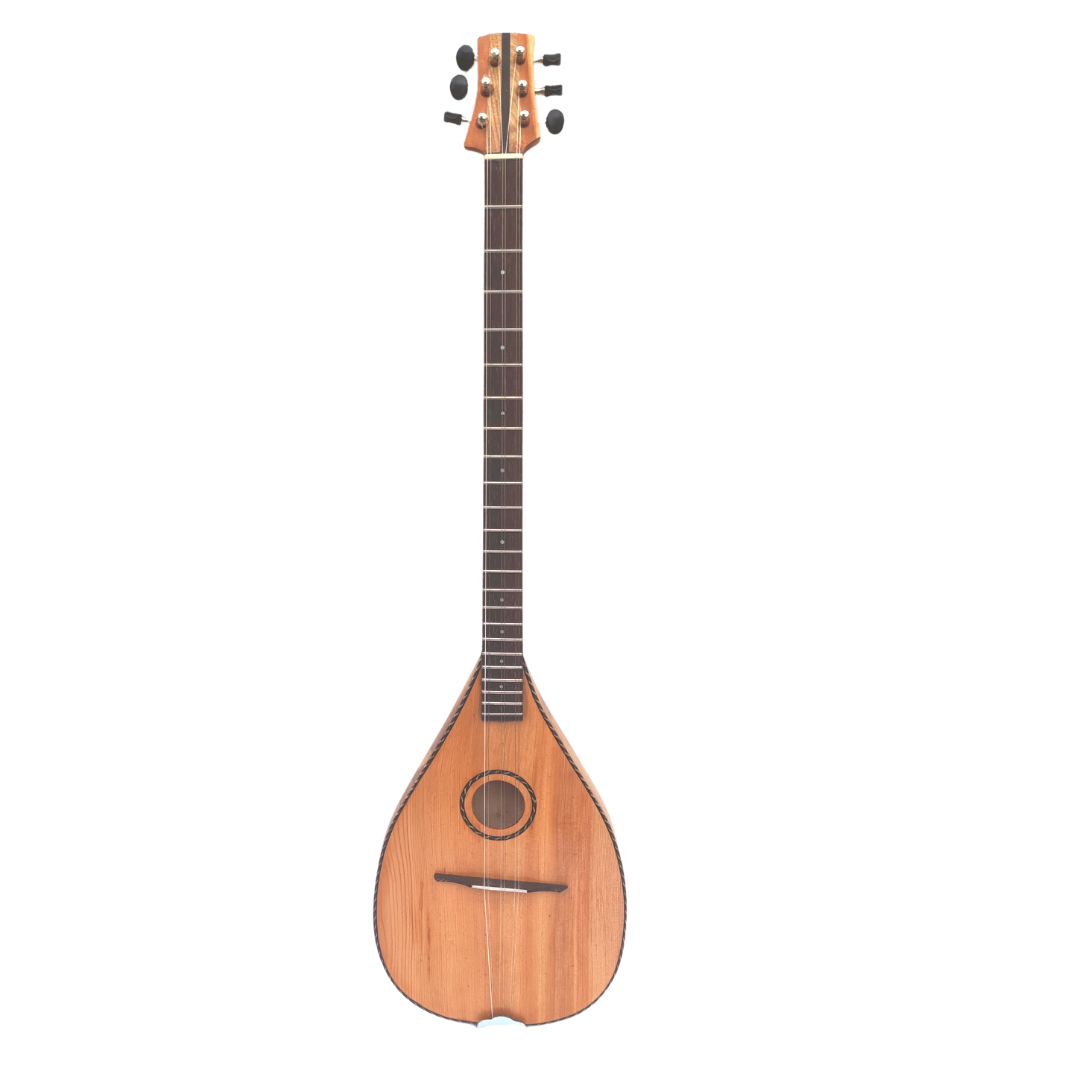
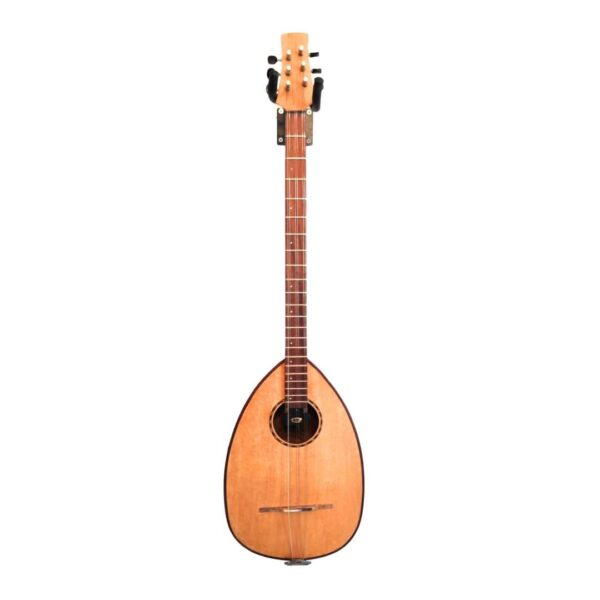
Construction follows the Balkan long-neck lute tradition. A pear-shaped body is hand-carved from solid wood — frequently a single block — and joined to a long fretted neck that supports the diatonic scales of Balkan folk repertoire. The strings are steel, arranged in doubled courses and most often tuned in unison rather than octaves, giving the instrument its characteristic ringing attack. A simple bridge and tailpiece carry the string tension across a resonant, projecting top.
The tambura is played with a plectrum for fast melodic runs and rhythmic chordal accompaniment, moving fluidly between solo lines and ensemble drive. String layouts vary across the family: the trichordo form carries six strings in three doubled courses, while larger Bulgarian variants extend to four courses. This flexibility lets a single instrument cover melody, harmony, and rhythm within the same folk setting.
In Balkan folk music the tambura anchors dance tunes (horo), song accompaniment, and instrumental ensembles, often played alongside the gadulka, kaval, and accordion. As a fretted plectrum lute it sits naturally beside other Mediterranean and Balkan long-necks such as the Greek bouzouki — which shares the same three- and four-course logic — within the wider string instruments family.
At Tapadum, our Bulgarian and Balkan tambura collection currently features the Macedonian Trichordo Tambura — six steel strings in three doubled courses, hand-carved from solid wood by Macedonian luthiers in North Macedonia — with further tambura variants joining the catalog as new stock arrives. Each instrument is checked for tuning stability, neck geometry, and string action by our string instruments specialist Sertan Sarioglu before shipping from our Brisighella, Italy showroom. Worldwide shipping & 15-day return.
Frequently Asked Questions
What is a Bulgarian tambura?
Is a Macedonian trichordo tambura the same as a Bulgarian tambura?
How is a tambura tuned and played?
What should I look for when choosing a tambura?