Setar
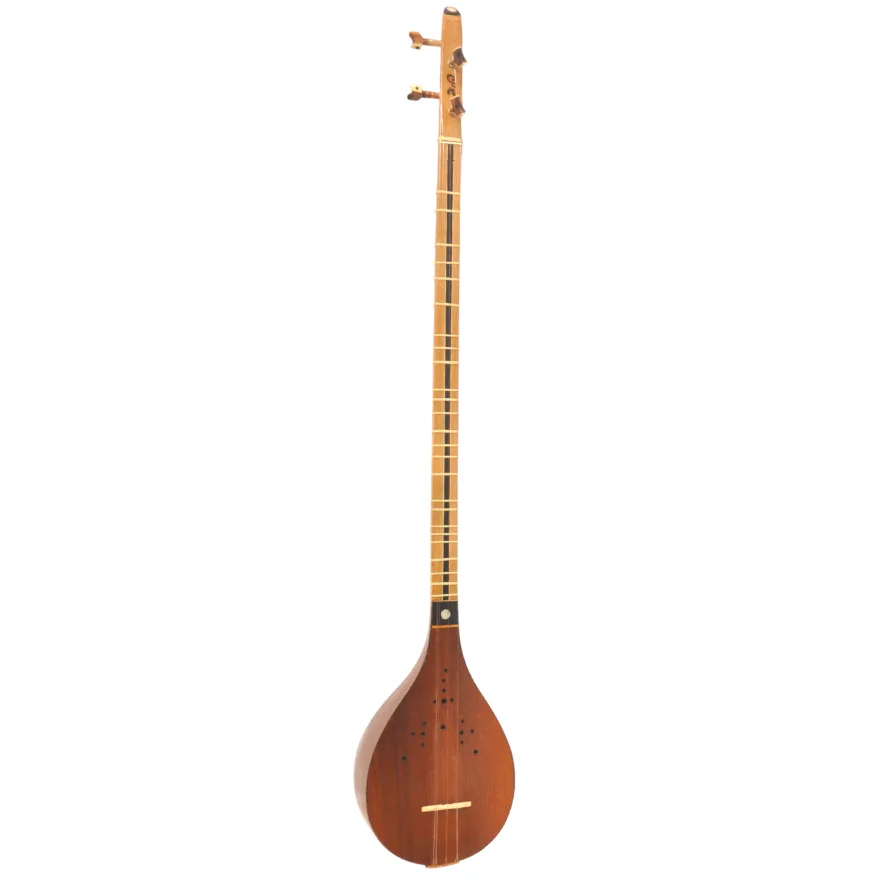
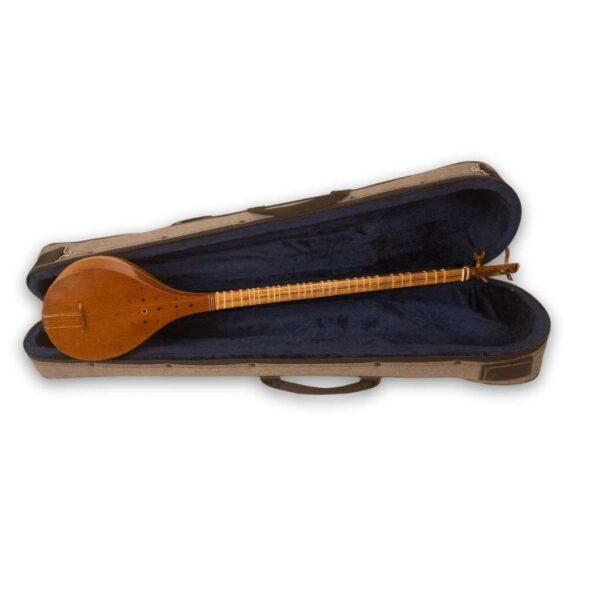
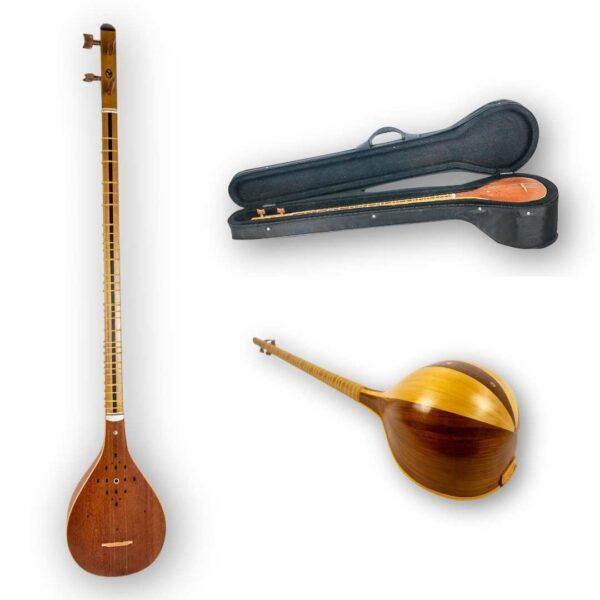
The Persian Setar (Iranian Setar) is a delicate, intimate fingerstyle lute at the heart of Persian classical music — a member of the tanbur family of long-necked lutes, distinguished by its small body, slender neck, and the bare-finger technique that gives it its characteristic introspective voice. Where the Iranian Tar projects boldly with a brass plectrum, the setar whispers — making it the chosen voice of solo improvisation and vocal accompaniment in the dastgah tradition.
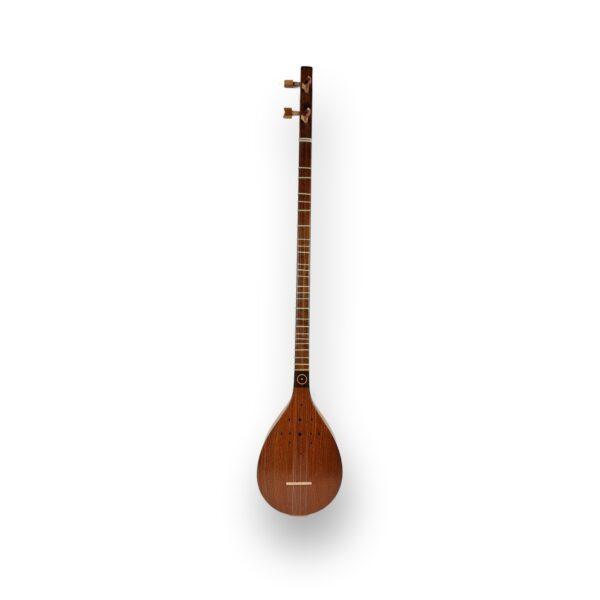
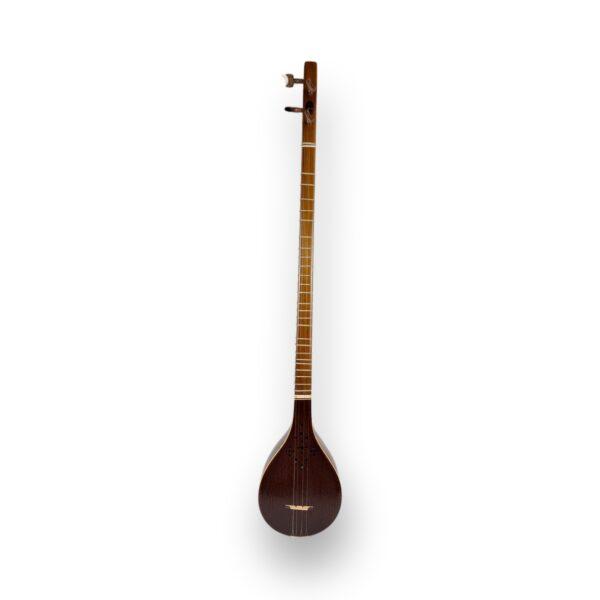
Construction follows centuries of Tehran-school refinement. The pear-shaped body is carved from aged mulberry wood, joined to a long walnut or mulberry neck carrying twenty-five to twenty-eight movable gut frets — repositionable for precise quarter-tone adjustment essential to Persian microtonal practice. The thin wooden soundboard, unbraced or lightly braced, transmits string vibration with delicate clarity. Most setars carry four strings: three steel and one bronze, arranged in a doubled bass course plus two single courses.
The setar is played with the nail of the right-hand index finger, drawing rapid up-and-down strokes (the riz) that create the instrument’s signature shimmering texture. Tuning is typically C–C–G–C (or variants depending on the dastgah), and the long neck supports a range exceeding two and a half octaves. The fingerboard’s gut frets allow microtonal slides and the koron / sori half-flat / half-sharp inflections that define Persian classical phrasing.
Setar practice sits at the core of solo avaz performance, intimate taqsim-style improvisation, and vocal accompaniment in classical Persian repertoire — alongside its close cousin the Iranian Tar within the wider Persian Instruments family. Modern masters such as Mohammad Reza Lotfi, Dariush Talai, and Hossein Alizadeh shaped the contemporary voice of the instrument and continue to influence today’s setar practice.
At Tapadum, our Persian setar collection is curated from three luthier lines working in the Tehran tradition, spanning the range from first instruments to professional builds. We also stock the Persian Shourangiz — a lighter, more agile alternative to the tar designed by Persian music master Hossein Alizadeh as a modern refinement of the classical tar voice. Each instrument passes individual quality control — fret positioning, neck stability, soundboard response — with our string instruments specialist Sertan Sarioglu before shipping from our Brisighella, Italy showroom.
Choosing your setar
Which line fits depends on where you are in your practice:
- Diba — €289. A handmade beginner instrument with a maple bowl; the usual first setar.
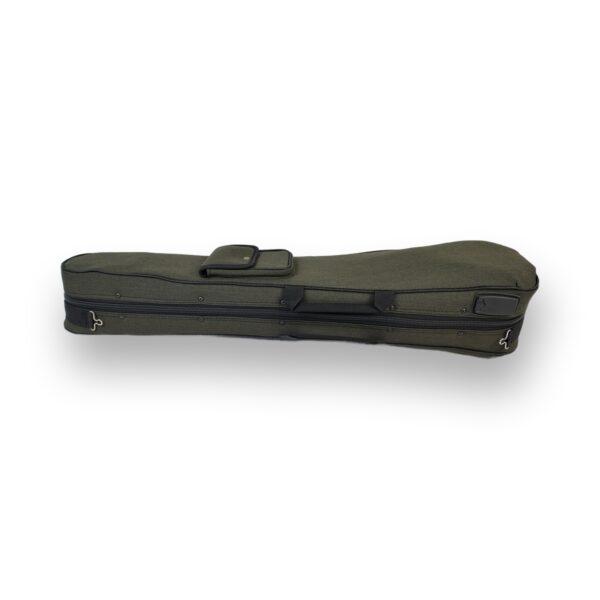
- Ravan — €539. Premium walnut and maple, supplied with a hard case.
- Hamid — €699. Aged tonewoods with delicate hand-inlay work.
Because the setar’s twenty-five to twenty-eight gut frets are tied rather than fixed, expect to reposition them occasionally as your ear develops — this is normal maintenance, not a flaw. Replacement strings, picks and protective cases are in our setar accessories range. Worldwide shipping & 15-day return apply to every order.
Frequently Asked Questions
What is a Persian setar?
How many frets does the setar have and why are they movable?
How is the setar tuned?
What's the difference between a setar and a tar?
Which setar model should I choose?