
Description
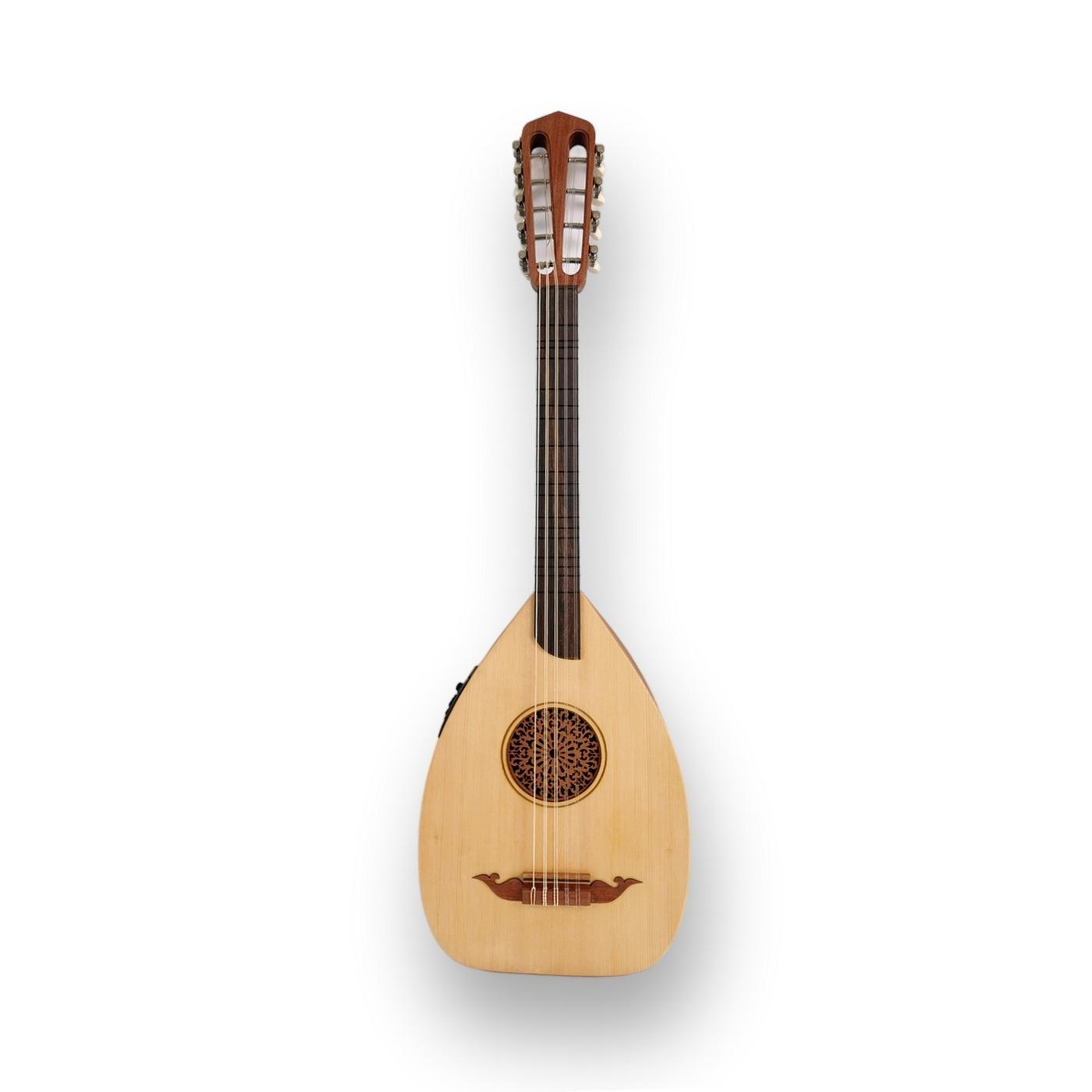
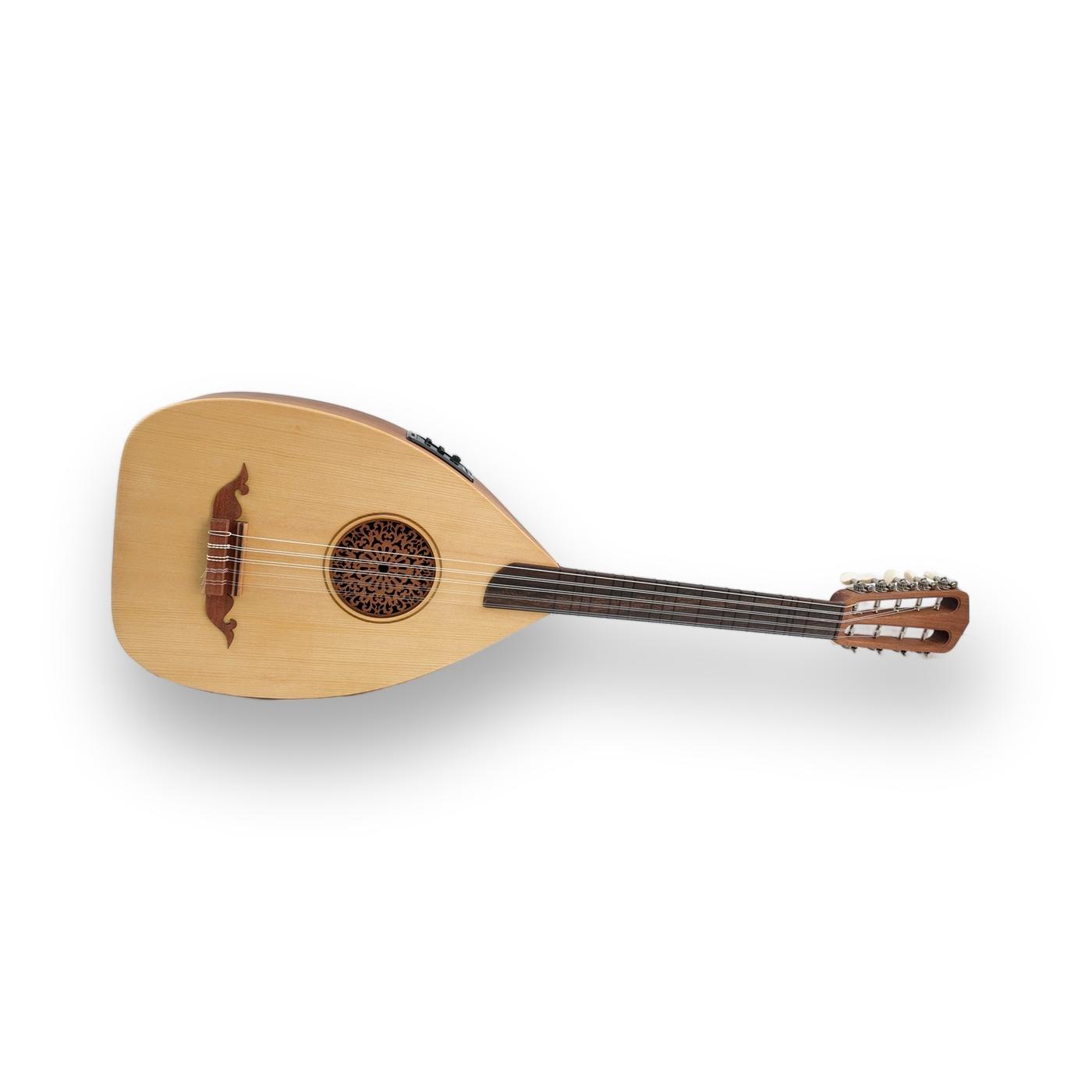
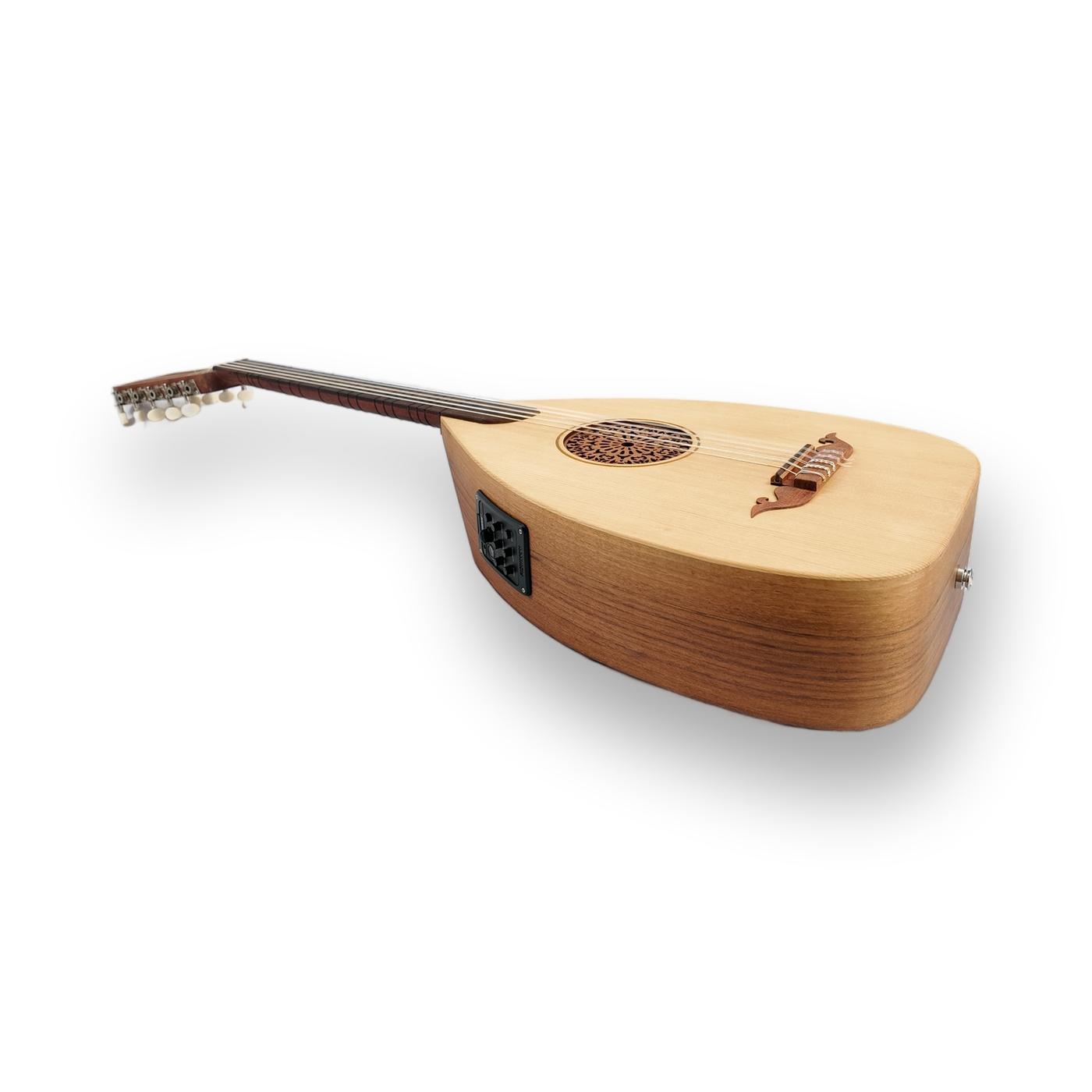
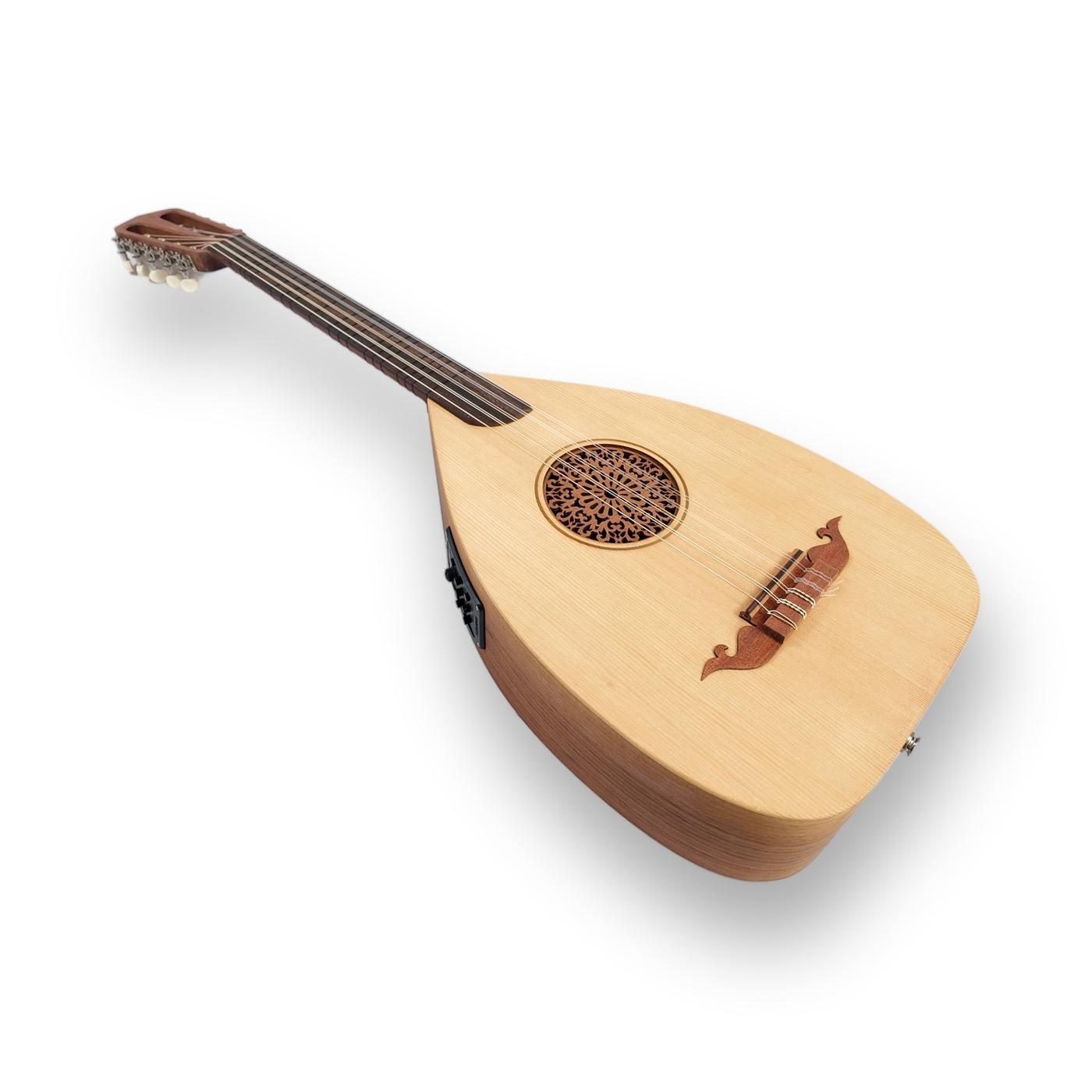
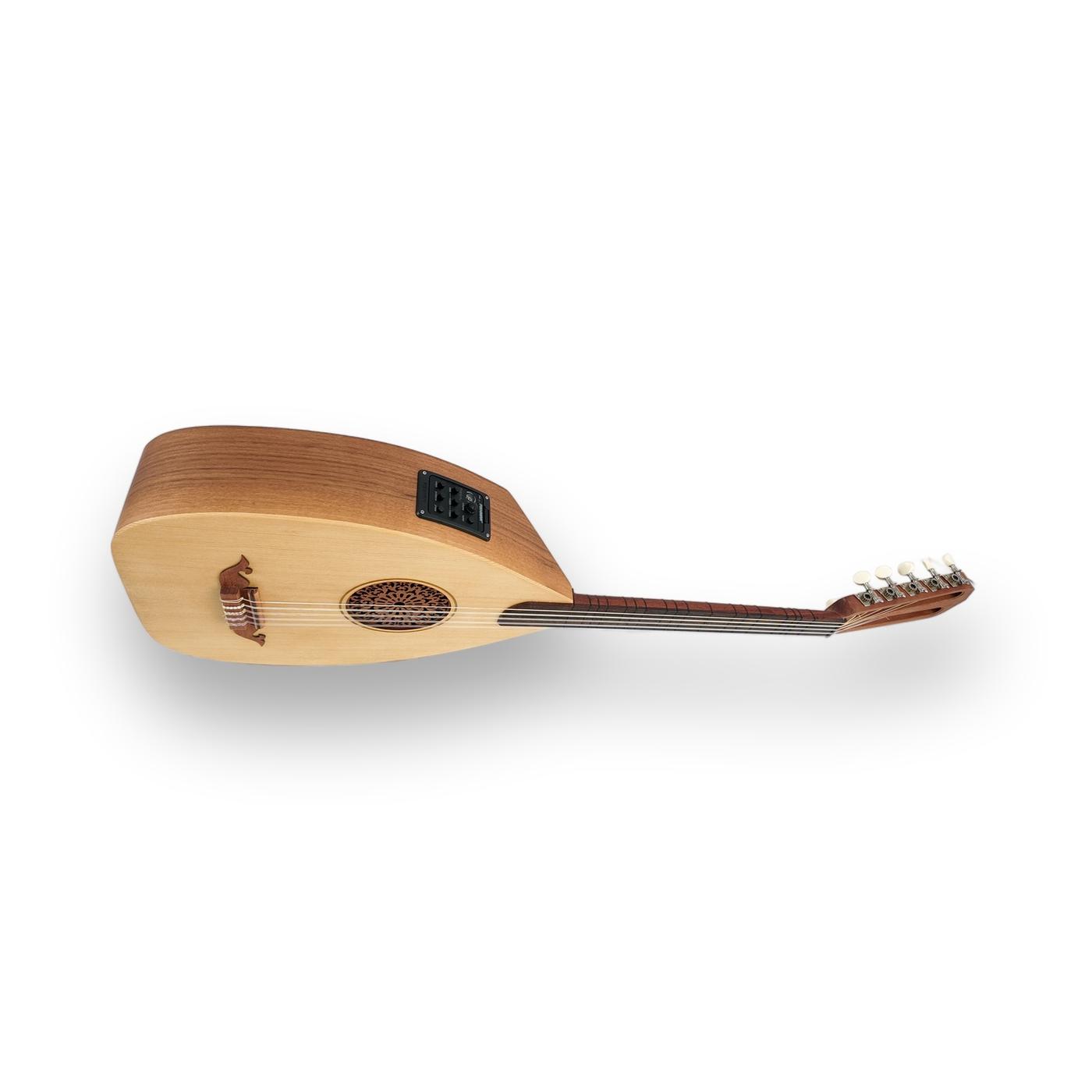
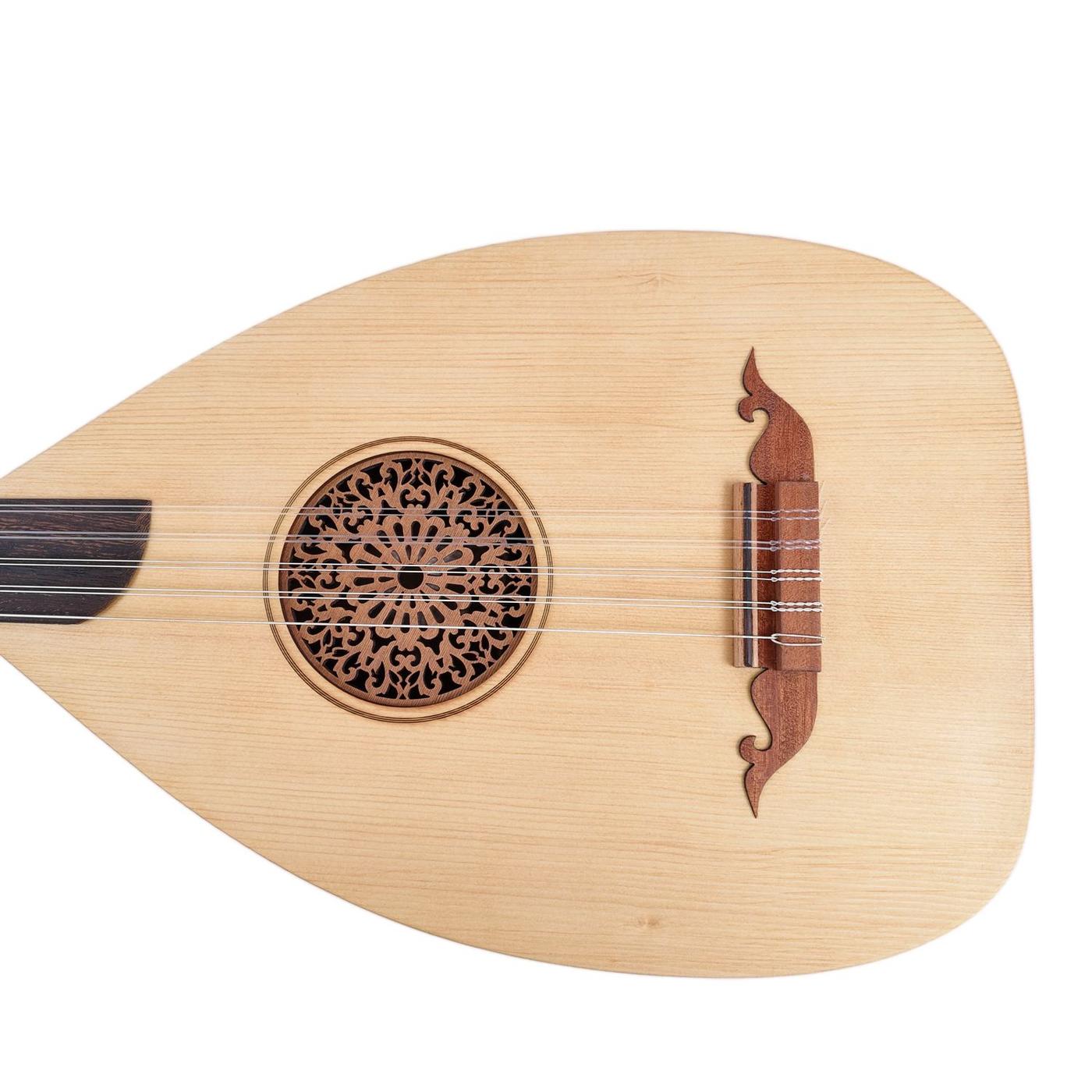
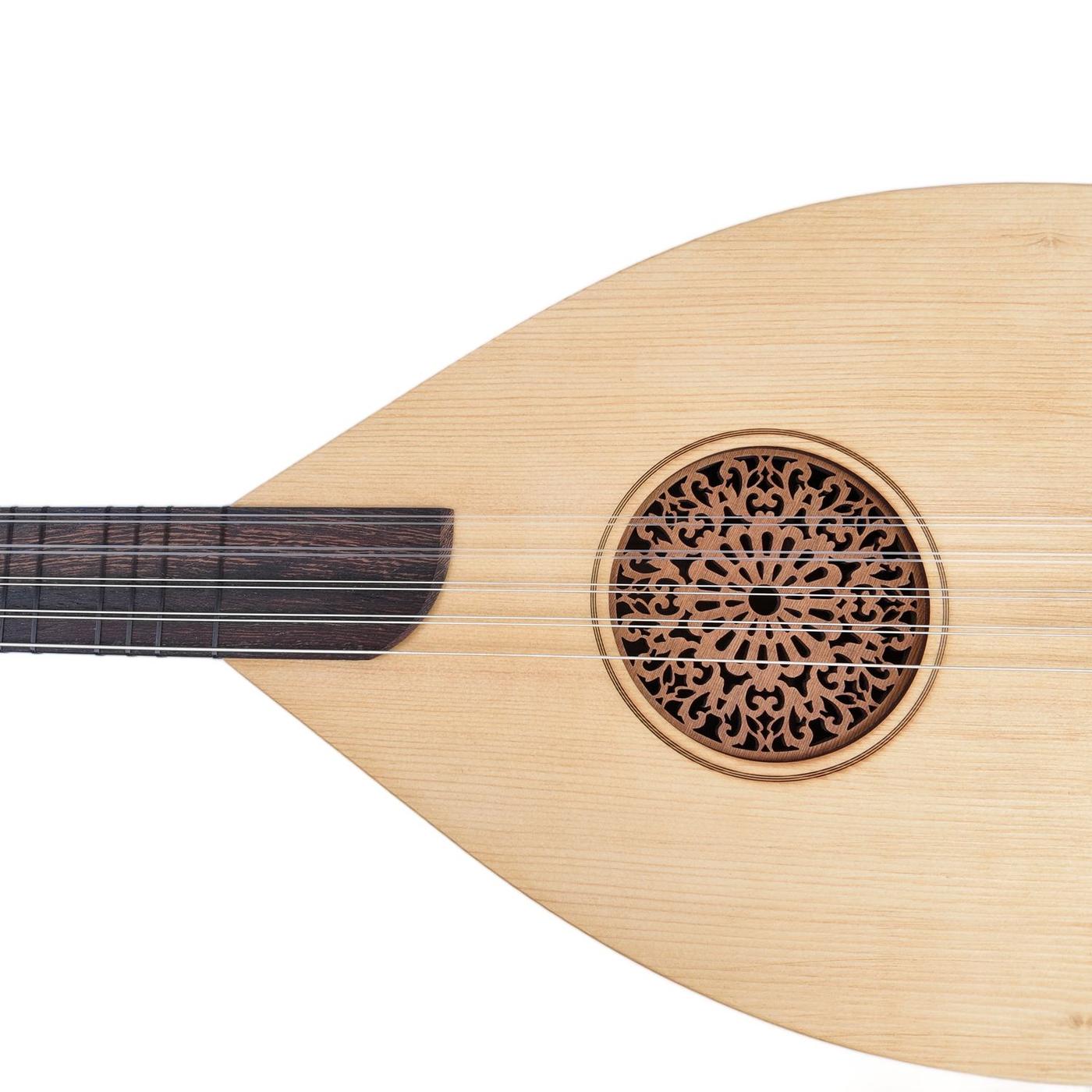
The Turkish 5 Strings Lavta is a handcrafted lute that extends the classical four-course Ottoman lavta with an added low string, giving the instrument a deeper bass register and a wider melodic range without breaking from tradition. Built in our workshop by Mitre Sertan Sarioglu — a professional musician and master luthier who manages Tapadum’s strings line — this electro-acoustic version is designed for players who move between intimate acoustic settings and amplified stage work. The first four courses retain the familiar D-A-D-G tuning of the classical Turkish lavta, while the fifth course is set as a low string that the player tunes to their own repertoire. The result is an instrument that stays rooted in fasil and Ottoman classical music yet opens up to fusion, world music, and modern composition.
Materials and Construction
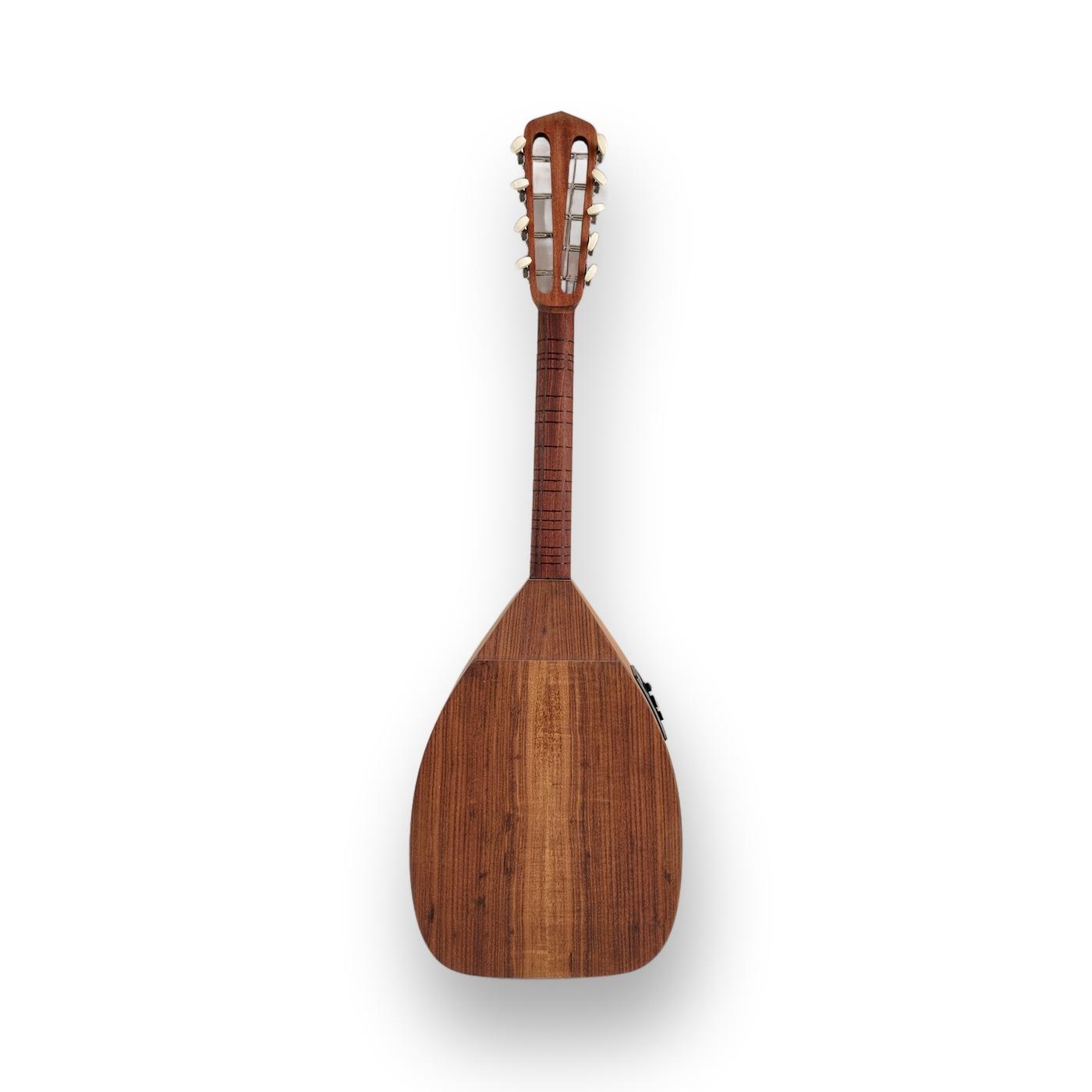
The body is carved from walnut, a tonewood prized for its dense grain and warm low-mid response — qualities that give the lavta a rounded, slightly dark voice that sits well alongside ouds, qanuns, and percussion in ensemble work. The soundboard is East Black Sea spruce, a regional tonewood recognized within luthier circles for its tight, even grain. Spruce keeps the high register clear and gives the instrument the projection needed both unplugged and through a sound system.
The neck is shaped from mahogany, chosen for stability across humidity changes and for the smooth feel it offers under the fretting hand. The fingerboard runs the length of the neck with traditional fret placement, allowing the precise note articulation that distinguishes the lavta from its fretless cousin, the oud.
Tuning and Tuning Hardware
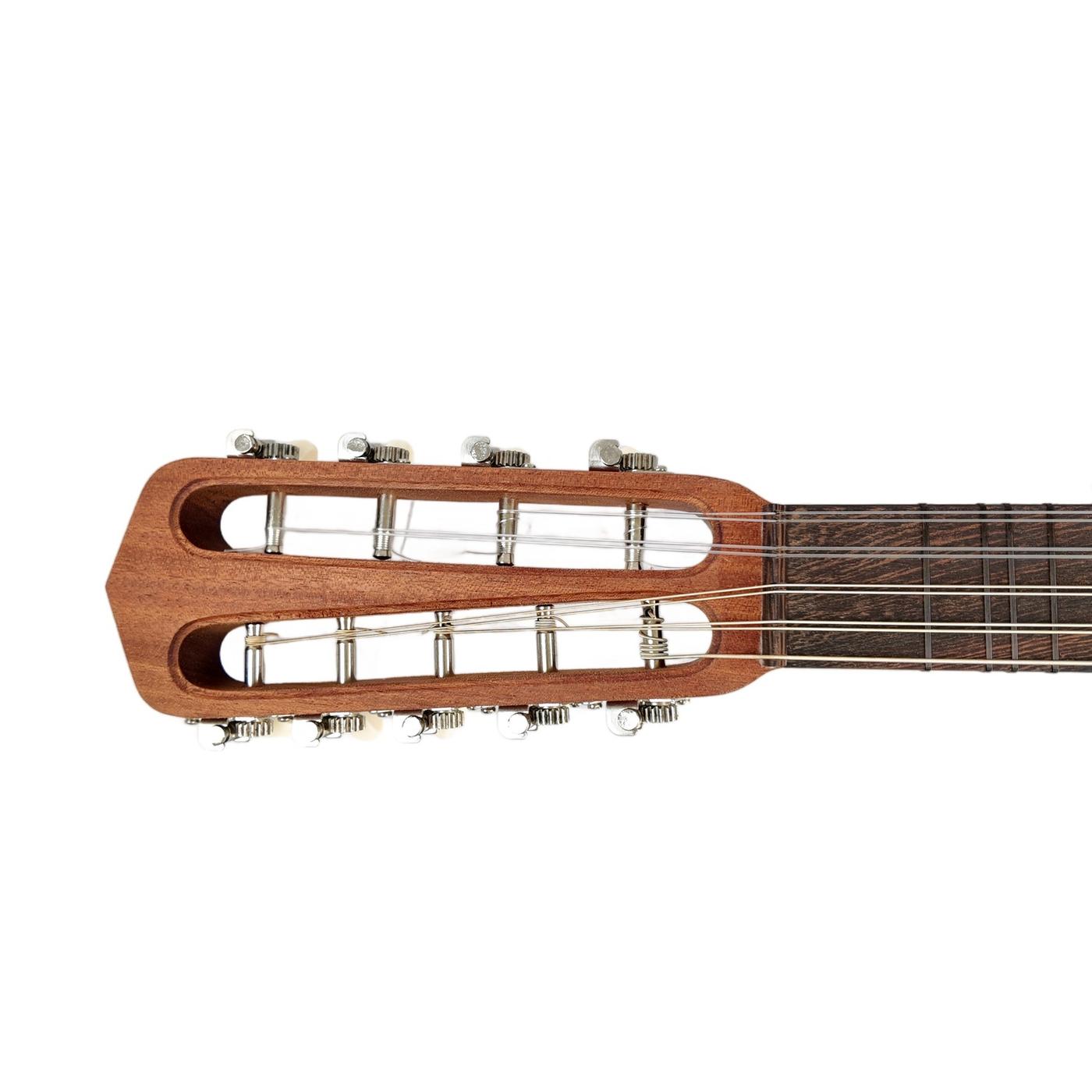
The first four courses follow the classical D-A-D-G tuning used in most of the Turkish lavta repertoire. The fifth course is added as a low string and is left for the player to set according to the piece — performers commonly tune it to a low D or A, but the configuration is open to your makam and ensemble context. The instrument ships with mechanical tuners, which hold tuning more reliably than traditional friction pegs and make the tuning process faster — especially helpful when the fifth course is being re-tuned between pieces.
For an overview of common Turkish lavta tunings and how players adapt them to different makams, see our guide on Turkish lavta tuning and timbre.
Electro-Acoustic Setup
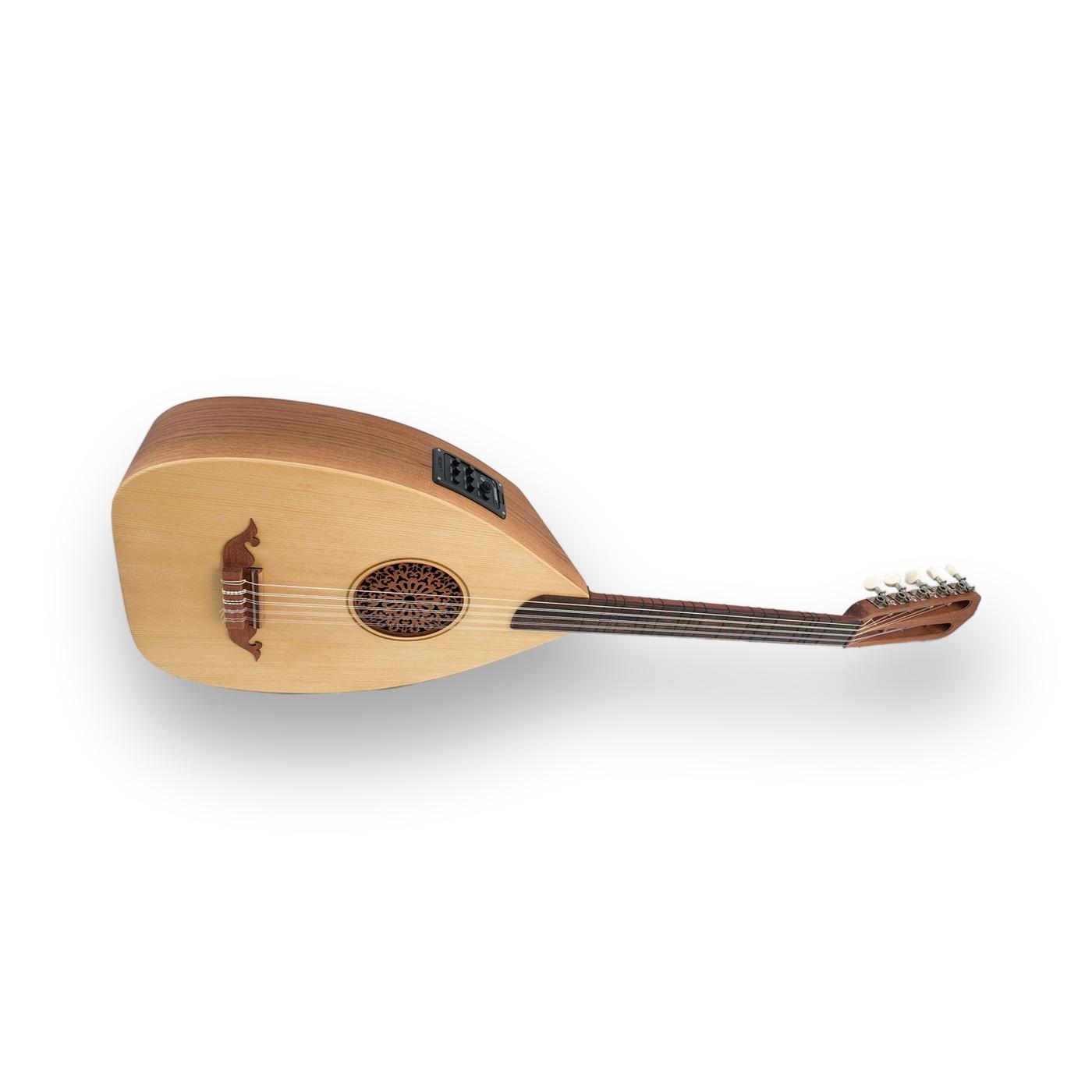
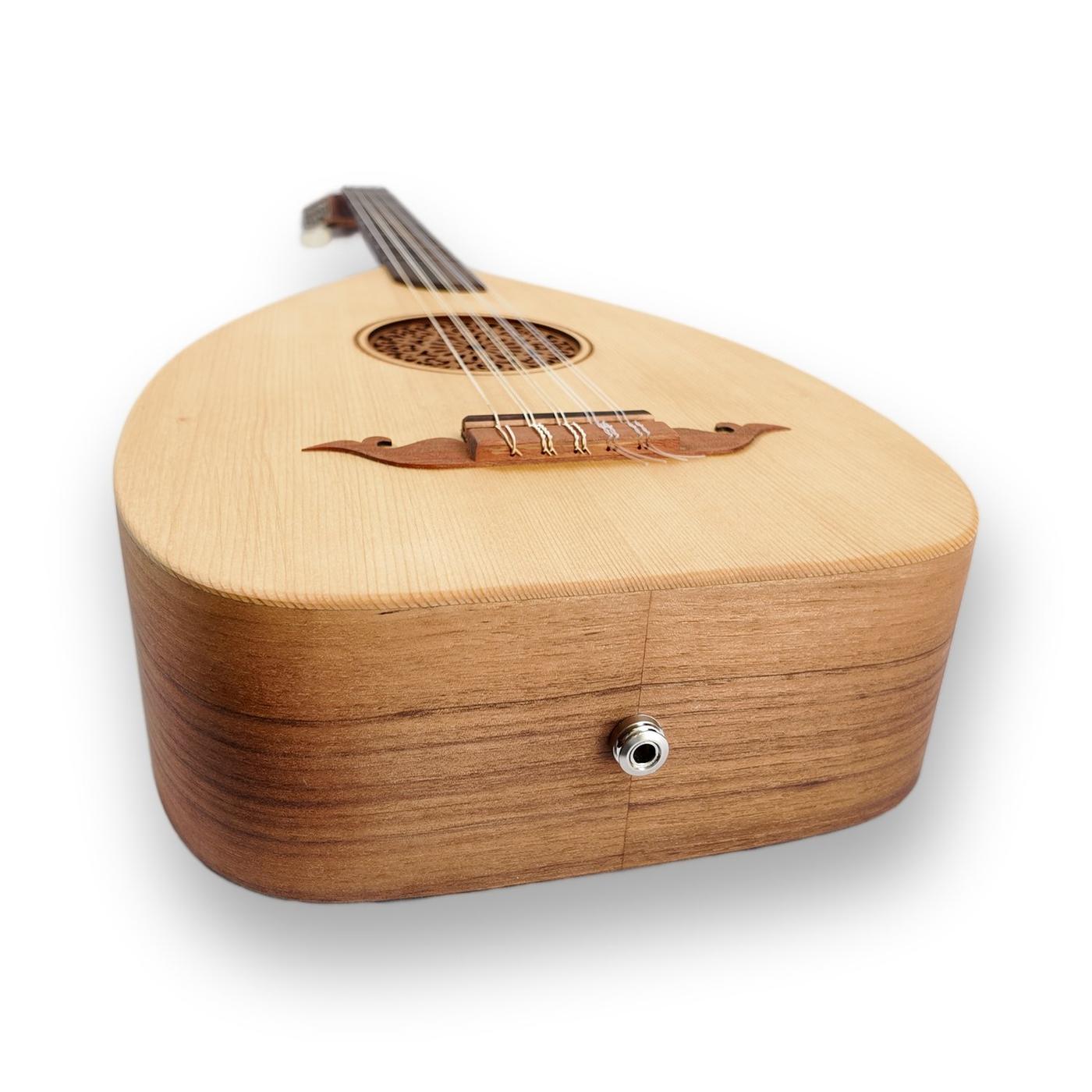
A Fishman Piezo Mic is fitted under the bridge, sending a balanced signal directly to a PA, mixer, or recording interface. Plugging in does not change the instrument’s acoustic voice — the pickup is there for stage use, not as a substitute for the natural resonance. For studio work, many engineers prefer to mic the soundboard and use the piezo as a blend or a backup. Onstage, the pickup carries the instrument cleanly over a full ensemble.
Specifications
| Body | Walnut |
| Soundboard | East Black Sea spruce |
| Neck | Mahogany |
| Strings | 5 (4 classical courses + 1 added low course) |
| Tuning (first four) | D-A-D-G (classical Turkish lavta) |
| Fifth course | Low — player’s preference (commonly low D or A) |
| Tuners | Mechanical |
| Pickup | Fishman Piezo Mic |
| Case | Premium soft case included |
| Maker | Mitre Sertan Sarioglu (Tapadum master luthier) |
| SKU | Tap118 |
Who This Instrument Is For
The Turkish 5 Strings Lavta is a professional-level instrument intended for performers who play Turkish classical, fasil, and Ottoman repertoire and want a wider bass range than the four-course lavta provides; world-music and fusion players moving between Turkish, Greek, Armenian, and Mediterranean traditions; and studio musicians who need an instrument that can be miked acoustically and also delivers a clean DI signal. Players who already own a four-course lavta will find the technique fully transferable — the fifth course adds depth without changing what the right and left hands already do.
If you are new to the instrument, browse our full Turkish lavta collection before stepping up to the five-course design. For historical context, see Wikipedia’s article on the lavta.
Care and Maintenance
Keep the instrument away from sustained humidity changes — wood movement is the most common cause of intonation drift on fretted lavtas. Loosen the strings slightly if you will not play for several weeks, wipe down the fingerboard after sessions, and unplug the cable when storing the instrument to protect the pickup output jack. With reasonable care, a Tapadum lavta will hold its voice for decades.



Reviews
There are no reviews yet.