



Description
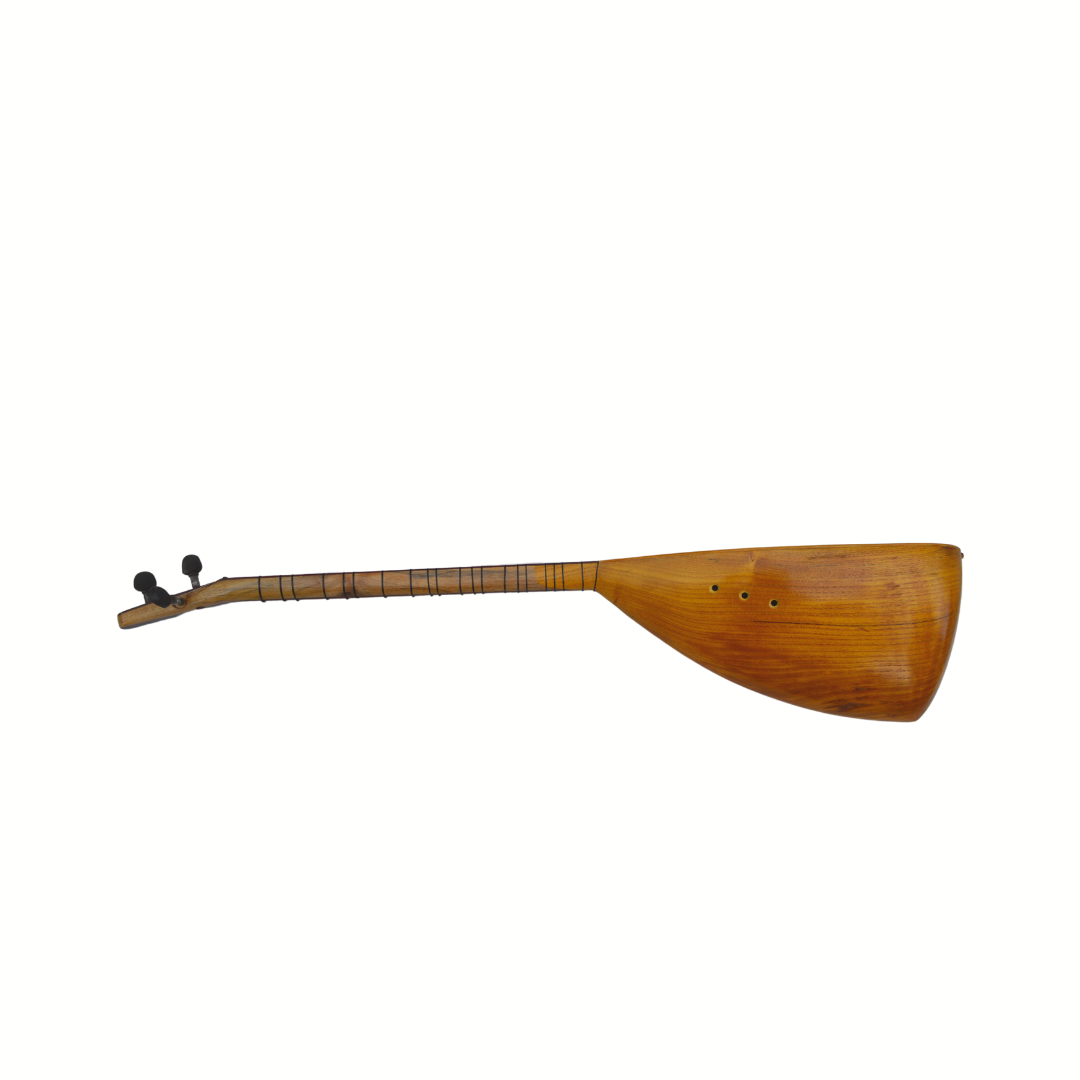
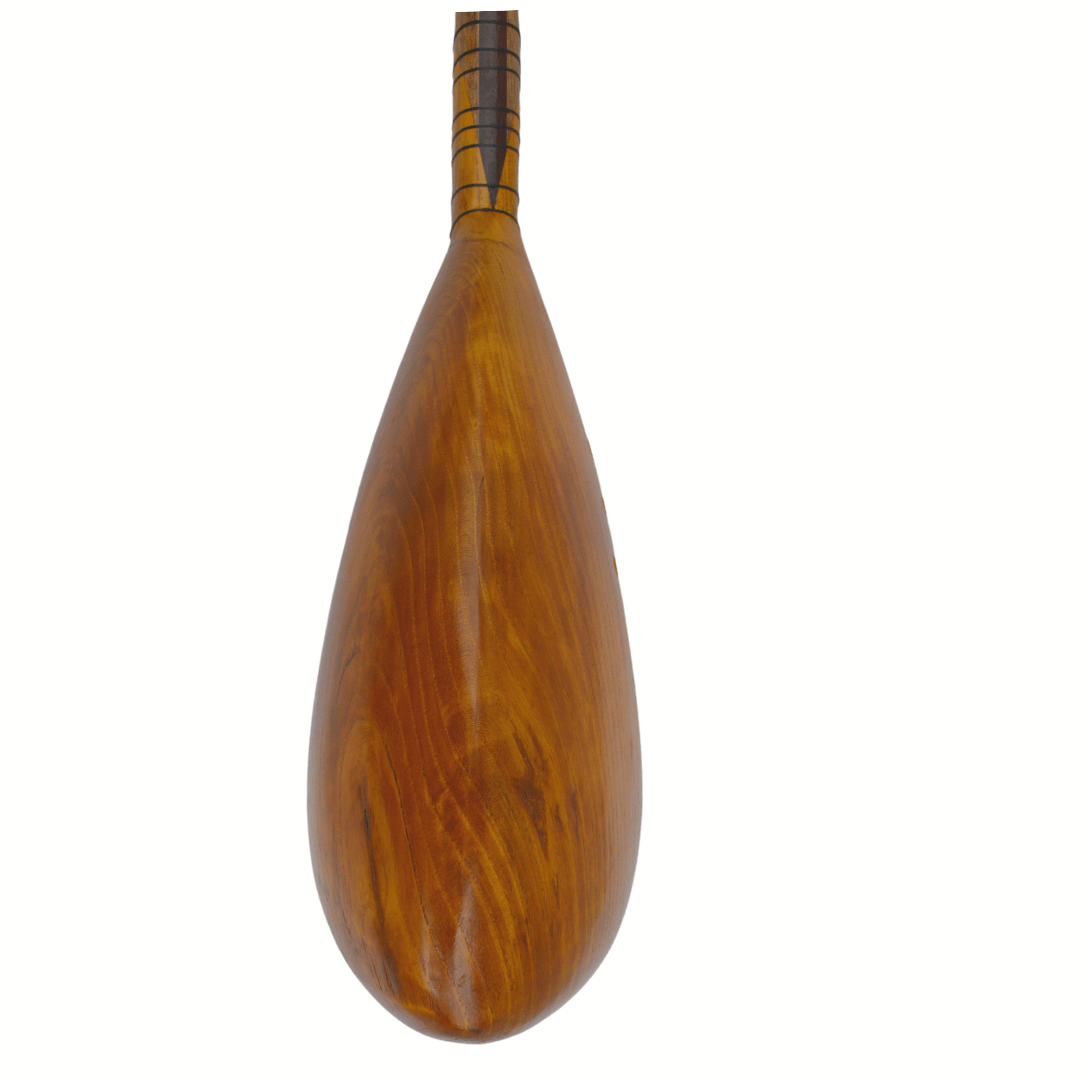
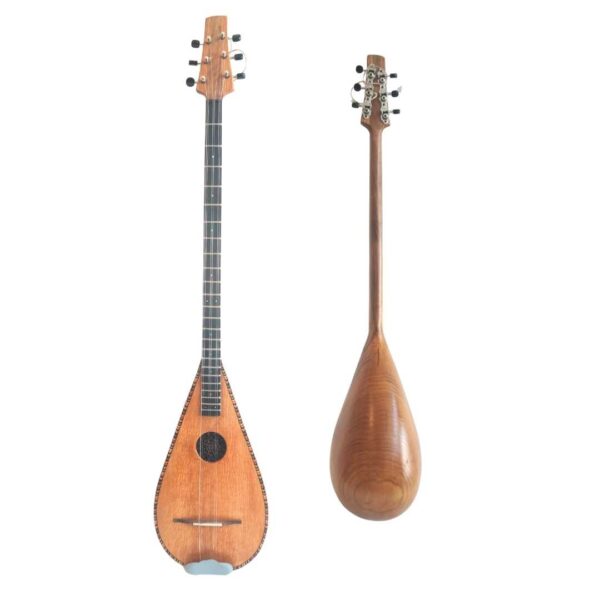
The Turkish kopuz is the small, short-necked member of the baglama and saz family, and the name dede sazi — “the elder’s saz” — points to where it has mattered most: in the hands of the dede, the spiritual elder who leads the Alevi-Bektasi cem ceremony. This instrument is built in that tradition, hand-finished in Turkey for players who want the saz voice in a body small enough to carry anywhere.
Where the kopuz sits in the saz family
Anatolian long-necked lutes run as a family of sizes rather than a single instrument. The cura is the smallest and highest, the full baglama sits in the middle, and the divan sazi is the largest and deepest. The kopuz belongs near the small end: a compact carved body and a short neck, which raises the pitch, tightens the string response, and puts the frets close enough together that the left hand covers a whole mode without shifting.
The practical consequence is directness. A short scale speaks quickly and stays audible against a singing voice without volume, which is exactly what a ceremonial or accompanying instrument needs. It is also why the kopuz travels — it fits in a car, a bus, and a small room in a way a divan sazi does not.
Dede sazi — the instrument of the cem
In Alevi-Bektasi practice the saz is not an accompaniment to worship, it is part of it. The dede plays while singing deyis and nefes — sung poems that carry the community’s teaching — and the instrument is treated with the respect given to a sacred object. The kopuz built for this role is plain rather than ornamented, sized to be held close, and voiced to sit under a speaking-range voice rather than over it.
That heritage shapes what this instrument is good at today. It rewards a player who sings, and it suits repertoire built on modal melody and rhythmic accompaniment rather than dense chordal playing.
Playing technique
The kopuz is played two ways. With a mizrap — a flexible plectrum, traditionally cherry bark — the right hand drives clear melodic lines and the driving downstroke rhythms of Anatolian dance forms. In selpe technique the plectrum is set aside and the strings are struck, tapped, and plucked directly with the fingers, giving percussive attack and simultaneous melody-and-rhythm playing. Both are standard on this instrument, and a short neck makes the second easier to learn than it is on a full-length baglama.
Tuning follows saz practice, with the player choosing the duzen that suits the repertoire; tied frets can be nudged along the neck to place the microtonal steps that Anatolian modes require.
At a glance
| Family | Baglama / saz family, short-neck |
| Also known as | Dede sazi |
| Played with | Mizrap (plectrum) or selpe fingerstyle |
| Frets | Tied, repositionable for modal intervals |
| Origin | Turkey |
Who it is for
The kopuz suits singers who accompany themselves, players already working in Anatolian repertoire who want a small instrument for travel and practice, and anyone drawn to the Alevi-Bektasi tradition specifically. Guitarists moving across will find the short scale familiar under the hand, though the tied frets and modal tuning take adjustment. If you want the fuller, deeper voice of the standard instrument instead, the baglama and saz collection covers the larger sizes, and the wider string instruments range sets it alongside the other plucked lutes we build and curate.
Repertoire
The core repertoire is Anatolian: turku from the regional folk traditions, the deyis and nefes of Alevi-Bektasi practice, and the asik tradition of travelling poet-musicians who sang their own verse to their own saz. Players also bring it into contemporary Anatolian folk arrangements, where its bright short-scale voice cuts through an ensemble without amplification. You can read more about the instrument’s long history on Wikipedia.
Care and maintenance
Keep the instrument in moderate, stable humidity and away from direct heat — a carved body and a wooden soundboard both move with the seasons. Wipe the strings and body with a soft dry cloth after playing. Check the tied frets from time to time: they can drift out of position with handling, and a fret that has slipped will throw a single note out of tune while the rest of the neck sounds correct. Replace strings when they lose brightness or start to buzz against the frets. Other instruments from the same family are in the kopuz collection.
Worldwide shipping & 15-day return.


Reviews
There are no reviews yet.