

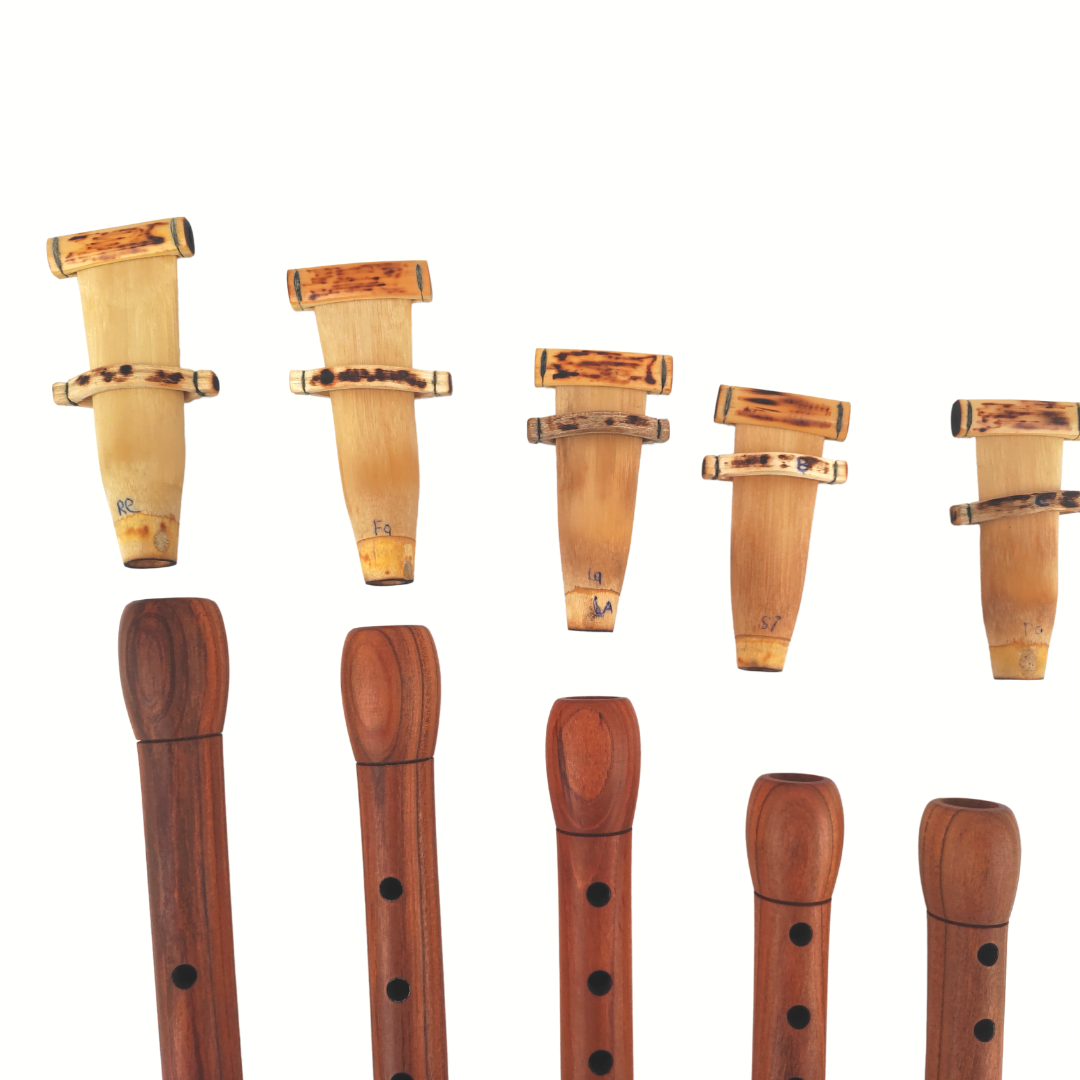


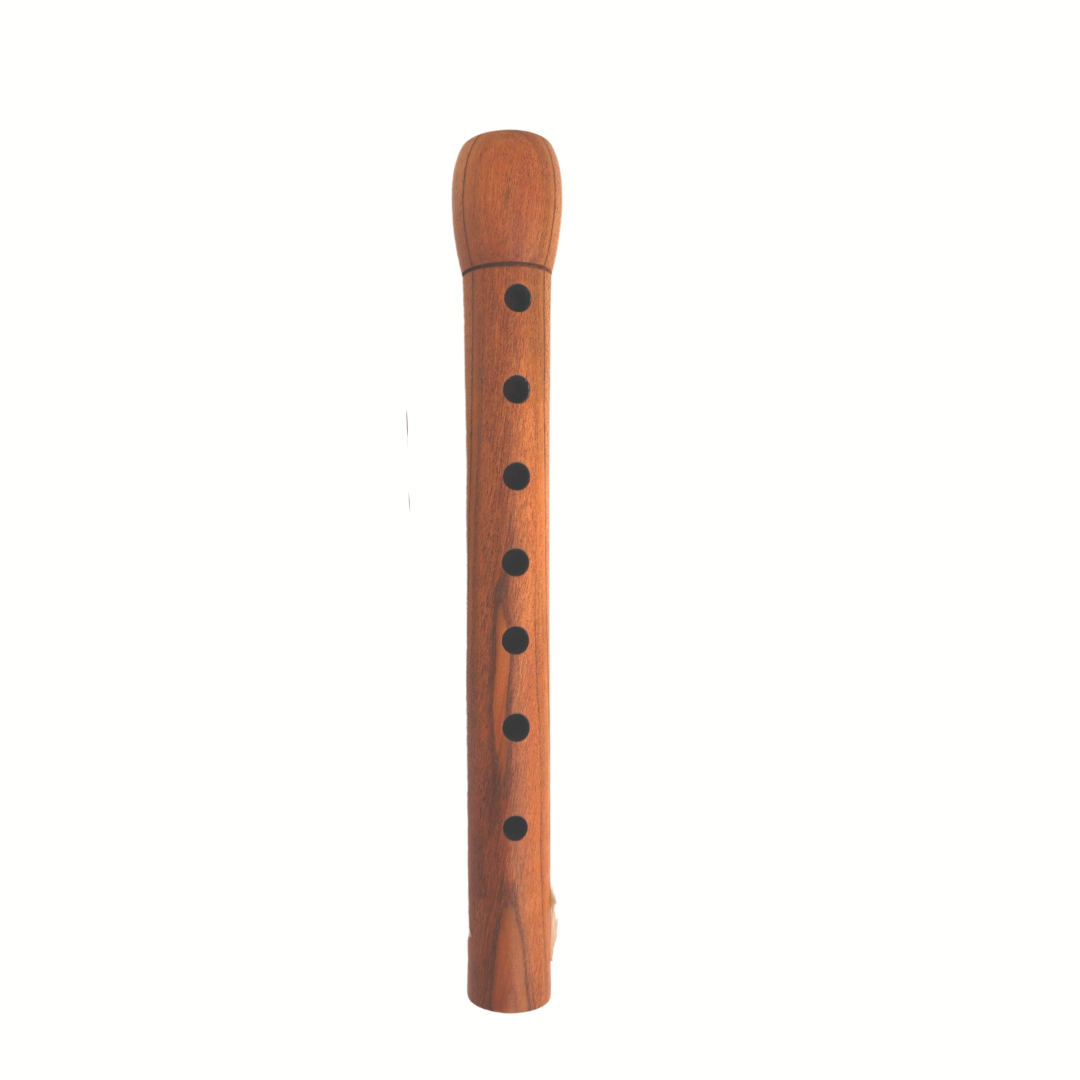
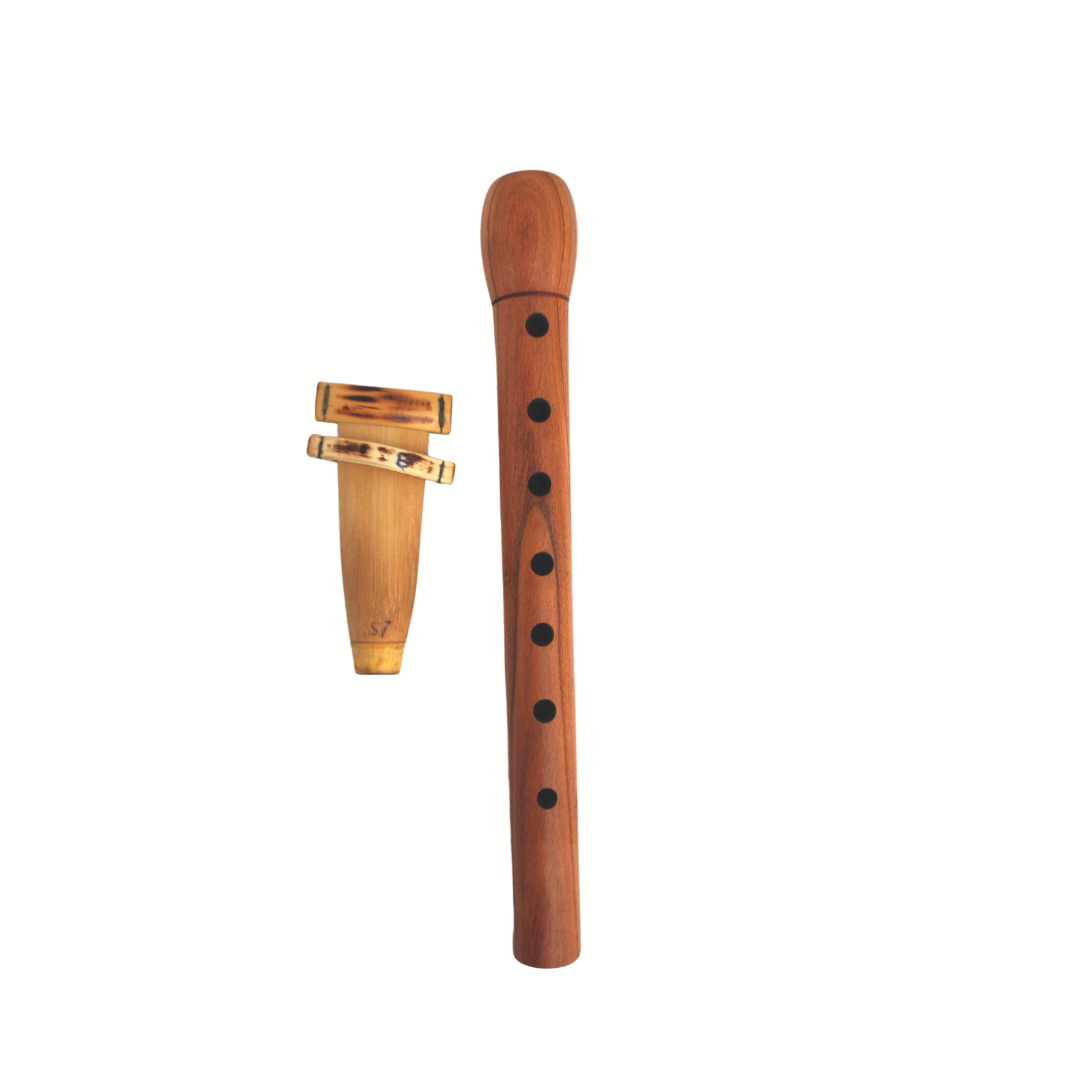

Description
The Professional Turkish Mey delivers the warm, melancholic voice that has defined Anatolian folk music for centuries. Built from seasoned apricot wood and fitted with a handcrafted double reed, this instrument produces the deep, breathy timbre that distinguishes the Mey from every other woodwind in the Turkish tradition — intimate enough for solo meditation, yet bold enough to cut through a full folk ensemble.
Materials & Construction
The body of this Professional Mey is turned from aged apricot wood, a dense hardwood prized in Anatolian instrument-making for its natural resonance and warm acoustic character. The cylindrical bore is carefully shaped to produce even intonation across the instrument’s range. The double reed (kamis) is crafted from Arundo donax cane — the same reed grass used in Armenian duduk construction — trimmed and flattened by hand to create the wide, responsive mouthpiece that gives the Mey its signature sound. A tuning clip (kiskac) mounted on the reed allows fine pitch adjustment during performance.
Sound & Character
The Mey sits in a tonal space all its own — deeper and more intimate than the Turkish ney, warmer and less piercing than the zurna. Its wide reed produces a slightly nasal, deeply expressive timbre that responds to subtle changes in breath pressure and embouchure. Soft breath yields a hushed, introspective voice; firm breath opens a full, carrying tone suited to ensemble playing. The instrument rewards players who value dynamic nuance and emotional range over sheer volume.
Available Tones & Ordering
This Professional Mey is available in the following tones: Do, Si, La, Fa, Re. When placing your order, please specify your preferred tone in the order notes section at checkout.
Other tones are made to order. The preparation period for custom tones varies between 3 and 10 days. Note: The price listed is for each tonality.
Specifications
| Feature | Detail |
|---|---|
| Body material | Apricot wood |
| Reed type | Double reed (Arundo donax) |
| Tuning mechanism | Kiskac (adjustable reed clip) |
| Available tones | Do, Si, La, Fa, Re (custom tones on request) |
Who Is This For?
This Mey is designed for intermediate and advanced wind players exploring Turkish and Azerbaijani modal music. The wide double reed demands a relaxed embouchure and controlled breath support — players with prior experience on reed instruments (clarinet, oboe, duduk) will adapt fastest. Dedicated beginners can learn the Mey, but should expect a learning curve with reed control. A few lessons with a traditional Mey teacher will accelerate progress significantly.
Musical Traditions & Genre Compatibility
The Mey is deeply rooted in Turkish folk music (halk muzigi), where it traditionally accompanies the baglama, davul, and def in regional ensembles from eastern Anatolia, the Black Sea coast, and the Kars region. It also appears in Azerbaijani mugham traditions under the name balaban. Players working in makam-based music — exploring modes like Huseyni, Ussak, and Karcigar — will find the Mey’s natural microtonal flexibility indispensable. Contemporary musicians increasingly use the Mey in world music fusion, film scoring, and meditative soundscapes for its immediately evocative, emotionally rich voice.
Care & Maintenance
After each playing session, remove the reed and allow both reed and body to air-dry completely before storing. Keep the instrument away from direct sunlight and rapid temperature changes, which can cause the wood to crack. Apply a thin coat of bore oil to the interior every few months to preserve the wood. Reeds are consumable — replace when the tone becomes thin or uneven.


