

Description
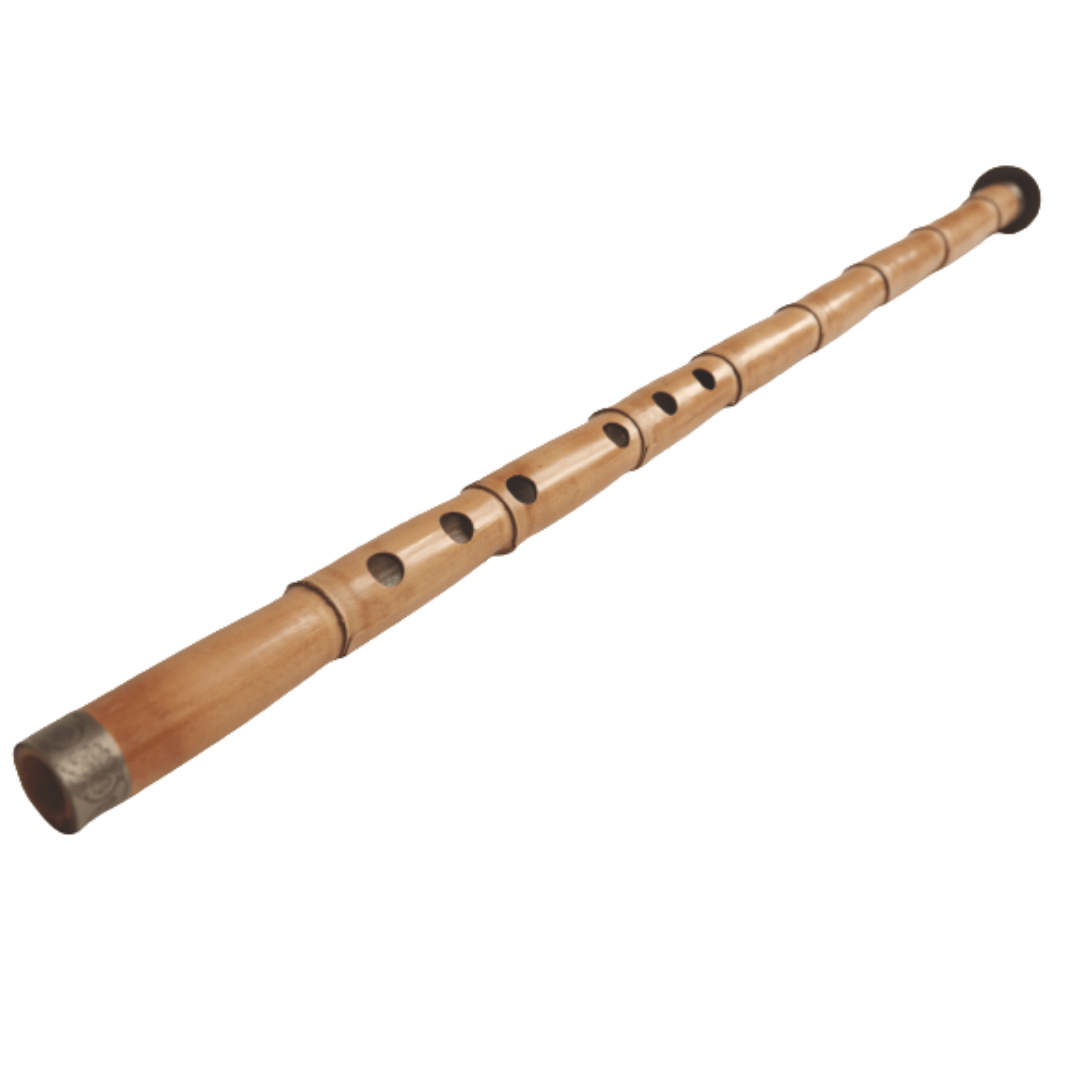
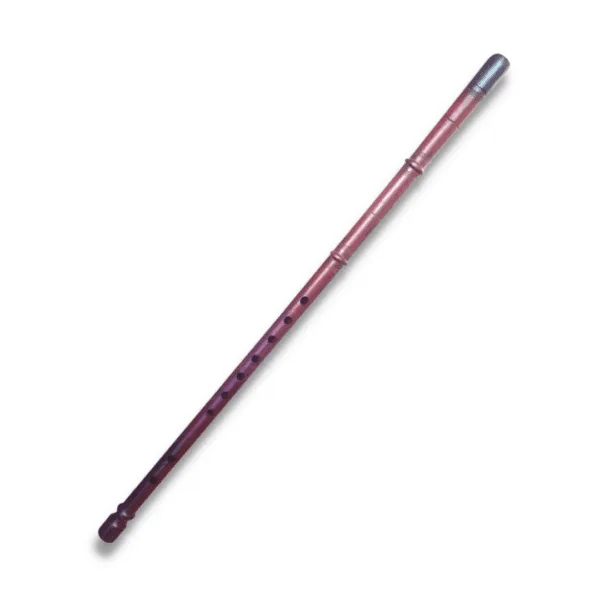
This Turkish Ney is built in Mansur tuning, pitched to A — the fuller, lower voice among the five standard Turkish ney tunings, and a common choice for players working in classical Ottoman repertoire and Mevlevi ceremony. It is hand-carved by ney maker Kemal Ucok from reed seasoned for at least fifteen years, and ships with a hard case.
Kargi reed, not bamboo
A genuine Turkish ney is made from a single length of kargi — the giant reed Arundo donax, the plant Turkish makers have used for centuries. This is not bamboo. The two look related and are often confused in instrument descriptions, but they are not interchangeable: kargi has a thinner, harder wall and a natural segment structure that bamboo does not share, and it is that structure that lets the ney speak across its full range on a single tube with no keys or joints.
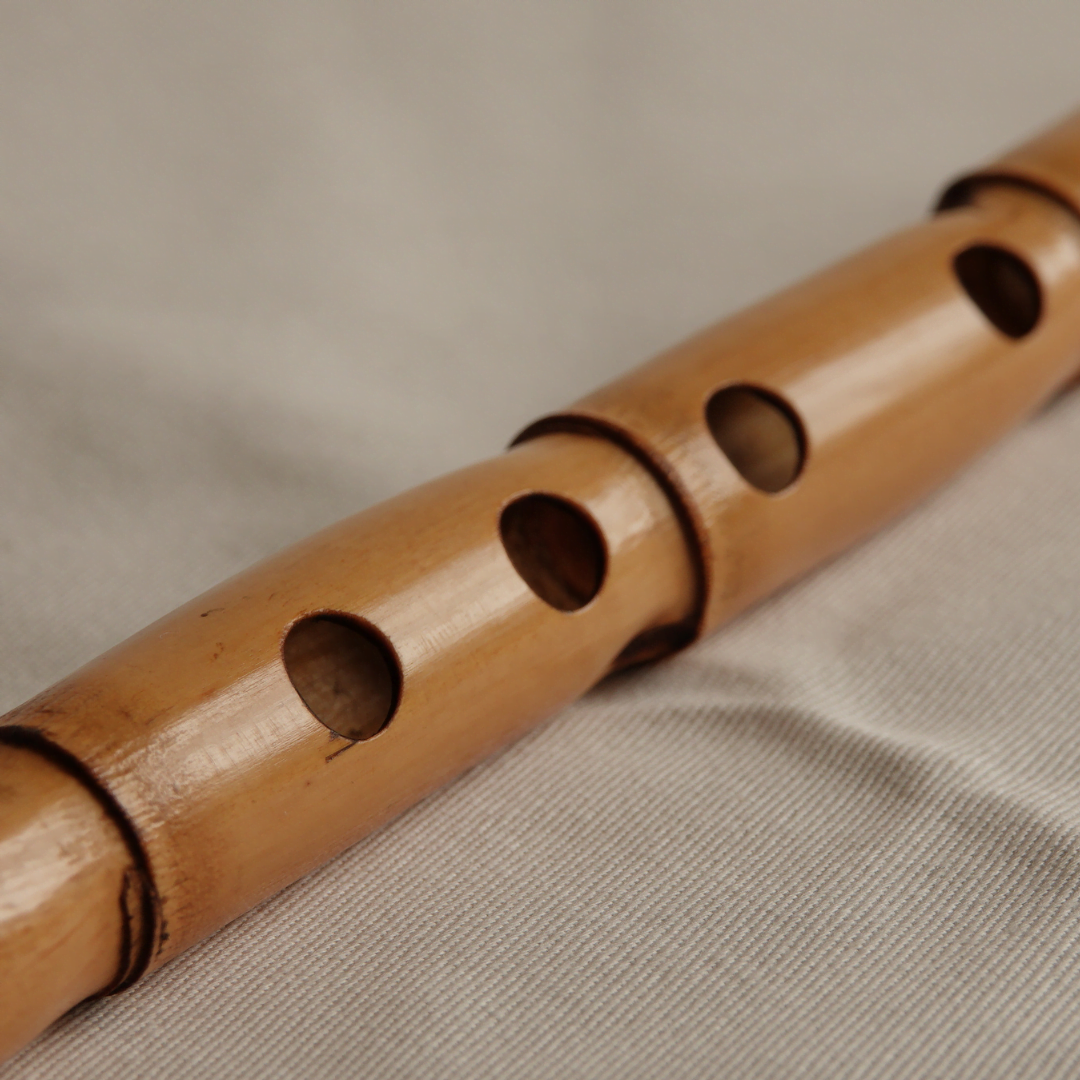
The reed for this instrument is cut in Turkey’s Aegean, Marmara and Mediterranean regions and then dried for fifteen years or more before it is worked. Seasoning is not a formality — green reed shifts as it dries, and a tube that moves after the holes are cut will never hold its intonation. Selection is severe: makers commonly report that only one or two stalks in a thousand meet the standard for wall thickness, straightness and segment spacing. A correctly proportioned ney shows nine segments along its length.
Baspare and playing position
The tube is fitted with a baspare, the conical mouthpiece seated at the top end, against which the player angles the airstream. The ney has six finger holes on the front and one thumb hole at the back, and unlike a recorder or a Western flute it gives the player no edge to blow against — tone comes entirely from lip position and breath angle, which is why the first weeks on the instrument are spent simply producing a stable note. This ney can be prepared with either the left or the right hand uppermost; specify your preference when ordering.
| Material | Kargi reed (Arundo donax) |
| Seasoning | Minimum 15 years |
| Reed origin | Aegean, Marmara, Mediterranean regions of Turkey |
| Tuning | Mansur (A) |
| Mouthpiece | Baspare, conical |
| Holes | Six front, one thumb |
| Hand preference | Left or right uppermost, made to order |
| Included | Hard case |
| Maker | Kemal Ucok, Turkey |
Which tuning to choose
Tapadum carries the five most-played tunings — Supurde (D), Bolahenk (E), Mansur (A), Yildiz (C) and Kiz (B). Bolahenk is the usual starting point for a first ney because it is shorter and the finger stretch is easier. Mansur is longer, with wider hole spacing and a deeper, rounder register — players often move to it once their embouchure is secure, and it is the tuning most associated with the classical repertoire. If you are choosing between them for ensemble work, match the ney to the vocalist or the ensemble’s reference pitch rather than to your own hand size. The full range is in the Turkish Ney collection.
Repertoire
The ney is central to the makam system and to the microtonal intervals that define Turkish music — intervals a keyed instrument cannot produce. It carries the melodic line in classical Ottoman ensembles, accompanies the Mevlevi sema, and appears across Sufi devotional music, Anatolian folk and contemporary world-music groups. Players learning the instrument can study ney technique and makam theory with Volkan Incuvez at the Tapadum Music Academy. See also our wider Turkish wind instruments, or read the instrument’s history on Wikipedia.
Care and storage
Let the reed dry fully between sessions and swab moisture from the bore before it goes back in the case. Kargi is stable once seasoned but still reacts to sudden humidity change — keep it away from radiators and out of a hot car. Handle the baspare carefully; it is the part most often damaged in transit. Hairline cracks should be seen by a maker rather than glued at home.
Tune Your Ney
Check your Mansur ney against a reference before playing — our free browser tuner reads the pitch directly and needs no installation. Open the Tapadum Tuner.
Hand-carved by Kemal Ucok, who builds Tapadum’s neys across all five traditional tunings.
Hear the instrument: https://www.youtube.com/watch?v=W0qAVcgrhK0
&url=https://tapadum.com/product/professional-turkish-ney-a-tune/&media=https://tapadum.com/wp-content/uploads/2023/05/yildiz-do.png)