
Description
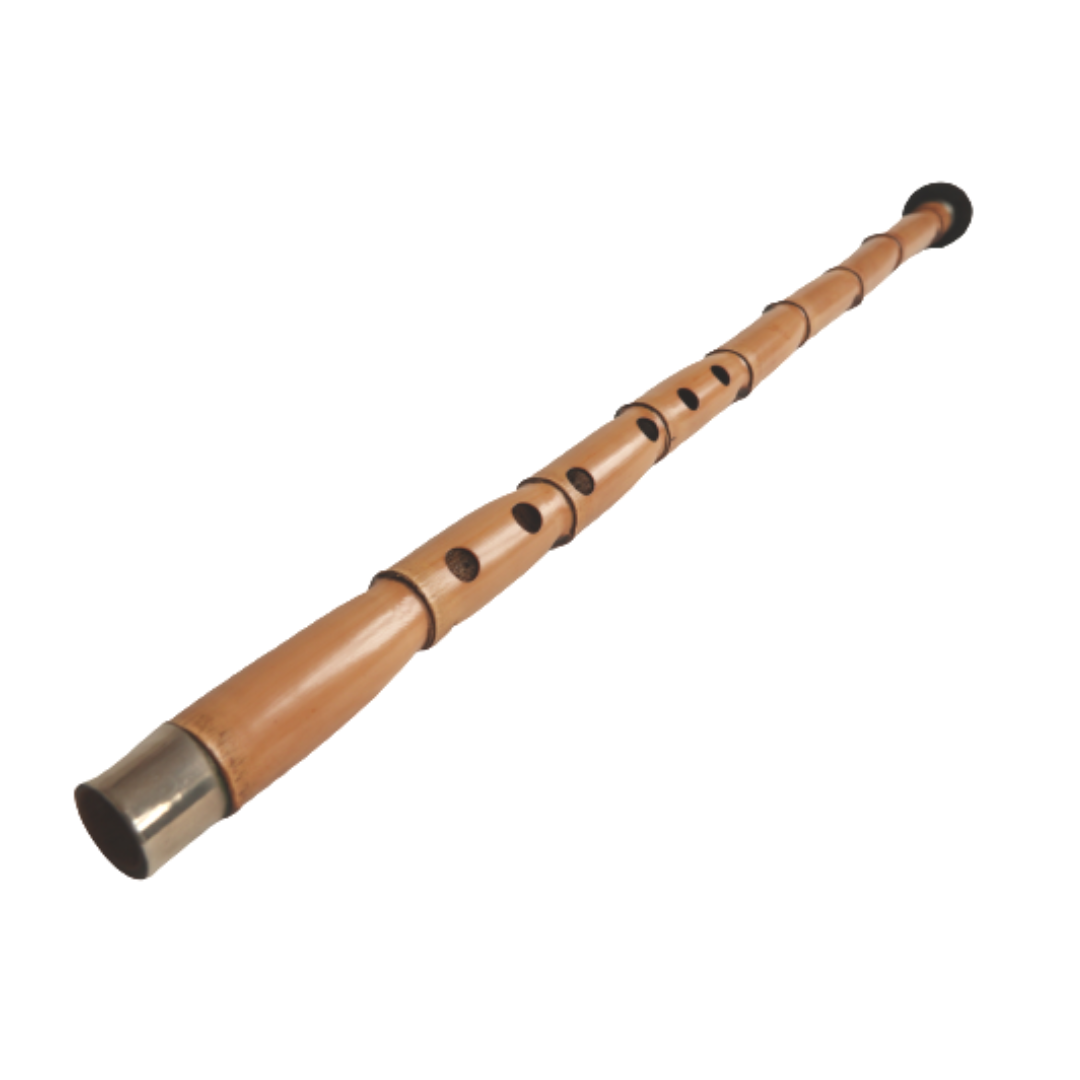
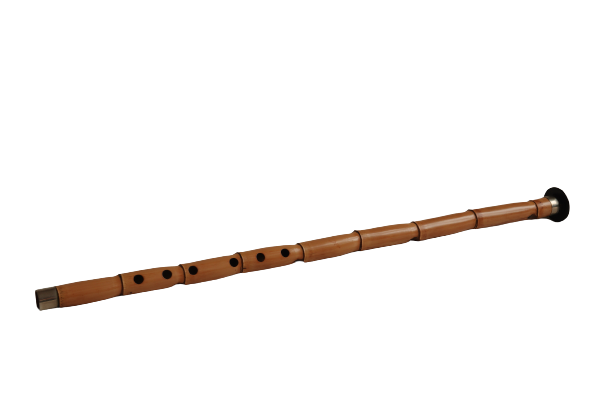
The Kiz ney is the Turkish reed flute tuned to B — one of the two long tunings, and the one players choose when they want the depth of Mansur without quite its reach. Its lower register has the full, rounded weight that classical Ottoman repertoire is written around. Hand-carved by ney maker Kemal Ucok from kargi reed seasoned at least fifteen years, supplied with a hard case.
The long end of the family
Turkish neys are sized by pitch: the lower the tuning, the longer the tube and the wider the spacing between finger holes. From longest to shortest the family runs Mansur (A), Kiz (B), Yildiz (C), Supurde (D), Bolahenk (E). Kiz sits second from the bottom — long enough for the deep, breathy voice that carries the sema and the classical repertoire, marginally more forgiving in the hand than Mansur.
The longer air column also asks more of the player: fuller breath support, steadier embouchure, and more patience across the range. This is not a first ney and is not sold as one. Players usually arrive at Kiz after a shorter tuning has taught them tone, and stay with it for the register it opens up.
Kargi reed, not bamboo
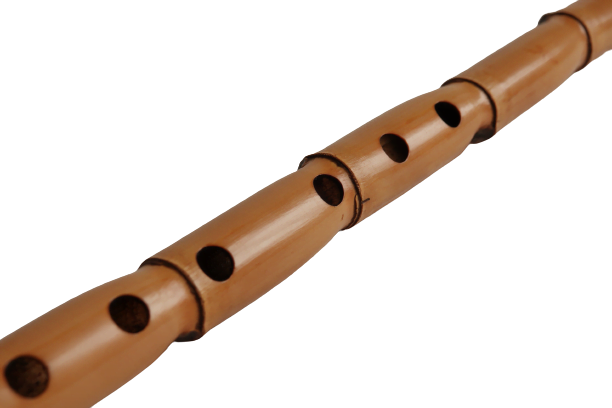
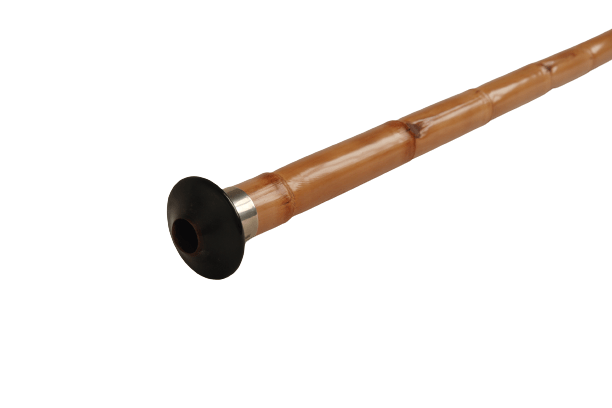
A genuine Turkish ney is made from a single length of kargi — the giant reed Arundo donax. This is not bamboo. The plants resemble one another and are constantly confused in instrument descriptions, but kargi has a thinner, harder wall and a natural segment structure bamboo does not share; that structure is what allows one unbroken tube to speak across its full range without keys or joints. On a long tuning like Kiz it matters more, not less — the wall must stay even over a greater length. The reed is cut in Turkey’s Aegean, Marmara and Mediterranean regions and dried fifteen years or more, and only one or two stalks in a thousand meet the standard.
| Tuning | Kiz (B) — second longest of the five |
| Material | Kargi reed (Arundo donax) |
| Seasoning | Minimum 15 years |
| Reed origin | Aegean, Marmara, Mediterranean regions of Turkey |
| Mouthpiece | Baspare, conical |
| Holes | Six front, one thumb |
| Hand preference | Left or right uppermost, made to order |
| Included | Hard case |
| Maker | Kemal Ucok, Turkey |
Who this tuning suits
Kiz suits players with a secure embouchure who want the lower register as their working voice, performers in classical Ottoman and Mevlevi settings, and anyone whose ensemble sits around B. Players still building tone are better served by Bolahenk (E), the shortest tuning and the standard teaching ney. Those who want to go one step deeper still should compare Mansur (A).
Repertoire
The ney is central to the makam system and to the microtonal intervals that define Turkish music — intervals a keyed instrument cannot produce. In its lower tunings it takes the melodic line in classical Ottoman ensembles and accompanies the Mevlevi sema, where the depth of the register does much of the expressive work. See the full range in the Turkish Ney collection, explore our wider Turkish wind instruments, or read the instrument’s history on Wikipedia.
Care and storage
Let the reed dry fully between sessions and swab moisture from the bore before the ney goes back in its case. Kargi is stable once seasoned but reacts to sudden humidity change — keep it away from radiators and out of a hot car. Handle the baspare carefully; it is the part most often damaged in transit. Hairline cracks belong with a maker, not with household glue.
Tune Your Ney
Check your Kiz against a reference before playing — our free browser tuner reads the pitch directly and needs no installation. Open the Tapadum Tuner.
Hand-carved by Kemal Ucok, who builds Tapadum’s neys across all five traditional tunings.
Hear the Kiz ney: https://www.youtube.com/watch?v=0kDoY3Sl7LA
A professional player demonstrating the instrument: https://www.youtube.com/watch?v=W0qAVcgrhK0


Reviews
There are no reviews yet.