


Description
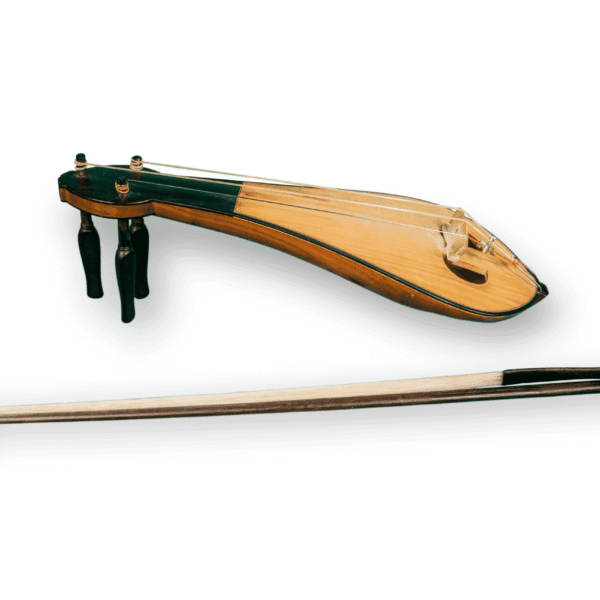
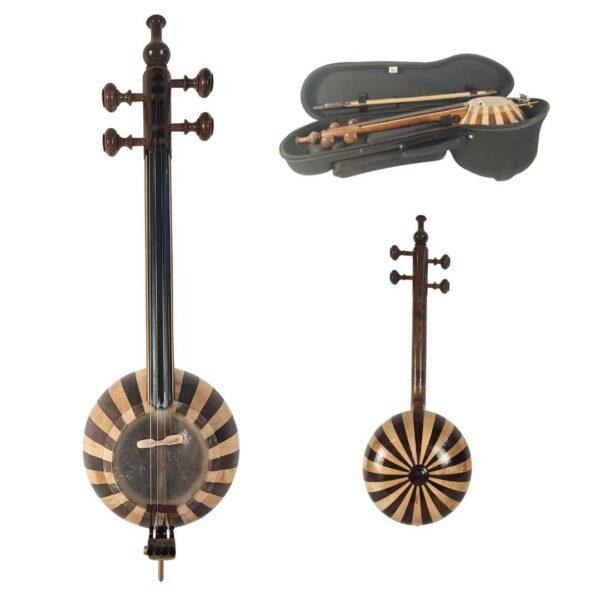
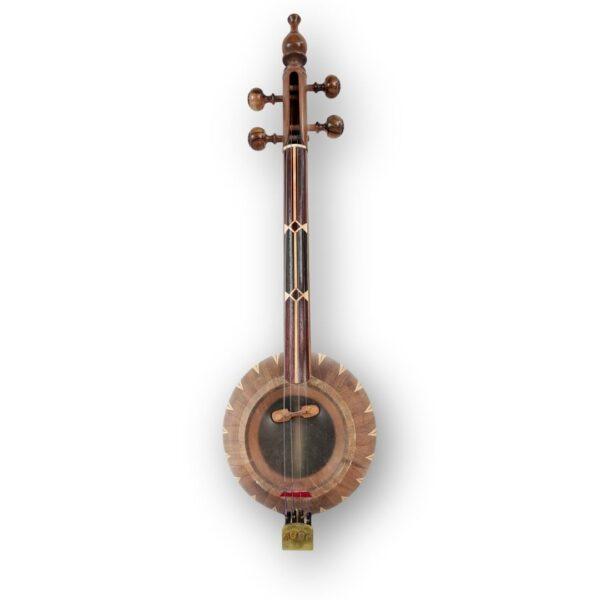
The Black Sea Kemence (Karadeniz Kemencesi) is the narrow, three-stringed bowed lute that carries the dance music of Turkey’s Black Sea coast. Played upright against the knee or held at the chest, it produces a bright, cutting voice designed to be heard over a crowd — the sound that drives the fast, asymmetric rhythms of the horon. This instrument is carved and assembled at our Izmir workshop and ships with a horsehair bow and a soft case.
Mulberry body: why this wood defines the Black Sea kemence
The body is carved from a single block of mulberry wood — the traditional choice across Anatolian instrument making, and the wood that gives this kemence its characteristic voice. Mulberry is dense enough to project without damping, yet elastic enough to keep the tone from turning harsh at the top of the register. Because the body is hollowed from one piece rather than assembled from staves, the whole shell vibrates as a unit, which is what gives the Black Sea kemence its immediate, direct response under the bow.
The keyboard and the pegs are both cut from rosewood, chosen for its hardness: the keyboard takes constant finger contact without wearing, and rosewood pegs hold their setting rather than slipping mid-performance. The tailpiece is ebony, and the bridge is maple — a bridge wood that transmits string energy efficiently and keeps the instrument’s upper register clear rather than shrill.
Three strings, one bow, no frets
The Black Sea kemence carries three strings tuned in fourths and is played without frets, with the fingernails stopping the strings from the side rather than pressing them down. This technique is what produces the instrument’s rapid ornamentation and its sliding, vocal transitions between notes. The instrument is supplied with a horsehair bow, short and light compared to a violin bow, matched to the quick bow changes the repertoire demands.
| Body | Carved mulberry, single piece |
| Keyboard & pegs | Rosewood |
| Tailpiece | Ebony |
| Bridge | Maple |
| Strings | Three, fretless |
| Bow | Horsehair |
| Included | Bow, soft case |
| Origin | Izmir, Turkey |
Who this instrument is for
This is a performance-grade instrument rather than a decorative one. It suits players already working in Black Sea repertoire, folk musicians adding a regional voice to an ensemble, and committed beginners who intend to study the instrument seriously — the fretless fingerboard and the nail-stopping technique both reward practice and punish neglect. Players coming from violin should expect to relearn their left hand entirely; the two instruments share a bow and almost nothing else.
Repertoire and tradition
The kemence is inseparable from the horon, the circle dance of the eastern Black Sea, where its repeated, driving figures sit in 7/16 and 5/8 time. Beyond that core repertoire it appears in Laz and Pontic song traditions, in wedding and celebration music across the region, and increasingly in contemporary Anatolian folk and world-music ensembles that want its unmistakable attack. Browse the full Black Sea Kemence collection, or compare it with the Classical Kemence of Ottoman court music — a rounder, deeper instrument built for an entirely different repertoire. For background on the instrument’s regional history, see Kemence of the Black Sea.
Care and storage
Wipe rosin dust from the body and strings after each session with a dry cloth. Keep the instrument in its case away from direct heat and dry air — carved mulberry responds to humidity swings, and a cracked shell cannot be repaired invisibly. Loosen the bow hair when you put the instrument away. If the pegs begin to slip in dry weather, a small amount of peg compound solves it; do not force them.
Tune Your Kemence
Set your three strings in fourths before you play — our free browser tuner works for fretless bowed instruments and needs no installation. Open the Tapadum Tuner.
Built at Tapadum’s Izmir workshop, where our string and percussion ateliers have produced Anatolian instruments for the shop and its showroom in Brisighella, Italy.


Reviews
There are no reviews yet.