



Description
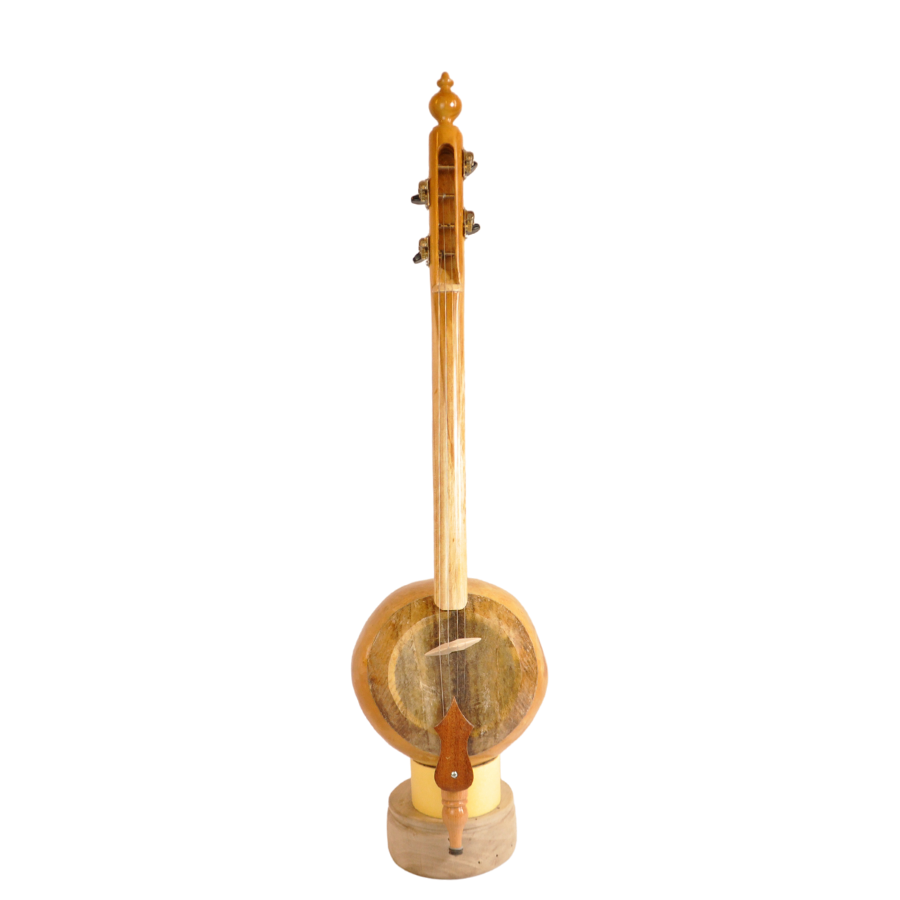
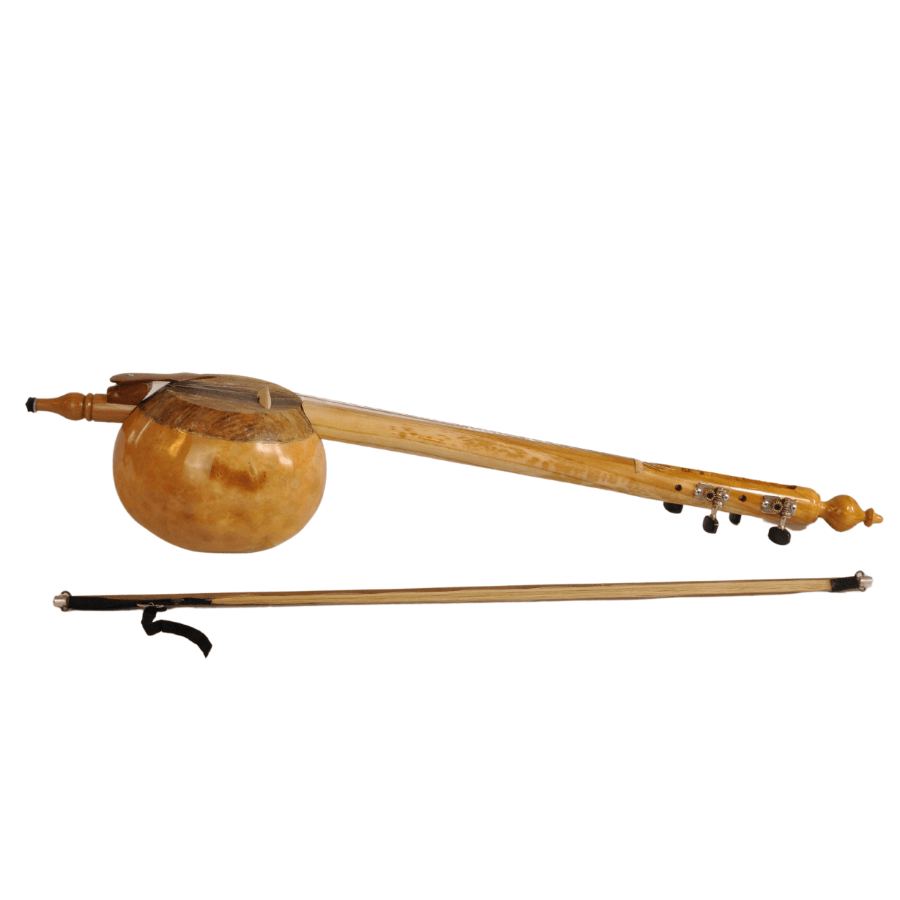
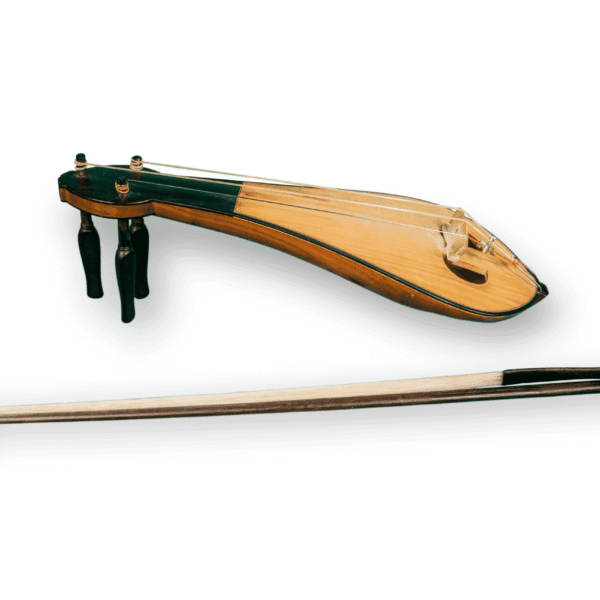
The kabak kemane is a bowed folk fiddle from Turkey’s Aegean and Teke regions, built around a hollowed gourd — kabak — that gives the instrument its warm, reedy voice. This traditional Turkish kabak kemane is fretless and carries three strings, played upright on the knee and rotated toward the bow much like the kamancheh spike fiddle of the wider region.
Materials & Body
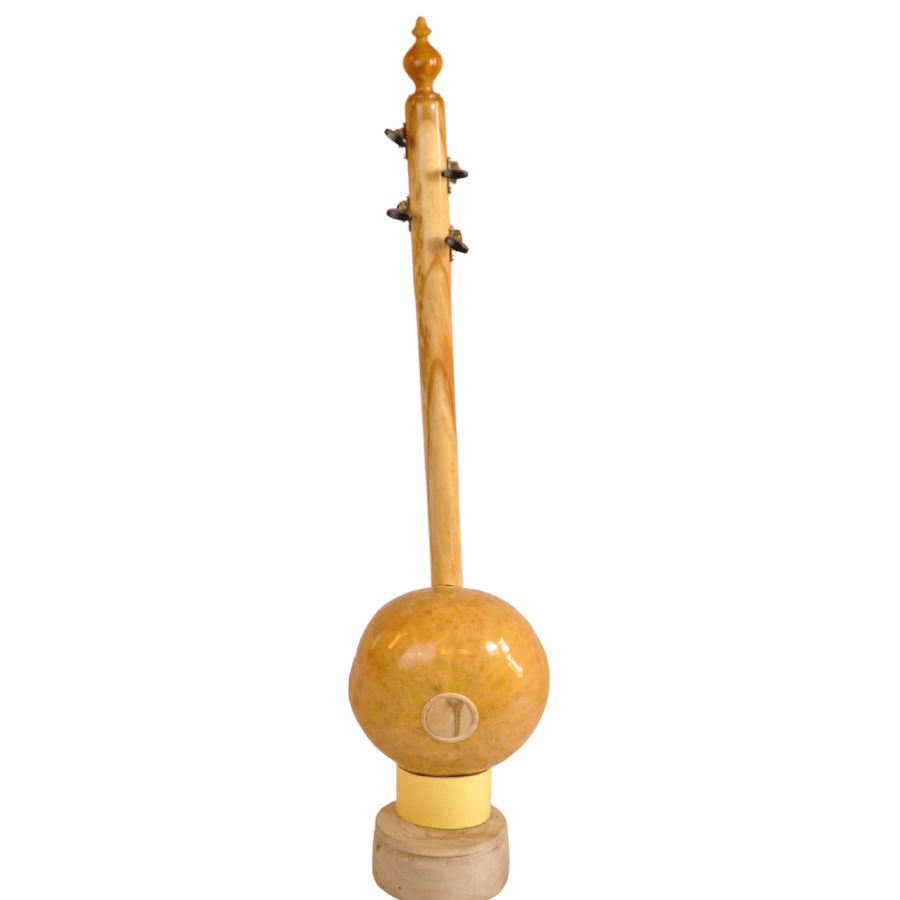
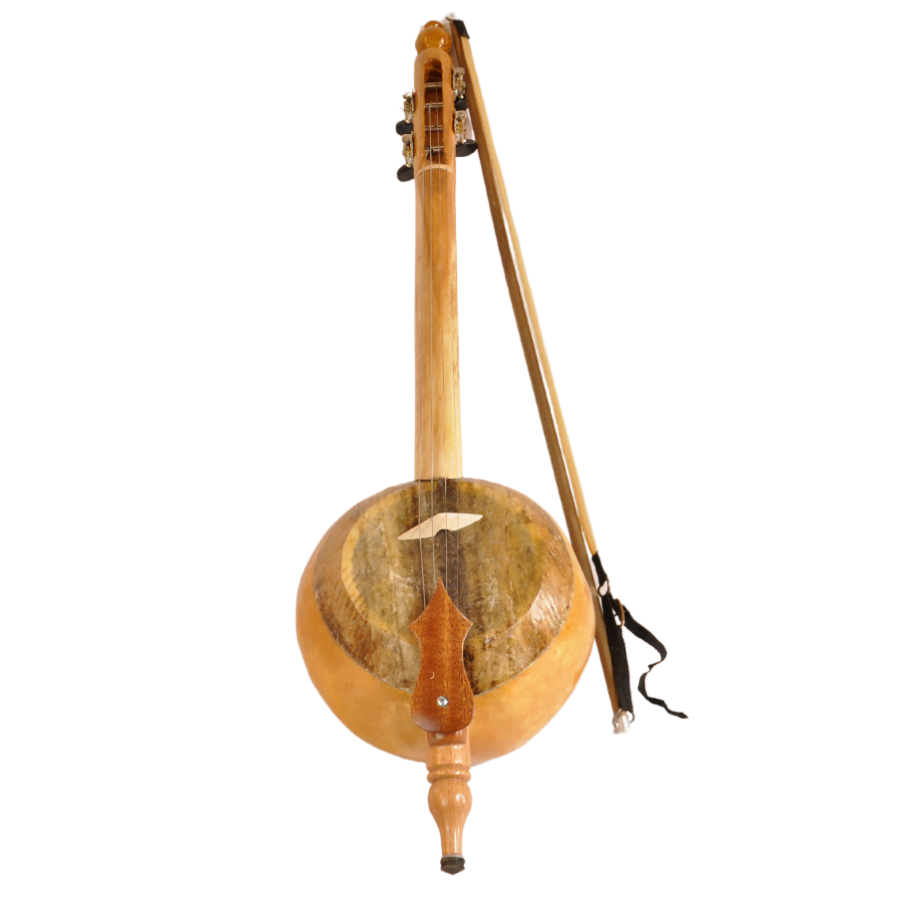
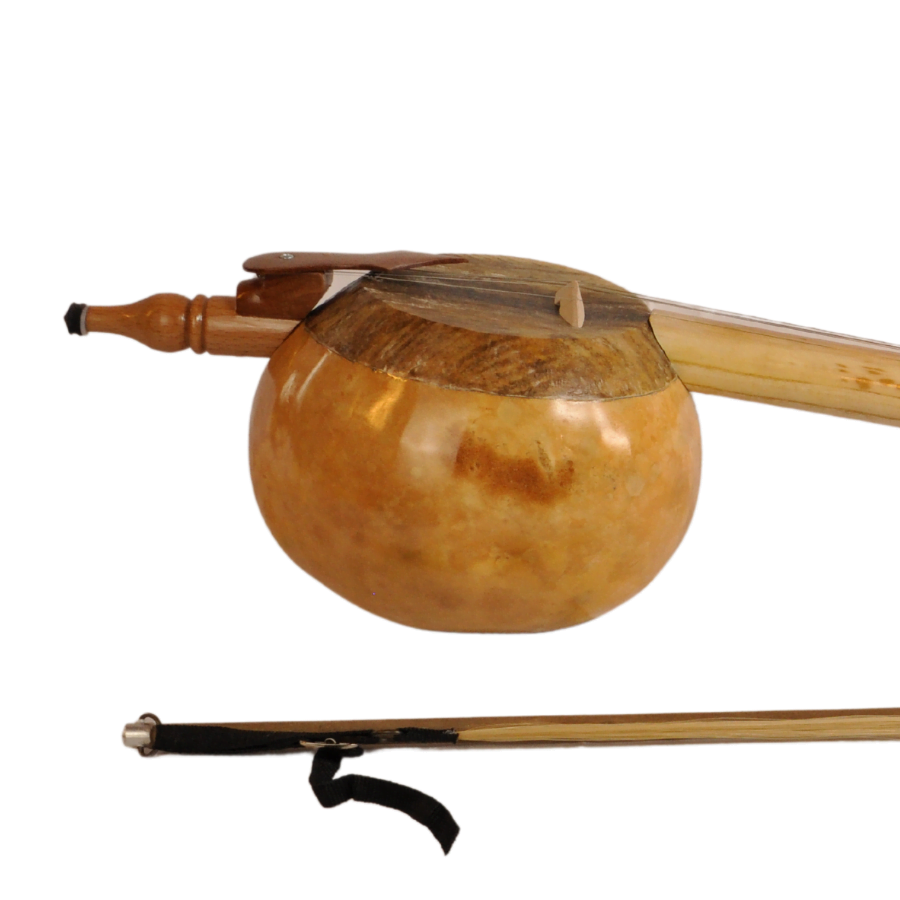
The body is a dried water gourd, roughly 30 cm across, hollowed and left open at the front. That opening is covered with a thin animal-skin membrane — traditionally cattle pericardium — which serves as the soundboard and lends the kabak kemane its characteristic buzzing warmth. Because the resonator is a gourd rather than a carved wooden bowl, the instrument stays remarkably light, which is part of why it moves so easily between village gatherings and the concert stage.
Strings, Neck & Bow
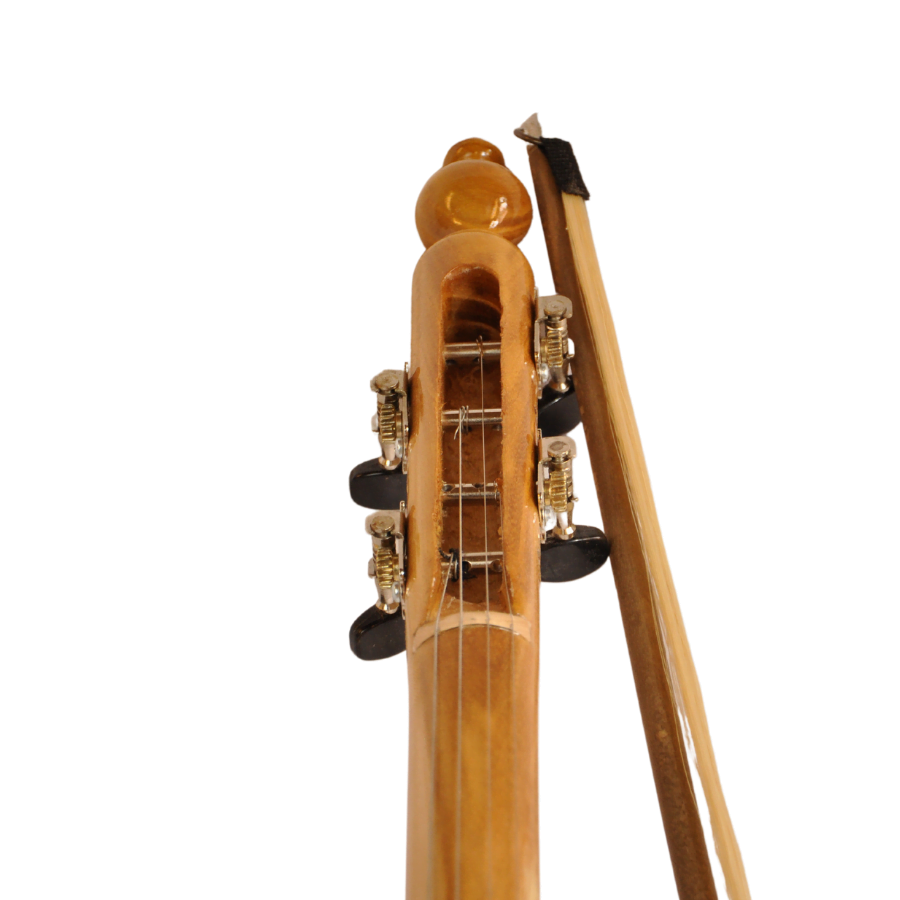
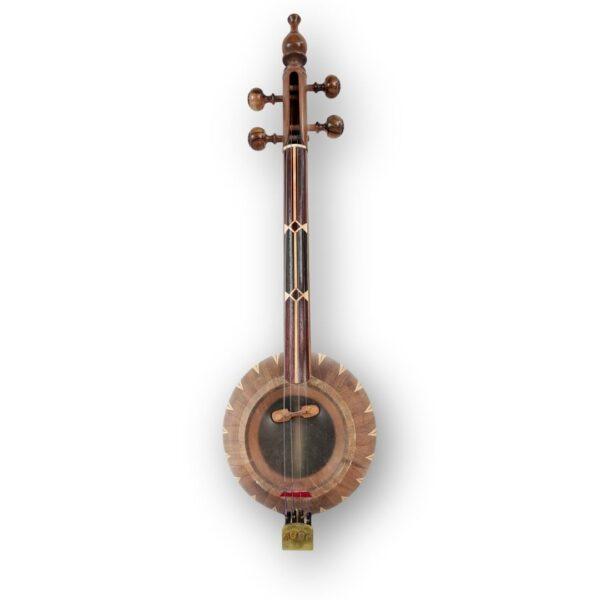
A long, unfretted neck rises from the gourd and carries three metal strings. Where older instruments used gut, modern makers fit steel strings that can be tuned to move chromatically, letting the player glide through the microtonal pitches at the heart of Turkish folk melody. The strings are sounded with a horsehair bow, and because there are no frets, pitch comes entirely from finger placement — one reason the kabak kemane rewards an ear already trained on Turkish makam.
Technical Specifications
| Feature | Specification |
|---|---|
| Body | Dried gourd (kabak), ~30 cm |
| Soundboard | Animal-skin membrane (traditionally cattle pericardium) |
| Strings | 3 metal strings |
| Neck | Long, unfretted (fretless) |
| Bow | Horsehair bow (included) |
| Overall length | ~65 cm |
| Country of origin | Turkey (Aegean / Teke region) |
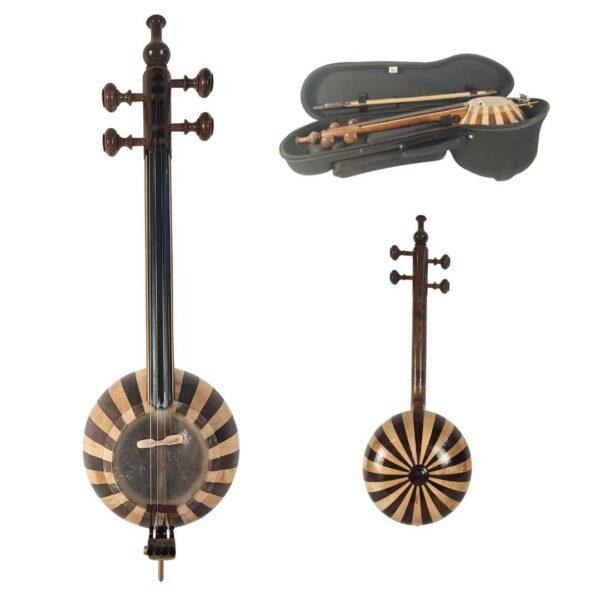
| Included accessories | Gig bag and bow |
Playing & Sound of the Kabak Kemane
The gourd resonator produces a warm, gently nasal tone that carries clearly against other folk instruments, from a solo turku to a full ensemble. It suits intermediate and advanced players most naturally: the fretless neck and upright, rotating bow technique take time to master, though a committed beginner can certainly start here. Collectors value it for its craftsmanship and its place in Anatolian tradition. If you want to explore Turkey’s two great regional fiddles together, set it beside a classical kemence.
Musical Traditions
The kabak kemane is the signature melody instrument of the Teke region — Antalya, Isparta, Burdur and Mugla — where it drives Yoruk Turkmen dance tunes and long-form turku. Beyond that heartland it also appears in Turkish classical settings, Sufi-influenced pieces, and contemporary and ambient recordings, where its breathy sustain suits more meditative textures. Our full guide to Turkey’s pumpkin-bodied folk fiddle traces its history and regional variants, and you can see how it sits within our wider range of Turkish string instruments.
Care & Maintenance
Keep the kabak kemane in its gig bag in a cool, dry place, away from direct sun and radiators — both the skin membrane and the gourd react to swings in humidity. Check the membrane now and then for slackness or cracking, wipe the neck and strings with a soft cloth after playing, and loosen the bow hair before storing it. For background on the instrument’s history and its regional forms, the Kabak kemane reference and the Turkish Music Portal are reliable starting points.


Reviews
There are no reviews yet.