Baglama - Saz
The Turkish baglama (also called the saz) is the central long-necked fretted lute of Turkish music — a family of instruments ranging from the small, high-pitched cura to the large, deep-voiced meydan sazı, played across Anatolian folk repertoire, Turkish classical music, and contemporary fusion projects. Its movable tied frets enable microtonal practice across multiple regional uzun hava and kırık hava styles.
The baglama family spans seven principal sizes. The cura is the smallest with a bright, high-register voice. The çöğür is short-necked with a warm, resonant tone suited to chamber playing. The kısa sap baglama offers compact reach without losing tonal depth. The uzun sap baglama, with its long neck, is the most widely recognized type. The tambura has a crisp, bright projection ideal for vocal accompaniment. The divan sazı, larger-sized, occupies Turkish classical settings. The meydan sazı, the largest of the family, delivers powerful low-register sounds for outdoor and ensemble use.
Construction uses a carved-bowl body — most often mulberry, juniper, or maple — paired with a spruce soundboard. The long neck carries movable tied gut or nylon frets that can be repositioned for makam practice, supporting precise quarter-tone and koma intonation. Most baglamas carry three double or triple courses of strings tuned in fourths, played with a plectrum (tezene) or with the fingers (şelpe technique).
The baglama is the foundational solo voice of Anatolian aşık (bardic) tradition, alongside dance and song repertoire across Turkish folk regions. It also appears prominently in Turkish classical chamber work, contemporary fusion ensembles, and as the parent design that inspired the electric caglama hybrid built within the string instruments family.
At Tapadum, Cihan Doldur builds çöğür-variant baglamas with attention to chamber-suited voicing and intonation precision. Each baglama in our collection passes individual setup checks — tied fret positioning, neck-to-bowl angle, plectrum response — with our string instruments specialist Sertan Sarioglu before shipping from our Brisighella, Italy showroom.
Baglama Tuning: Kara Düzen and Bağlama Düzeni
Most players begin in kara düzen — also called bozuk düzen — with the three courses tuned A–D–G from the lowest course upward. It is the system the bulk of Turkish folk repertoire assumes, and the one most teachers start with. The second principal system is bağlama düzeni: A–D–E on short-neck instruments and D–G–A on longer scales, closely associated with aşık repertoire and with fingerstyle şelpe playing.
Because the frets are tied rather than fixed, microtonal positioning for a given makam is set by moving the frets themselves, not by retuning the strings. Neck length decides what a string set can safely hold, which is why long-neck and short-neck sets are not interchangeable. Our step-by-step guide to tuning a long-neck baglama covers string order, reference pitches, and the setup checks a carved bowl needs as the seasons change.
Turkish Baglama or Greek Baglamas?
The two names cross often in search, but these are different instruments. The Turkish baglama is the long-necked Anatolian lute described above, with movable tied frets for makam practice. The Greek baglamas — also written baglamadaki — is the smallest member of the bouzouki family, traditionally carved with a one-piece soundbox and neck, and it belongs to early rebetiko rather than Anatolian folk repertoire. If that is the instrument you are looking for, it sits in our Greek bouzouki collection alongside the tzouras.
Baglama Buying Guide — Choosing the Right Saz for Sale
Every baglama and saz for sale at Tapadum is set up by hand, so the choice starts with neck length. A short-neck (kısa sap) baglama is the practical modern choice for most players: the compact reach makes chord positions and fast left-hand work easier, and it is the format most contemporary Turkish players learn on. A long-neck (uzun sap) saz carries the classic aşık voice and the extended fret range traditional repertoire was written for — the right pick if you follow older regional styles or study with a traditionalist teacher. Smaller family members such as the cura suit travel and high-register ensemble color.
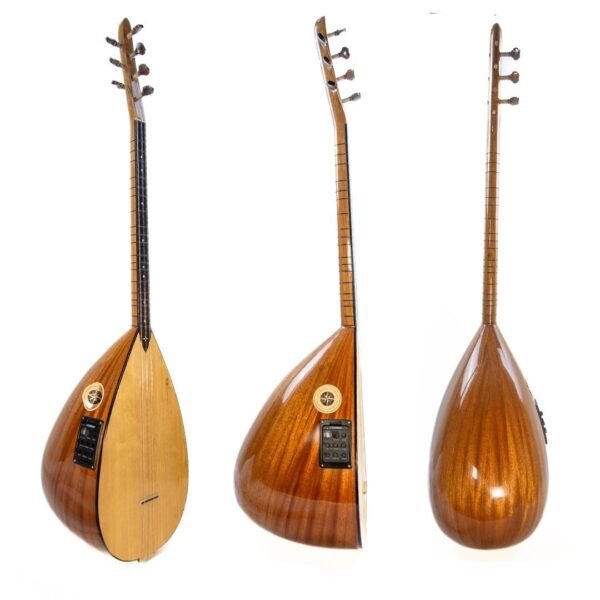
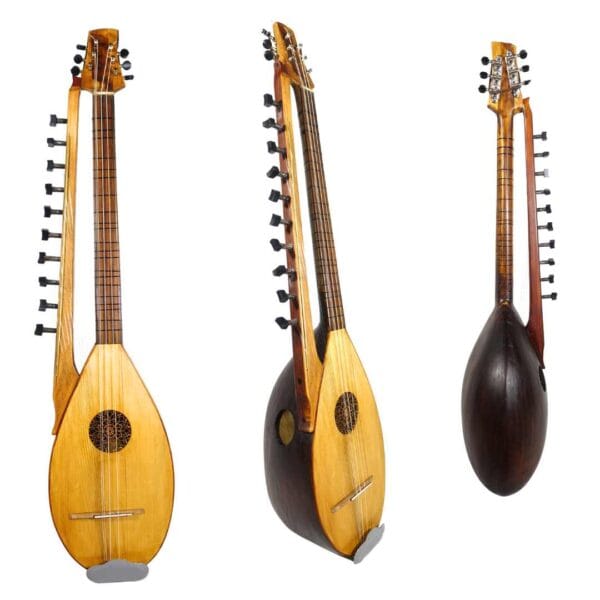
The second decision is acoustic or electro-acoustic. A purely acoustic baglama gives the untouched bowl resonance that suits home practice, lessons, and unplugged sessions. If you perform on stage, record, or play in mixed ensembles, an electro-acoustic model — like our electro baglama and electro-acoustic short-neck saz — adds a pickup without changing the playing feel, so you can go straight into an amplifier or interface. Players drawn to fingerstyle şelpe and wider chordal writing should also look at the guitar-spaced Ogur Sazi, a modern relative of the saz family.
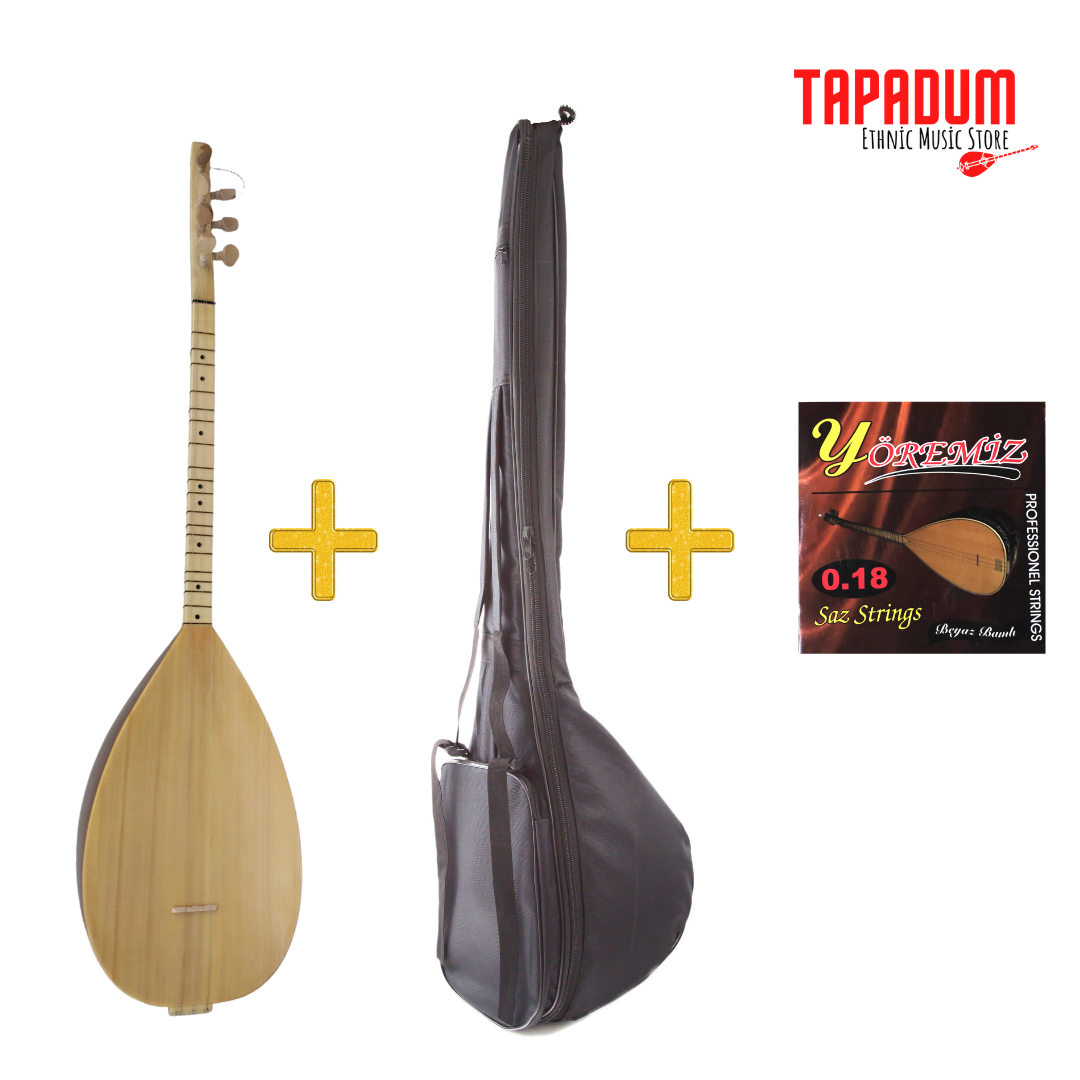
Complete the setup from our saz & baglama accessories: string sets are matched to neck length (long-neck and short-neck sets are not interchangeable), and a padded gig bag or stand protects the carved bowl between sessions. Every instrument ships with its tied frets positioned and checked; worldwide shipping & 15-day return apply, and our team will help you match size, tuning, and string gauge to your repertoire if you are unsure where to start.
Frequently Asked Questions
What is the baglama (saz)?
What sizes exist in the baglama family?
How is the baglama tuned?
What musical traditions use the baglama?
Which baglama should a beginner buy — short neck or long neck?
Is the Greek baglamas the same instrument as the Turkish baglama?