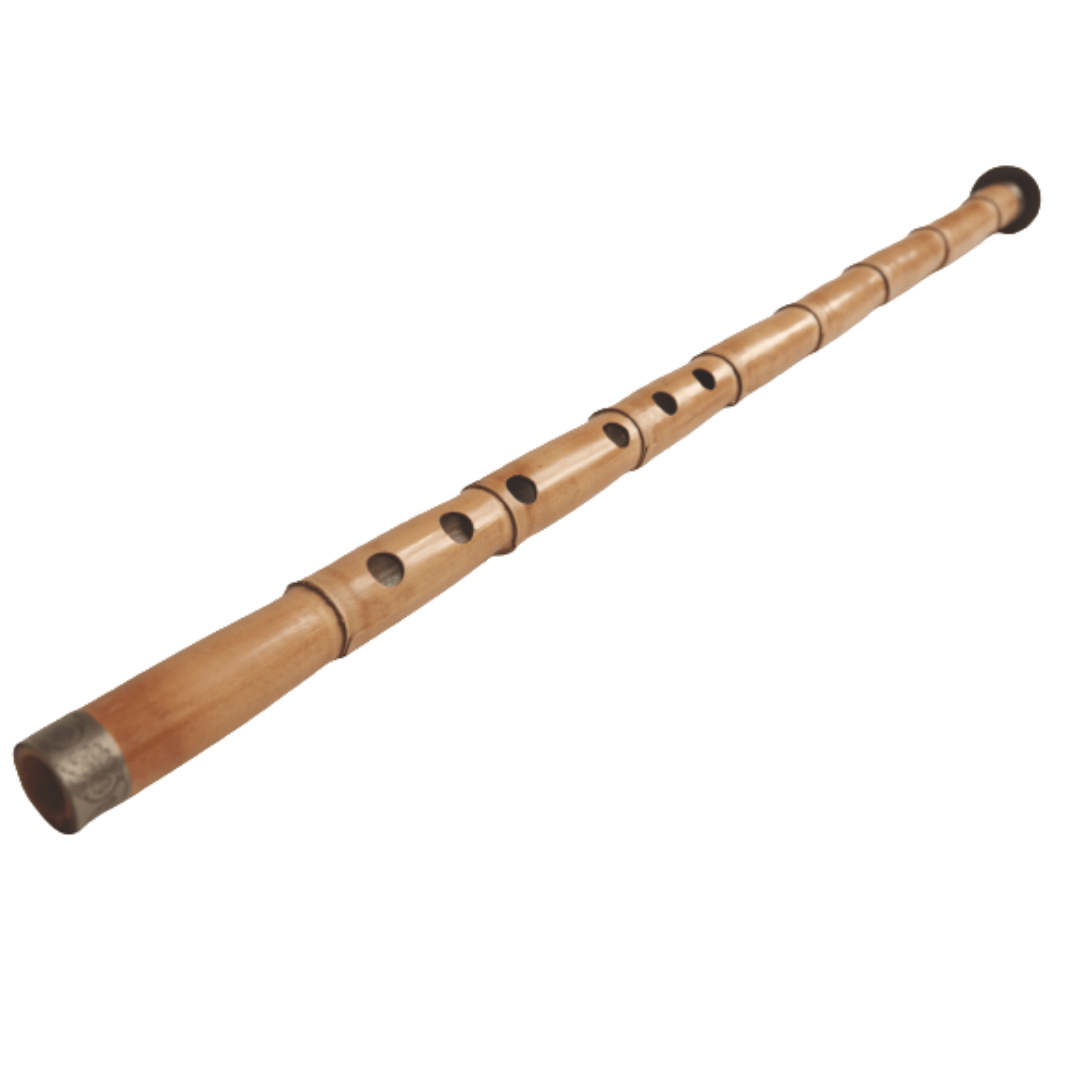
Ney (Turkish)
The Turkish Ney is the end-blown reed flute at the heart of classical Ottoman, Sufi, and folk music — an instrument whose breathy, vocal tone has carried Anatolian melody for centuries. Tapadum’s collection brings together professional-grade neys in the five core tunings, each made to the standard expected on the concert stage and in the Mevlevi ceremony alike.
A genuine Turkish Ney is made from a single length of reed cane (kamis), traditionally sourced from Turkey’s Aegean, Marmara, and Mediterranean regions and aged for years before it is worked. The cane is fitted with a baspare — the conical mouthpiece, historically of horn — and finished with binding rings that protect the body. Our neys are made by ney master Kemal Ucok, whose work balances accurate intonation with the warm, open voice the ney is prized for. Every instrument in this collection is a single professional tier priced at €245, so your choice is guided by tuning and register rather than by budget.
Choosing Your Turkish Ney — Which Tuning?
The ney is neither fretted nor keyed: each tuning is a separate reed of a different length, so players choose the instrument by the makam range, ensemble, or vocal pitch they work with. The five most-played Turkish tunings, from shortest and brightest to longest and deepest, are:
- Bolahenk (E) — the shortest reed and the one most teachers place in a beginner’s hands first; compact finger spacing and a bright middle-register voice.
- Supurde (D) — one step below Bolahenk, slightly longer, and warmer through the lower half of its range; a common second ney.
- Yildiz (C) — the middle tuning of the five and the usual all-rounder when you want a single ney that handles most repertoire.
- Mansur (A) — the fuller, lower voice, valued in classical Ottoman repertoire and the Mevlevi ceremony.
- Kiz (B) — one of the two long tunings, chosen for the depth of Mansur with a slightly shorter reach.
If you are buying a first ney, Bolahenk (E) is the usual starting point for its comfortable finger spacing; Supurde (D) and Mansur (A) are also frequent first choices, depending on the pitch of the singers and instruments you play with.
Beyond its sound, the ney is inseparable from the makam system and the microtonal intervals that define Turkish music. The fine tuning of those intervals is made with the breath and the angle of the lips against the baspare rather than with keys — part of why the ney rewards patient practice. If you are learning the instrument, you can study ney technique and microtonal music theory directly with Volkan Incuvez, who teaches ney and makam theory at the Tapadum Music Academy.
Because the ney is a natural reed instrument, a little care keeps it stable: warm it gently before playing, let it dry after use, and keep it in its case away from sudden changes in humidity. Every ney here is selected and checked in our workshop, ships with a protective case, and is inspected at our Brisighella, Italy showroom before dispatch. Worldwide shipping & 15-day return.
Explore the wider range of Turkish wind instruments, or read more about the ney’s history in Sufi music on Wikipedia.
Frequently Asked Questions
What is a Turkish Ney made of?
Which Turkish Ney tuning should a beginner choose?
What are the five Turkish Ney tunings?
Is the Turkish Ney difficult to learn?
Does the Turkish Ney come with a case?
How much does a Turkish ney cost?
Where can I buy an authentic Turkish ney?