
Description
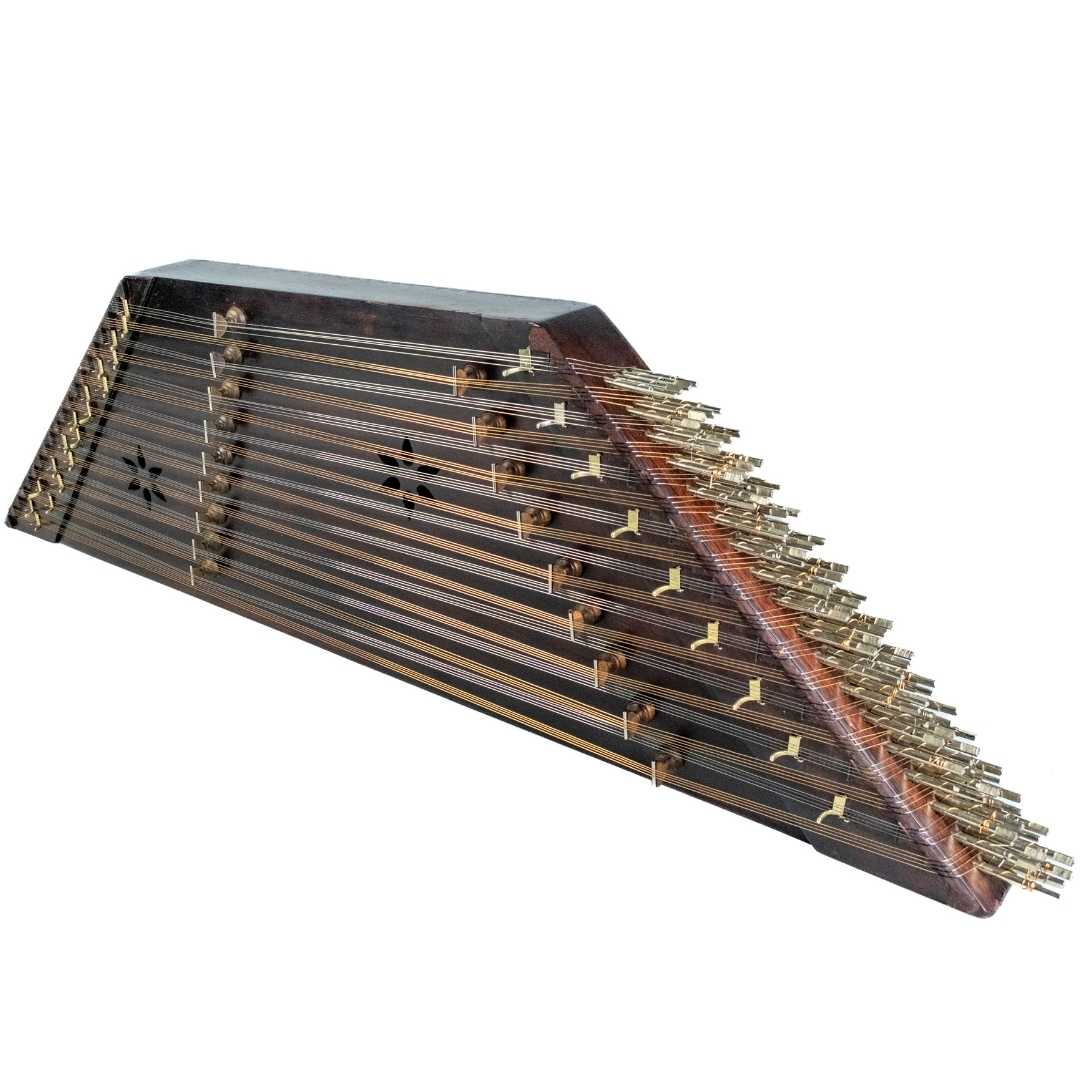
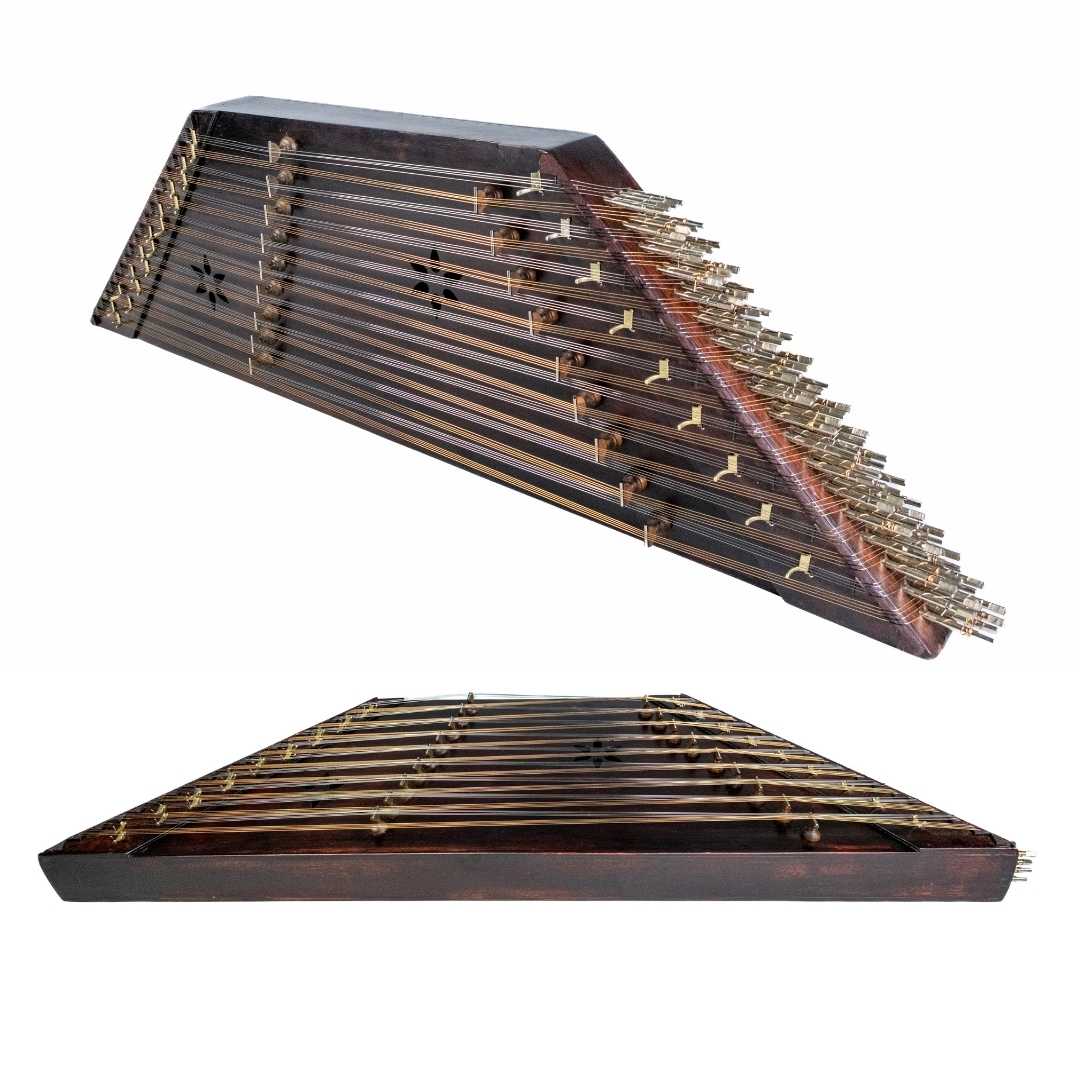
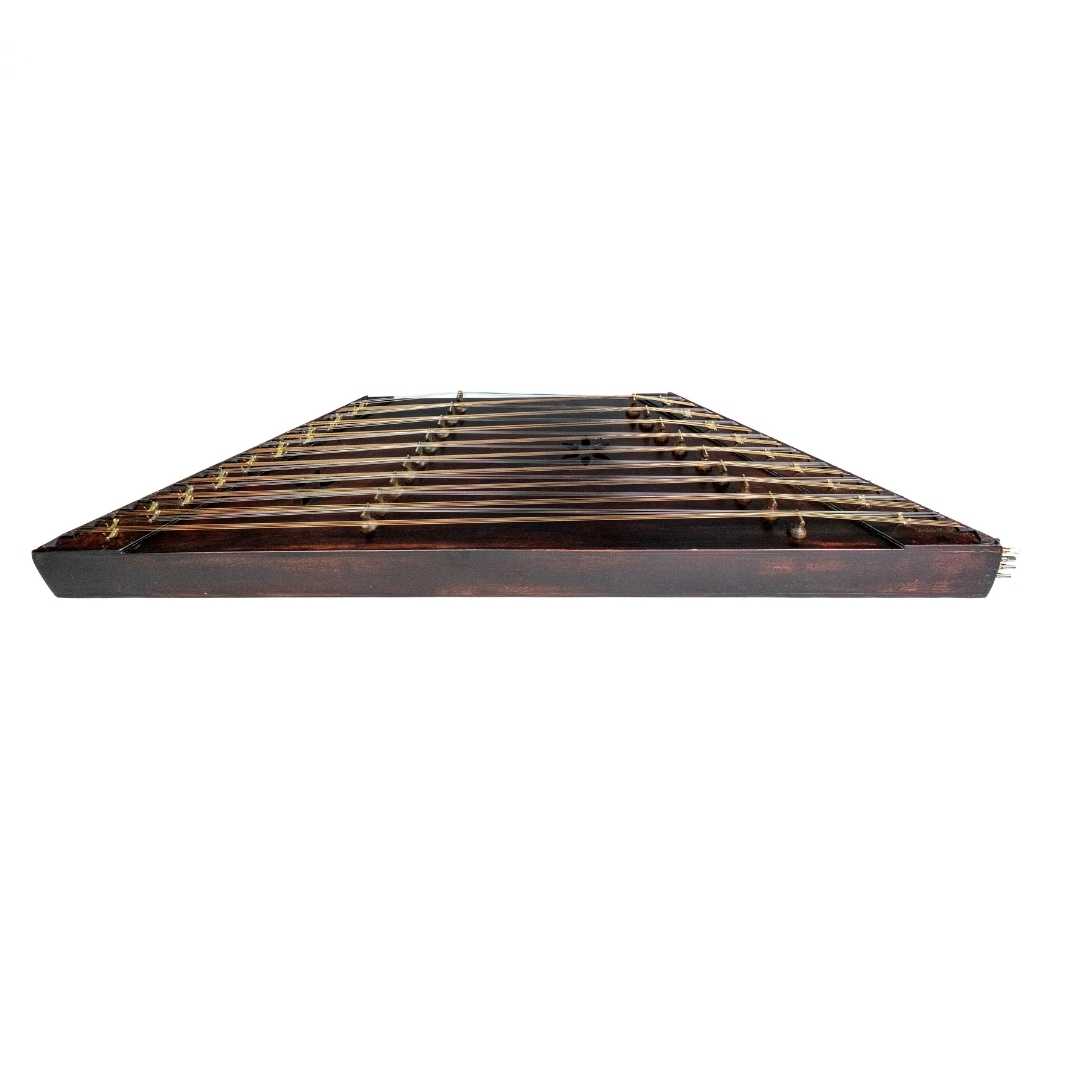
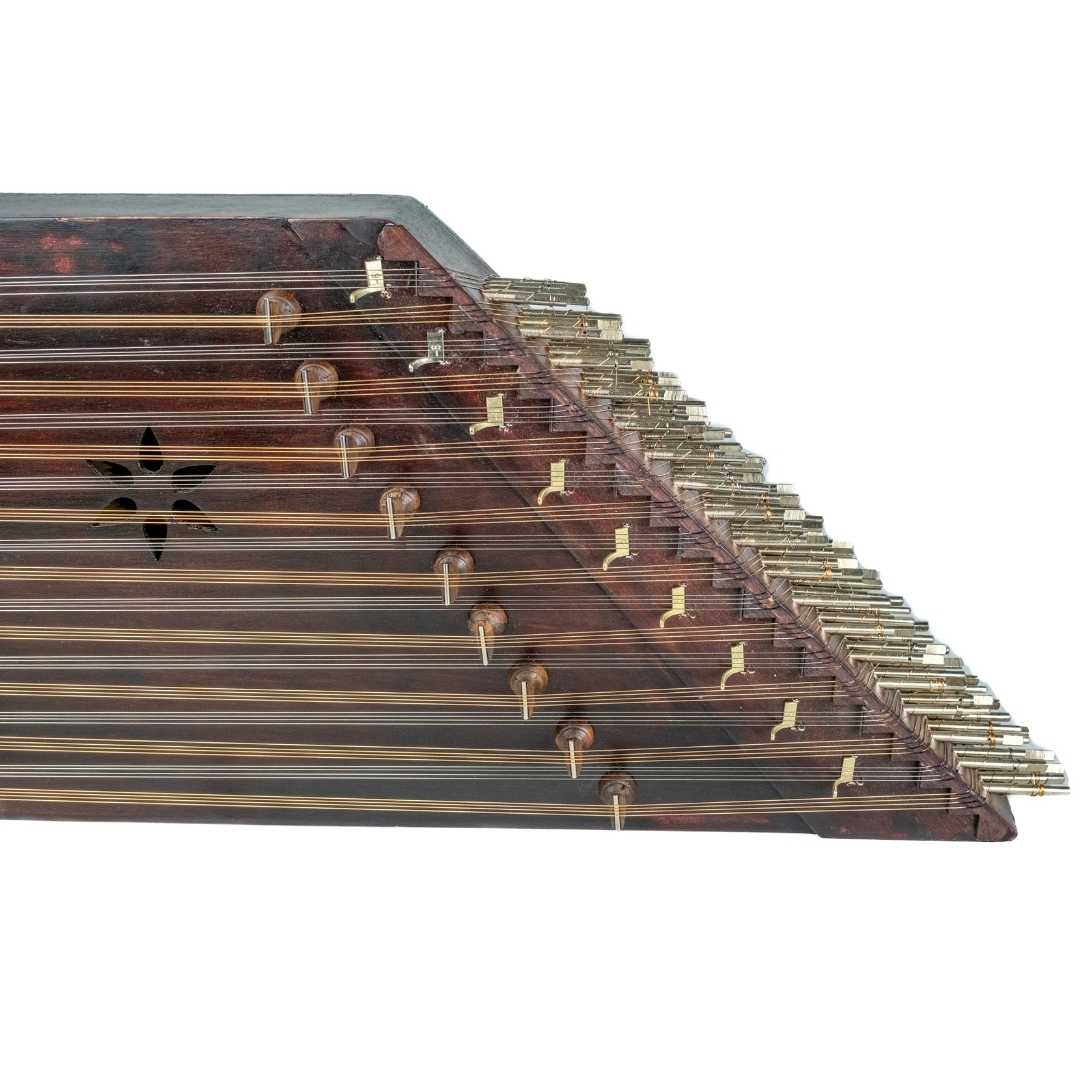
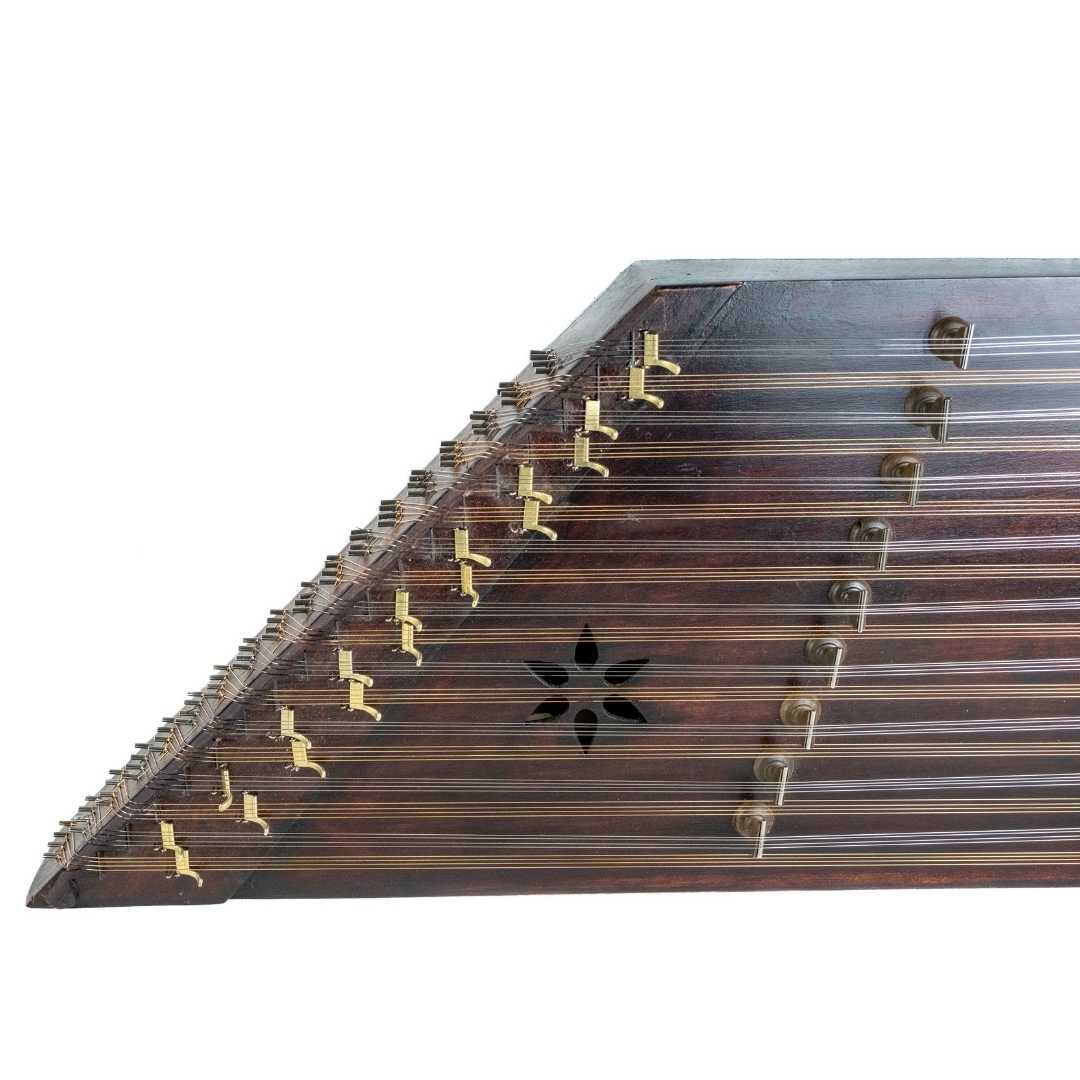
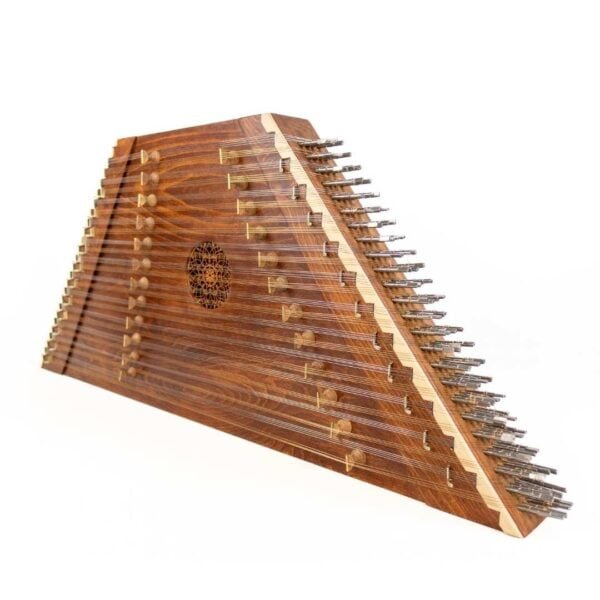
The 9 Bridge Special Santur with Sharping Levers is a hammered dulcimer built in the Tapadum Strings & Percussion Workshop on the classical Persian nine-bridge layout, with a row of mandal levers running along the bridges. A traditional santur is locked to a single diatonic tuning, and every change of key means retuning course after course by hand. Each lever here raises its course by a half-step at a touch, so the key changes inside the piece rather than between pieces.
How the sharping levers work
The principle comes from the qanun, where mandals have been in use for centuries, and from the sharping levers of the Celtic harp. Each lever shortens the sounding length of its course by a fixed amount, raising that note a half-step and holding it there until it is released. Because the levers sit at the bridge end, they stay within reach mid-phrase without breaking the hand position over the striking area. The instrument’s own voice is untouched — the mechanism only takes the tuning key out of the equation.
Nine bridges: the layout you already know
Nine kharak per row is the arrangement Persian santur players learn on, and it is what makes this the most familiar of our lever instruments to move to. The courses run across two parallel rows of bridges, so each course sounds two different pitches depending on which side of its bridge you strike, and the spacing, the reach and the striking geography sit exactly where a trained hand expects them. If you need a wider working compass — for pieces that move across registers, or for voicing a line underneath a melody — the twelve-bridge model carries the same mechanism over a larger frame.
Who this santur is for
This is an instrument for a player who already knows the santur and wants to stop retuning between pieces. It suits the student moving from a fixed traditional instrument into modal exploration, the teacher who has to demonstrate several dastgah in one lesson, and the performer accompanying singers who transpose. If your repertoire stays inside a single tuning, a traditional instrument from our santur collection will serve you and cost less.
Repertoire and traditions
The santur sits at the centre of Persian classical dastgah and avaz playing, and the same instrument family runs through Greek santouri, Turkish and Indian practice. With the levers engaged it also carries comfortably into Mediterranean and Anatolian material, into film and ambient work, and into improvisation that would otherwise fall outside a fixed diatonic tuning. The courses are struck with mezrab — light wooden mallets held between the fingers — the technique behind the santur’s rapid runs and its shimmering, overlapping decay.
Care and maintenance
Keep the santur in a stable environment, away from direct heat and from swings in humidity — both the soundboard and the seating of the bridges respond to moisture. Return the levers to their resting position before storing it, check the tuning regularly, and wipe the strings with a soft cloth after playing. Spare strings, mallet sets and tuning keys are in our santur accessories range, and our complete guide to the Persian santur covers tuning and mallet technique in more depth.
Ships with a gig bag, traditional mezrab mallets and a tuning key. Worldwide shipping & 15-day return.


Reviews
There are no reviews yet.