Tar
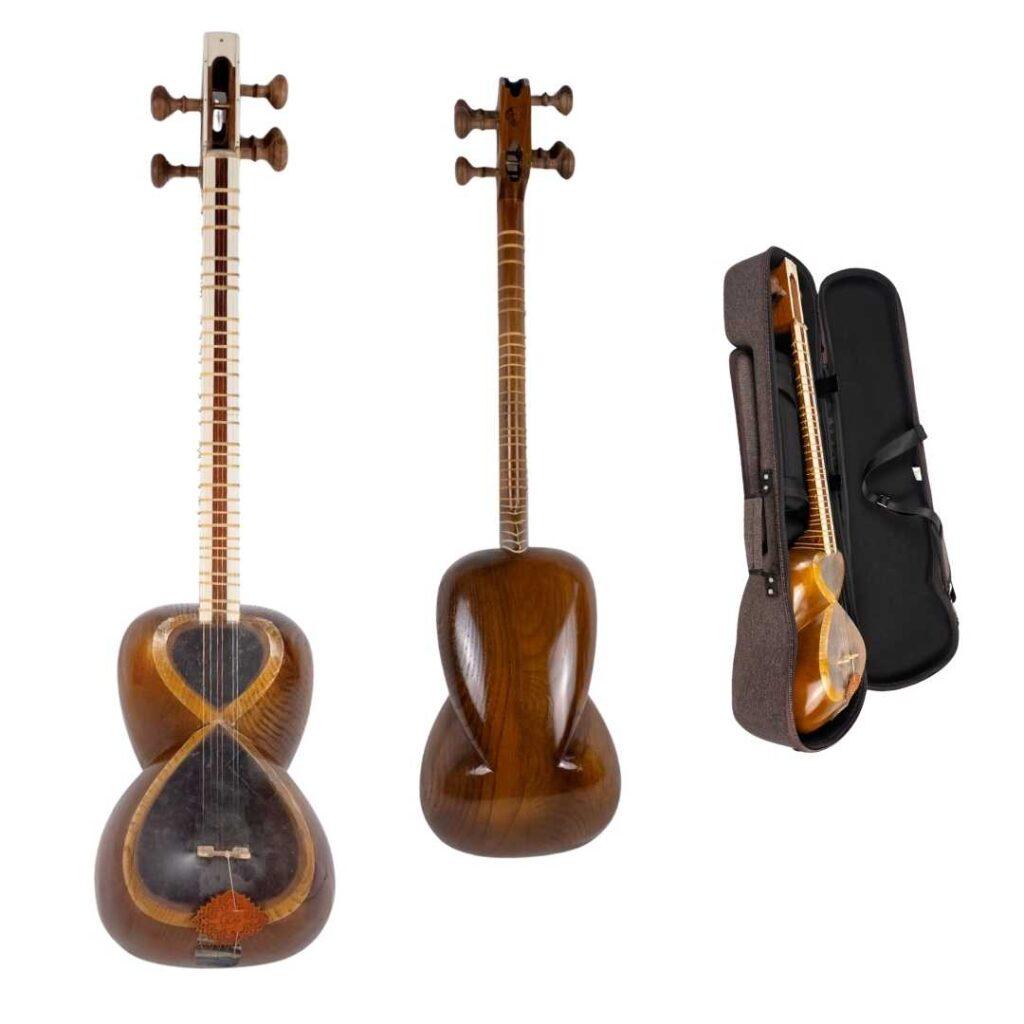
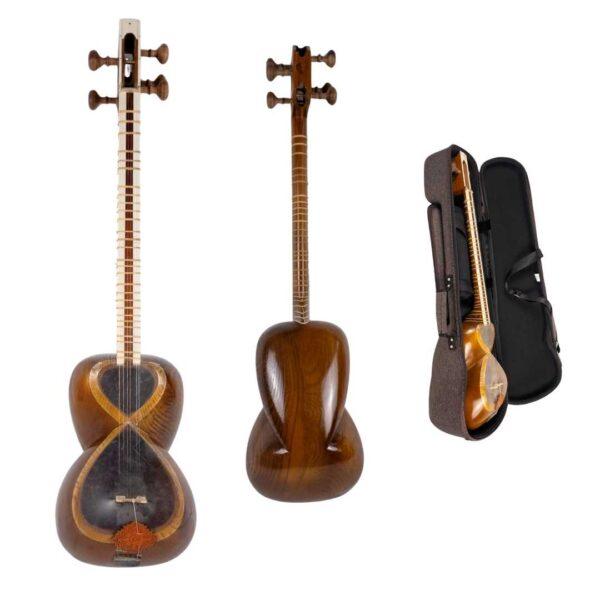
The Iranian Tar (Persian Tar) is a cornerstone of Persian classical music — a fretted plucked lute known for its expressive double-bowl voice and intricate Tehran-school craftsmanship. The instrument shapes the melodic foundation of dastgah-based Persian classical repertoire, ensemble work, and solo improvisation traditions. Its long neck and three double courses of strings give players an exceptional dynamic range, from delicate melancholy to passionate intensity.
Most Iranian tars use a double-bowl body carved from aged mulberry wood, joined to a long walnut neck with twenty-five adjustable gut or nylon frets. The soundbox is covered with a stretched lambskin membrane that gives the tar its warm, resonant projection — distinctly Persian and unlike any other lute family. The brass mezrab (plectrum), held between thumb and index finger, drives the rhythmic vocabulary and ornamental phrasing that define dastgah practice.
Iranian classical and folk repertoire — the seven dastgah systems and their derivative gushe — sit at the core of tar practice. The instrument also appears in contemporary Persian fusion projects and as a solo voice in concert improvisation (avaz accompaniment, taqsim-style improvisation). Master players such as Ali-Akbar Shahnazi, Jalil Shahnaz, and Hossein Alizadeh shaped the modern repertoire and continue to influence today’s tar tradition.
At Tapadum, our Persian tar collection is curated from master luthiers working in the Tehran tradition — including Mohamad Hatami, Amin Golestani, and other established Persian makers. Each instrument is carefully selected and individually quality-controlled to the standards of its class — from entry-level tars suited to those discovering dastgah music, through intermediate instruments for advancing students, to professional concert tars for stage performers and recording use. We test tuning stability across the fretted neck, mezrab response, and lambskin membrane integrity before each instrument leaves our Brisighella, Italy showroom.
Browse our Persian Tar collection alongside the Persian Setar family, and explore the wider Persian Instruments category for related string, percussion, bowed, and wind instruments. Free Shipping & 15-day return apply across the EU.
Frequently Asked Questions
What's the difference between the Iranian Tar and the Persian Setar?
Why does the Iranian Tar use a lambskin membrane?
How is the Iranian Tar tuned?
Which Iranian Tar is right for beginners?