
Description
Walnut Tombak by Shirani — A Deep-Voiced Persian Zarb
Struck at the centre, a good walnut tombak answers with a low, round tom that seems to rise from under the floor; flicked at the rim, it snaps back a bright bak. That pair of sounds is what gives the tonbak its name — and it is exactly what the walnut tombak by Shirani is built to deliver. A three-mohr drum from the celebrated workshop, it is made for players who put depth and warmth first.
Why Walnut
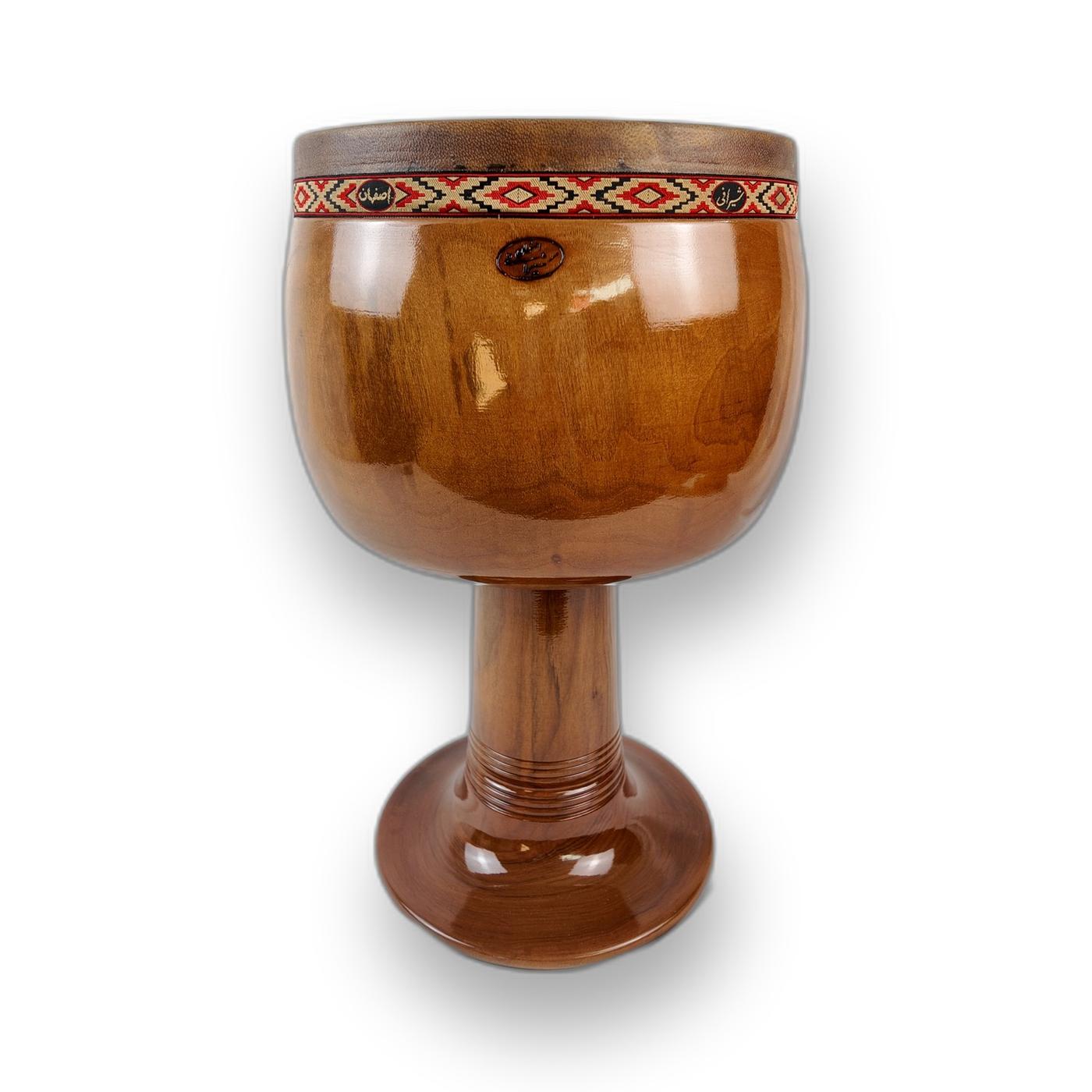
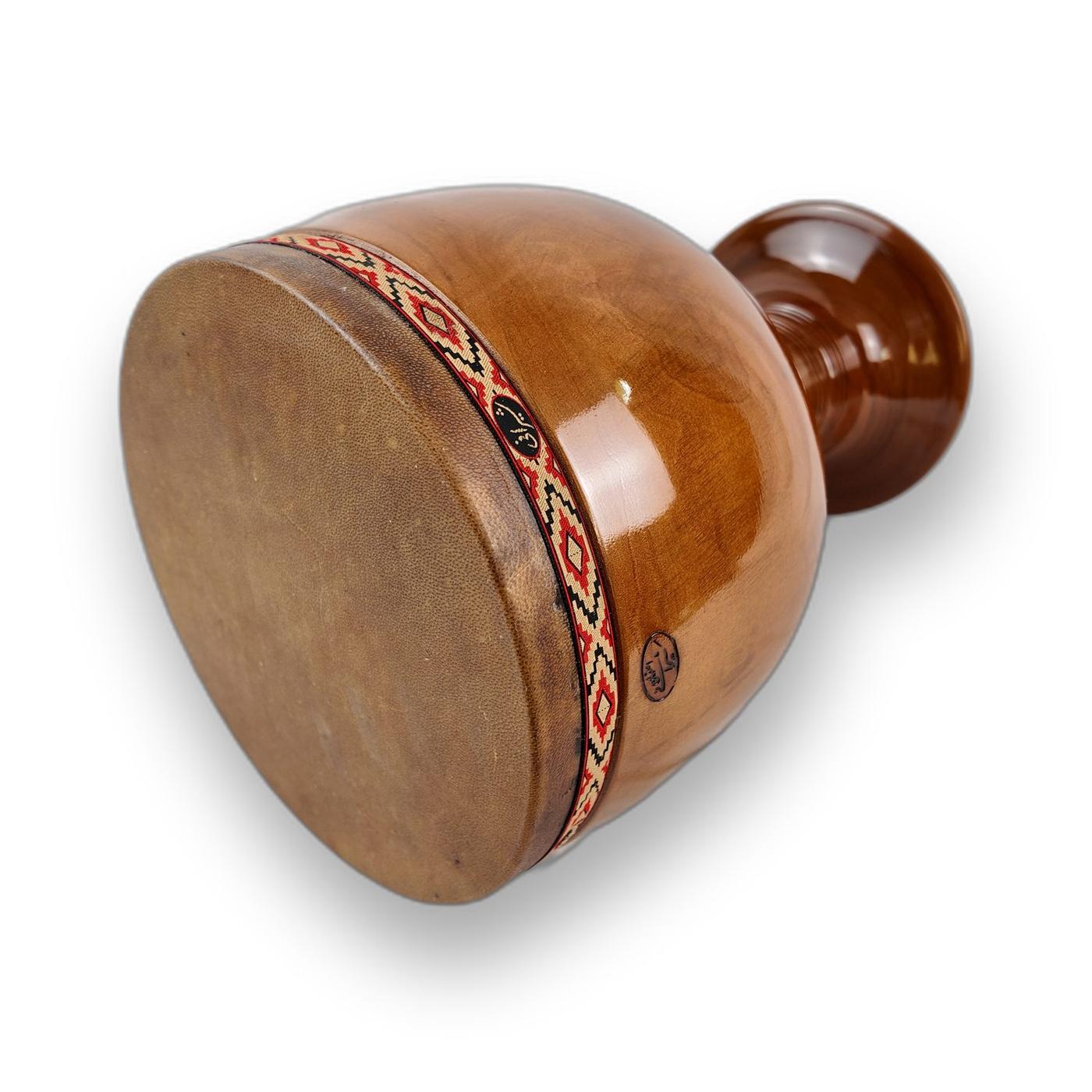
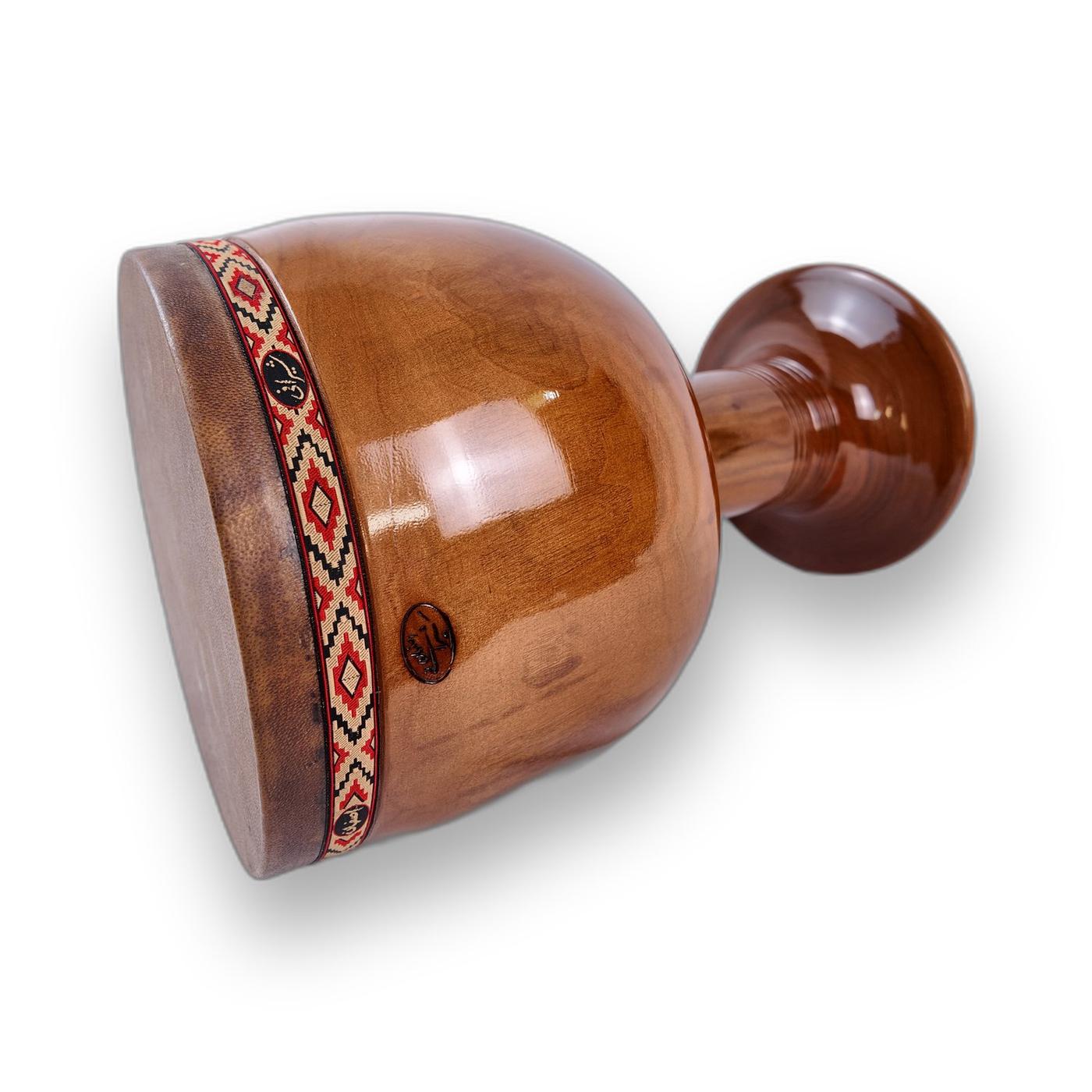
This shell is turned from a single block of aged walnut (gerdoo) — a dense, oily hardwood that, well seasoned, gives a drum a dark, mature voice with long sustain. It is the reason walnut has been a first-choice tombak wood in Iran for generations. Shirani leaves the bowl smooth and brings it to a high-gloss lacquer, so the chocolate grain reads as one clean curve from rim to foot, with no ribbing to interrupt the line.
The Skin and the Seal
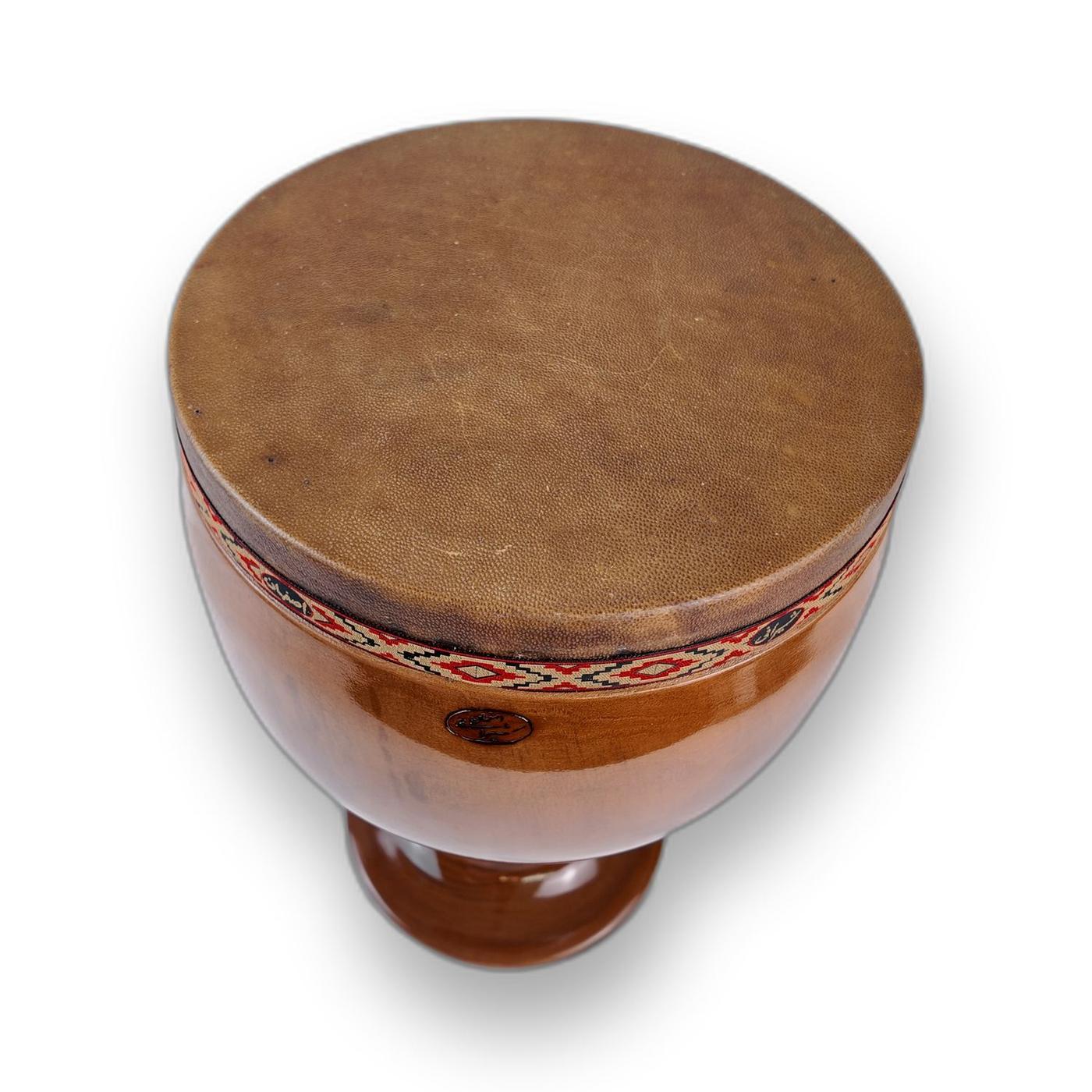
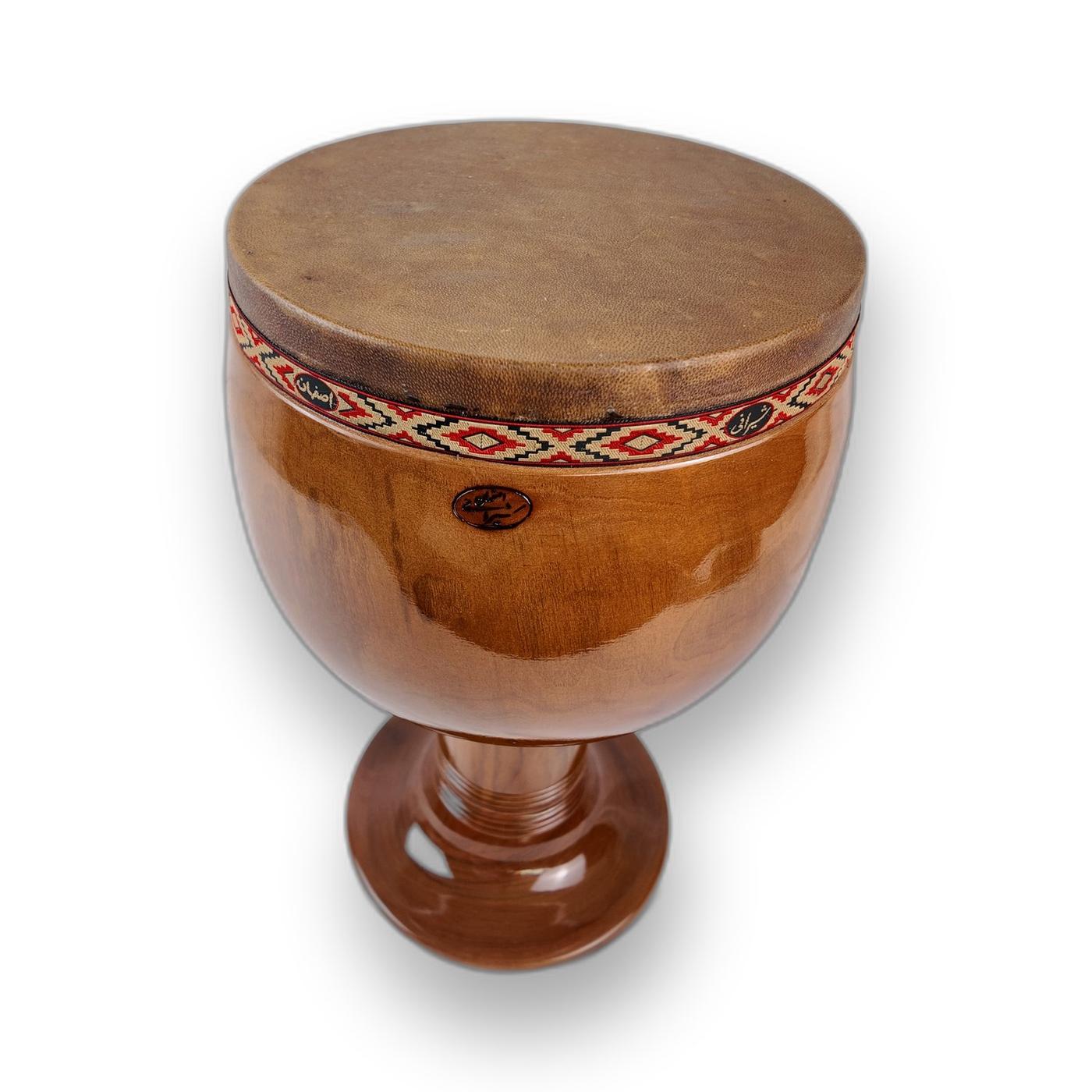
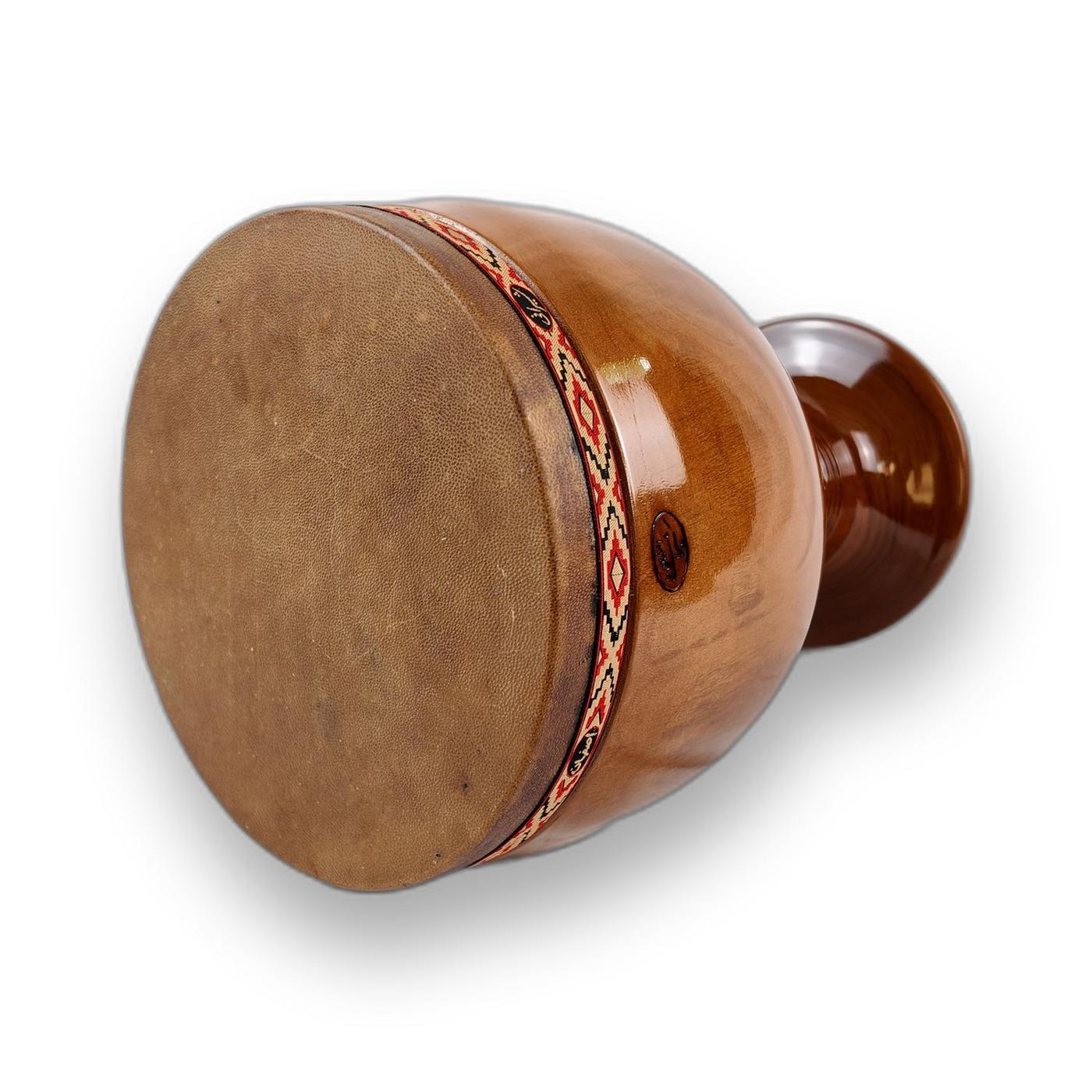
Over that body sits a camel-skin head — thicker and more weather-stable than goat or calf, and the skin Shirani keeps for its fuller-bodied drums. On walnut it leans into the low end without losing the snap a fast riz roll needs. Below the head runs the workshop’s woven band — the red-and-cream Shirani trim — beside the burned oval seal; counting its three mohr is how Persian drummers read the grade, here semi-professional to professional.
| Specification | Detail |
|---|---|
| Maker | Shirani |
| Instrument | Persian Tombak (Zarb) |
| Grade | 3 Mohr (three-seal) |
| Body | Walnut — single turned shell, smooth |
| Head | Natural camel skin |
| Head diameter | 27.5 cm |
| Height | 49 cm |
| Weight | 3.9 kg |
| Finish | High-gloss lacquer |
| Decoration | Shirani woven band + burned seal |
| SKU | SH1 |
Who Should Play It
At 27.5 cm across, 49 cm tall and 3.9 kg, this is a sit-down concert tombak for the committed student or working percussionist who favours a warm, traditional voice for Persian classical and folk playing. For a brighter, paler sound, see the ash model (SH2).
Living With a Natural-Skin Drum
Camel skin is hard-wearing but still natural: keep the drum clear of radiators and open windows, let it settle when you carry it between rooms, and give the lacquered shell an occasional wipe with a dry cloth. There is nothing to tune — the head’s voice shifts a little with the warmth of the room and your hands, which is part of how a tombak breathes. Explore the wider Persian tombak range for other woods and sizes.
Worldwide shipping & 15-day return.

Reviews
There are no reviews yet.