



Description
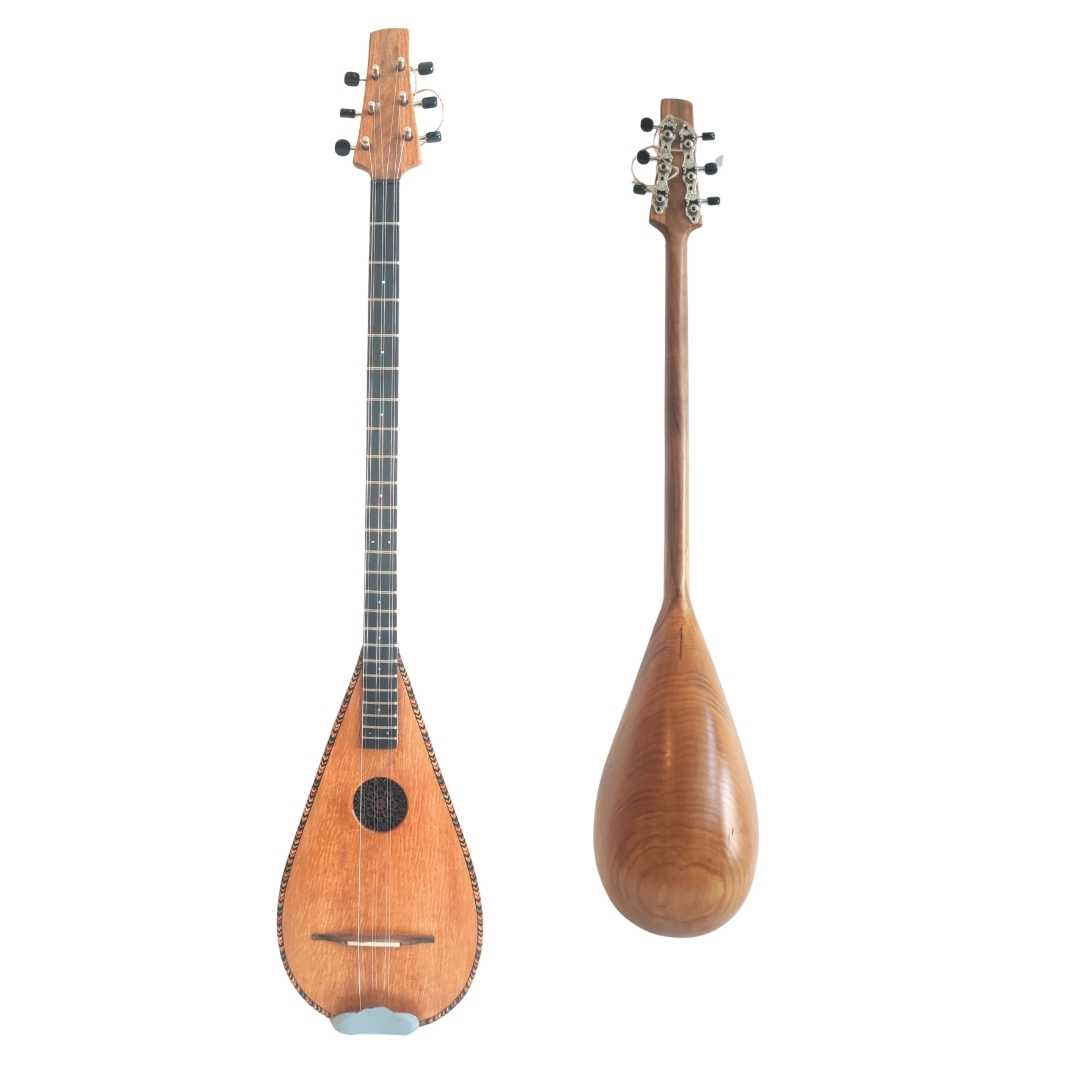
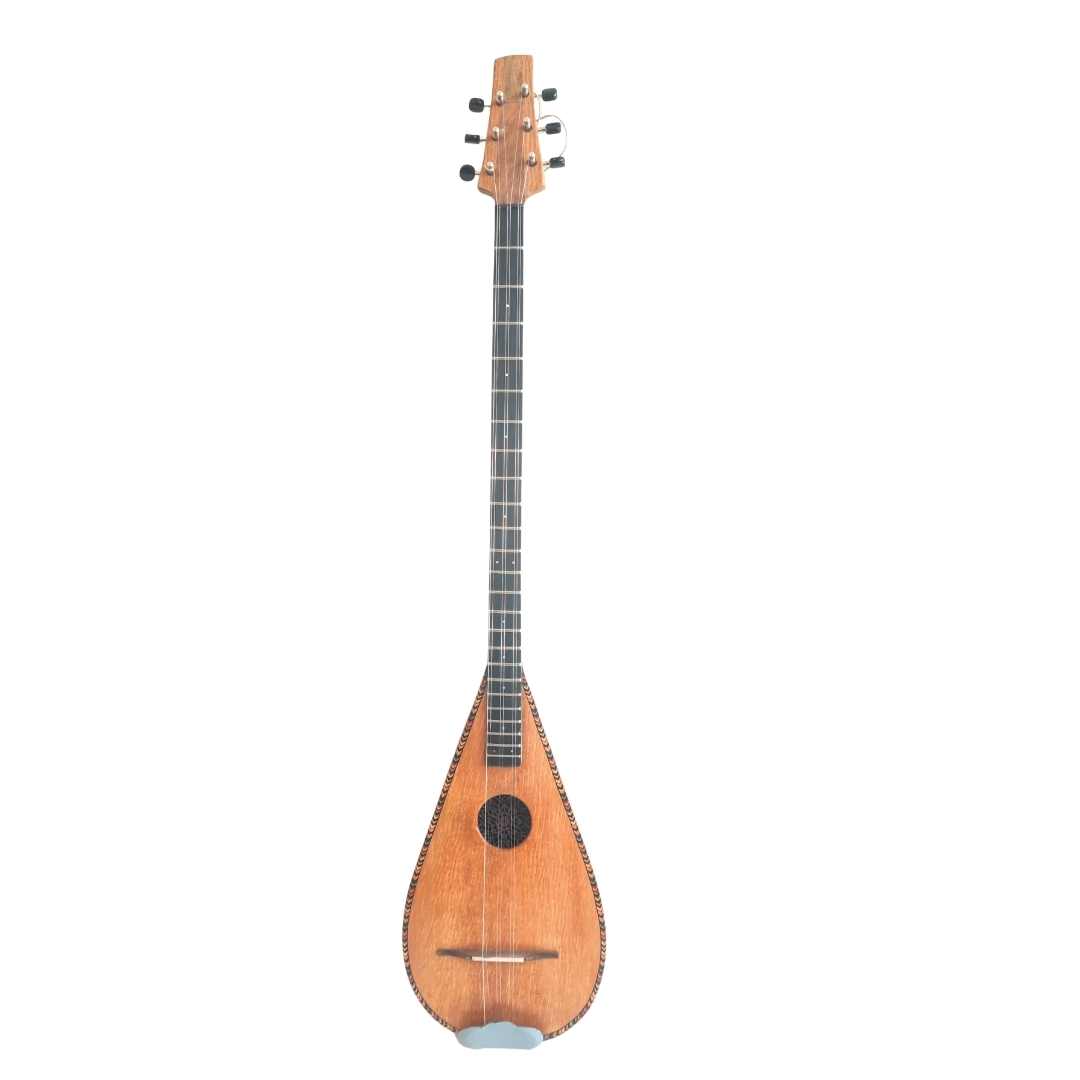
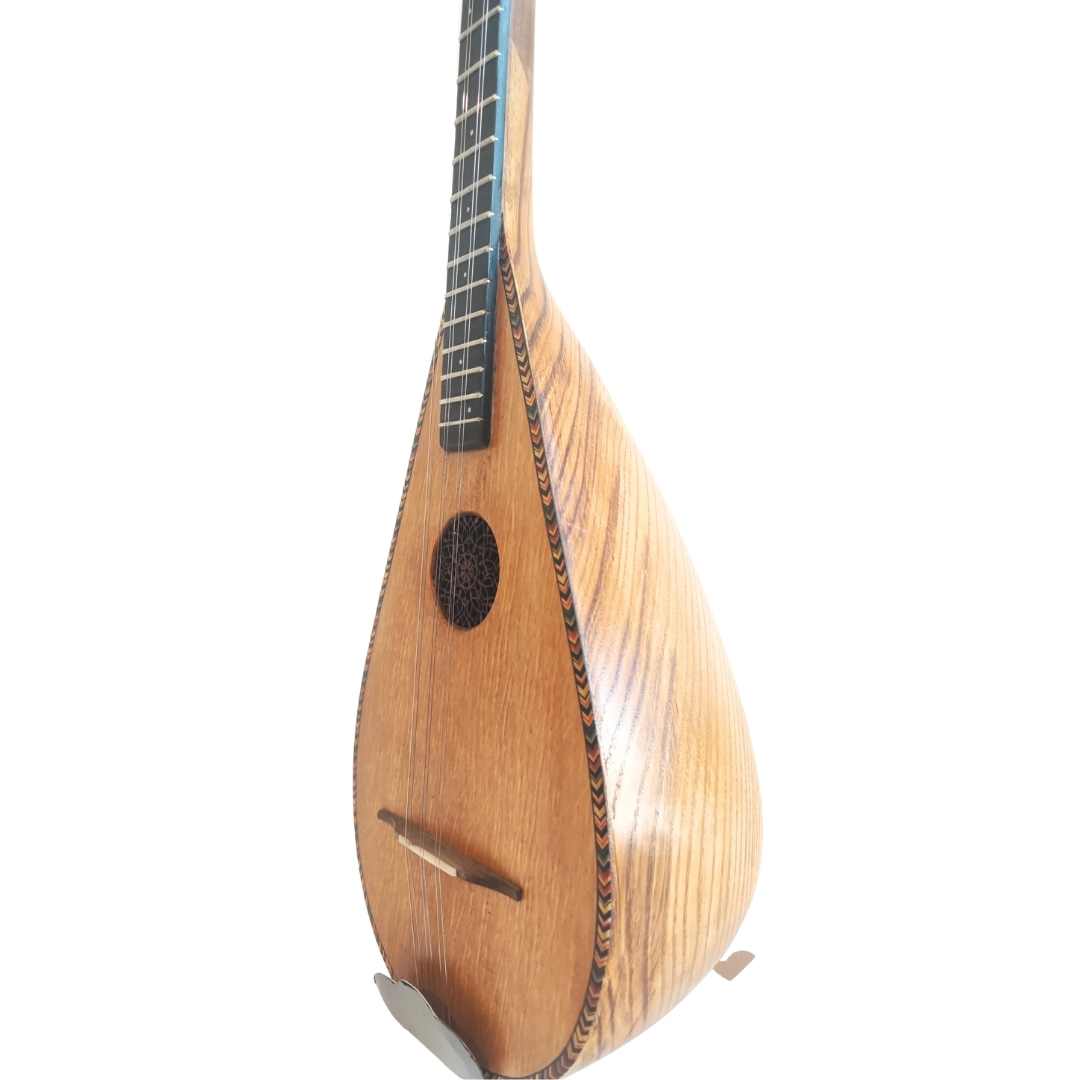
The tzouras is the small, high-voiced member of the Greek bouzouki family, and this one is built on a balta saz body — a carved shape borrowed from the Anatolian saz tradition rather than the usual staved bouzouki bowl. The result is an instrument with the tzouras register and attack, carried by a body that speaks a little differently from the standard build.
Carved mulberry body, spruce top
The body is carved mulberry — cut from solid wood rather than assembled from bent ribs. A carved shell has no glue seams across the back to damp vibration, which gives a direct, immediate response and a firm low end for an instrument of this size. Mulberry is the traditional choice across the whole eastern lute family for exactly this reason: it is dense enough to project, light enough to stay comfortable, and it ages well.
The spruce top supplies the brightness and cut that the tzouras needs to be heard next to a bouzouki. Together the two woods give the instrument its characteristic voice — sharp in the attack, quick to decay, clear enough to hold a melodic line above a fuller ensemble.
Six strings in three courses
This tzouras is strung with six metal strings in three double courses. Doubling each course is what produces the shimmering, slightly detuned chorus that defines the sound of the family: two strings struck together never speak in perfect unison, and that small disagreement is the instrument’s voice. The tzouras sits above the bouzouki in pitch and below the baglamas, which is why it so often carries the middle line in a rebetiko trio.
It is played with a plectrum, using the rapid tremolo picking that sustains a note on an instrument with a naturally short decay.
Technical specifications
| Body | Carved mulberry, balta saz shape |
| Top | Spruce |
| Strings | Six, in three double courses |
| Played with | Plectrum |
| Family | Greek bouzouki family |
Where the tzouras belongs
The tzouras is inseparable from rebetiko — the urban Greek song tradition that grew in the tavernas and refugee quarters of the early twentieth century. In the classic rebetiko line-up it works between the bouzouki and the tiny baglamas, filling the harmonic middle and taking melodic turns of its own. Players today also bring it into contemporary Greek folk, Mediterranean fusion, and songwriting where a bouzouki would sit too low or too loud.
Its balta saz body places it in an interesting position: the carving tradition it comes from belongs to the Anatolian saz and baglama family, while its stringing and repertoire are Greek. That crossing is not an accident of design — the two traditions have exchanged instruments and technique across the Aegean for centuries.
Who it is for
The tzouras suits bouzouki players who want a second, higher voice for recording and ensemble work, rebetiko players building a traditional line-up, and singers looking for a compact instrument to accompany themselves. Its short scale is comfortable for guitarists crossing over, though the double courses and plectrum tremolo take practice. You can see the rest of the range in our string instruments collection, and read more about the instrument on Wikipedia.
Care and maintenance
A carved body is a single piece of wood and reacts to sudden humidity changes more than a staved one — keep the instrument in moderate, stable conditions and away from direct heat. Wipe the strings and top with a soft dry cloth after playing; metal strings hold body oils and go dull faster when they are left dirty. Replace a full course at a time rather than a single string, so the pair stays matched in tension and tone.
Video
Worldwide shipping & 15-day return.



Reviews
There are no reviews yet.