Description
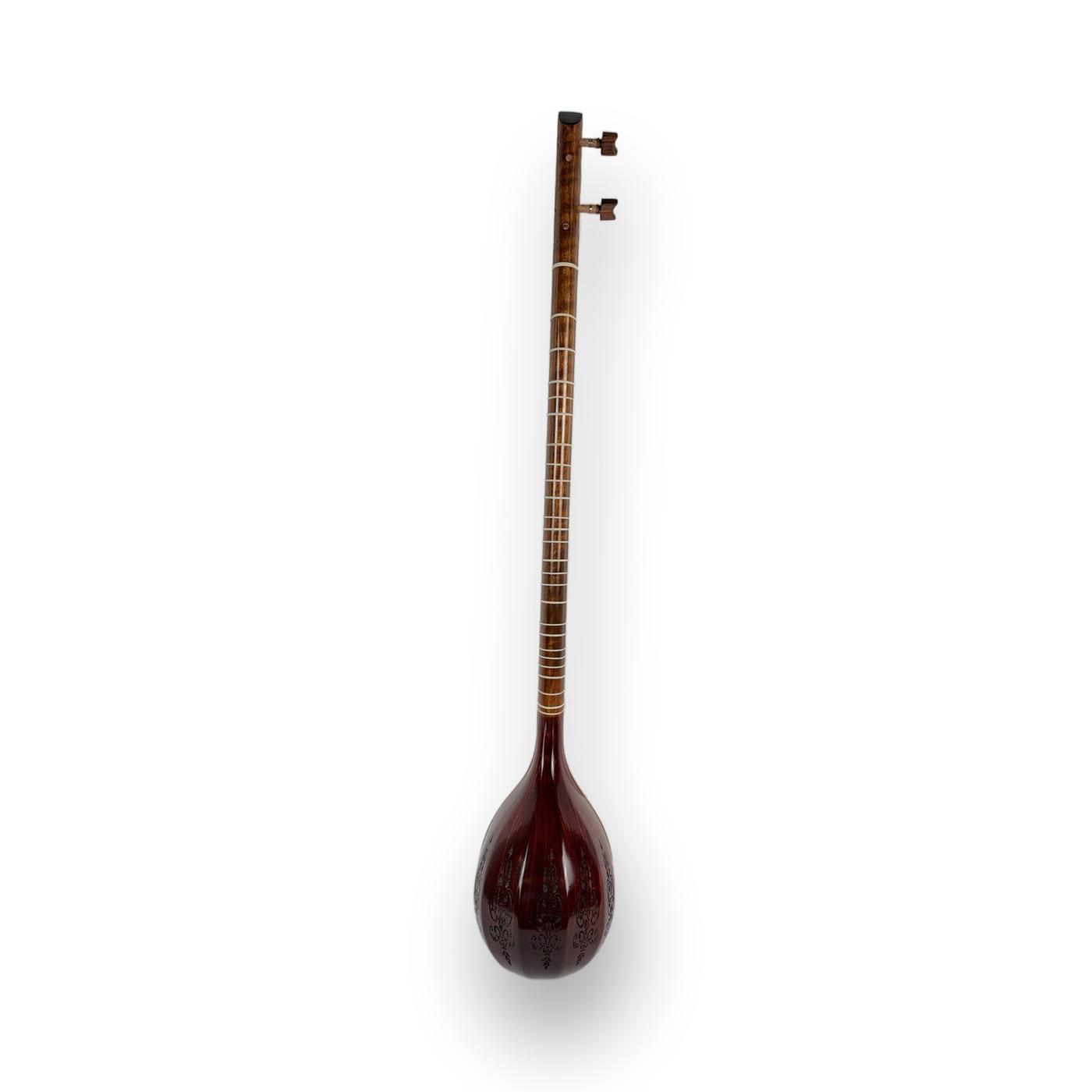
The Persian Setar by Diba is a handmade long-necked lute carved entirely from mulberry — the tonewood at the very heart of the Persian setar tradition. Stamped with Diba’s own maker’s seal (mohr) and supplied with a fitted soft case, it answers with the warm, rounded, singing voice that has shaped Persian classical music for generations.
An all-mulberry body in the Tehran tradition
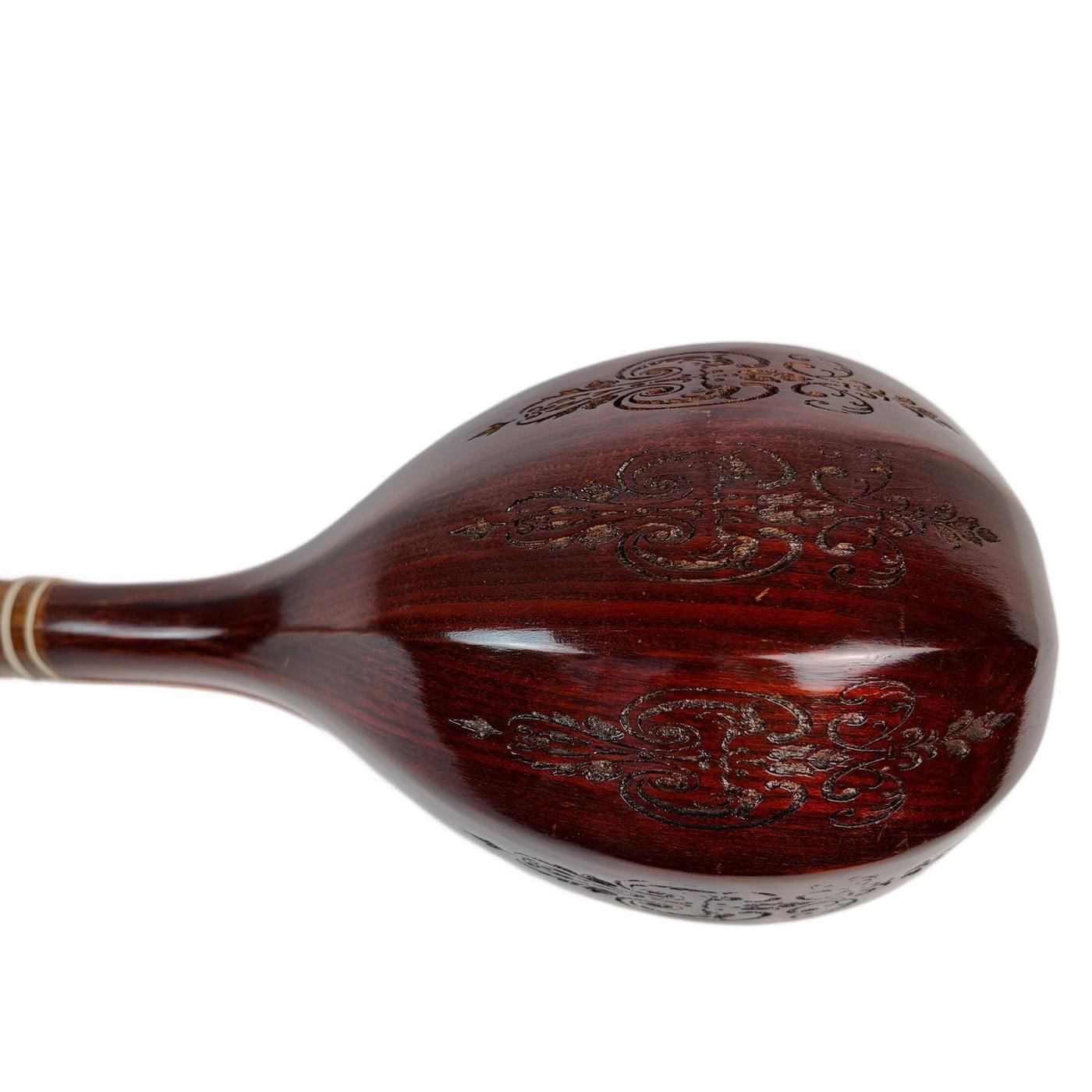
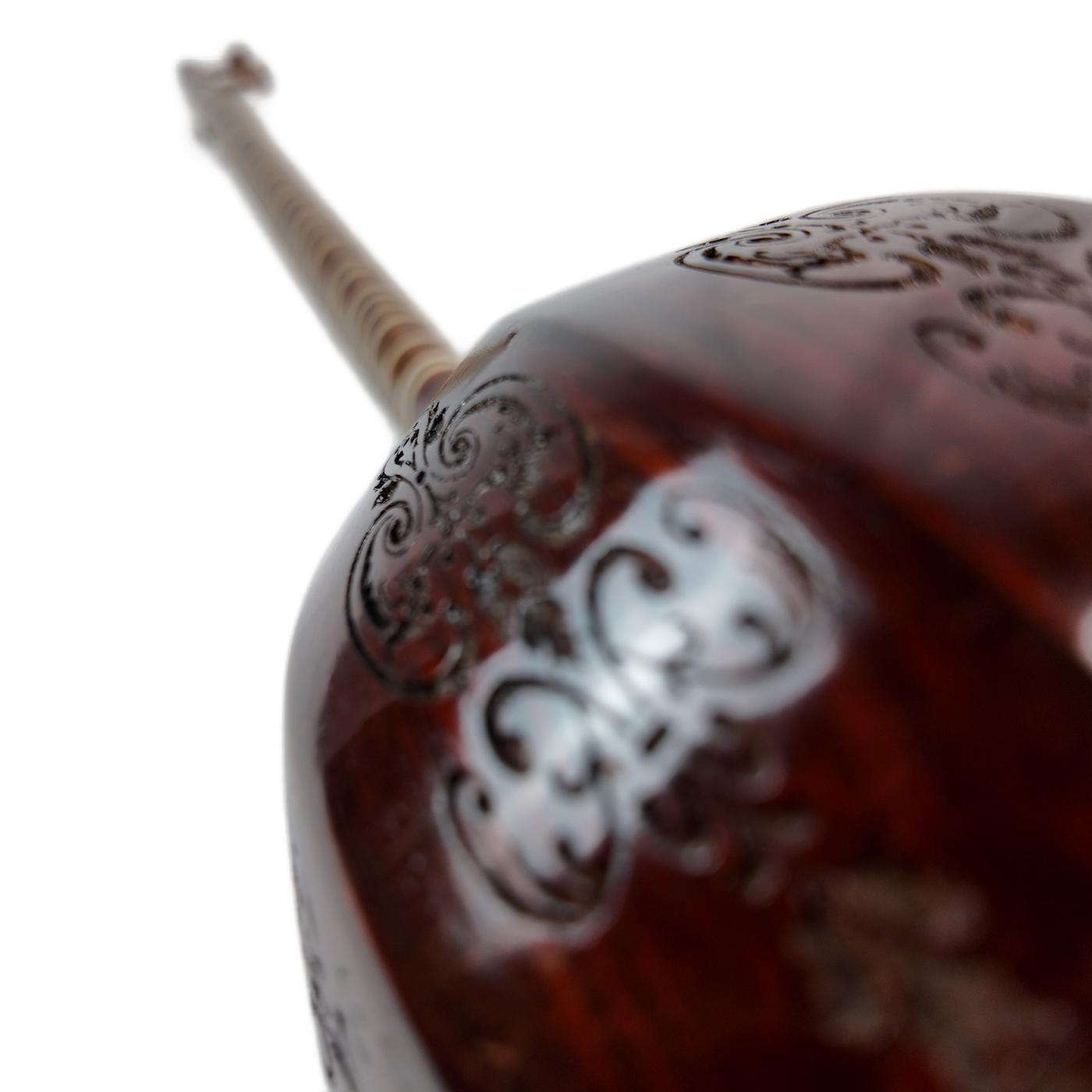
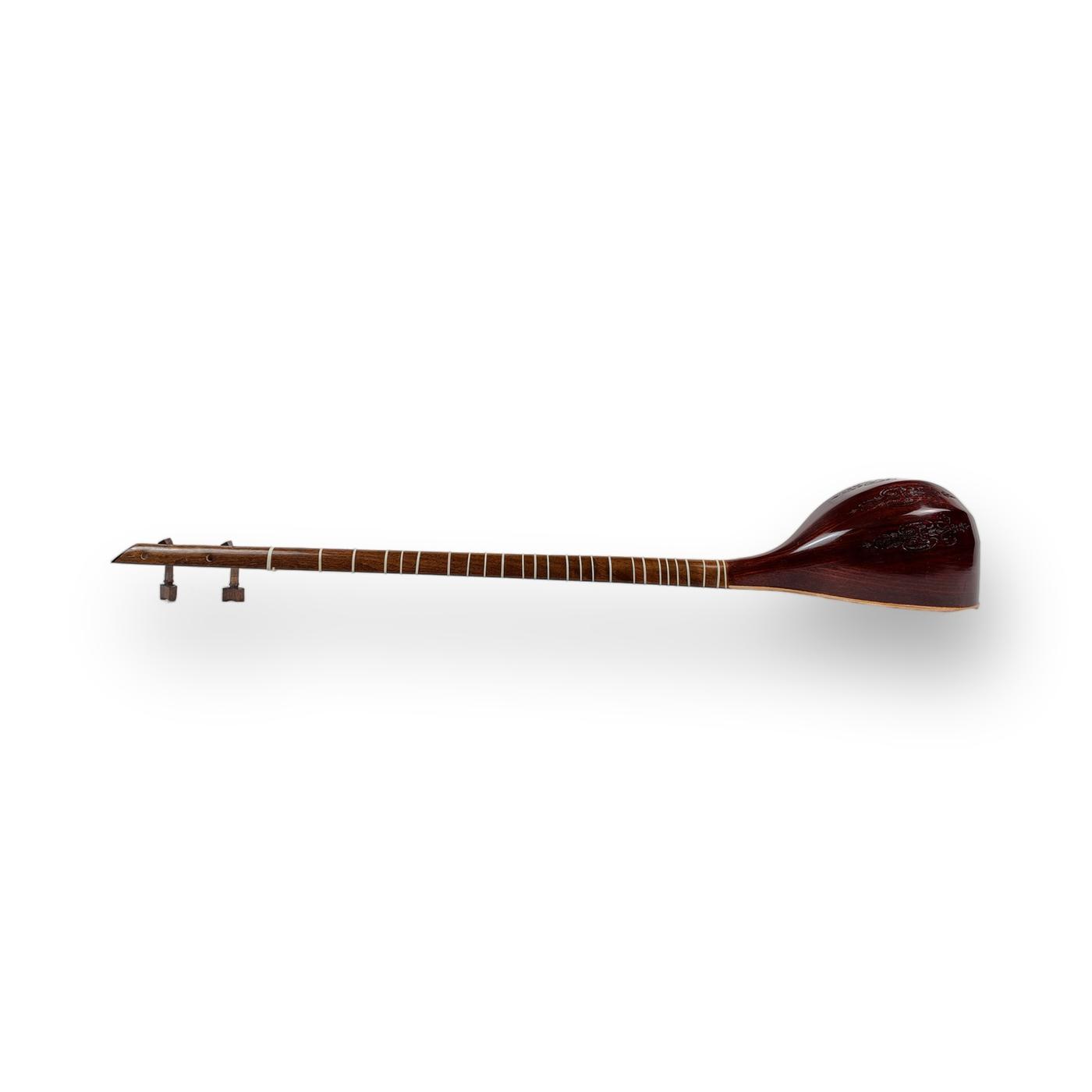
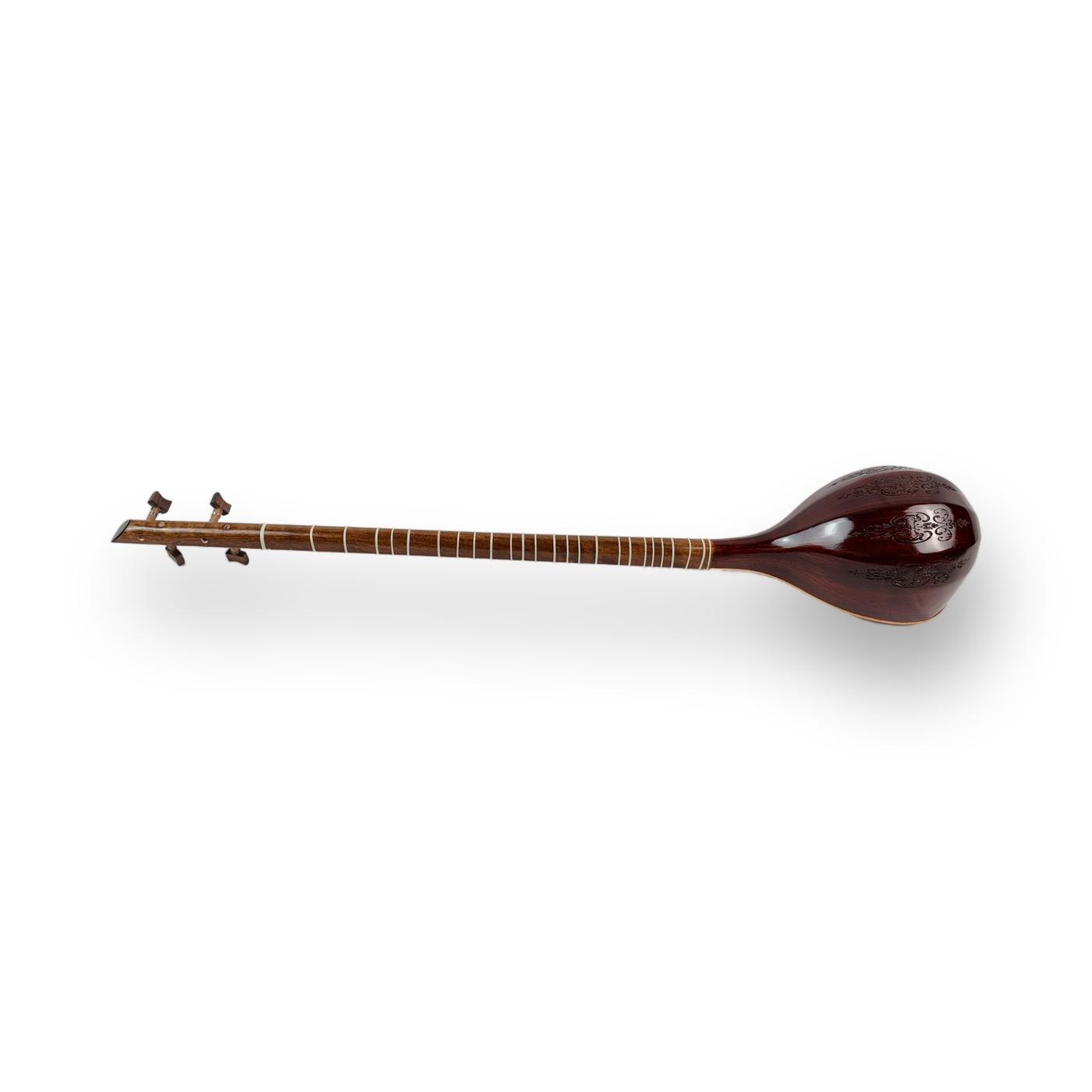
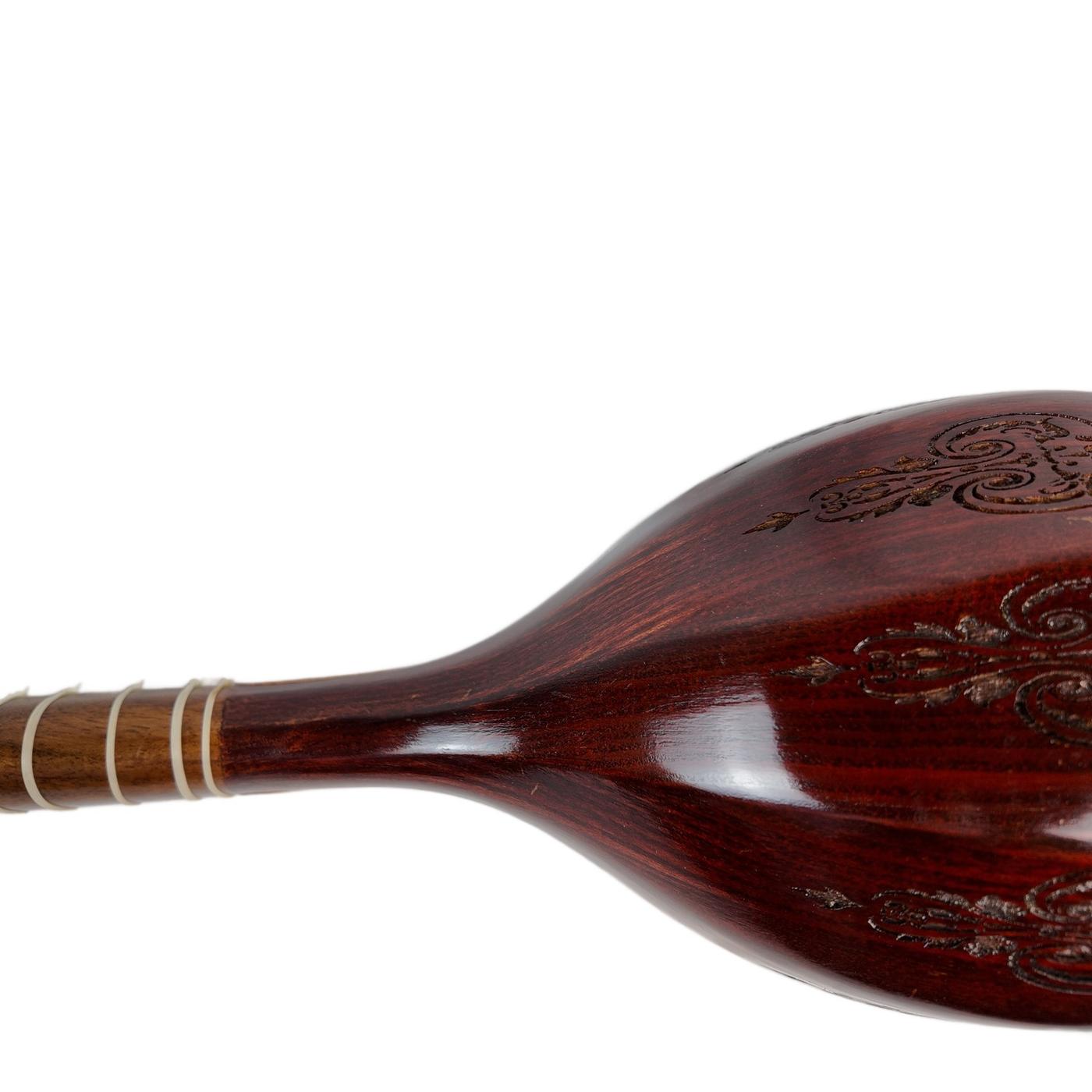
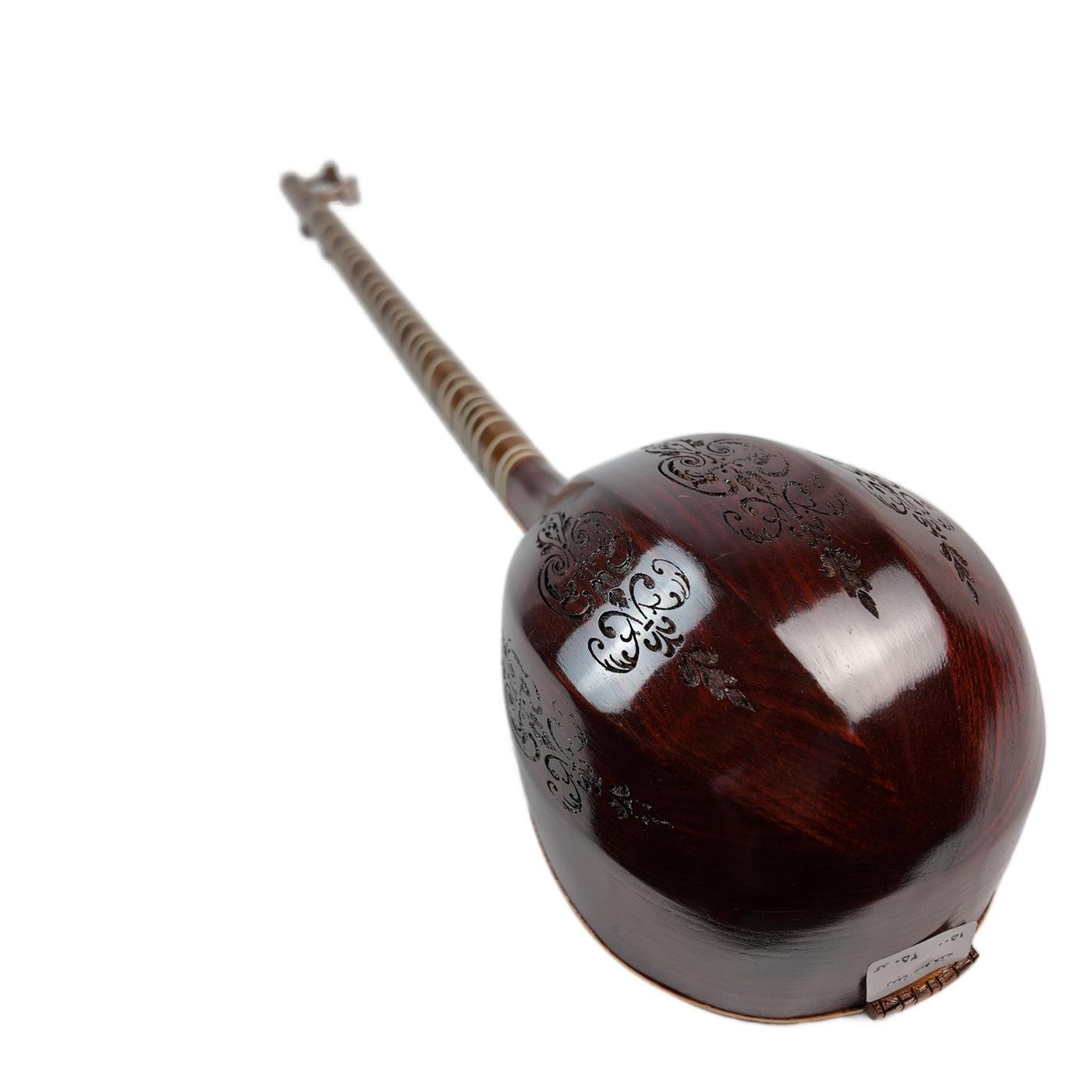
Where some setars are built with a maple or walnut bowl, this Diba setar returns to the wood Tehran luthiers have always favoured. The pear-shaped bowl is carved from aged mulberry and finished in a warm glossy lacquer, decorated with traditional ornamental motifs. Mulberry is a light, resonant tonewood that gives the setar its characteristic depth and roundness — a soft, intimate attack and a long, sweet sustain that suit the contemplative phrasing of the dastgah. For a brighter, crisper voice from the same maker, see the maple-bowled Diba setar.
Mulberry soundboard, walnut neck and tuning
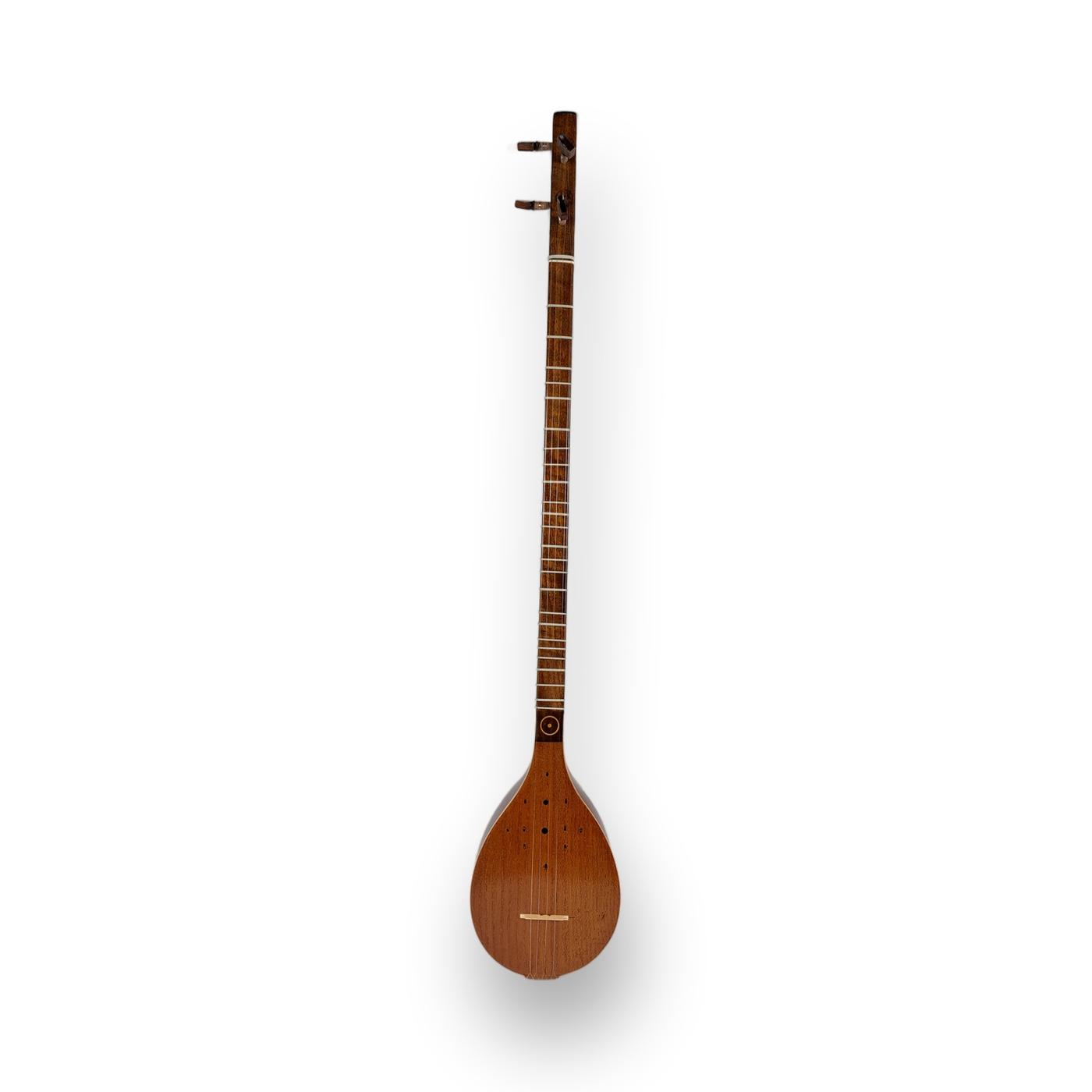
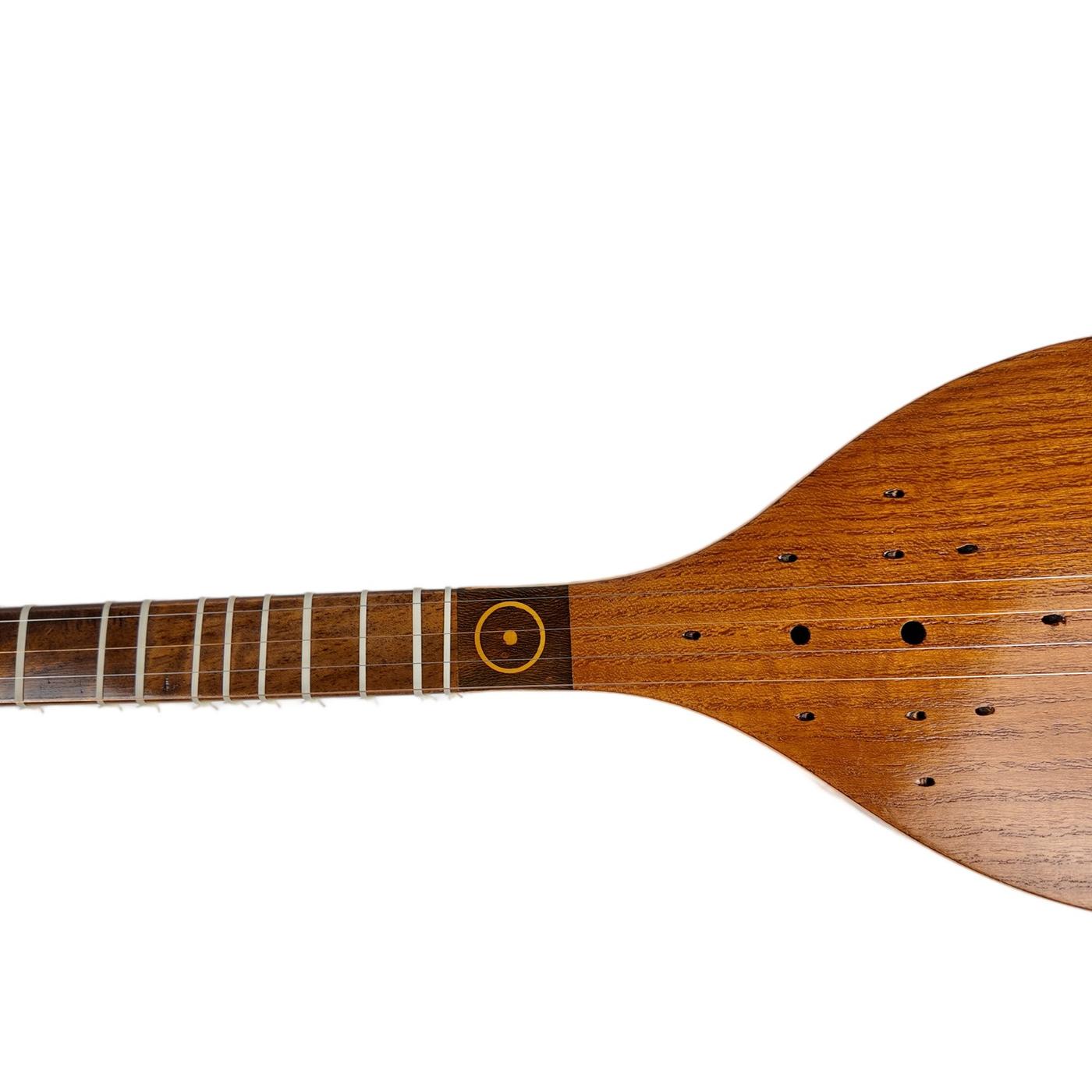
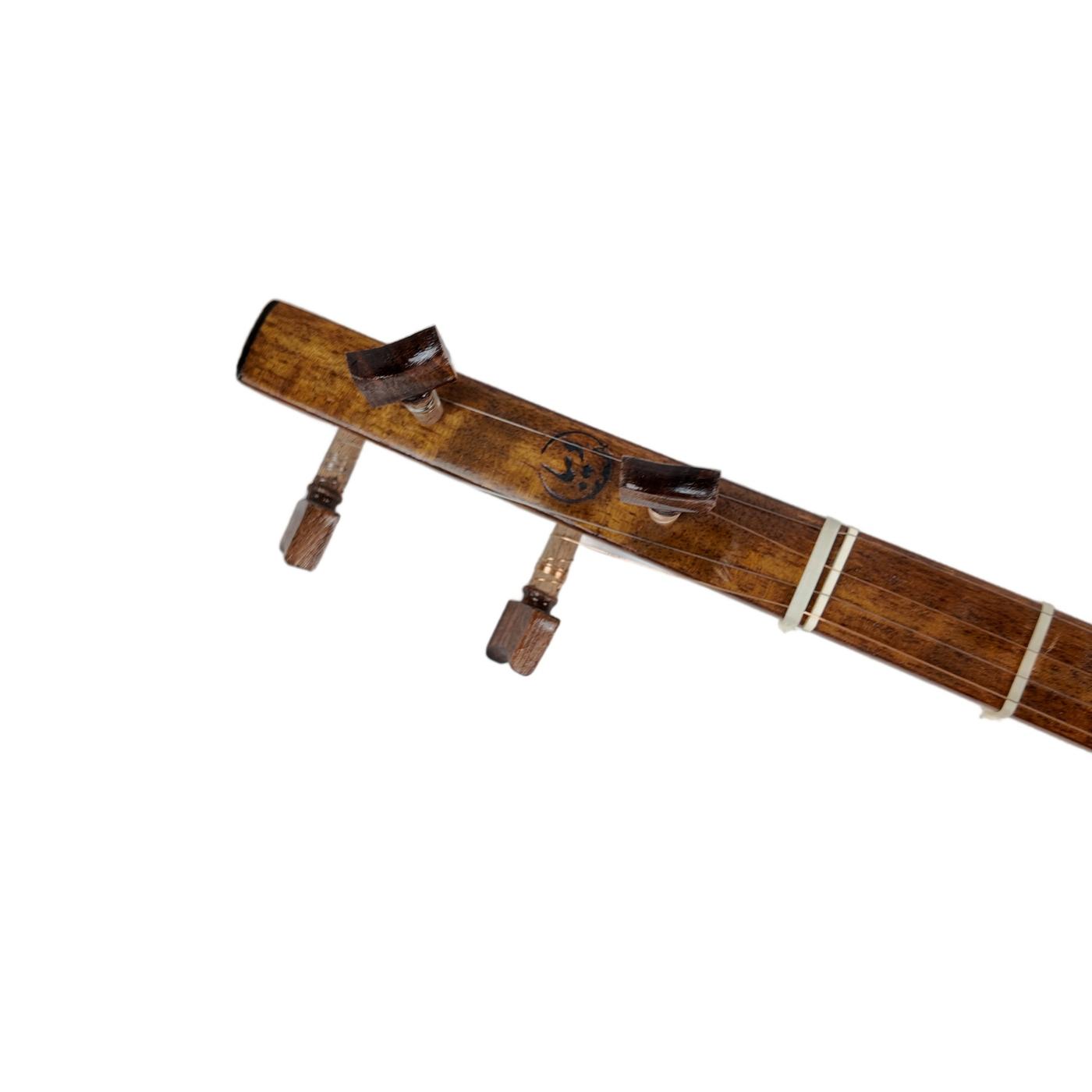
The matte mulberry soundboard — the classic choice for the setar — is paired here with the mulberry bowl for a fully traditional voice. A cluster of small sound holes lets the top breathe, while the walnut neck carries its movable gut frets along a comfortable 65 cm playing length. Four strings are turned by friction pegs and brought to the standard setar tuning, ready to play straight out of the case.
Who this Persian setar is for
At 0.40 kg and just 87 cm long, the Diba setar is light, compact and easy to hold — well suited to students, players exploring Persian instruments for the first time, and anyone drawn to the authentic warmth of a traditional all-mulberry build. It is hand-built by Diba in Tehran, Iran.
The music of the setar
The setar sits at the heart of Persian classical music, where it carries the radif and the modal system of the dastgah. Plucked with the nail of the right-hand index finger in rapid up-and-down strokes, it is an intimate, contemplative voice — as much at home in solo practice and meditation as in ensemble and accompaniment. You can read more about the instrument on Wikipedia.
Worldwide shipping & 15-day return.
Technical Specifications
| Instrument | Persian setar (long-necked lute) |
| Maker | Diba (Tehran, Iran) |
| Soundboard (top) | Mulberry, matte finish |
| Bowl / body | Mulberry, glossy finish |
| Neck | Walnut |
| Pegs | Walnut & maple |
| Strings | Four (three steel, one bronze) |
| Scale length (nut to bridge) | 65 cm |
| Total length | 87 cm |
| Bowl dimensions | 23 × 16 × 13 cm |
| Weight | 0.40 kg |
| Includes | Fitted soft case |