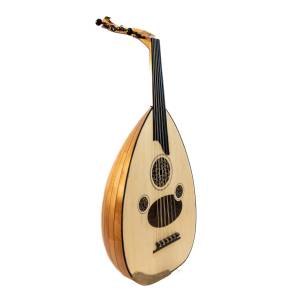
Introduction: Two Traditions, One Instrument
The oud (also spelled ud) is one of the most iconic fretless lute instruments in Middle Eastern and Mediterranean music. While it's called "ud" in Turkey and "ʿûd" (عود) in the Arab world, musicians and buyers often wonder: What's the actual difference between Arabic oud and Turkish oud?
This isn't about which is "better"—both traditions have produced world-class musicians and luthiers. Instead, this guide focuses on verifiable, technical differences: scale length, sound hole design, construction details, and how these affect playability and tone.
Whether you're a beginner choosing your first oud, a collector, or a curious music lover, this comprehensive comparison will help you understand what sets these two styles apart.
TL;DR: Quick Comparison Table
| Feature | Turkish Oud | Arabic Oud |
|---|
| Scale Length | ~58.5 cm | ~59.5 cm (~1 cm longer) |
| Sound Holes | 3 holes (2 small + 1 large) | Often 1 large hole |
| String Tension | Moderate | Slightly higher (due to longer scale) |
| Tone Character | Brighter, more articulate | Deeper, fuller bass response |
| Common Repertoire | Turkish classical, fasıl | Arabic maqam, tarab |
| Playing Style | Crisp ornamentation, fast passages | Flowing legato, vocal accompaniment |
Source: TDV Islamic Encyclopedia – Oud
Historical Background: How Two Traditions Diverged
The oud's origins trace back to ancient Mesopotamia and Persia, evolving through centuries of Islamic Golden Age scholarship and Ottoman court music. By the 19th and 20th centuries, two distinct schools emerged:
- Turkish School: Influenced by Ottoman classical music, emphasizing agility, ornamentation (trill techniques), and integration with Western notation systems.
- Arabic School: Rooted in Egyptian, Syrian, and Iraqi traditions, prioritizing vocal accompaniment, microtonal expression, and deeper bass resonance.
These aesthetic preferences gradually shaped the physical design of the instruments themselves.
1. Scale Length: The Foundation of Difference
Scale length (the vibrating length of the string from nut to bridge) is the most critical physical parameter.
Verified Measurements:
- Turkish Oud: Typically ~58.5 cm
- Arabic Oud: ~59.5 cm (approximately 1 cm longer)
Source: TDV Islamic Encyclopedia – Oud
Why This Matters:
- String Tension: Longer scale = higher tension at the same pitch, affecting playability and finger pressure.
- Tone: Longer scales can produce a slightly fuller, more sustained bass response.
- Ergonomics: Players with smaller hands may find Turkish ouds more comfortable.
2. Sound Hole Design: Aesthetics Meet Acoustics
Turkish Oud:
- 3-hole design: Two small side holes + one larger central hole
- Covered with intricate rosette (kafes) woodwork
- Allows more controlled, focused sound projection
Arabic Oud:
- 1-hole design: Single large sound hole (more common, though not universal)
- Often features elaborate geometric rosette patterns
- Produces a more open, resonant sound
Source: TDV Islamic Encyclopedia – Oud
Important Note: Modern luthiers create hybrid designs, so this isn't an absolute rule—but it reflects traditional tendencies.
3. Construction & Materials: More Similarities Than Differences
Here's a crucial insight from the TDV Islamic Encyclopedia:
"The oud used in Turkey has almost no structural difference from ouds in other Islamic countries; the main distinctions are scale length and tuning level."
Common Construction Elements:
- Bowl (body): 17-21 ribs of rosewood, walnut, or mahogany
- Soundboard (face): Spruce or cedar (3-4 mm thick)
- Neck: Typically walnut or mahogany
- Strings: Nylon or PVF (modern); gut (historical)
- Pegs: Ebony or rosewood friction pegs
Where Preferences Differ:
- Arabic ouds: Often use lighter, more flexible soundboards for deeper resonance
- Turkish ouds: May use slightly thicker soundboards for brighter attack
Source: TDV Islamic Encyclopedia – Oud
4. Playing Techniques & Performance Style
Turkish Oud Technique:
- Risha (plectrum): Stiffer, smaller pick
- Ornamentation: Emphasis on trills (çarpma), slides (glissando)
- Articulation: Crisp, clear note separation
- Repertoire: Peşrev, saz semai, taksim (improvisation)
Arabic Oud Technique:
- Risha: Softer, more flexible pick (often made from eagle feather or plastic)
- Ornamentation: Vibrato (tahrir), bends, microtonal inflections
- Articulation: Legato, flowing phrases
- Repertoire: Bashraf, sama'i, layali (vocal improvisation accompaniment)
5. Tone & Sound Character: What to Expect
Disclaimer: Tone is subjective and heavily influenced by:
- Luthier craftsmanship
- Wood quality and aging
- String choice
- Player technique
General Tendencies (Based on Design):
Turkish Oud:
- ✅ Brighter, more "present" midrange
- ✅ Faster attack and decay
- ✅ Excellent for fast passages and intricate ornamentation
- ✅ Cuts through ensemble settings
Arabic Oud:
- ✅ Deeper, fuller bass response
- ✅ Longer sustain
- ✅ Warmer, more "rounded" tone
- ✅ Ideal for vocal accompaniment and slow, expressive melodies
6. Maintenance & String Care
String Selection:
- Turkish Oud: Lighter gauge strings (due to shorter scale)
- Arabic Oud: Heavier gauge strings (to maintain proper tension)
Common String Brands:
- Turkish: Pyramid, La Bella Turkish Oud
- Arabic: Pyramid Arabic Oud, Aquila Alabastro
Maintenance Tips:
- Humidity: Keep at 45-55% to prevent soundboard cracks
- Storage: Use a hard case; avoid direct sunlight
- Cleaning: Wipe strings after playing; use lemon oil on fingerboard annually
- Setup: Check bridge height and nut slots for optimal action
- String Changing: Replace strings every 3-6 months depending on playing frequency
Common Issues & Solutions:
| Problem | Cause | Solution |
|---|
| Buzzing strings | Low bridge height or worn nut | Adjust bridge or file nut slots |
| Dull tone | Old strings or humidity issues | Replace strings; check humidity |
| Tuning instability | New strings or loose pegs | Stretch strings; apply peg compound |
| Soundboard cracks | Low humidity | Use humidifier; consult luthier |
7. Which Oud Should You Choose?
Choose Turkish Oud If:
- ✅ You're learning Turkish classical music or fasıl
- ✅ You prefer brighter, more articulate tone
- ✅ You have smaller hands or prefer lighter string tension
- ✅ Your teacher/method book uses Turkish style
- ✅ You enjoy fast, intricate melodic passages
Choose Arabic Oud If:
- ✅ You're studying Arabic maqam or tarab music
- ✅ You prefer deeper, warmer bass response
- ✅ You accompany vocalists frequently
- ✅ You want a single large sound hole aesthetic
- ✅ You favor expressive, legato playing
Consider Both If:
- ✅ You're a collector or professional working across traditions
- ✅ You want to explore the full range of oud repertoire
- ✅ You perform in diverse musical contexts
Frequently Asked Questions (FAQ)
What is the main technical difference between Arabic and Turkish oud?
The most verifiable differences are: Arabic oud has a scale length ~1 cm longer (~59.5 cm) and different sound hole configuration. Turkish ouds typically feature three sound holes while Arabic ouds often have one large hole. Source: TDV Islamic Encyclopedia
Does the sound hole design really matter?
Yes, traditionally—Arabic ouds more commonly feature a single large sound hole, while Turkish ouds typically have three holes (two small + one large). This affects resonance and projection, though modern hybrid designs blur this distinction. Source: TDV Islamic Encyclopedia
Is Turkish oud better than Arabic oud (or vice versa)?
Neither is objectively "better." The choice depends on your musical tradition, tonal preference, and physical comfort. Both produce world-class instruments when crafted by skilled luthiers.
Can I play Arabic music on a Turkish oud?
Yes, absolutely! While each oud type is optimized for its tradition, skilled players can perform any repertoire on either instrument. The main adjustments are in technique and string setup.
What's the best wood for an oud soundboard?
Spruce (brighter, more projection) or cedar (warmer, more sustain). Both are excellent; choice depends on tonal preference and musical style.
How often should I change oud strings?
Every 3-6 months for regular players, or when you notice dullness in tone, discoloration, or tuning instability. Professional performers may change strings monthly.
Do I need different strings for Arabic vs Turkish oud?
Yes, generally. Arabic ouds typically use heavier gauge strings due to longer scale length, while Turkish ouds use lighter gauges. Always consult your luthier or string manufacturer's recommendations.
Conclusion: Celebrate the Diversity
The Arabic oud and Turkish oud represent two magnificent branches of the same musical tree. Their differences—scale length, sound hole design, tonal character—aren't flaws but reflections of distinct aesthetic philosophies shaped by centuries of cultural evolution.
Key Takeaways:
- ✅ Arabic oud: ~1 cm longer scale, often single sound hole, deeper tone
- ✅ Turkish oud: Shorter scale, typically three sound holes, brighter tone
- ✅ Both share nearly identical construction; differences are in setup and tradition
- ✅ Choose based on your musical goals and playing style
- ✅ Proper maintenance is essential for both types
Whether you're drawn to the bright articulation of Turkish taksim or the deep warmth of Arabic tarab, the oud offers a lifetime of musical exploration. Understanding these differences helps you make an informed choice and appreciate the rich diversity of oud traditions worldwide.
Ready to explore more world instruments? Discover our curated collection at Tapadum.com and find the perfect instrument for your musical journey.
References & Further Reading
TDV Islamic Encyclopedia – Oud (Primary source for scale length, sound holes, and construction details)
https://islamansiklopedisi.org.tr/ud
"The Oud: Construction and Repair" – Richard Hankey (Luthier's technical guide)
"The Arabian Tone System" – Habib Hassan Touma (Musicological analysis)
"Turkish Music Makam Guide" – Karl Signell (Turkish classical music theory)