

Description
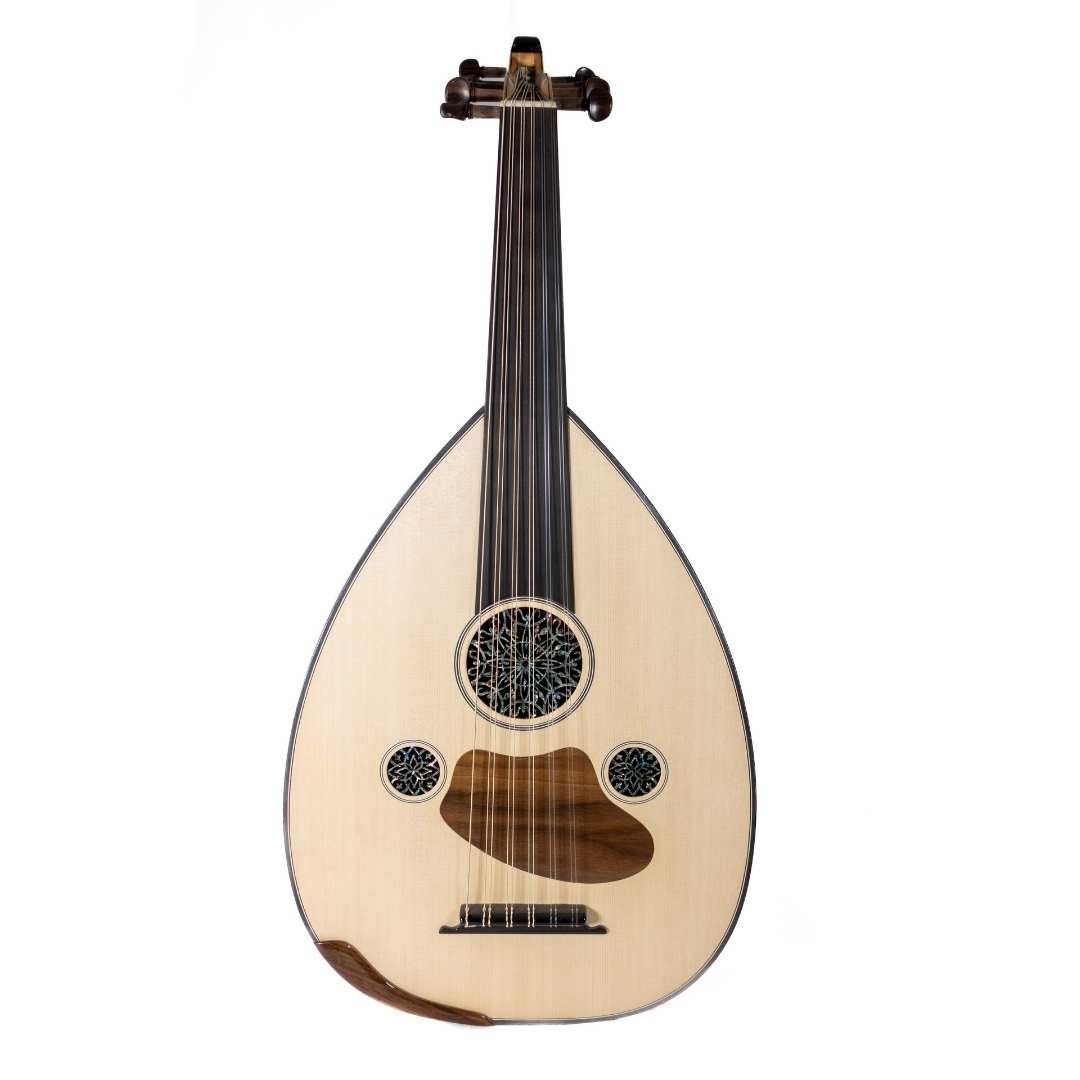
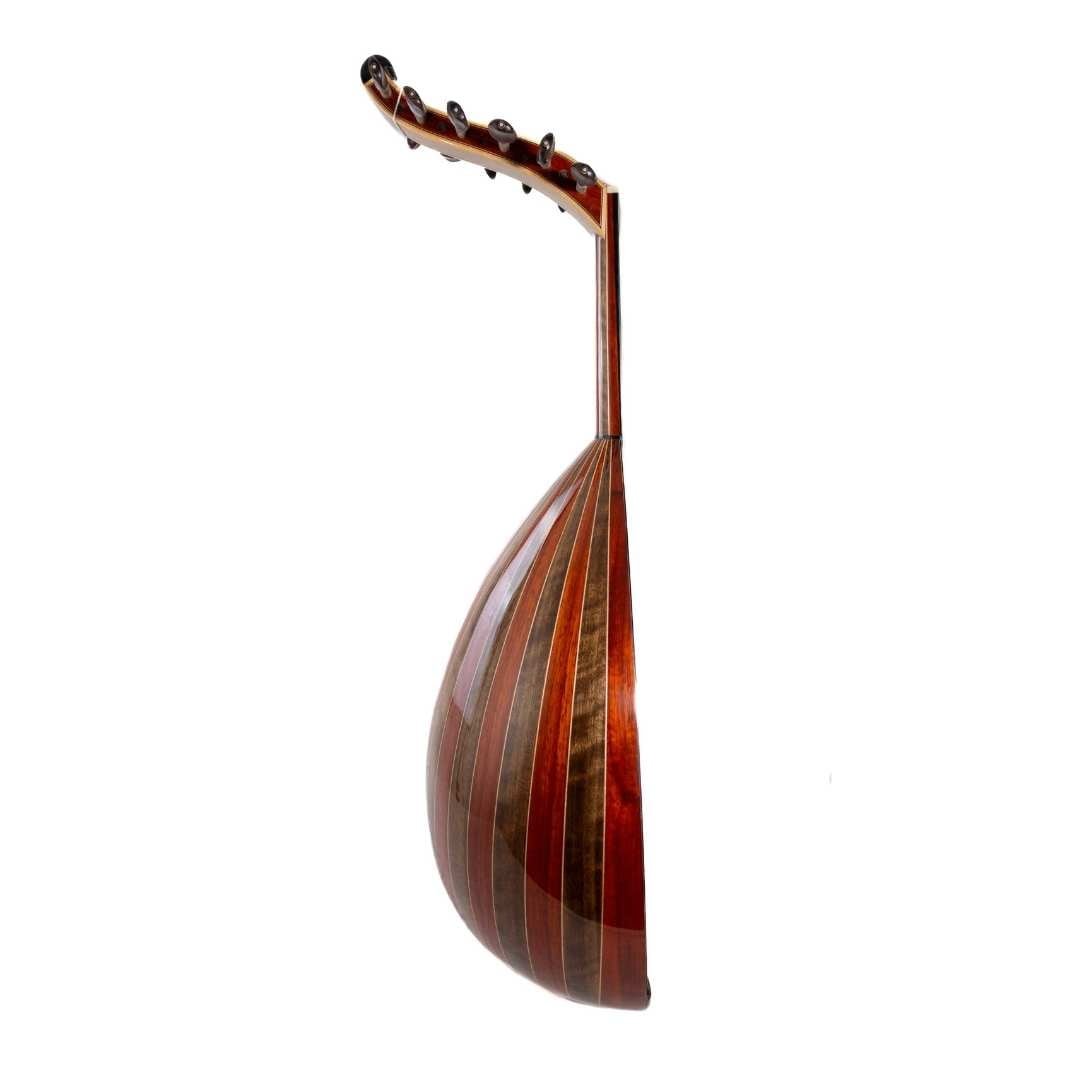
The Professional Turkish Oud by Feramis Aktas (Padouk & Walnut) is an acoustic concert-grade instrument built around a hybrid bowl that pairs Padouk with walnut — a construction choice that gives the player a wider tonal range than a single-wood bowl. Built by Feramis Usta in his Izmir workshop, this oud is aimed at musicians whose work covers both lead voice taqsim and ensemble playing, where one instrument has to handle both projection and blend.
Materials and Construction
The bowl is built from Padouk and walnut strips, alternated to bring out the strengths of each wood. Padouk is a dense African and Asian hardwood that gives a brighter, more forward projection in the upper midrange — useful when the oud is the lead voice in a recording or live setting. Walnut softens the low end and rounds off the attack, which keeps the tone balanced when the instrument sits inside an ensemble.
The soundboard is Eastern Spruce (Picea orientalis), the standard top wood for classical Turkish ouds, chosen for its sensitivity to plectrum dynamics and quick response to right-hand articulation. The pegs are rosewood, stable enough to hold tuning through long sets and changes in stage humidity. The soundhole is framed by a traditional mother-of-pearl rosette, cut and set by hand into the soundboard.
Tonal Character
The Padouk-and-walnut hybrid sits between a brighter all-Padouk build and the deeper, more rounded sound of an all-walnut bowl. In practice this means stronger upper-midrange presence for lead lines and clearer attack on plectrum strokes, paired with enough low-end body to support sustained chords and sustained-note maqam phrases. For solo concert work, the projection is sufficient without amplification in small to medium acoustic rooms. For larger venues or amplified contexts, the walnut sister model with built-in microphone is a better fit — this Padouk variant is purely acoustic.
The Maker — Feramis Aktas
Feramis Aktas — known to the Turkish oud world as Feramis Usta — was born in 1965 in Izmir. He started in woodworking workshops as a child and changed direction in 1981 when he met his teacher, Sinai Ozkan, one of the recognized authorities on Turkish instrument construction. Under Sinai Usta’s guidance, Feramis trained in the full range of traditional string instruments: oud, tanbur, lute, and qanun. His ouds are now in regular use by recording and concert-stage musicians across Turkey and the wider region. The same workshop produces a pickup-equipped walnut variant and a maple-body sister model for players seeking different tonal emphases.
Specifications
| Specification | Detail |
|---|---|
| Body | Padouk and Walnut (hybrid bowl) |
| Top (Soundboard) | Eastern Spruce (Picea orientalis) |
| Pegs | Rosewood |
| Rosette | Mother-of-pearl, hand-set |
| Pickup | None — fully acoustic |
| Skill Level | Professional |
| Maker | Feramis Aktas, Izmir, Turkey |
| Origin | Made in Turkey · Ships from Italy |
Who This Oud Is For
This instrument is built for working musicians who want a single oud that can move from solo taqsim to ensemble repertoire without a tonal compromise. The price point and feature set are aimed at players who already perform, record, or teach regularly — students will not be limited by the build, but the cost reflects a professional context. Players coming from the all-walnut Feramis Aktas oud line will notice the added attack and presence; players moving to a Feramis from another maker will find a familiar Turkish-oud voice with the slightly brighter character that Padouk contributes.
Musical Traditions
Built first for Turkish maqam repertoire — where the Padouk’s projection helps lead voice and improvised taqsim cut through clearly — the construction also serves Arabic classical and Mediterranean folk traditions where ensemble blend matters. The walnut element keeps the tone from becoming too forward in chamber settings. For contemporary world-fusion projects that need an amplified signal, the pickup-equipped sister model is the more practical choice; this oud is best where acoustic voice is the goal.
Care and Maintenance
Keep the instrument in a hard case when not in use. Both Padouk and walnut respond to indoor heating in winter — a small in-case humidifier helps below 40% RH. Clean the soundboard and bowl with a dry microfiber cloth only; avoid solvents on the mother of pearl rosette. Rosewood pegs will benefit from a light application of peg compound once a year. The Padouk’s natural color may darken slightly over time with light exposure — this is normal and does not affect tone.



Reviews
There are no reviews yet.