
The Caglama: A Rare Handcrafted String Instrument
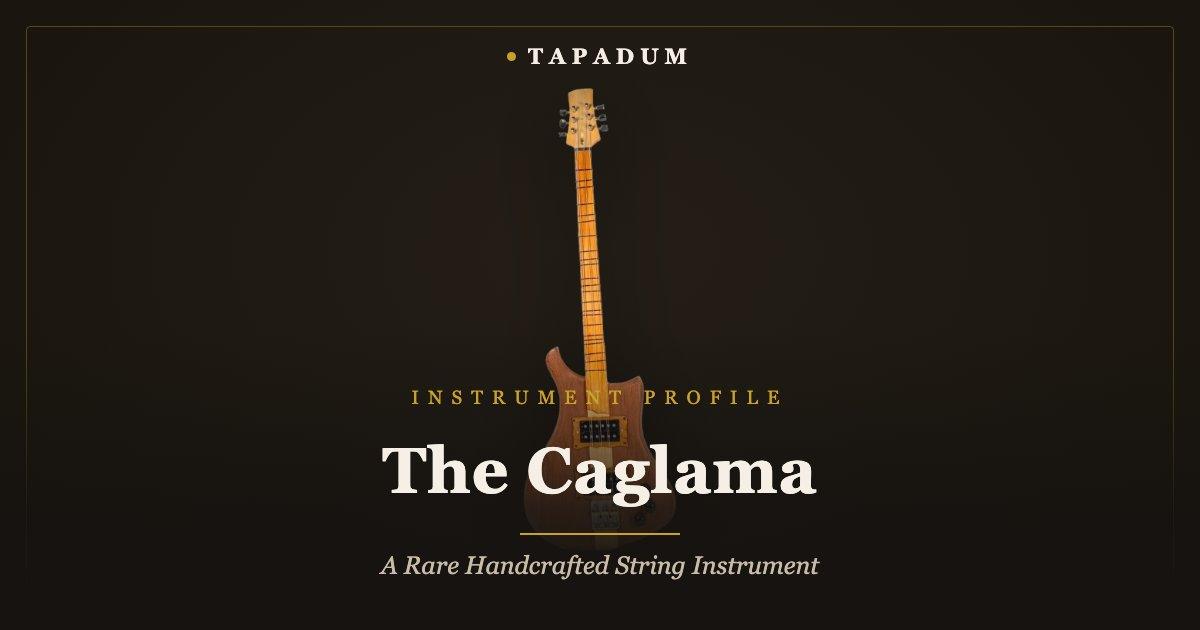
What you’ll learn: what a caglama actually is (hint: it’s neither a baglama nor a guitar), who invented it and why, the two Tapadum models and how they differ, and what kind of music it’s actually built for.
The caglama is a hybrid string instrument that fuses the amplified voice of the electric guitar with the long-necked modal character of the Turkish baglama. It was originally conceived by Turkish musician Ömür Kılıçarslan as an experimental instrument built to bridge Anatolian modal traditions and Western electric playing — deliberately a third instrument, not a substitute for either of its parents.
What Is a Caglama?
Visually, a caglama reads as a long-necked electric instrument, but its tuning, fret spacing, and modal logic come straight from the baglama family — meaning it’s built to play Anatolian and Middle Eastern makam music, including the microtonal intervals a standard guitar fretboard can’t reach. What separates it from a converted or “electrified” baglama is that it was designed from the ground up as its own instrument, with construction choices made specifically for amplified performance rather than adapted from an acoustic original.
Construction: Two Approaches
Tapadum builds the caglama in two distinct configurations. The Caglama – Double Pick Up (€999) uses a mulberry wood body with an oak top for warmth and clarity, an ash neck for stability, and an Afromosia fingerboard for durability. Its double Epiphone pickup configuration captures both the percussive attack of plectrum work and the sustained tonal character of fingered passages.
The Caglama Box – Kutu Saz (€689) takes a different structural approach entirely: a compact, box-shaped solid tonewood body built using single-piece (yekpare) construction, where the neck and box are carved from one continuous section of wood with no glued joint between them. This eliminates the typical neck-to-body seam and improves vibration transfer, while trading the deep resonator bowl for a slim rectangular chamber that prioritizes portability. It carries a single magnetic pickup with onboard volume and tone controls, tuned in the same baglama-style system (commonly D–A–D) across a 58 cm scale.
How It Sounds — Neither Baglama Nor Guitar
Unlike a standard baglama, the caglama integrates electric amplification suited to stage and studio work. Unlike a conventional electric guitar, it keeps the long-scale modal character and microtonal fretting of Turkish lutes. Tapadum’s own product notes put it plainly: it’s intentionally a third instrument. That makes it best suited to Anatolian rock fusion, Mediterranean modal genres, cinematic scoring, and experimental world-electric music — genres that want the amplified sustain of an electric instrument without losing makam-based melodic identity.
Playing the Caglama
I play caglama alongside ney and fretless guitar in my own work, and the adjustment coming from either direction is real. Coming from baglama, you gain sustain and dynamic control you never had acoustically, but you have to relearn your right hand for a pickup that responds differently to attack. Coming from electric guitar, the fretting is the challenge — the microtonal frets aren’t a mistake to correct, they’re where the instrument’s actual voice lives. It rewards players willing to sit with both traditions rather than treating it as either instrument with a plug.
Choosing Between the Two Models
The Double Pick Up is the full-scale stage instrument — built for a real amplified rig, pedal chains, and the tonal range a double-pickup system gives you. The Box (Kutu Saz) is the practical choice if portability matters more than maximum tonal range — its compact, one-piece body travels easily and still delivers the same fundamental modal-electric character, just in a smaller package suited to touring, small studios, or a first caglama.
Frequently Asked Questions
What is a caglama exactly?
It’s a hybrid string instrument combining the amplified electric guitar voice with the long-necked, microtonal modal character of the Turkish baglama — conceived as its own third instrument, not an electrified baglama or a modified guitar.
Who invented the caglama?
Turkish musician Ömür Kılıçarslan originally conceived it as an experimental instrument designed to bridge Anatolian modal traditions and Western electric playing.
What’s the difference between the two Tapadum caglama models?
The Double Pick Up (€999) is a full-scale stage instrument with a double Epiphone pickup system. The Box – Kutu Saz (€689) is a compact, single-piece (yekpare) construction built for portability, with a single magnetic pickup.
Can a baglama player switch to caglama easily?
The fretting and modal logic carry over directly, but the right-hand technique needs adjustment — a pickup responds differently to plectrum attack than an acoustic soundboard does.
What kind of music is the caglama built for?
Anatolian rock fusion, Mediterranean modal genres, cinematic scoring, and experimental world-electric music — contexts that want amplified sustain without losing makam-based melodic character.