

Description
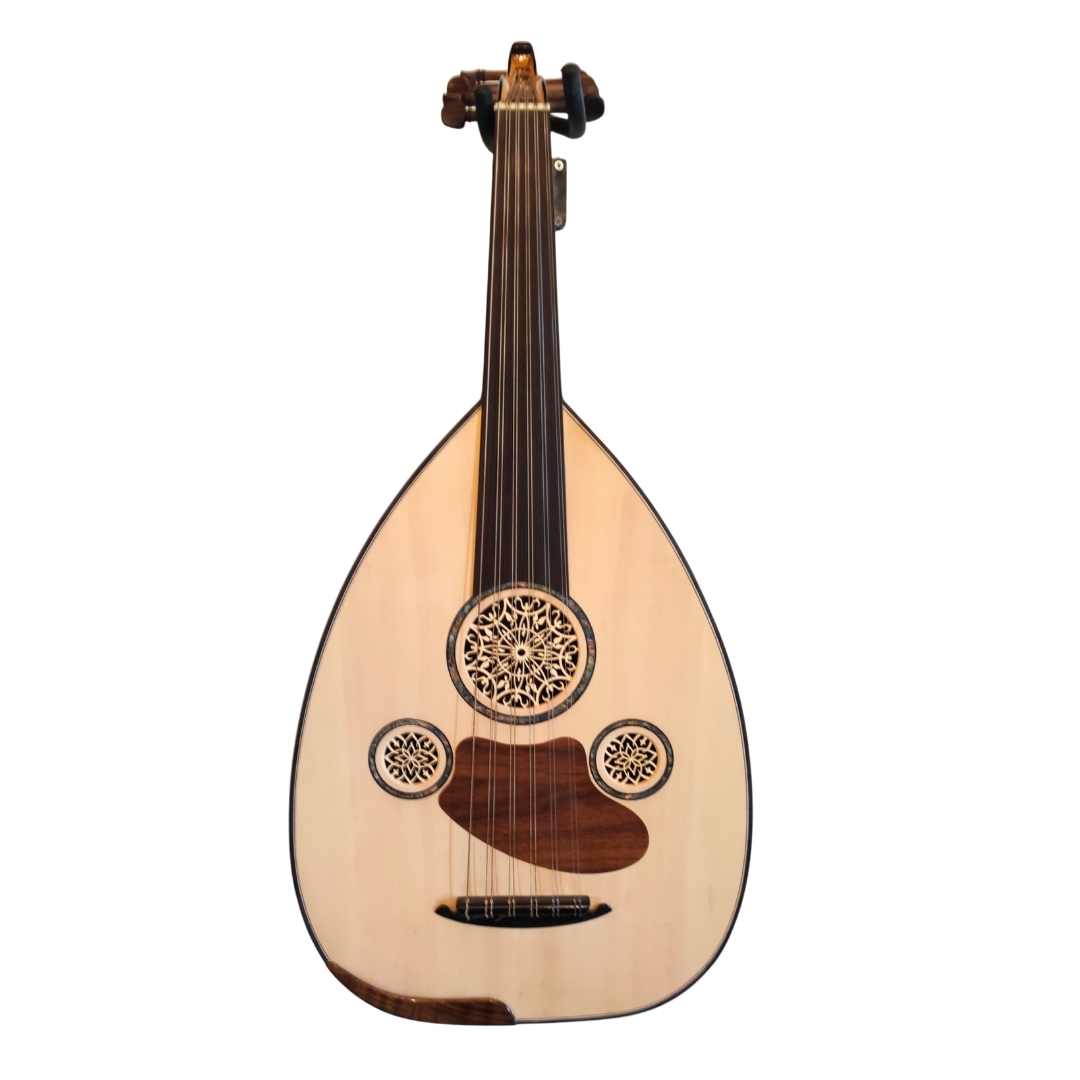
The Professional Turkish Oud by Feramis Aktas (with pick-up) is a working musician’s instrument — concert-grade construction with a built-in microphone for live use, recording, and amplified ensembles. Built by Feramis Usta in his Izmir workshop, this oud carries the tonal character that Turkish maqam playing demands while solving the practical problem every gigging oud player faces: how to get a clean, faithful signal on stage without sacrificing the natural voice of the instrument.
Materials and Construction
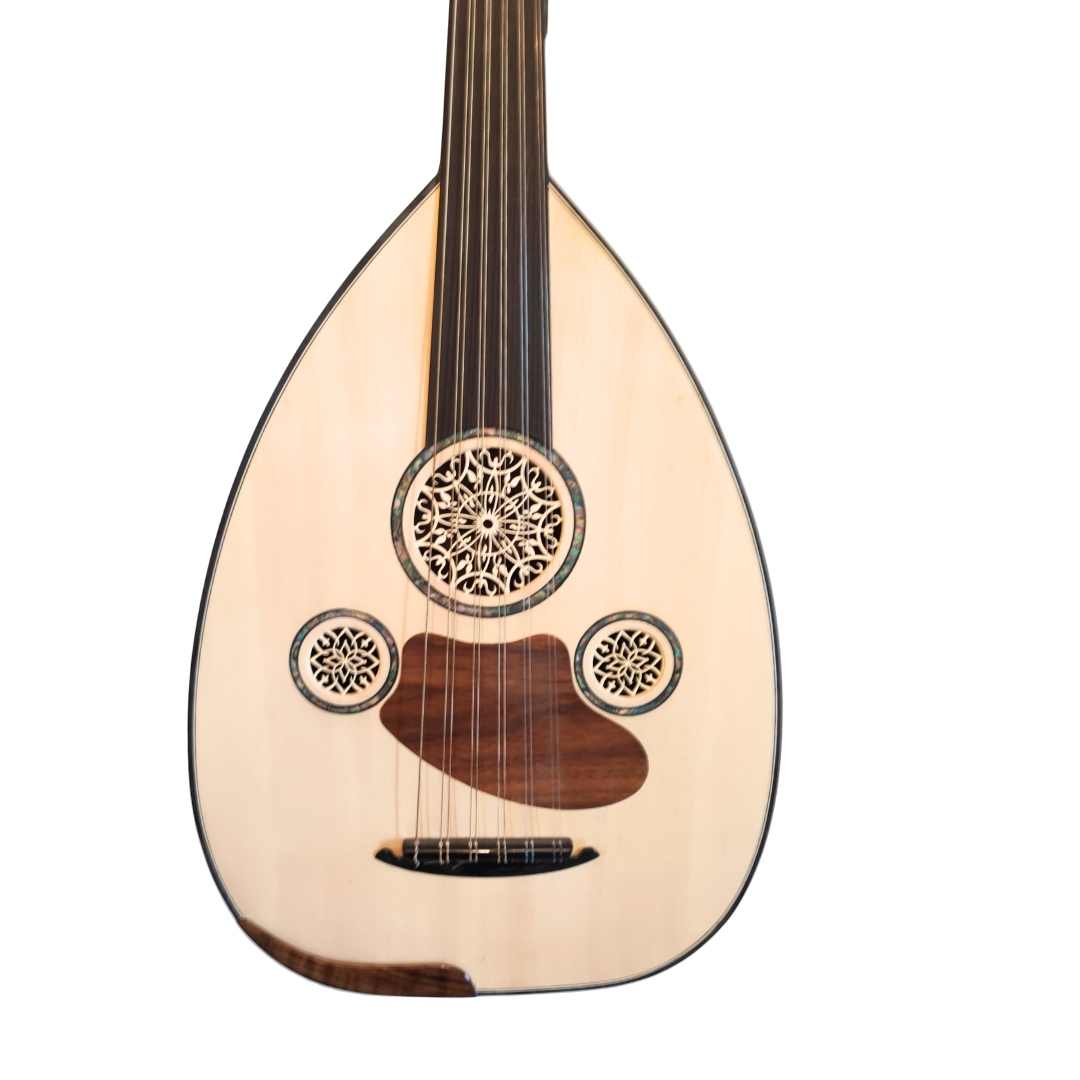
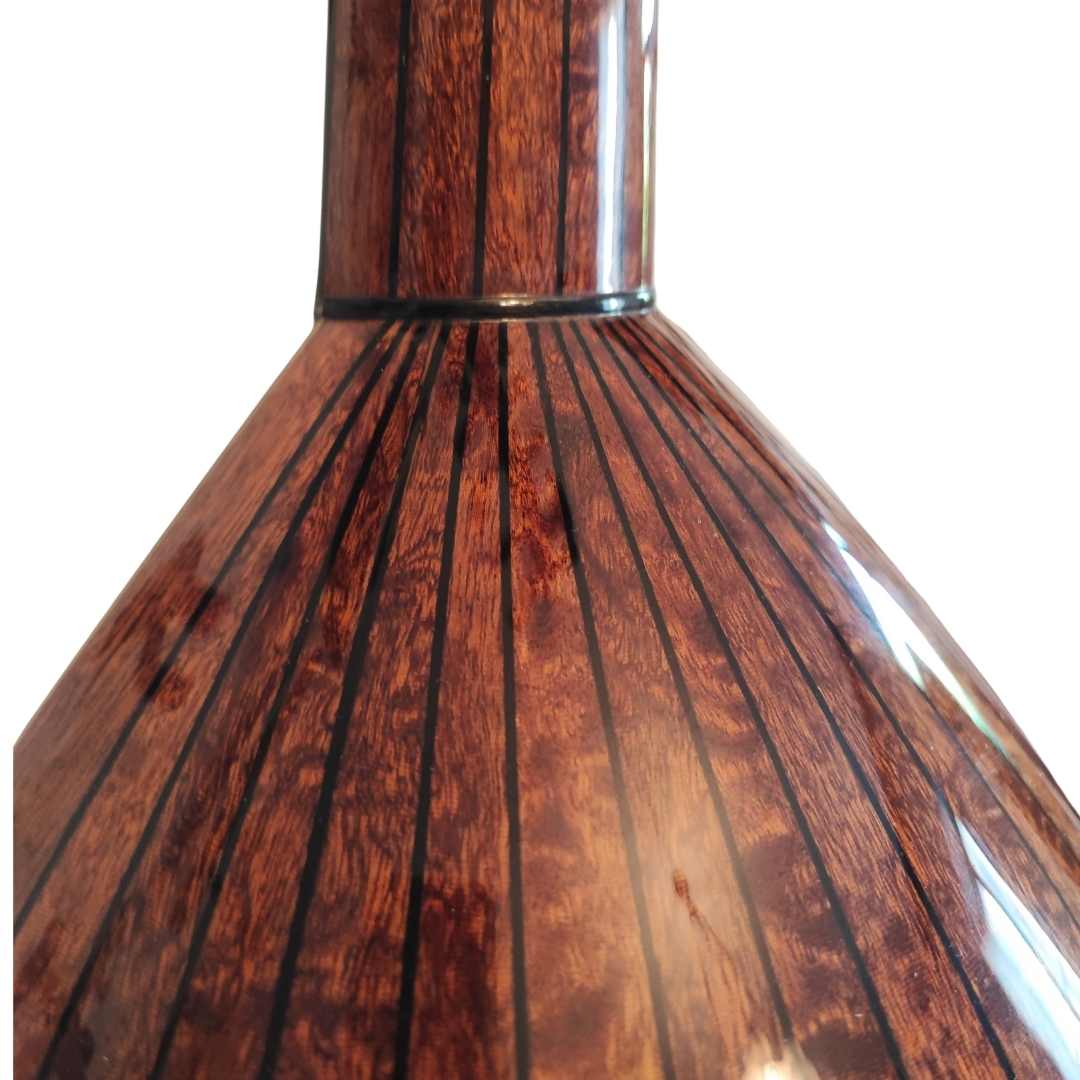
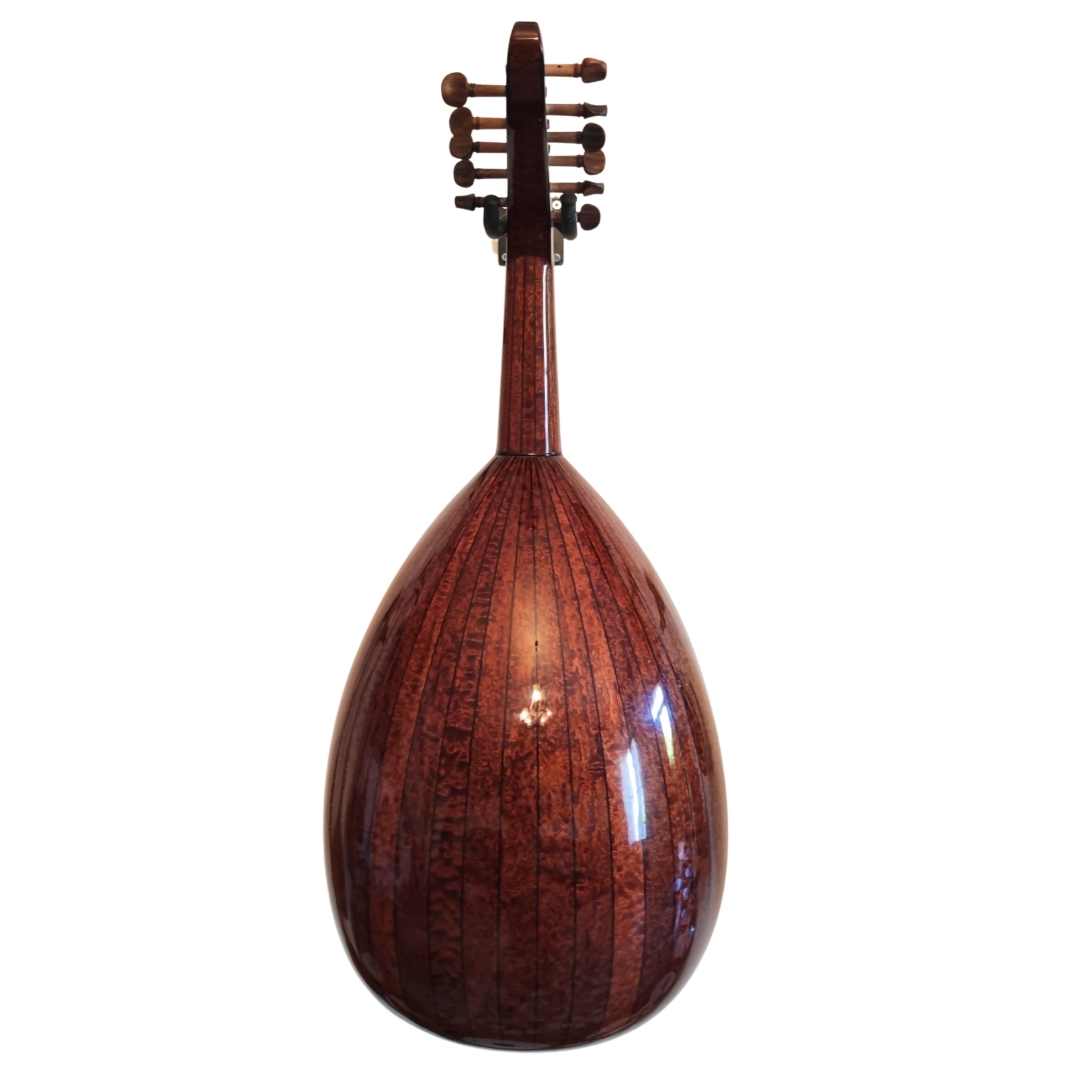
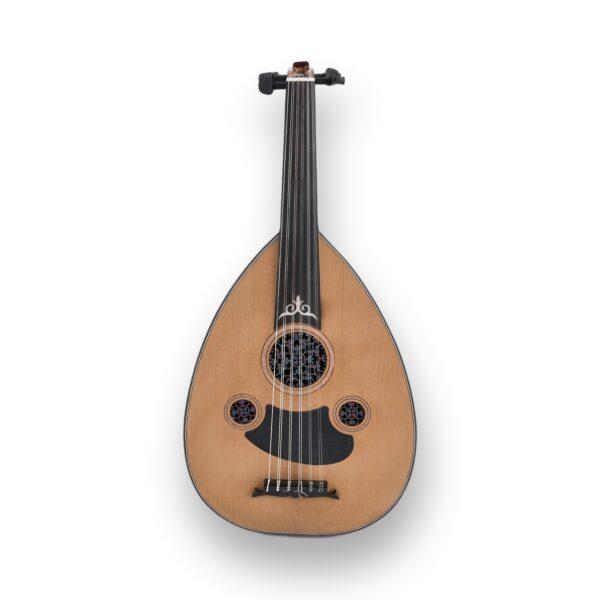
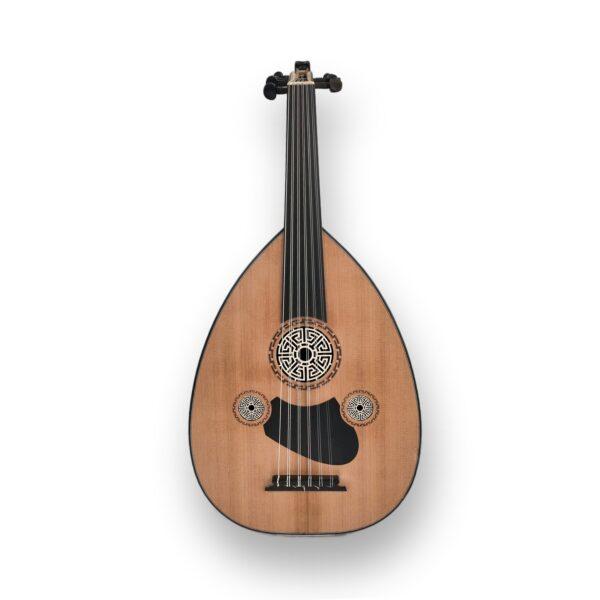
The body is shaped from walnut, a hardwood that gives the bowl a warmer midrange and a denser low-end response than maple — useful for ensemble playing where the oud needs to sit clearly under percussion and other strings. The soundboard is Eastern Spruce (Picea orientalis), the same species used on classical Turkish ouds for its sensitivity to right-hand dynamics and its quick response to plectrum attack.
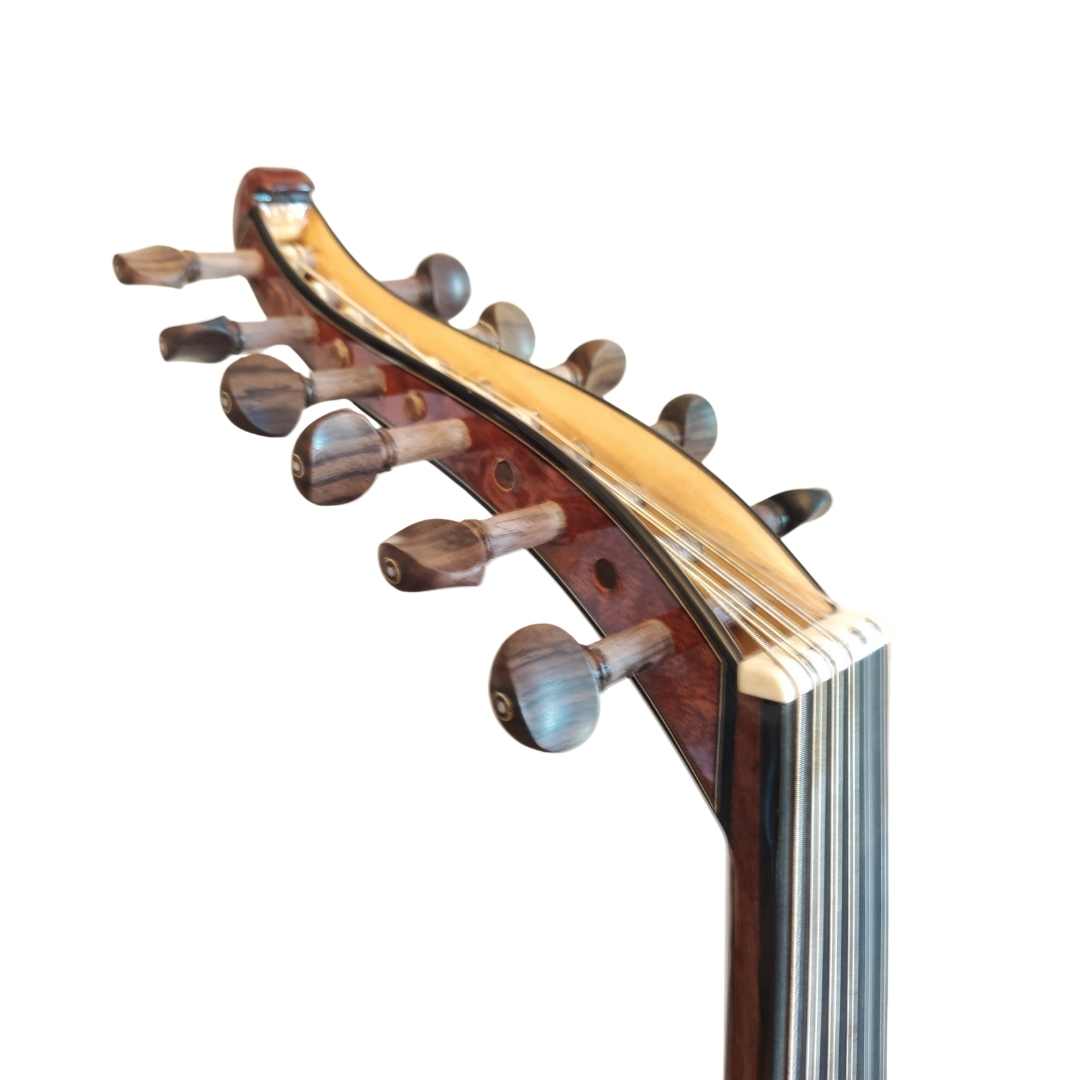
The pegs are rosewood, a stable choice that holds tuning through long sets and changes in stage humidity. The soundhole is framed by a traditional mother-of-pearl rosette — not a printed inlay, but cut and set by hand, which adds visual depth without altering the soundboard’s mass.
The Built-In Pickup
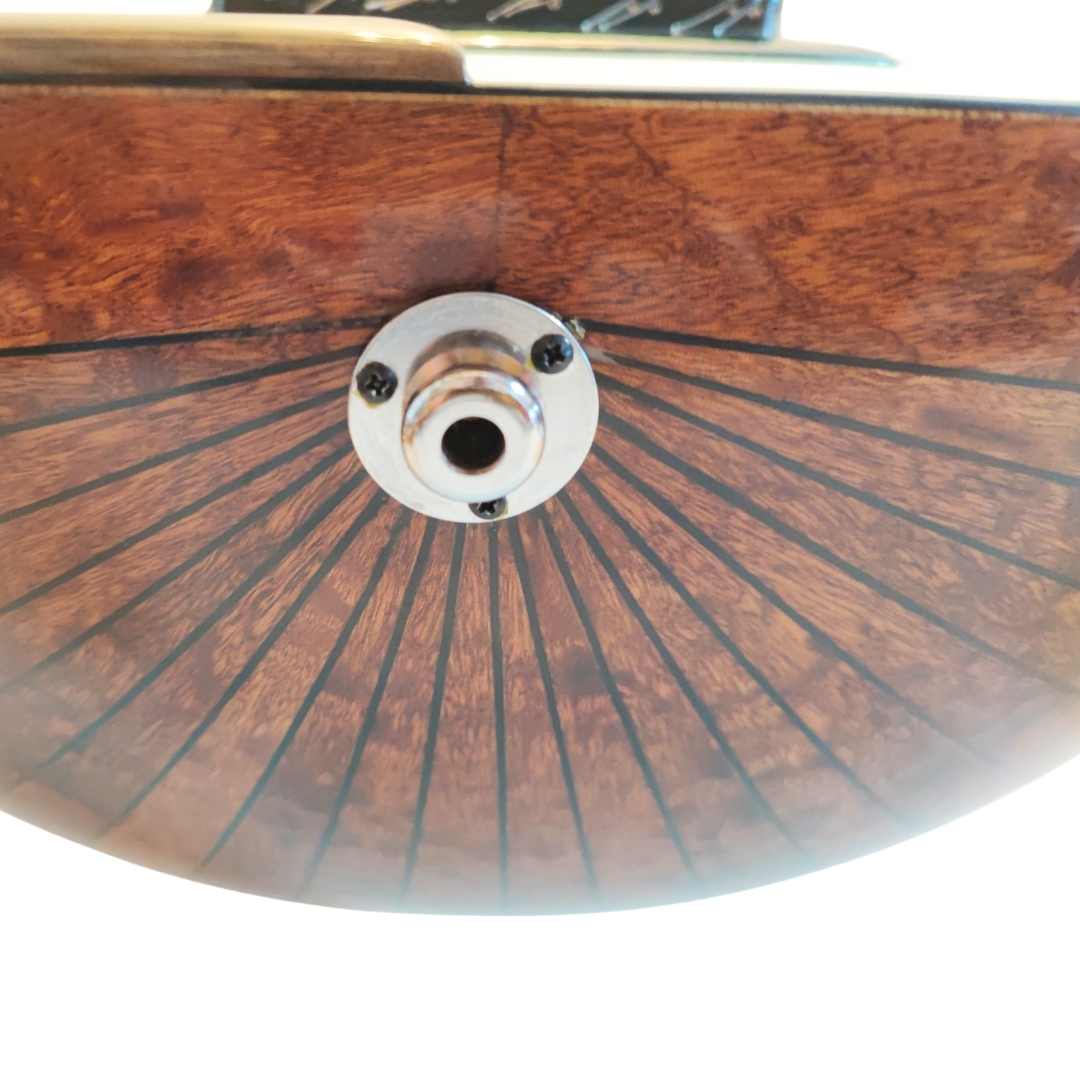
The pickup is an internal microphone, mounted inside the bowl and routed to a standard 1/4″ jack at the tail. This is a different design choice from the contact piezo systems found on most amplified ouds. A piezo reads vibration off the soundboard surface, which tends to translate into a bright, slightly compressed signal that can sound thin in the upper registers. An internal mic captures the actual air movement inside the bowl — the same sound the player hears unplugged — so the amplified signal preserves the warmth and complexity of the acoustic instrument.
For live use, plug into any acoustic instrument amp, PA channel, or mixer. For studio work, a DI box helps match the output to line-level inputs. When the cable is unplugged, the oud functions as a fully acoustic instrument with no signal coloring or mechanical load on the soundboard.
The Maker — Feramis Aktas
Feramis Aktas — known to the Turkish oud world as Feramis Usta — was born in 1965 in Izmir. He started in woodworking workshops as a child and changed direction in 1981 when he met his teacher, Sinai Ozkan, one of the recognized authorities on Turkish instrument construction. Under Sinai Usta’s guidance, Feramis trained in the full range of traditional string instruments: oud, tanbur, lute, and qanun. His ouds are now in regular use by recording and concert-stage musicians across Turkey and the wider region. The same workshop produces a maple-body sister model and a padouk-and-walnut variant for players seeking different tonal emphases.
Specifications
| Specification | Detail |
|---|---|
| Body | Walnut |
| Top (Soundboard) | Eastern Spruce (Picea orientalis) |
| Pegs | Rosewood |
| Rosette | Mother-of-pearl, hand-set |
| Pickup | Built-in internal microphone, 1/4″ jack output |
| Skill Level | Professional |
| Maker | Feramis Aktas, Izmir, Turkey |
| Origin | Made in Turkey · Ships from Italy |
Who This Oud Is For
This oud is built for working musicians who need an instrument that can move from acoustic practice to amplified performance without a signal-chain headache. The price point and feature set are aimed at players who already perform, record, or teach regularly — students will not be limited by the build, but the instrument is sized in cost and capability for professional context. Players coming from a Western guitar or lute background will adapt to the bowl shape and short scale; experienced Feramis Aktas oud players or other Turkish oud students will find a familiar voice with the added flexibility of an internal pickup.
Musical Traditions
Built first for Turkish maqam repertoire, the construction and tonal balance also serve Arabic classical, Mediterranean folk, and contemporary world-fusion projects. The pickup is what opens the second half of that list: when the oud has to integrate with amplified instruments, electronic processing, or a DAW input, the internal microphone gives a signal that other amplified ouds cannot. For purely acoustic Turkish or Arabic ensemble work, the pickup stays unused without altering the unplugged sound.
Care and Maintenance
Walnut is sensitive to humidity. Keep the instrument in a hard case when not in use and avoid dry indoor heating in winter — a small in-case humidifier helps in heated rooms below 40% RH. The mother of pearl rosette is set into the soundboard, so cleaning is done with a dry microfiber cloth only; avoid solvents or polish. Rosewood pegs will benefit from a light application of peg compound once a year.



Reviews
There are no reviews yet.