
Description
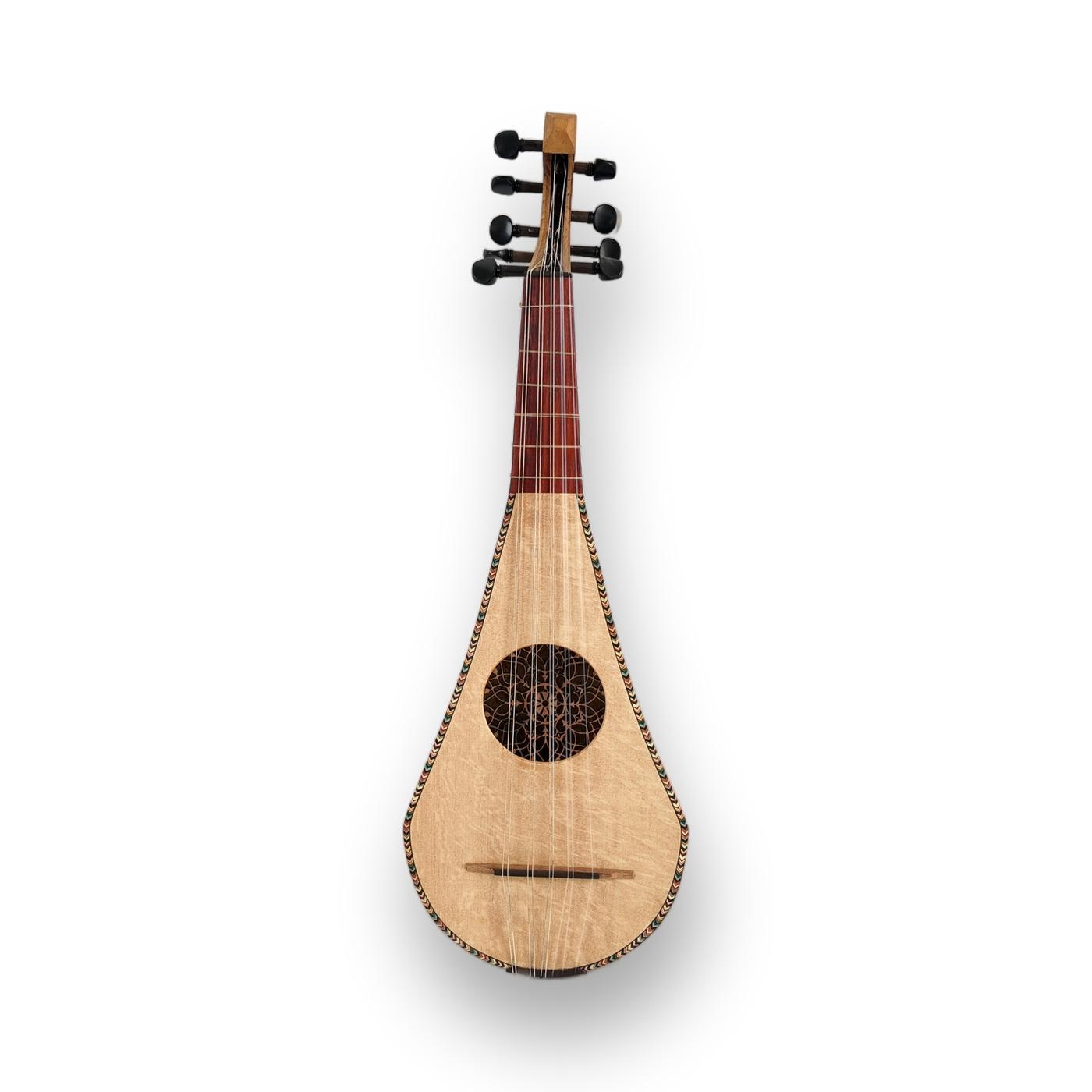
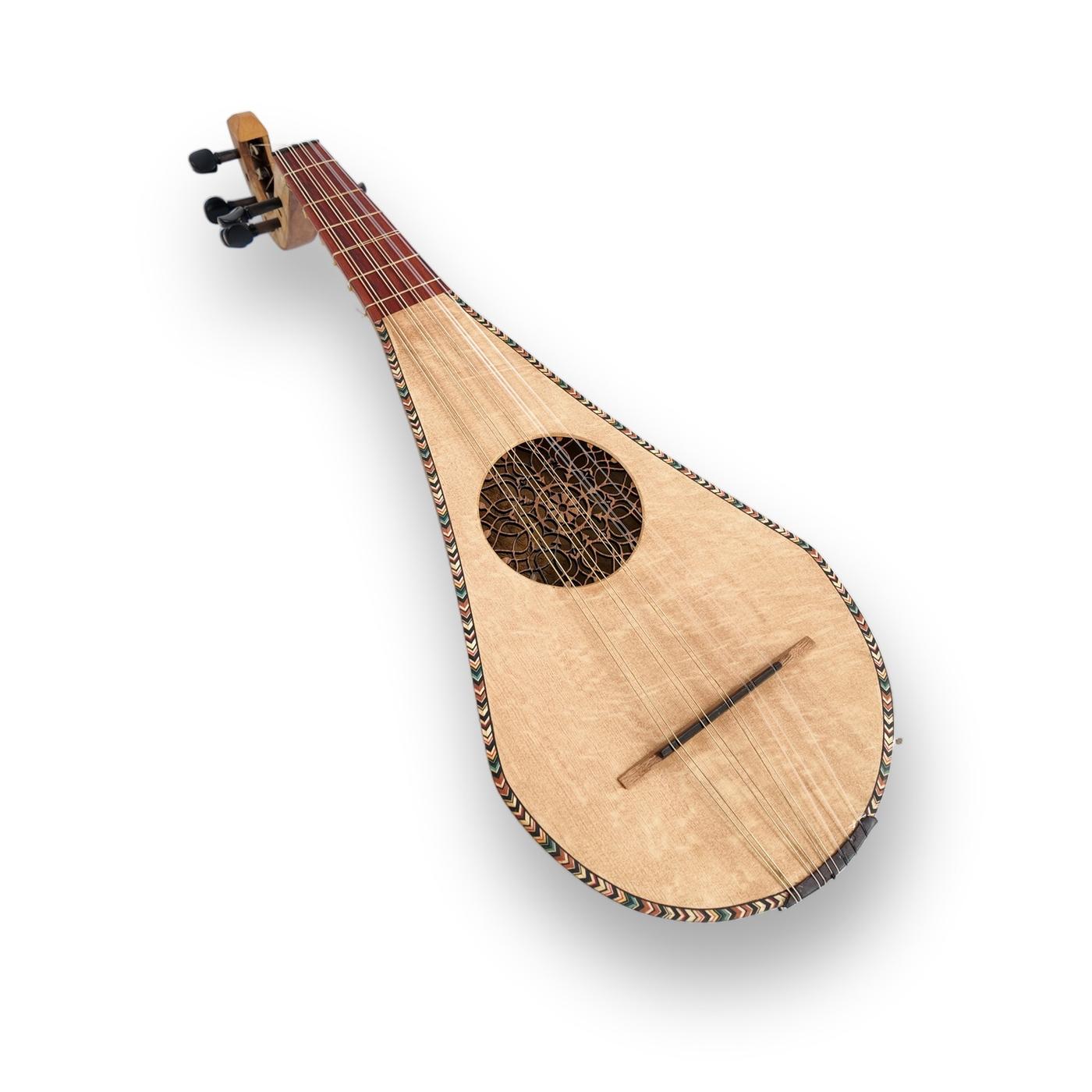
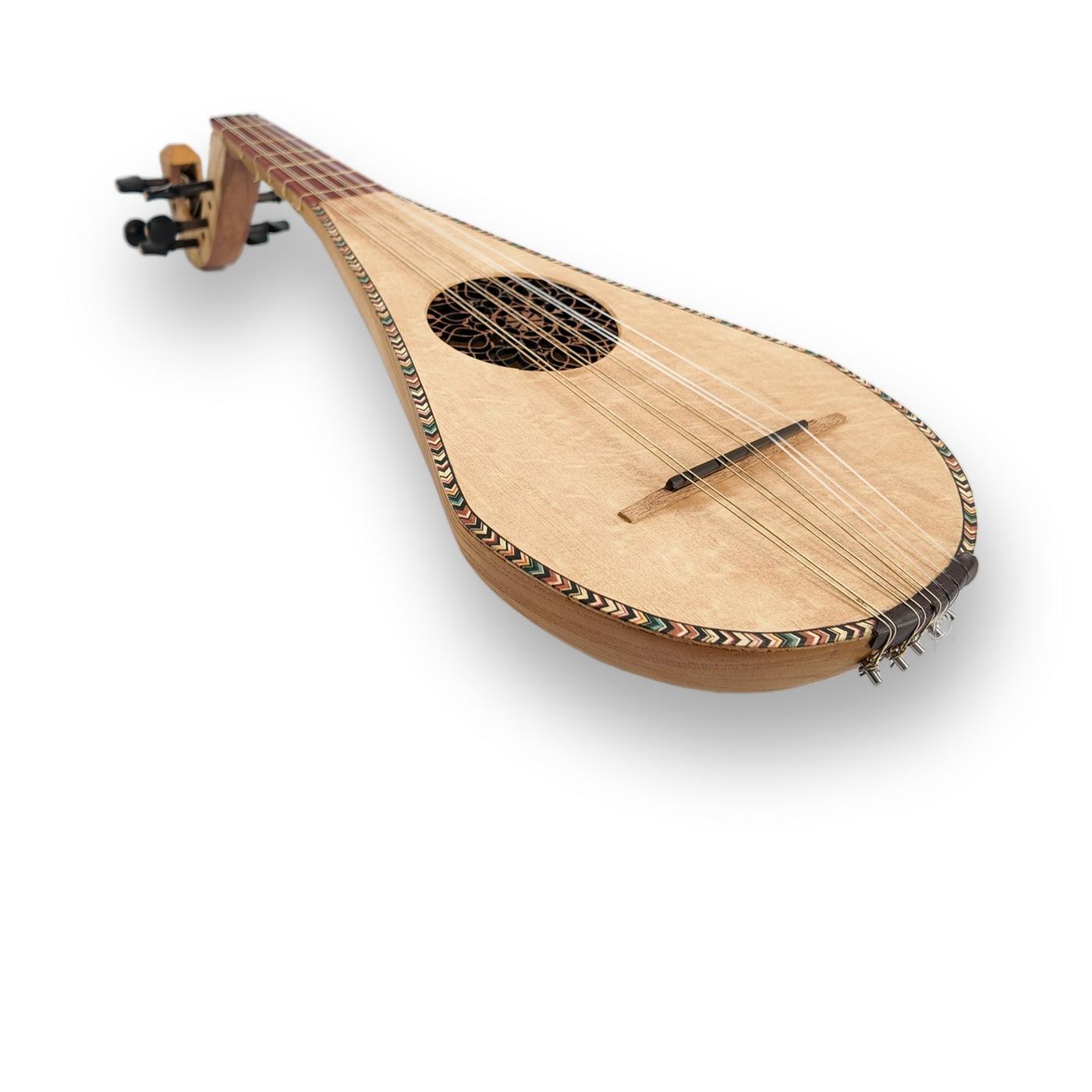
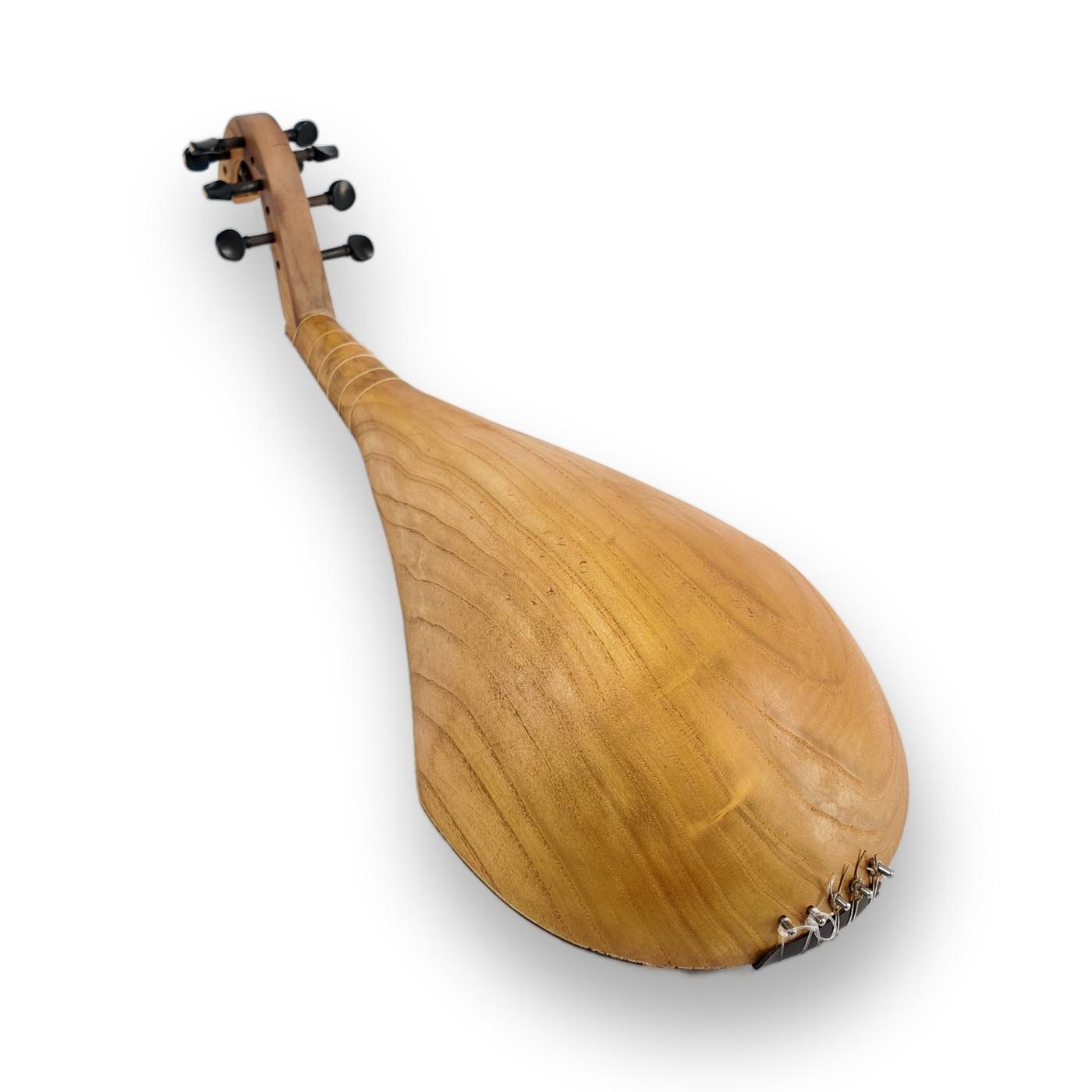
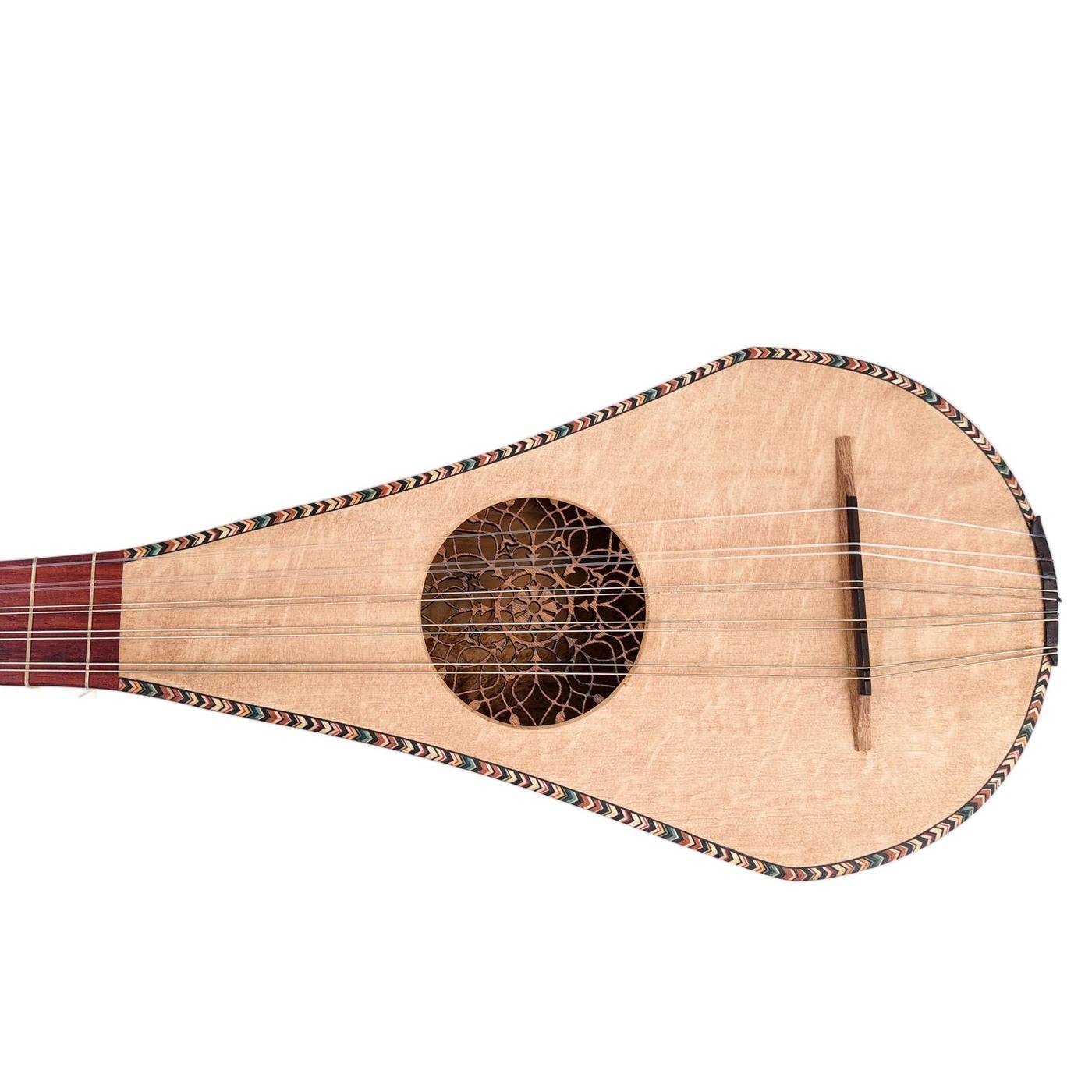
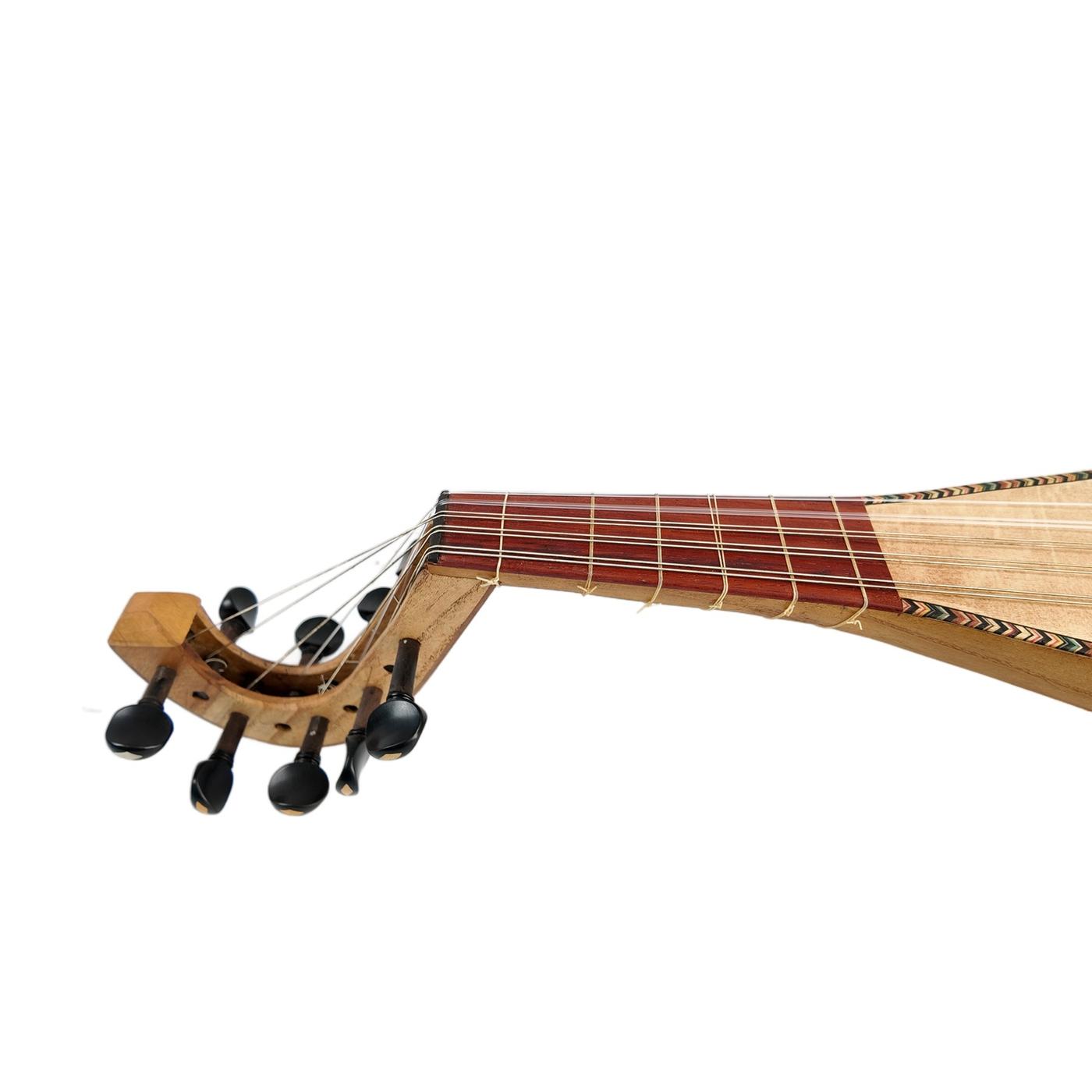
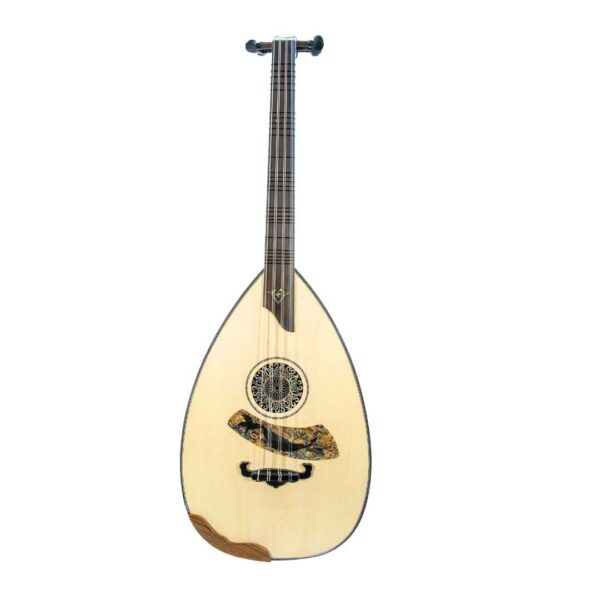
The gittern is a small, carved-body plucked lute that carried the secular music of medieval and Renaissance Europe, and this instrument is built to that pattern: a body hollowed from a single block of elm, a flat spruce soundboard, and a short neck strung with four to six courses. It is hand-carved to order in our workshop for early-music ensembles, historical reenactment groups, and collectors who want a playable instrument rather than a wall piece.
Elm body, spruce soundboard
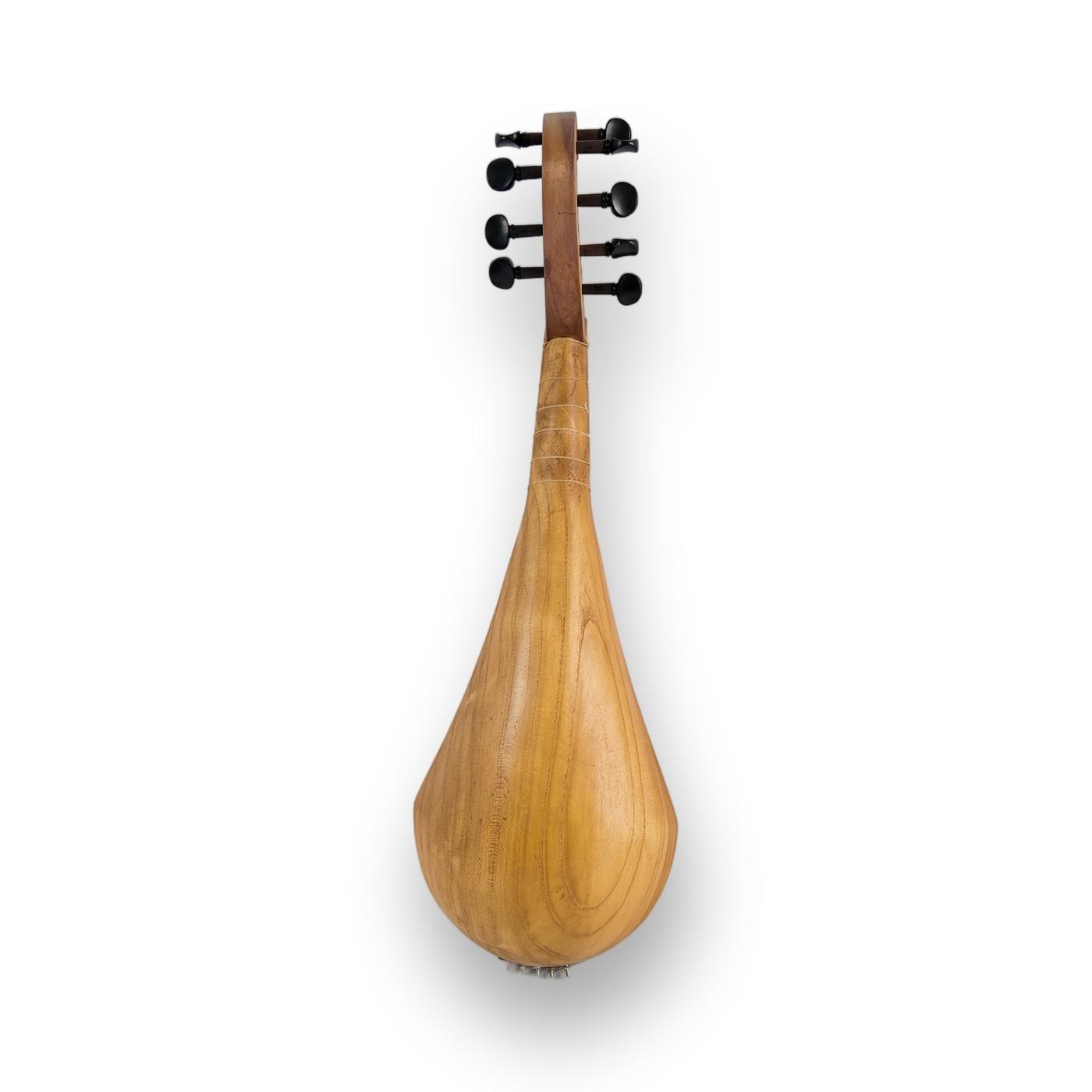
The rounded, pear-shaped back is carved from a single block of elm rather than assembled from bent staves. This is the older method, and it is what gives the gittern its quick, articulate response: there are no glue seams across the shell to damp the vibration. Elm is dense and close-grained, so the carved body holds its shape through seasonal humidity changes.
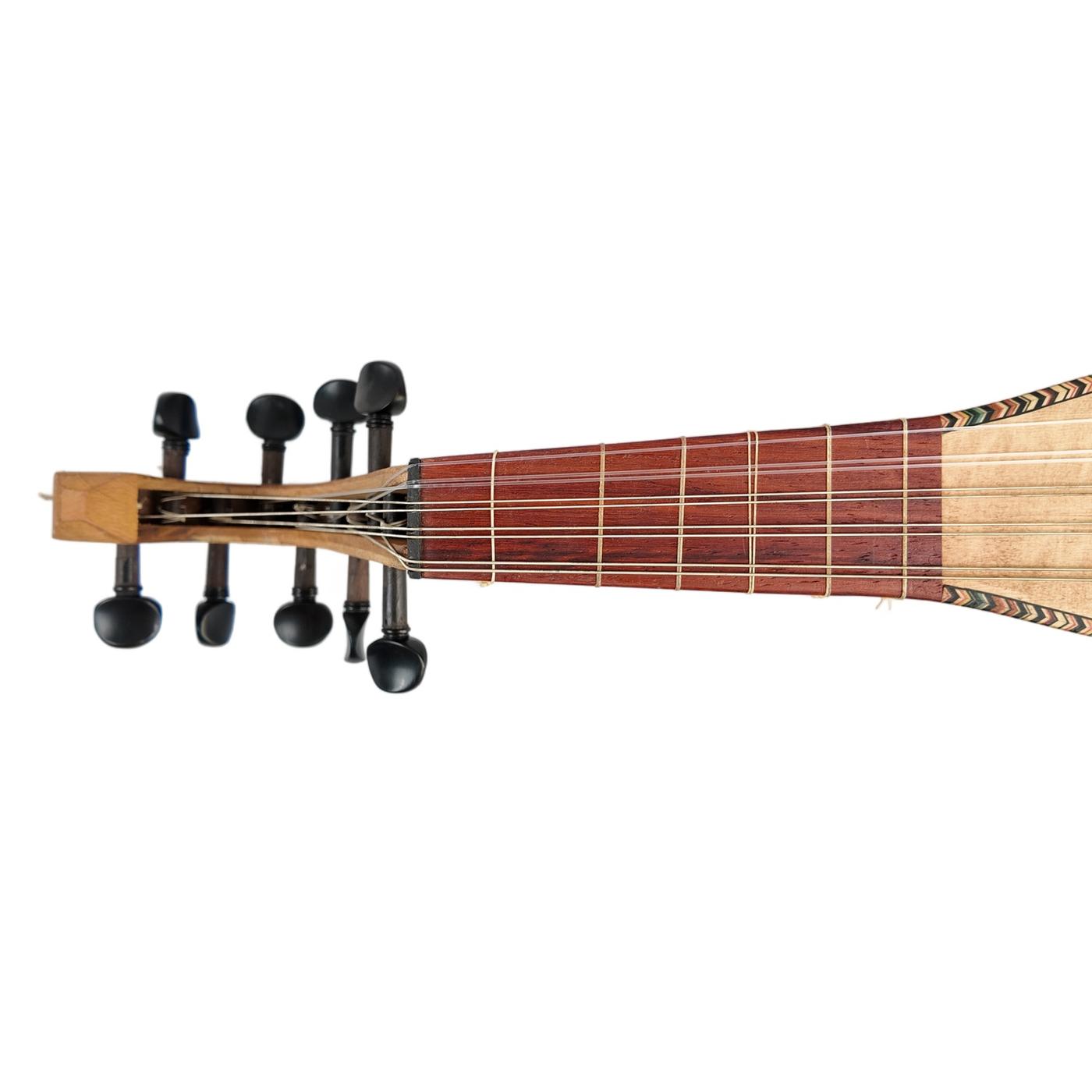
The flat spruce soundboard supplies the brightness and forward projection that early-music repertoire asks for, and the afromosia fretboard gives a hard-wearing surface with a smooth feel under the left hand. Every instrument passes individual quality control with our string instruments specialist Sertan Sarioglu — carving integrity, string action, and tonal balance — before shipping from our Brisighella, Italy showroom.
Strings and tuning
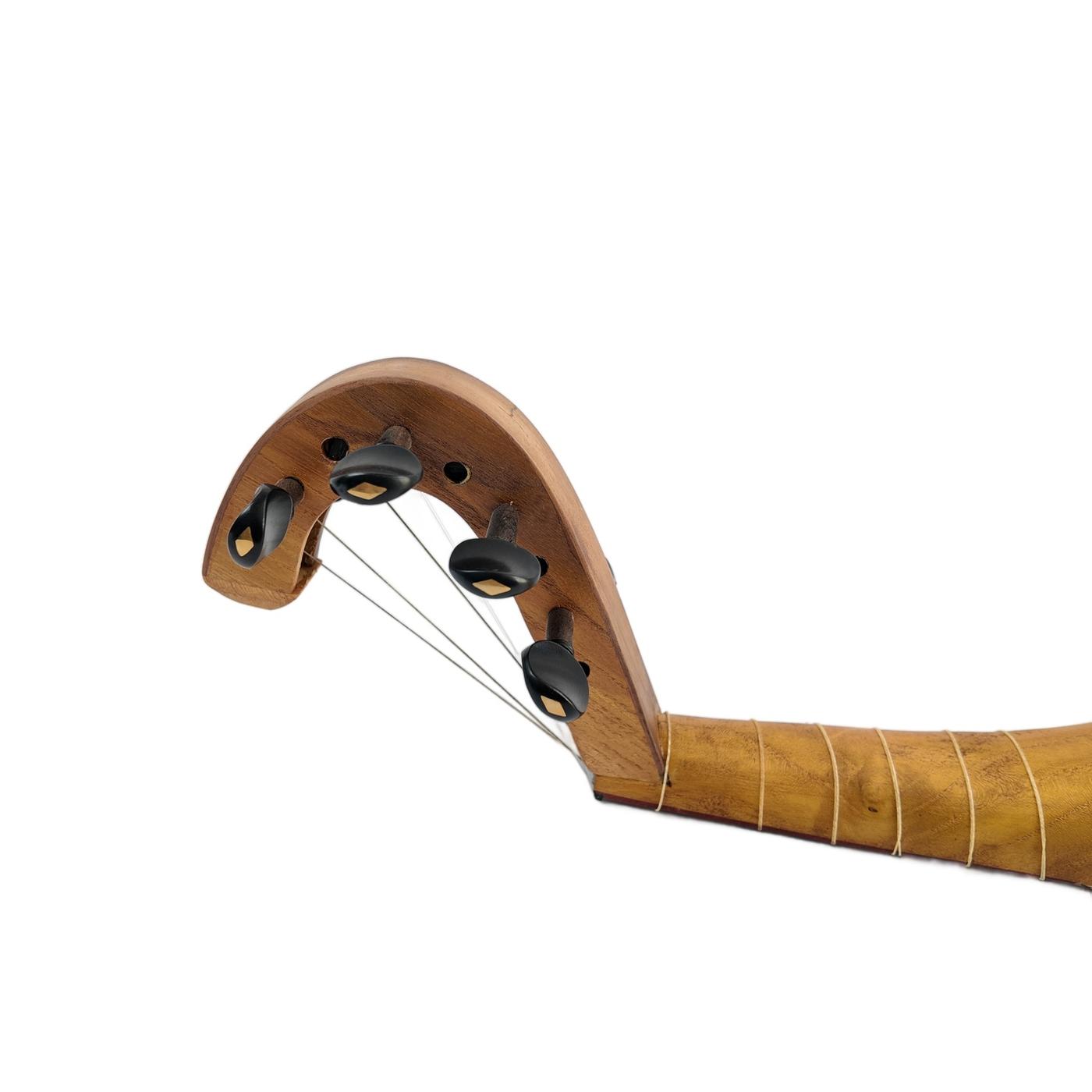
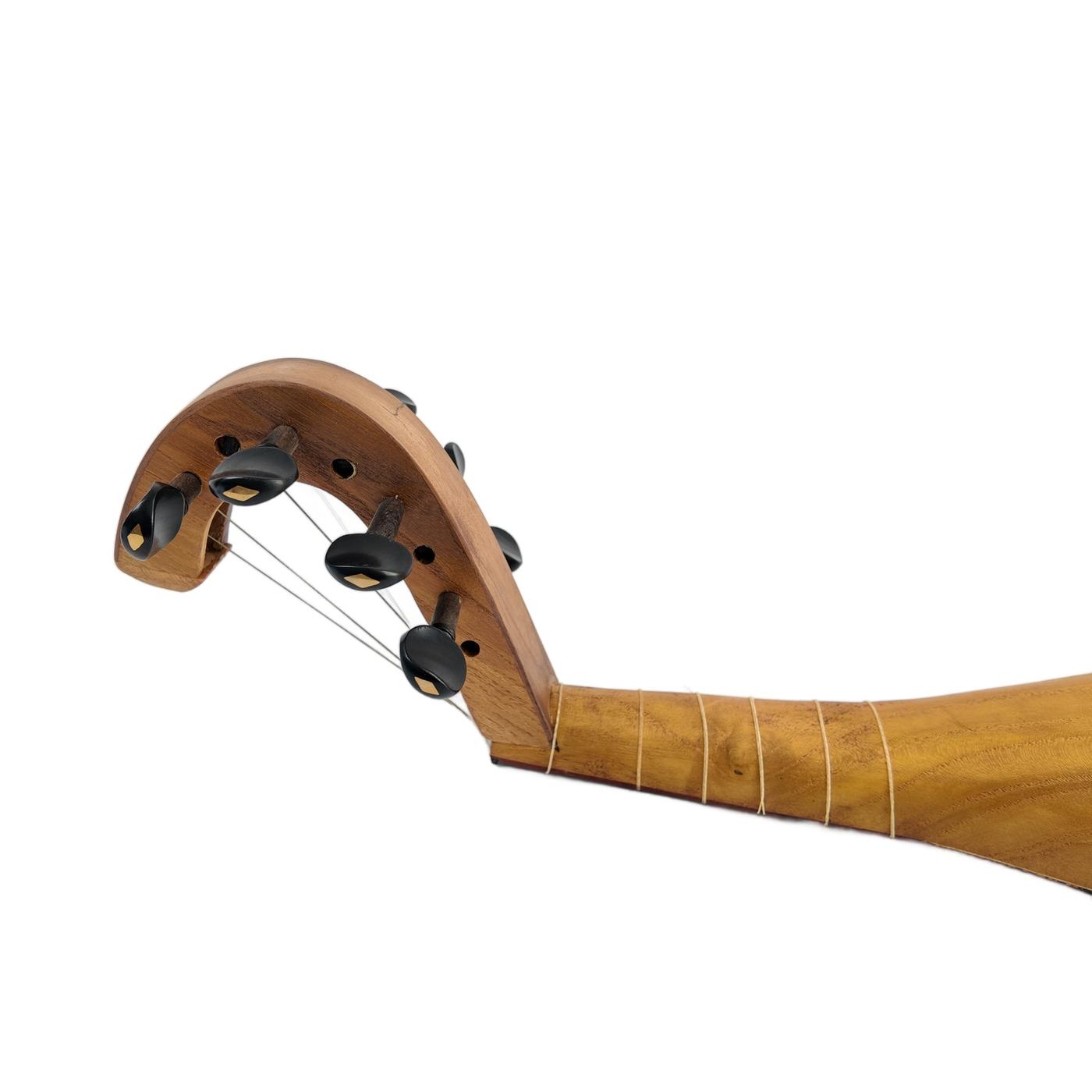
The gittern takes four to six strings: traditional gut, or modern lute and oud strings if you want a set that holds pitch longer and survives touring. The instrument accepts either without modification.
There is no single historical tuning for the gittern. It varied by region and by period, and the player set the instrument to suit the dance and song forms in front of them — this is a feature of the repertoire, not a gap in the record. Most players working in early-music ensembles settle on a diatonic setup for medieval and Renaissance melody and adjust from there. The right hand plays with a quill or plectrum, driving both single-line melody and rhythmic strumming; the short neck keeps ornamented lines close together under the left hand.
Technical specifications
| Body wood | Elm, carved from a single block |
| Soundboard | Spruce |
| Fretboard | Afromosia |
| Strings | Four to six — gut or oud strings |
| String length | 45 cm |
| Total length | 67 cm |
| Body | 22 × 12 cm |
| Weight | 2.5 kg |
| Build | Hand-carved to order, 3–10 days preparation |
Who it is for
This gittern suits players working in early-music ensembles, historical reenactment, and Renaissance fairs — anyone who needs an instrument that behaves historically rather than a modern guitar in period dress. Its compact size and short neck make it approachable for players coming from guitar or Renaissance lute, and the four-to-six string setup keeps the left hand simpler than a multi-course lute. Ethnomusicology students and collectors of early European instruments will find a genuine carved build rather than a decorative reproduction.
Repertoire and traditions
Between the thirteenth and sixteenth centuries the gittern belonged to the secular repertoire: dance tunes, troubadour song, and the instrumental music of minstrels and travelling players. It worked equally well in the street and in courtly ensembles, which is why it appears so often in period iconography — a small, loud, portable instrument. Today it carries estampie and saltarello dance settings, the melodic lines of medieval song, and instrumental accompaniment in early-music groups. As a member of the lute family that reached Europe through the Arabic oud, it sits naturally alongside the other plucked lutes in our string instruments collection, and you can read more about its documented history on Wikipedia.
Care and maintenance
Store the gittern in a stable environment — a carved shell is a single piece of wood and reacts to sudden humidity swings more than a staved body does. Wipe the soundboard and strings with a soft dry cloth after each session to keep body oils off the wood. Gut strings stretch and settle over their first weeks and need retuning more often than synthetic sets; check them for fraying at the nut and bridge, and keep the instrument out of direct sunlight and away from heat sources. Other options from the same tradition are in the gittern collection.
Worldwide shipping & 15-day return.

Reviews
There are no reviews yet.