
Description
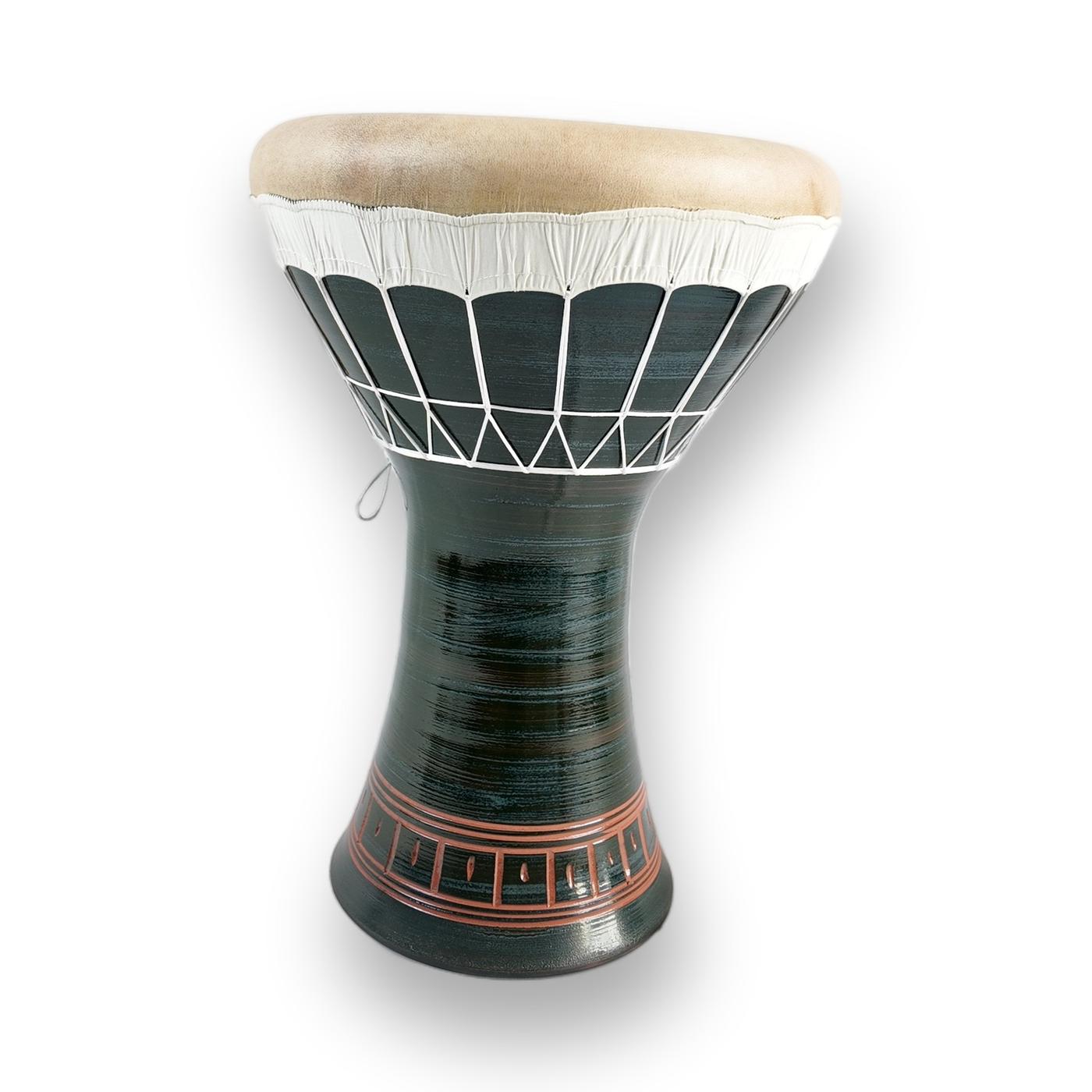
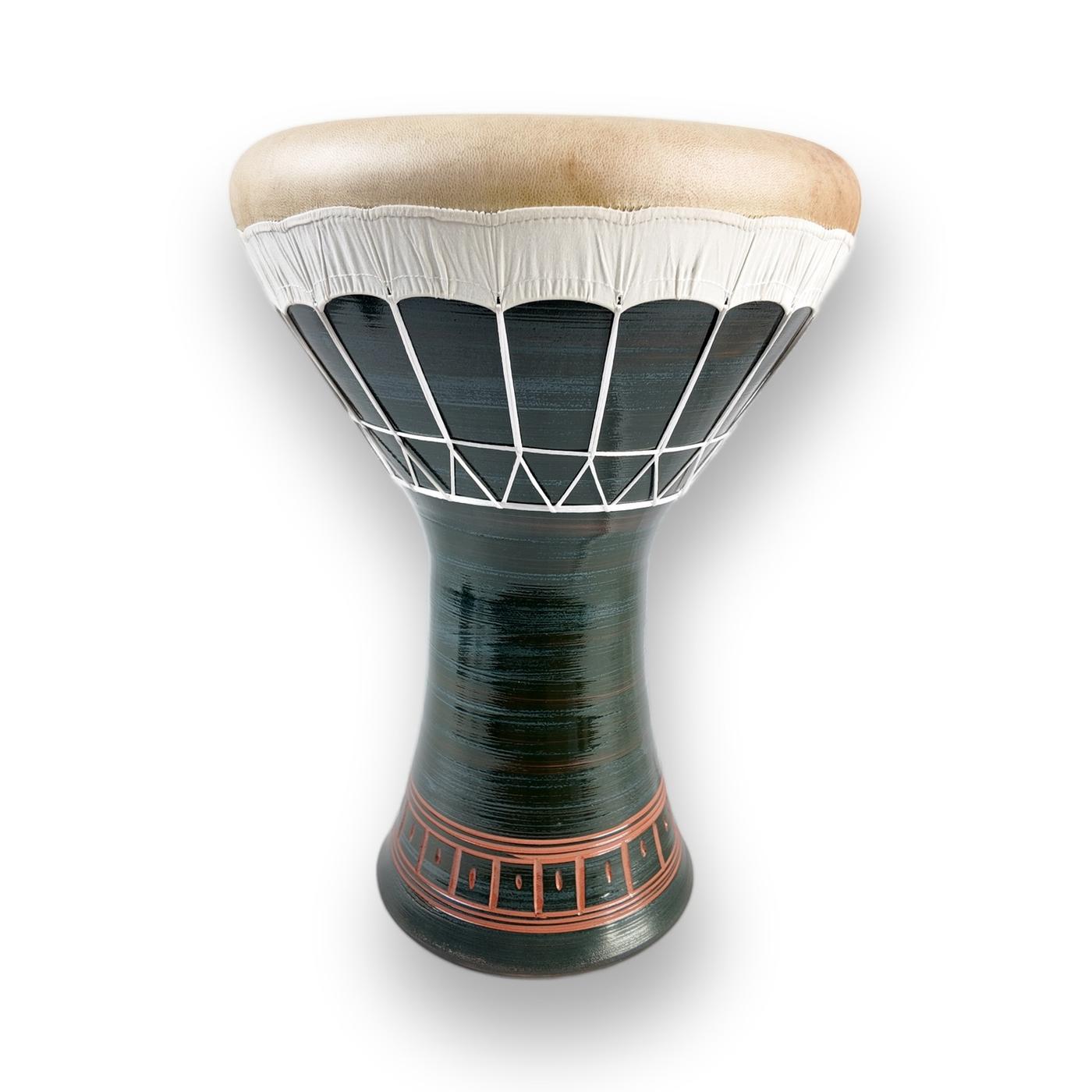
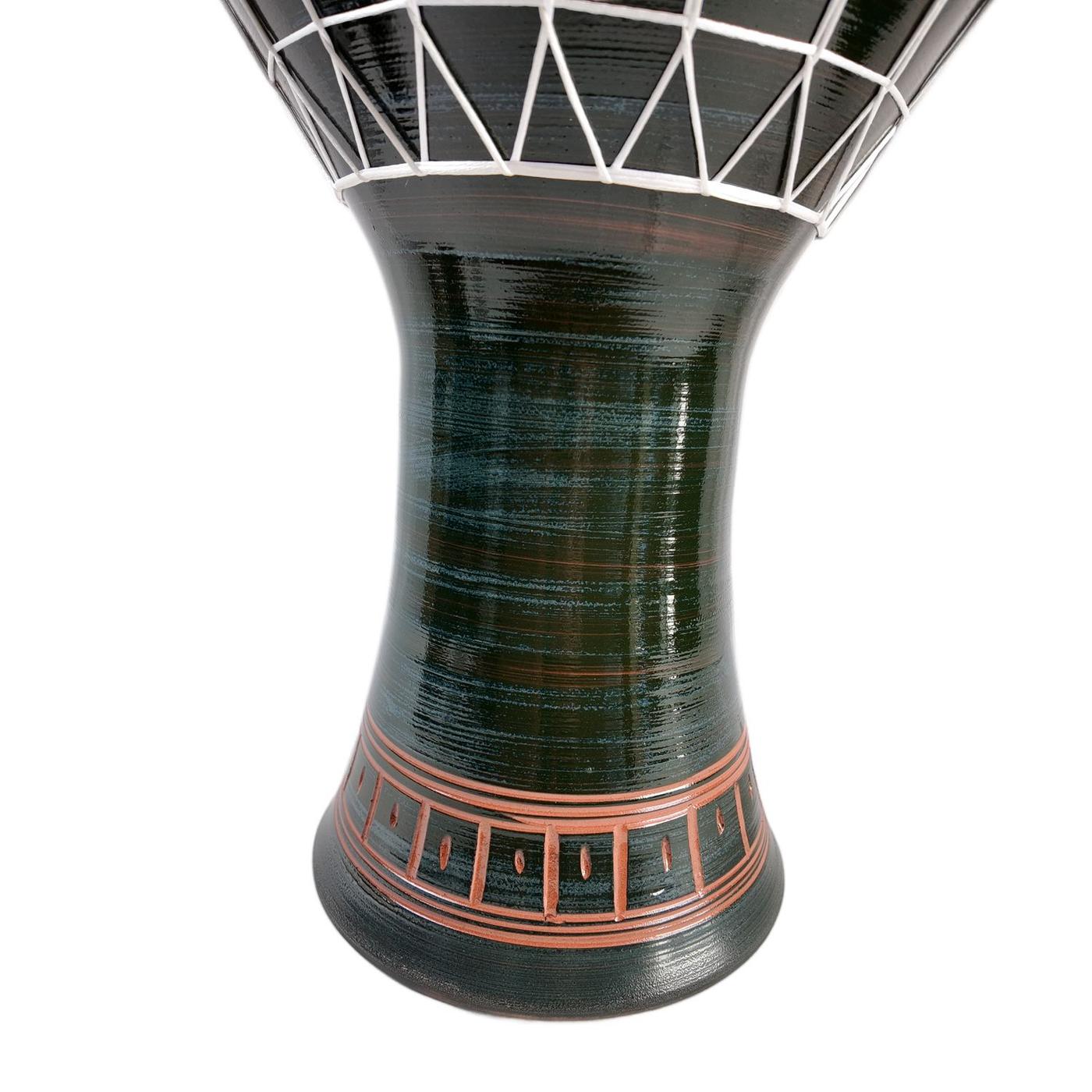
The clay bass darbuka — known across the Arabic world as the Dohola (also spelled Doholla or Duhulla) — is the deep-voiced anchor of the goblet-drum family. Where a solo darbuka speaks bright and articulate, the Dohola sits beneath it, laying down the low doum that gives Egyptian and Middle Eastern rhythm sections their weight. Hand-shaped at Tapadum’s Izmir workshop, this is a large bass instrument built for ensemble foundation and recorded low end.
Clay Body & Egyptian Heritage
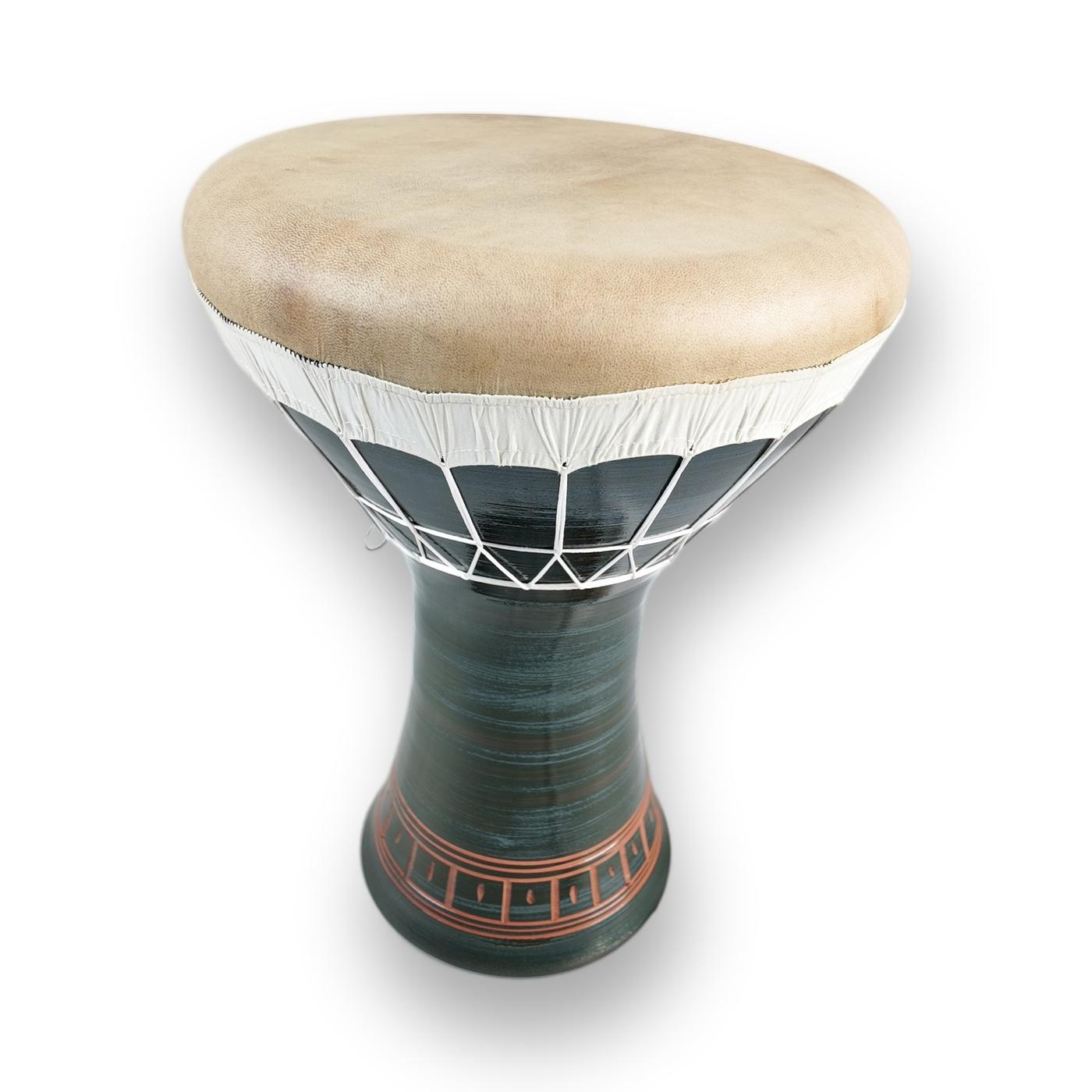
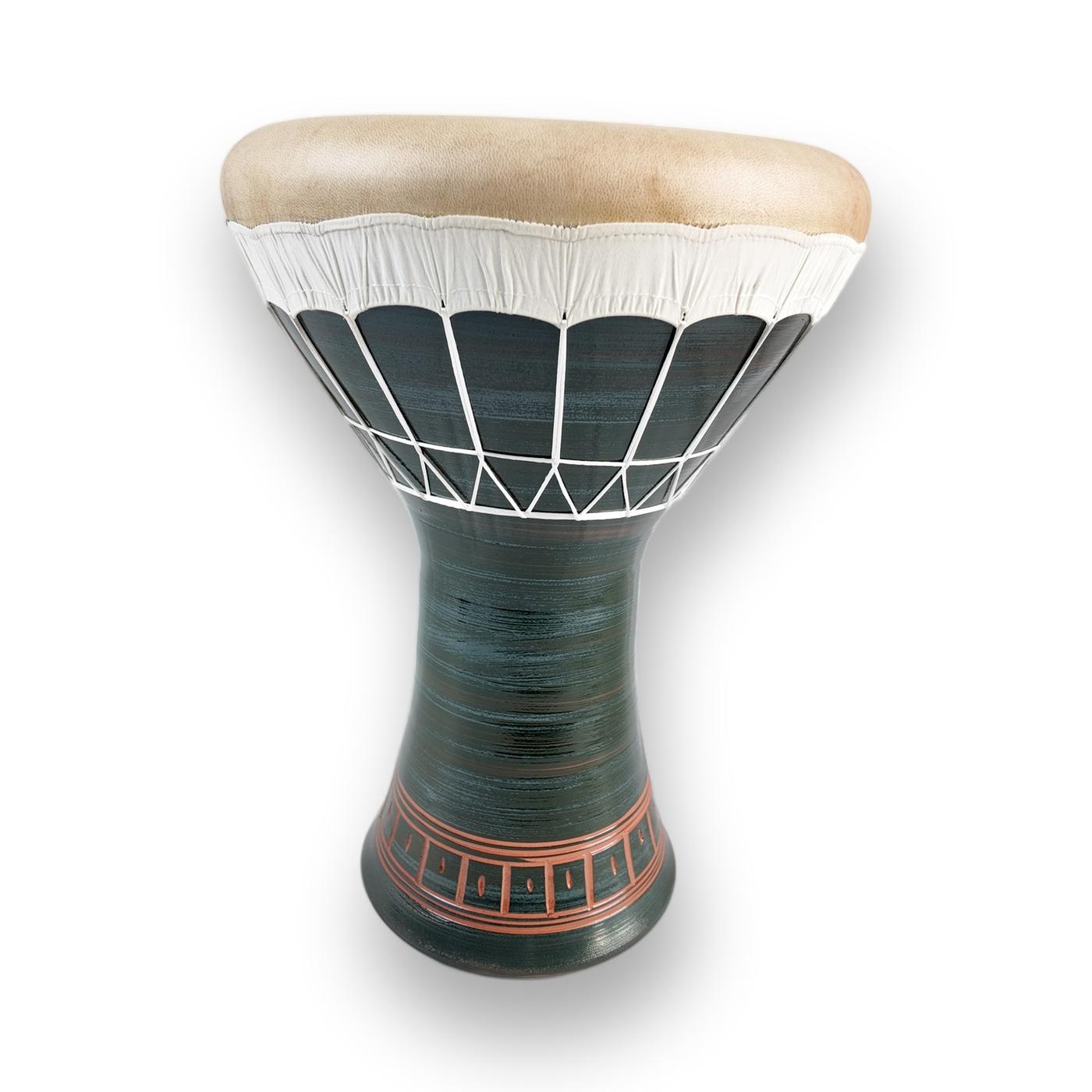
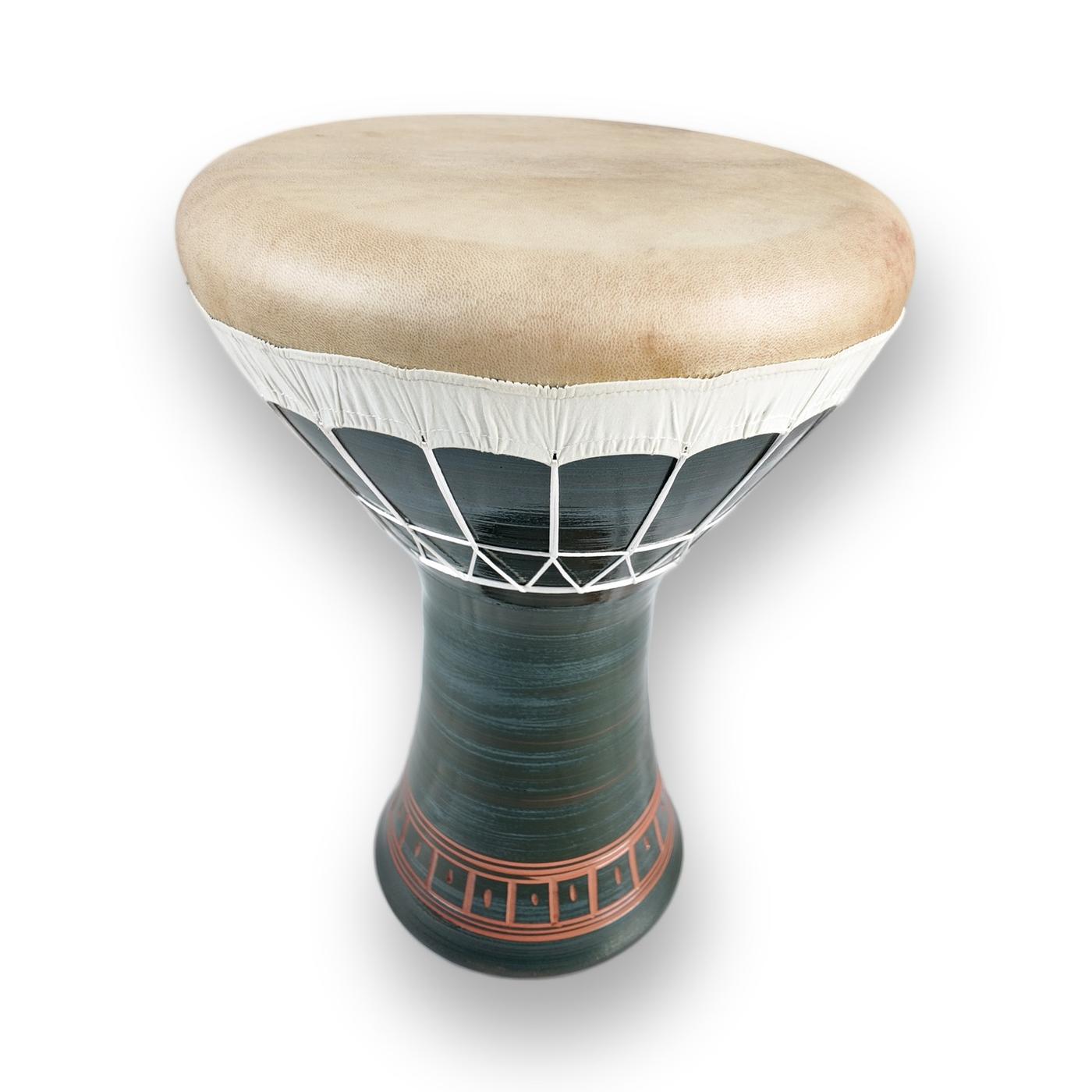
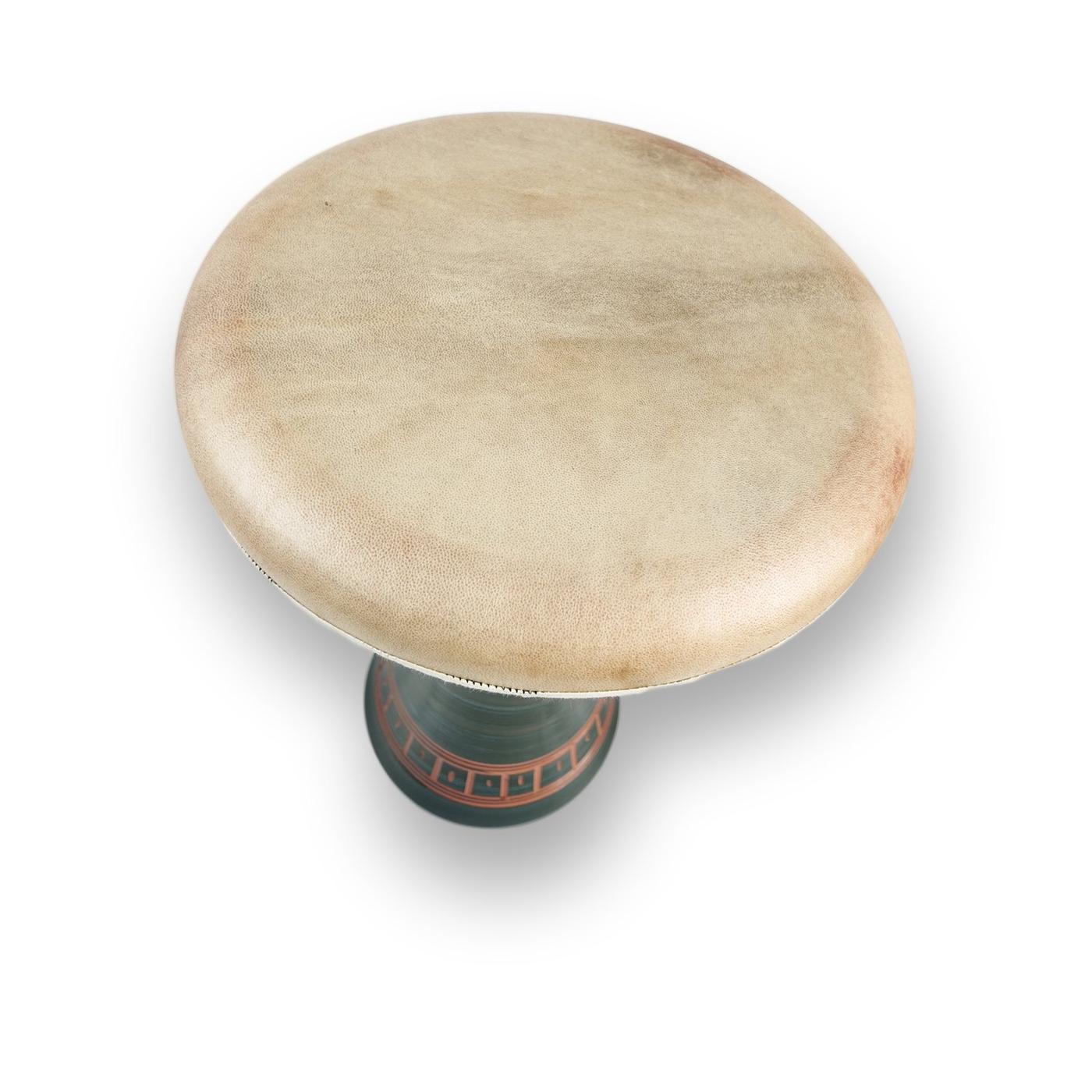
The shell is formed from high-fired natural clay, hand-shaped and finished in a deep green glaze with a copper decorative band around the base. Clay is acoustically distinct from aluminum: its density rounds off the attack and reinforces the low frequencies, which is exactly what a bass drum needs. On a body this size — 50 cm tall with a 37 cm rim — the wide resonance chamber turns the goblet profile into a genuine amplification chamber, projecting a doum you feel as much as hear. This is the traditional Egyptian bass voice, unchanged in principle for generations.
Natural Goatskin Head & Tuning Light System
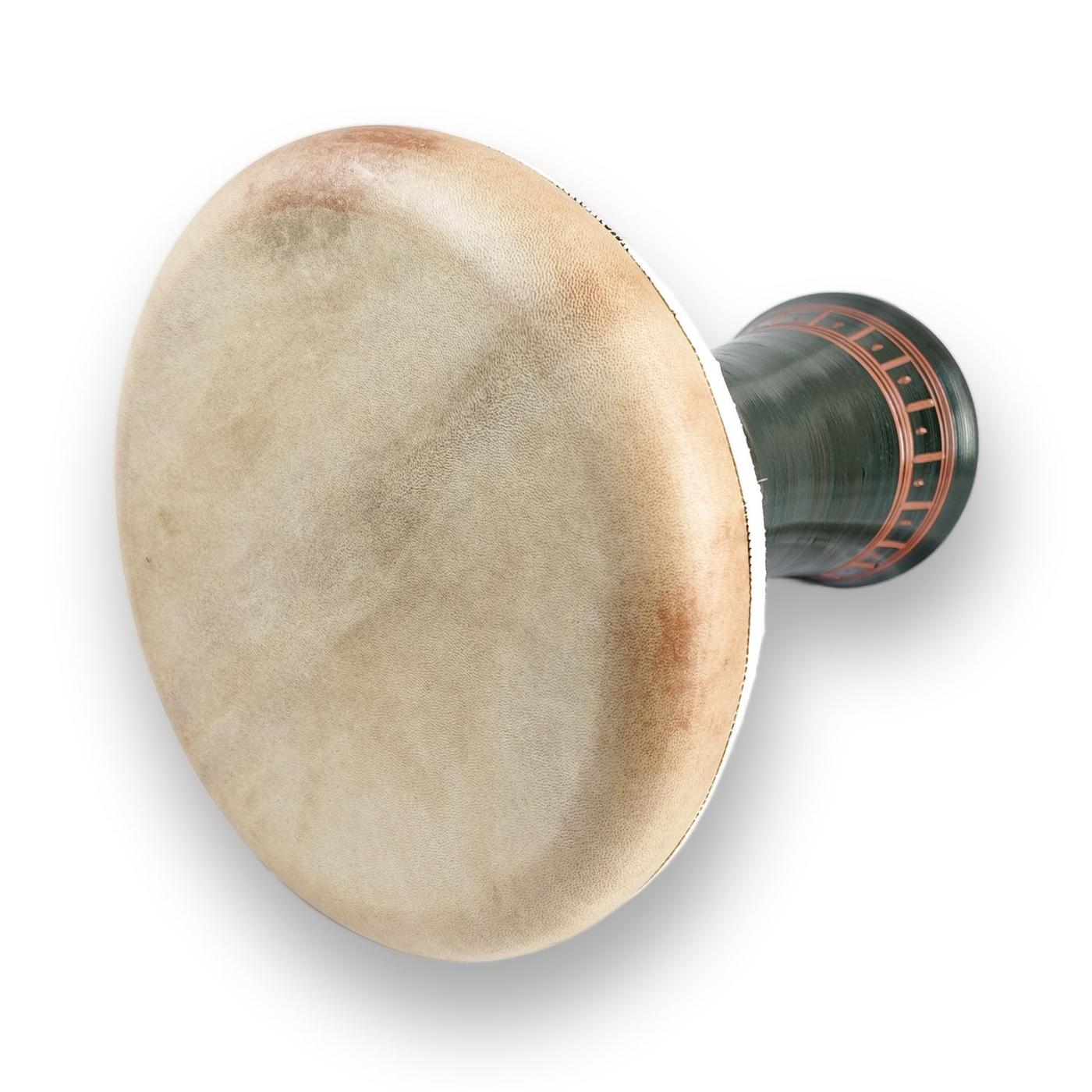
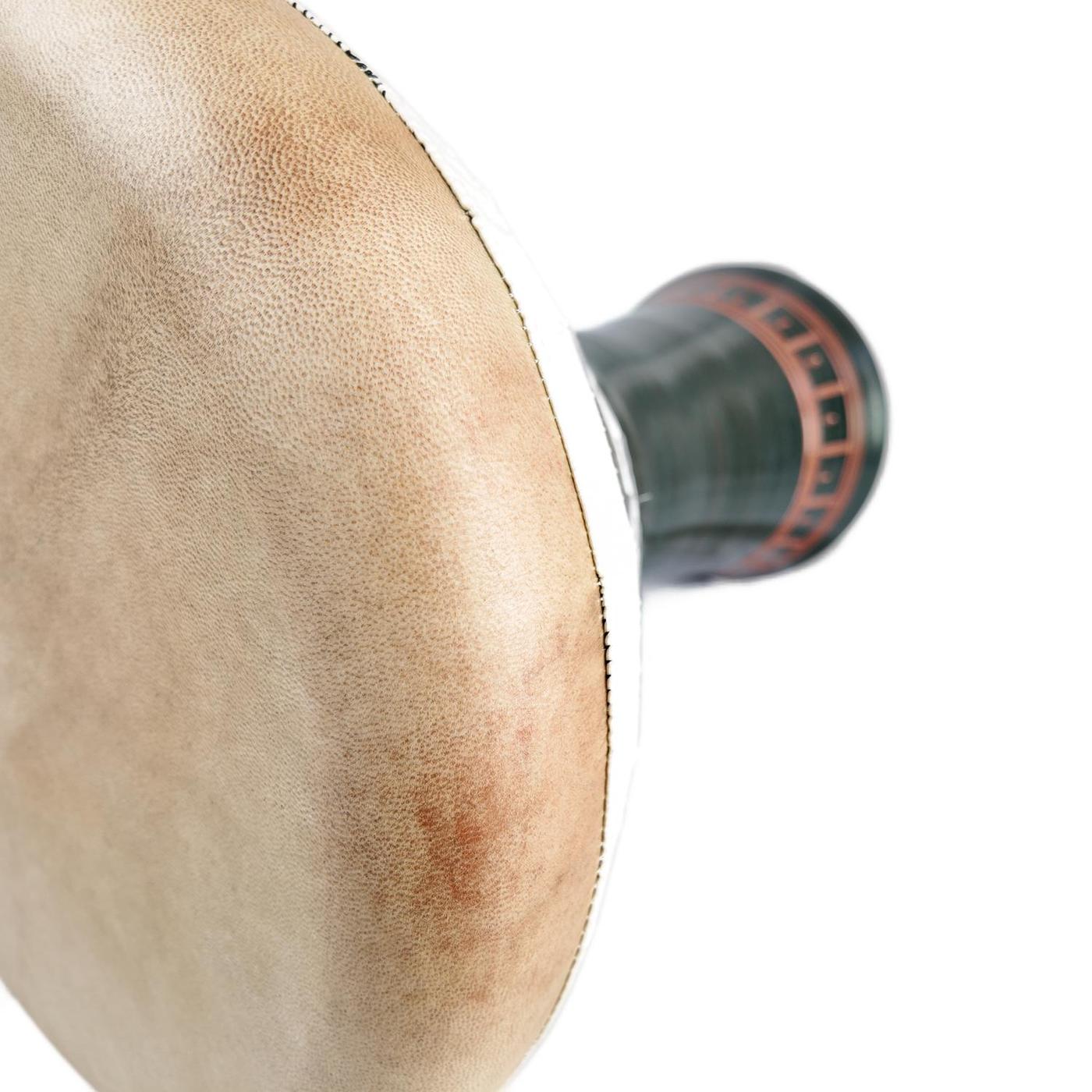
The 30 cm playing surface is tensioned natural goatskin, which responds to the hand with the depth and dynamic range synthetic heads cannot match. Because natural skin shifts with humidity, the drum carries Tapadum’s integrated Tuning Light System — an internal lamp with an adjustable dimmer that gently warms the head to hold a stable pitch through practice and performance, with no external heat source.
Technical Specifications
| Type | Bass Clay Darbuka (Dohola) |
| Body material | High-fired natural clay |
| Head material | Natural goatskin |
| Head (skin) diameter | 30 cm |
| Total (rim) diameter | 37 cm |
| Height | 50 cm |
| Weight | 7.2 kg |
| Decoration | Deep green glaze with copper band, hand-laced head |
| Tuning | Integrated Tuning Light System (dimmer-controlled) |
| Includes | Padded gig bag |
| Handcrafted in | Izmir, Turkey |
Who This Darbuka Is For
The Dohola is an ensemble and recording instrument. It suits percussionists who need a dedicated bass voice beneath a solo clay darbuka or a Sumbati mid-bass, and players building the full traditional doum-tek pair. At 7.2 kg it is a seated instrument for stage and studio rather than travel — for the road, a metal-bodied travel darbuka is the practical choice.
Music Genres & Traditions
The bass darbuka anchors Egyptian classical and folk repertoire — saidi, malfuf, masmoudi, and baladi rhythms — and appears throughout Arabic raqs sharqi ensembles, Turkish fasil, and Levantine and Maghrebi music. In world-fusion projects its earthy low end grounds metal and synthetic percussion, giving the whole section a foundation to sit on.
Care & Maintenance
Store the darbuka at moderate humidity (45–55%) and never submerge the body in water. Wipe the skin gently with a dry cloth after playing. If the head loses tension, warm it with the Tuning Light System rather than a radiator or hair dryer. Clay is durable but will chip if dropped, so always transport the instrument in the included padded gig bag.
Explore the Clay Darbuka Collection
Browse the full Clay Darbuka range within our wider Darbuka collection. Every clay shell is hand-shaped by master potter Ahmet Tashomcu and completed by Mehmet Nihat San, who selects and tensions every head. Each drum is sound-tested at our Brisighella, Italy showroom before shipping. Worldwide shipping & 15-day return.


Reviews
There are no reviews yet.