
Description
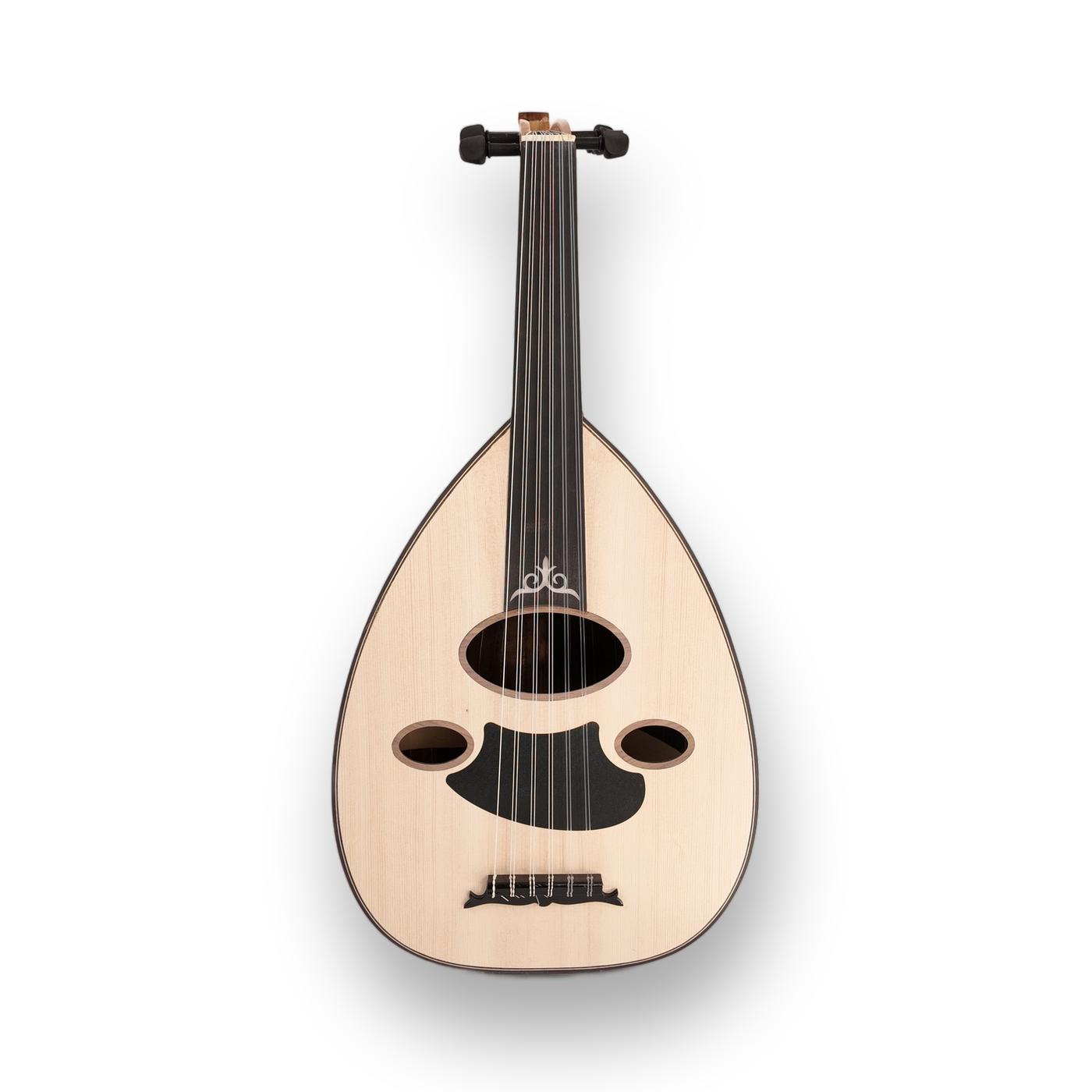
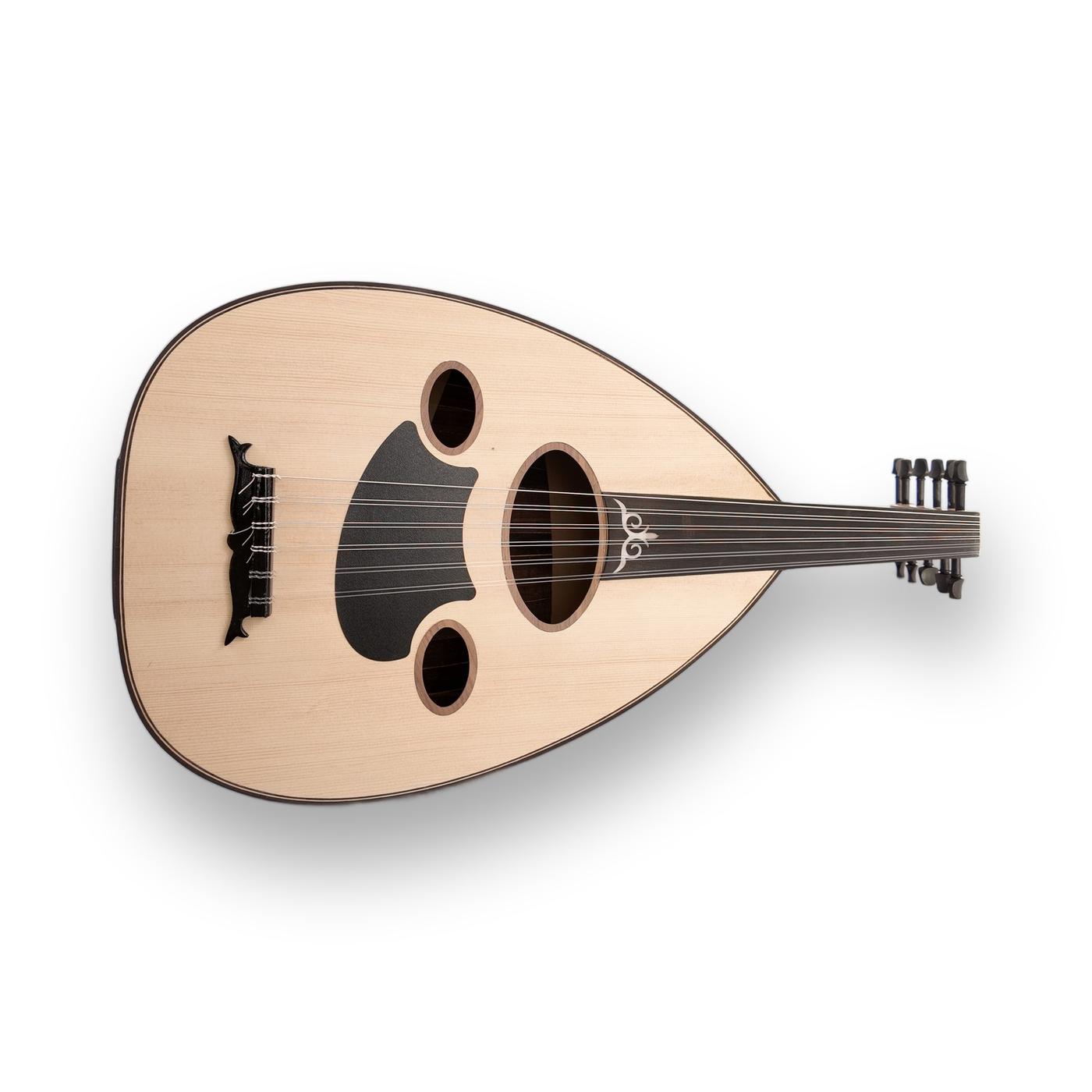
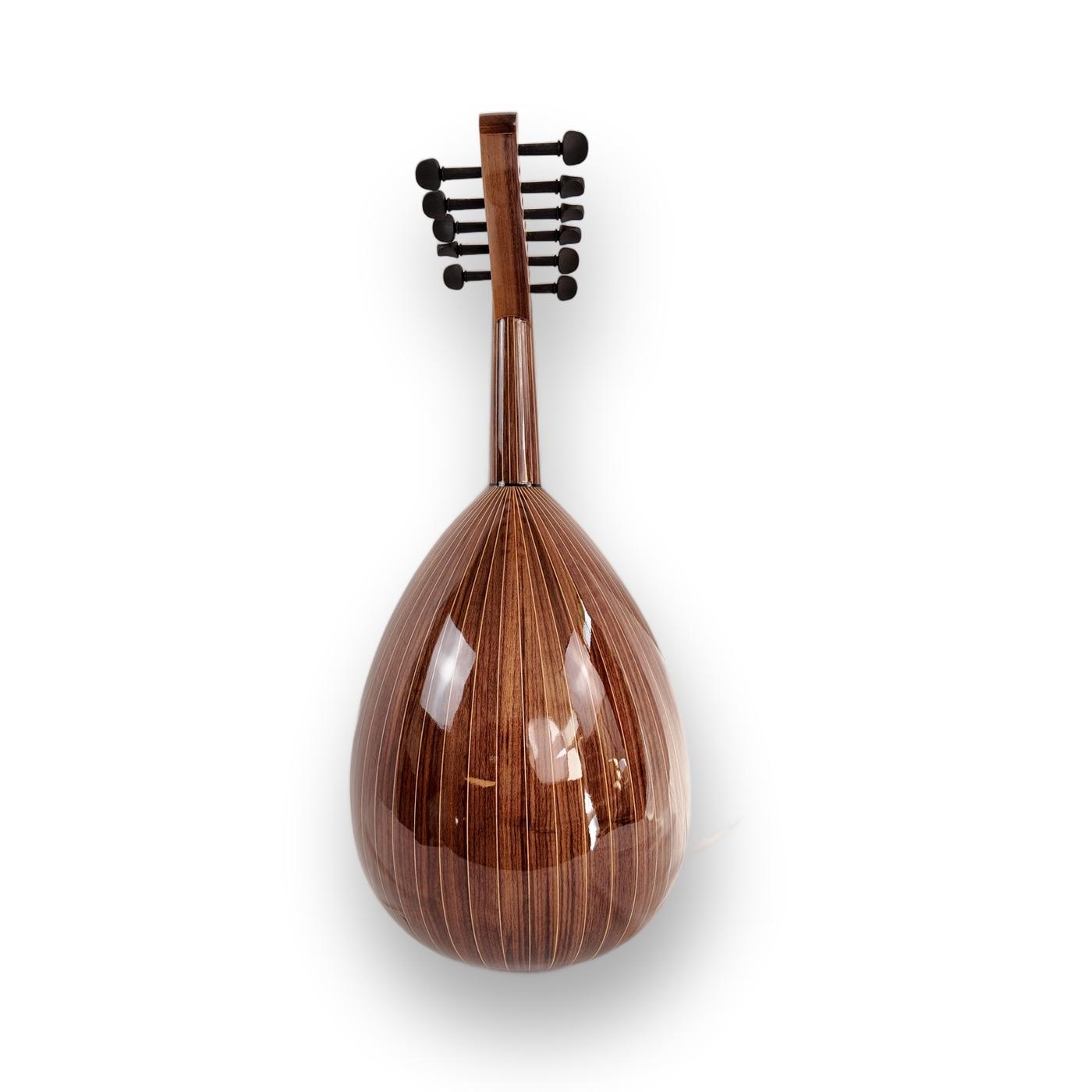
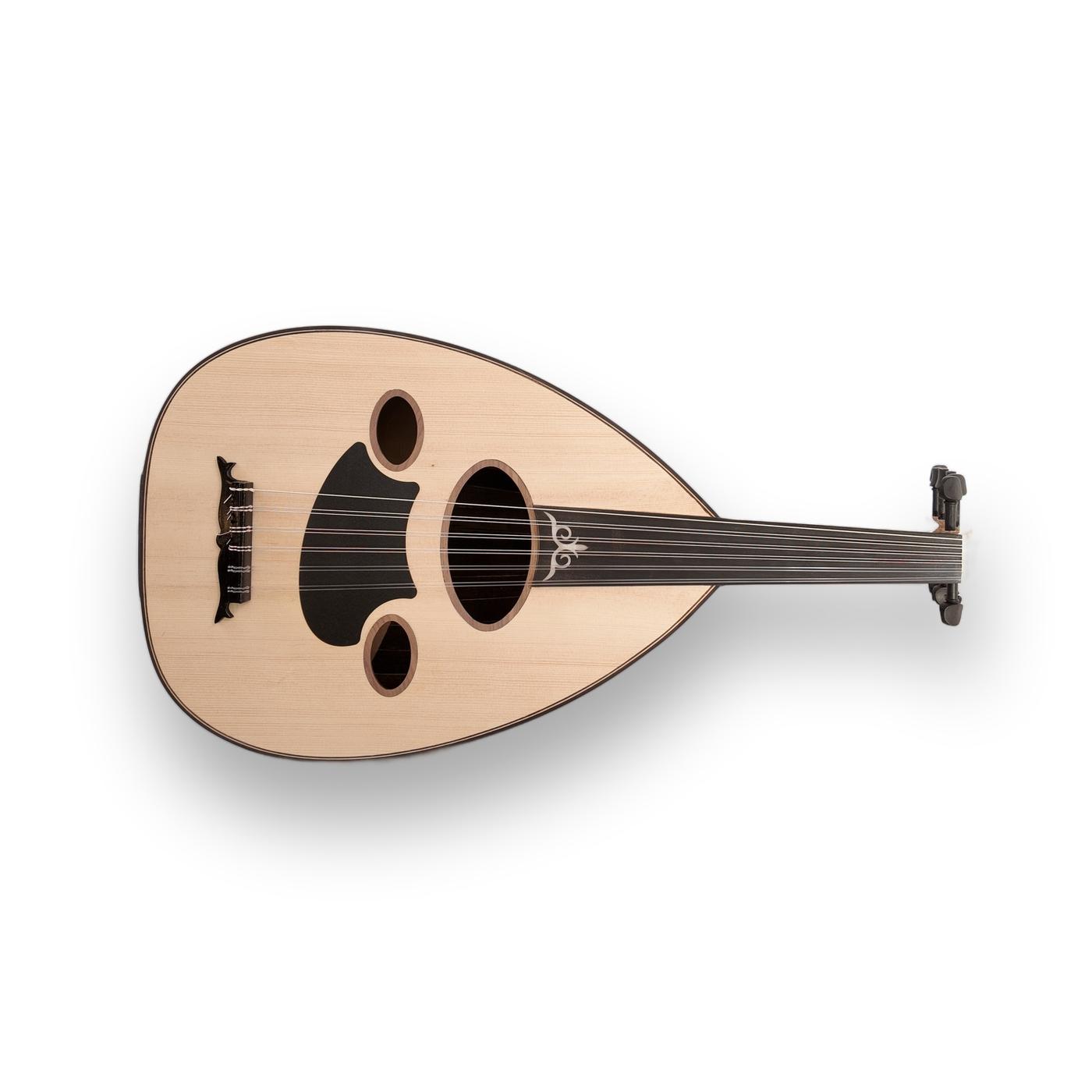
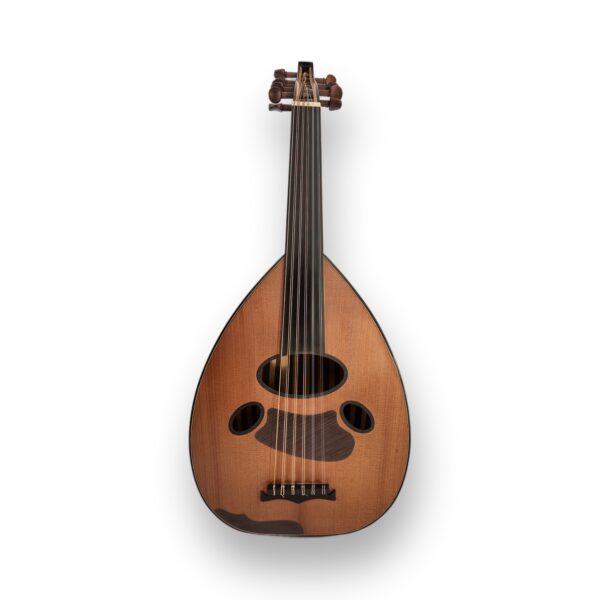
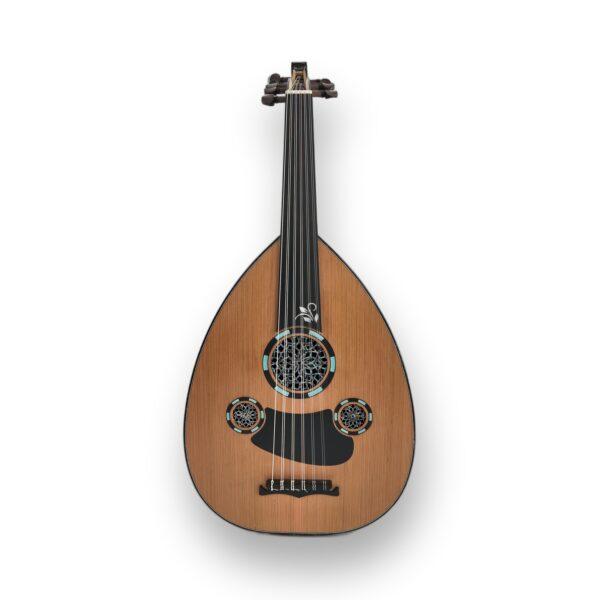
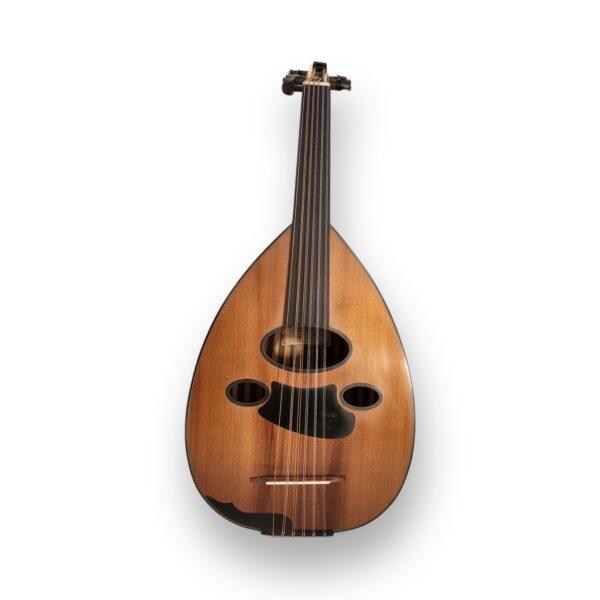
The Arabic Oud Smyrna takes its name from the old Aegean name for Izmir, the city where Tapadum’s workshop still stands. This eleven-string fretless oud pairs a striped walnut-and-maple bowl with a solid spruce soundboard and a fixed bridge, voiced for the deep, vocal resonance that Arabic maqam performance calls for.
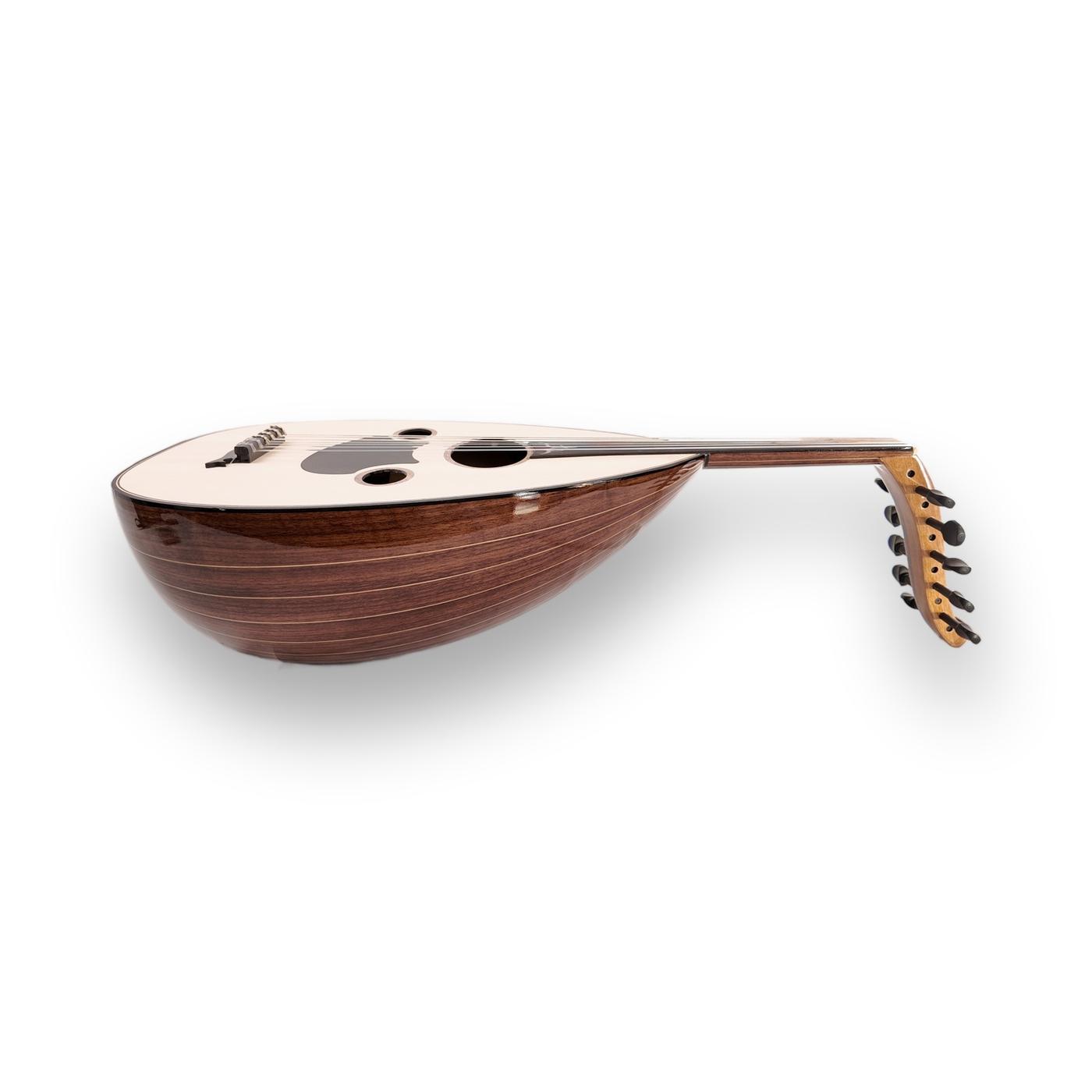
Walnut and Maple Rope-Pattern Bowl
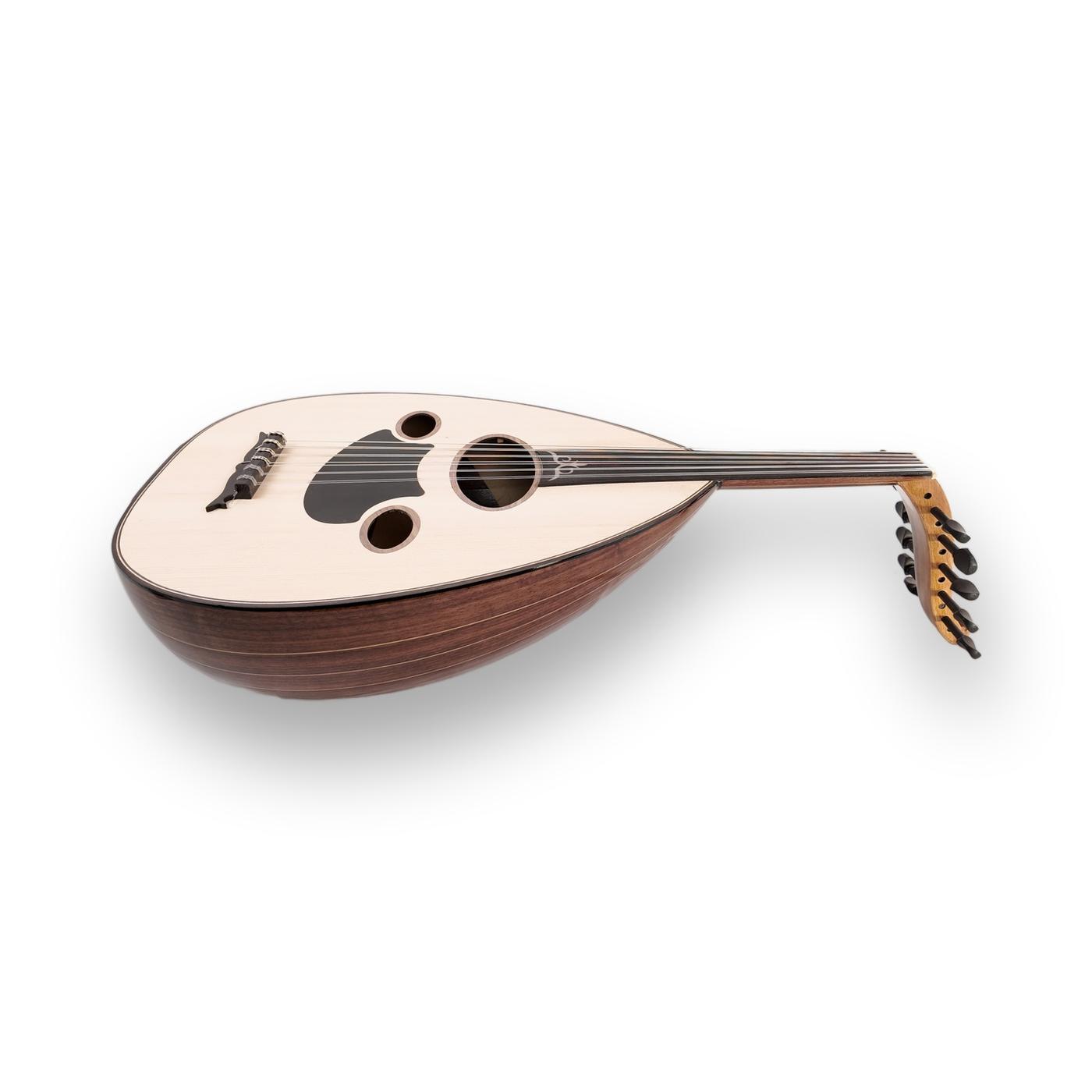
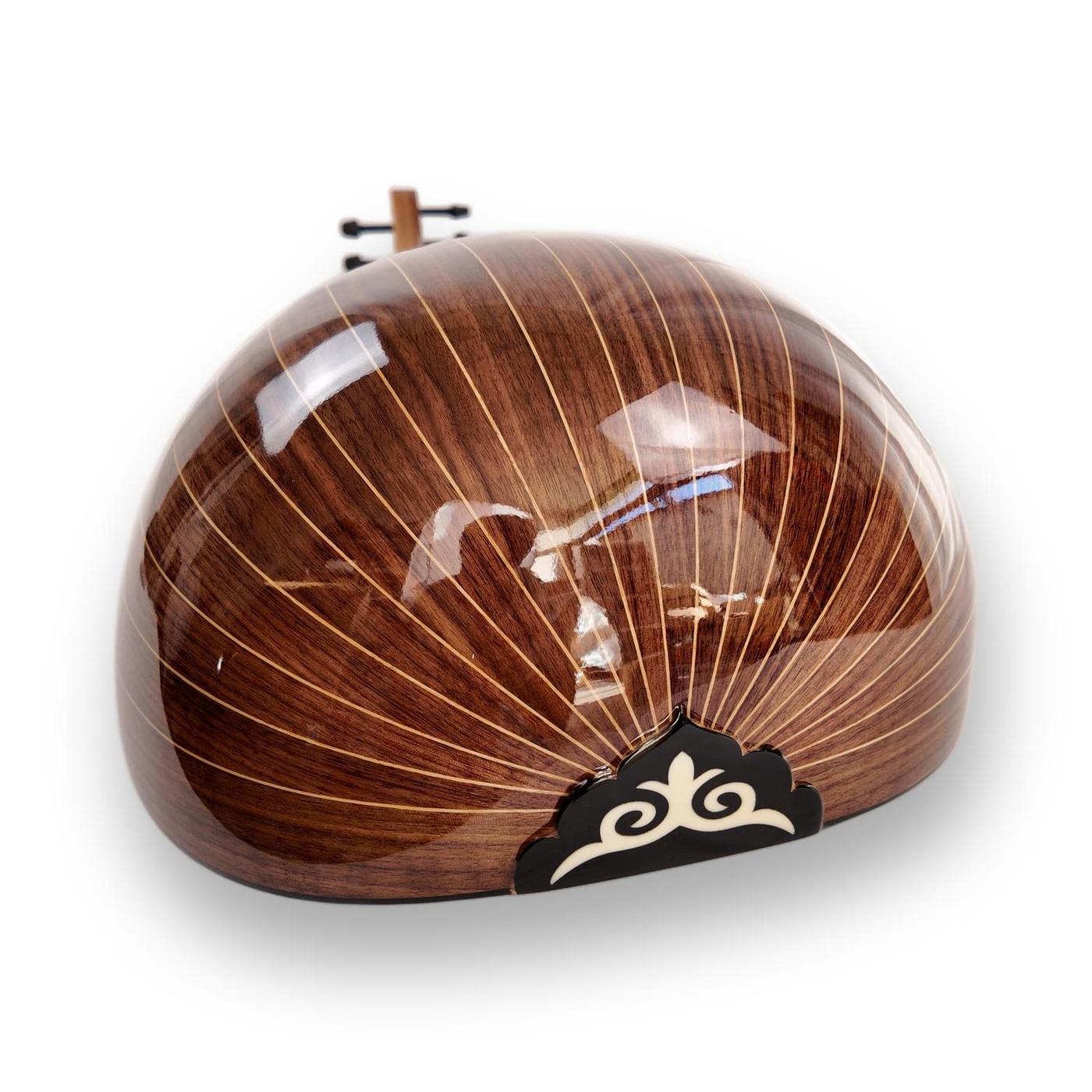
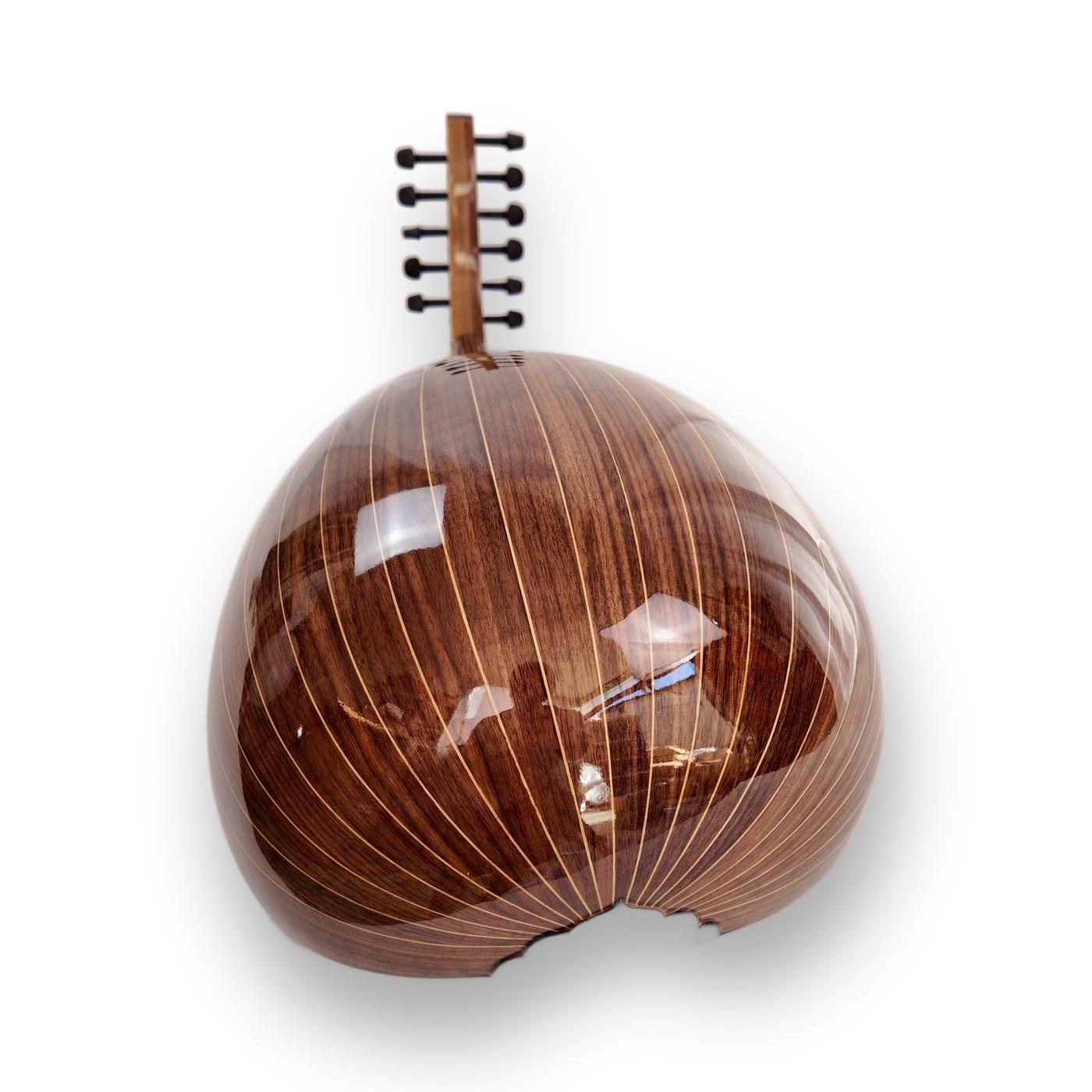
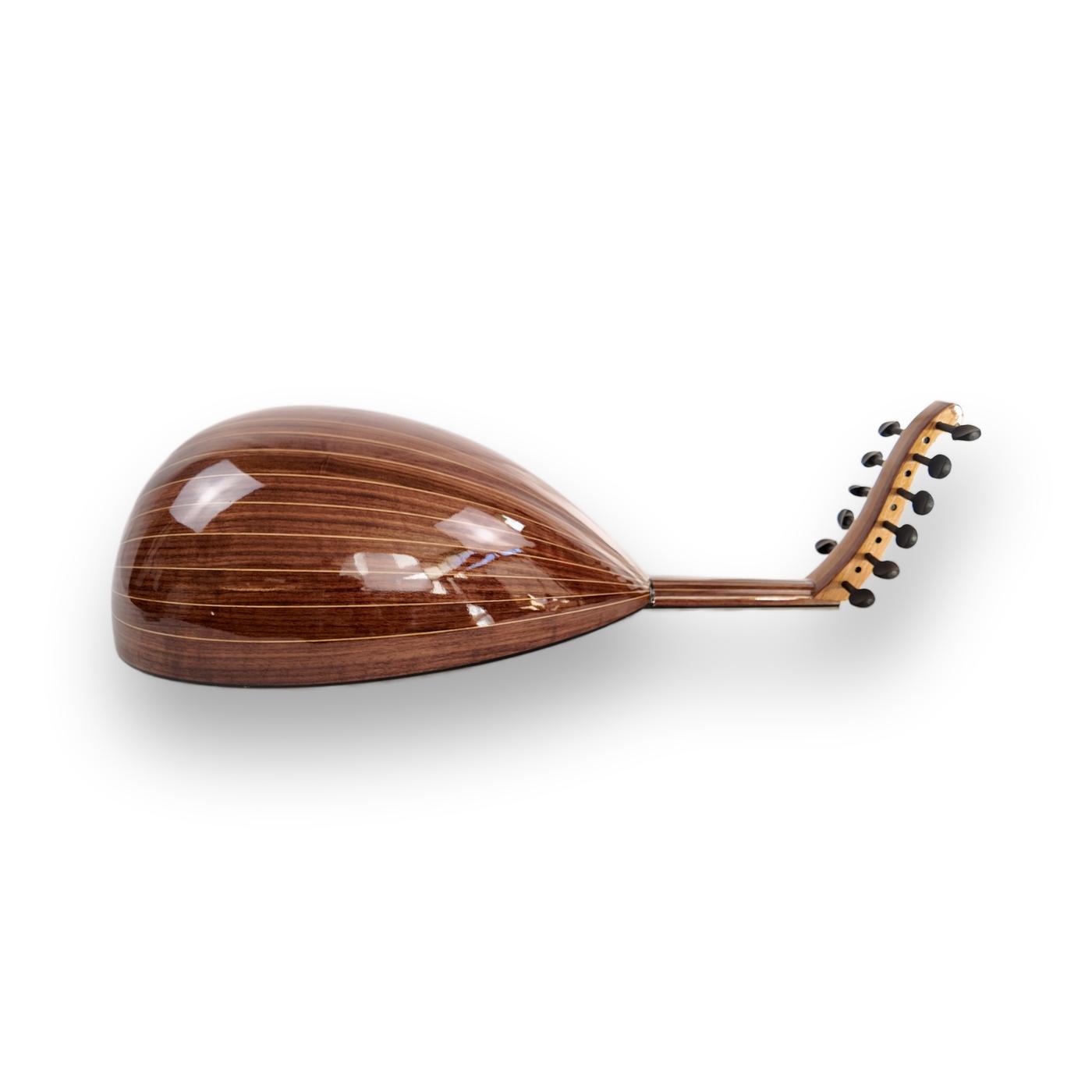
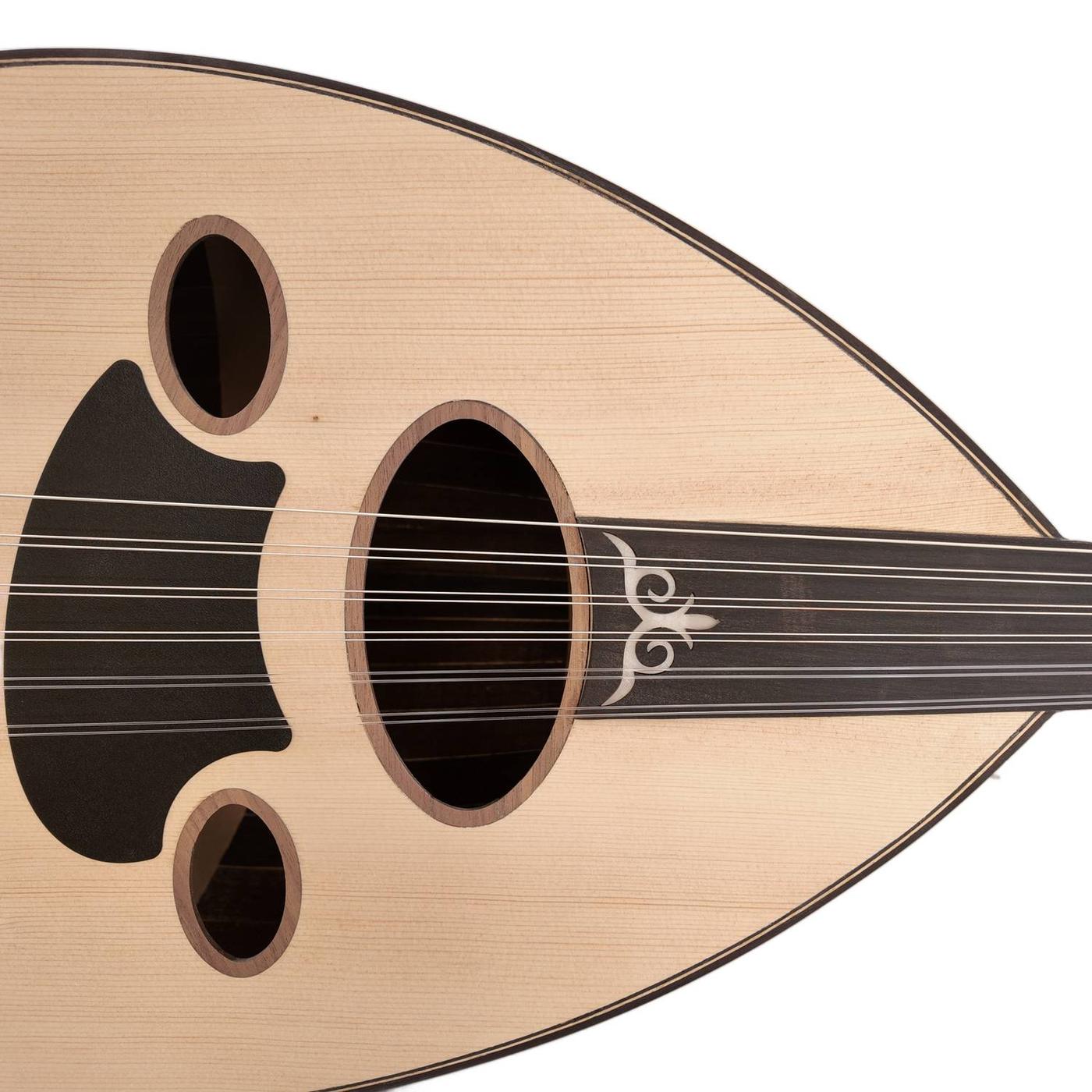
The bowl is built from alternating walnut and maple staves in a fine rope pattern — the lighter maple strips add stiffness at each seam without adding weight, while the walnut keeps the fundamental warm and full. The bowl carries a high-gloss polished finish, and the neck-to-bowl joint is marked with a black-and-mother-of-pearl inlay in a scrolling motif, echoed by a smaller pearl inlay on the fingerboard near the soundhole.
Spruce Soundboard and Fixed Bridge
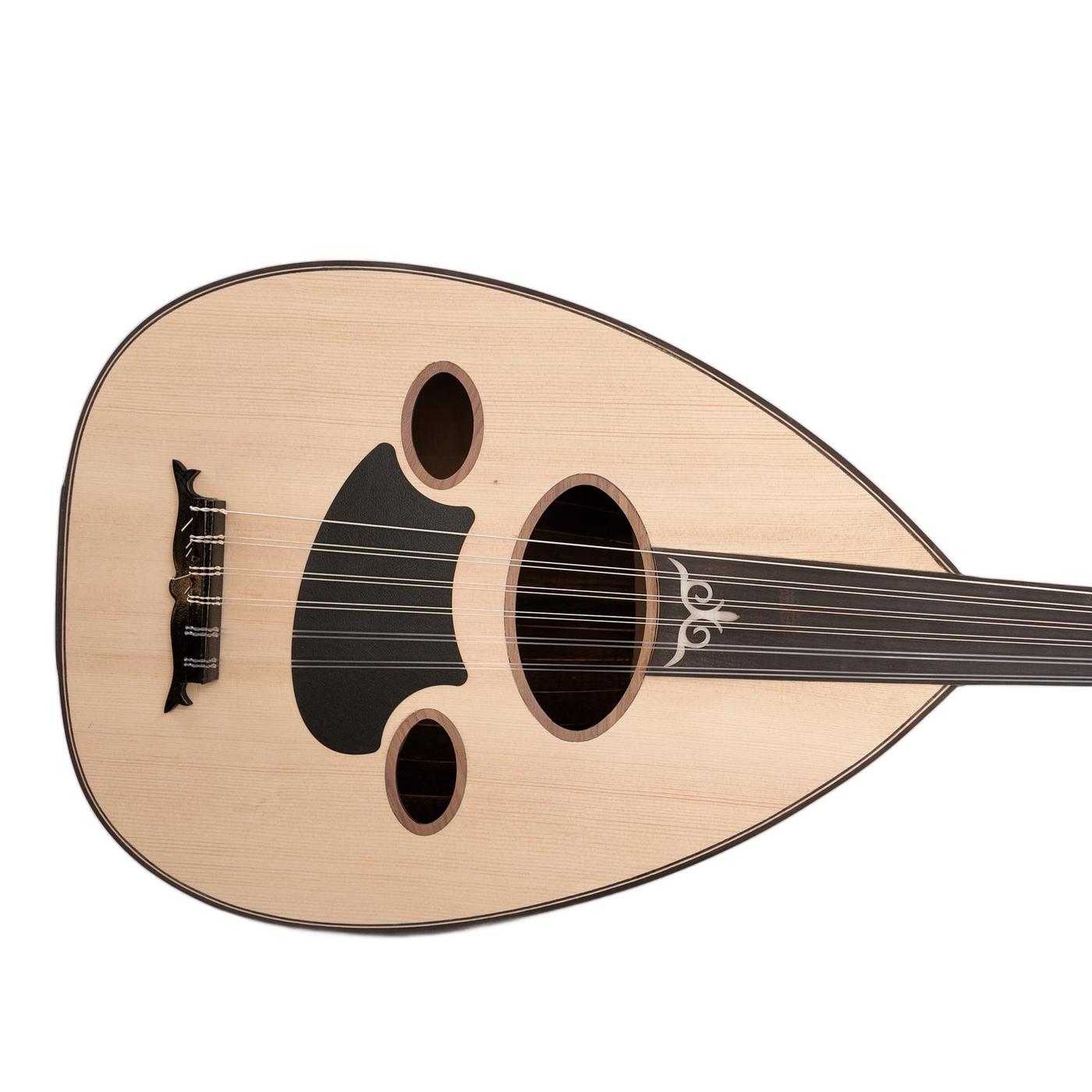
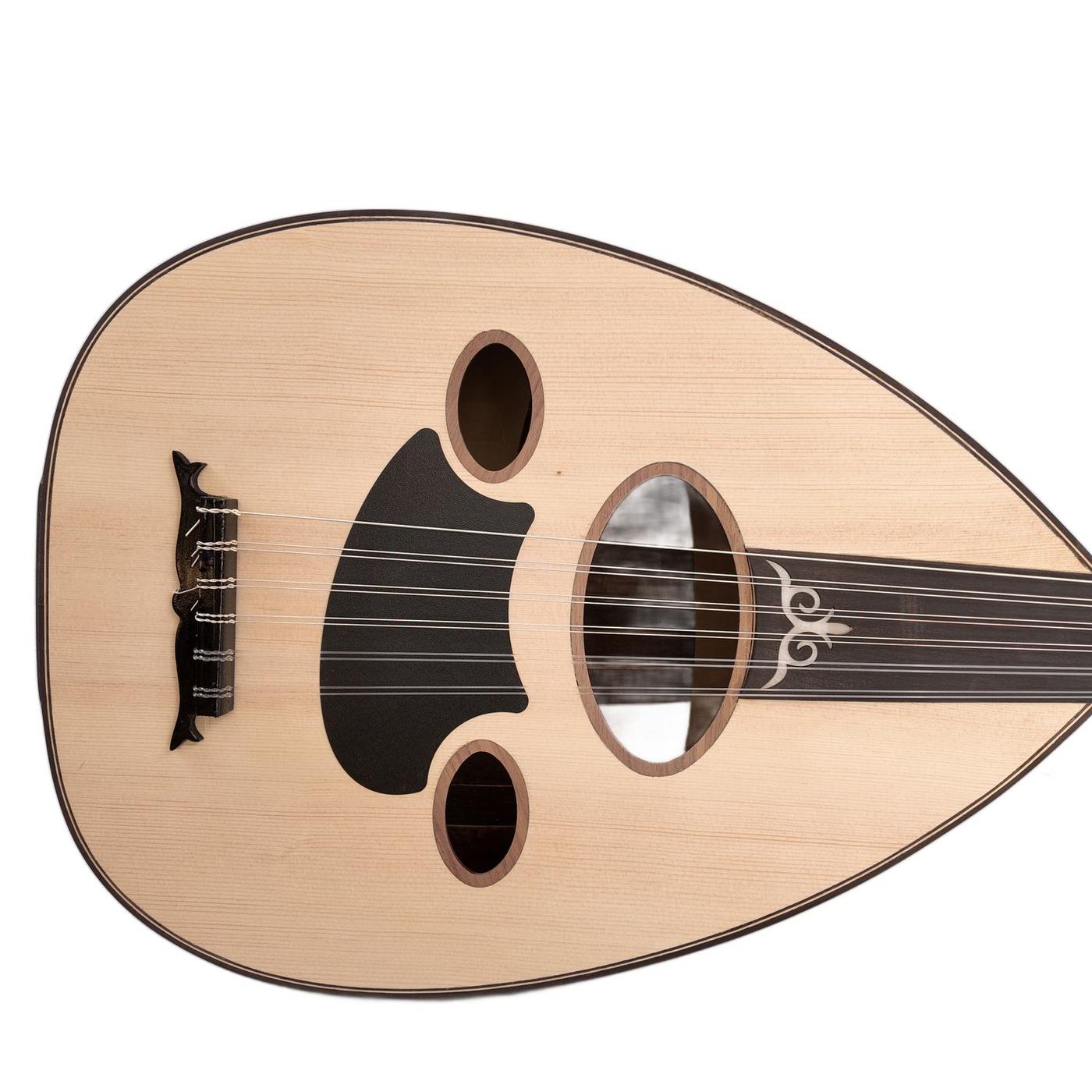
The soundboard is solid spruce, left in its natural pale finish rather than stained. Spruce’s lighter density gives the Smyrna a slightly quicker attack than a cedar-topped oud, while the walnut bowl holds the low end controlled rather than boomy. A fixed bridge, glued directly to the top, gives the instrument a settled, low-maintenance action — no periodic height adjustment the way a floating bridge asks for. The fretless ebony-finished fingerboard is built for the quarter-tone slides and ornamentation central to Arabic maqam playing, and the angled pegbox carries eleven friction pegs for five double courses plus a single bass string.
Specifications
| Bowl | Walnut & maple rope pattern |
|---|---|
| Soundboard | Spruce |
| Bridge | Fixed |
| Finish | Polished (gloss) |
| Strings | 11 (5 double courses + 1 bass), fretless |
| Tuning | Do–Do (C/C) |
| Body Length | 48.5 cm |
| Neck Length | 19.5 cm |
| String (Scale) Length | 58.5 cm |
| Depth | 19 cm |
| Width | 36.5 cm |
Who This Oud Is For
The Smyrna suits players moving beyond a first instrument into the fuller Arabic maqam repertoire — its settled, fixed-bridge action is forgiving enough for a committed beginner to grow into, while the walnut-and-maple bowl and pearl detailing give it presence on a professional’s stand. It responds well to solo taqsim improvisation, where the sustain of the walnut bowl lets long phrases breathe, and to ensemble accompaniment in wasla and muwashshah settings, where a settled action matters more than a floating bridge’s fine adjustability. Players who prefer a rounder, faster-opening voice under the fingers can find the same bowl and bridge paired with a cedar soundboard in the Arabic Oud Smyrna – Cedar Top.
Care and Accessories
Keep the polished bowl away from direct heat and sudden humidity swings, and wipe the finish with a soft, dry cloth after playing. Fretless fingerboards benefit from a light coat of fingerboard oil every few months to keep the wood from drying out under string tension. For a case, spare strings, and a risha plectrum, see our oud accessories collection; for the full range of Arabic and Turkish instruments, browse the oud category. Readers curious about the instrument’s broader history can find more on the oud on Wikipedia.
Worldwide shipping & 15-day return.


Reviews
There are no reviews yet.