
The Zurna & the Davul-Zurna Duo
What you’ll learn: what a zurna actually is and why it’s so loud, evidence of the instrument going back to Hittite stone reliefs, why it’s almost never played alone, and the circular-breathing technique that makes zurna playing so physically demanding.
Few instruments announce a celebration the way a zurna does. This piercing double-reed wind instrument, always paired with the davul frame drum, has powered weddings, festivals, and public gatherings across Anatolia, the Caucasus, and Central Asia for thousands of years — loud enough to carry across an open village square with no amplification at all.
What Is a Zurna?
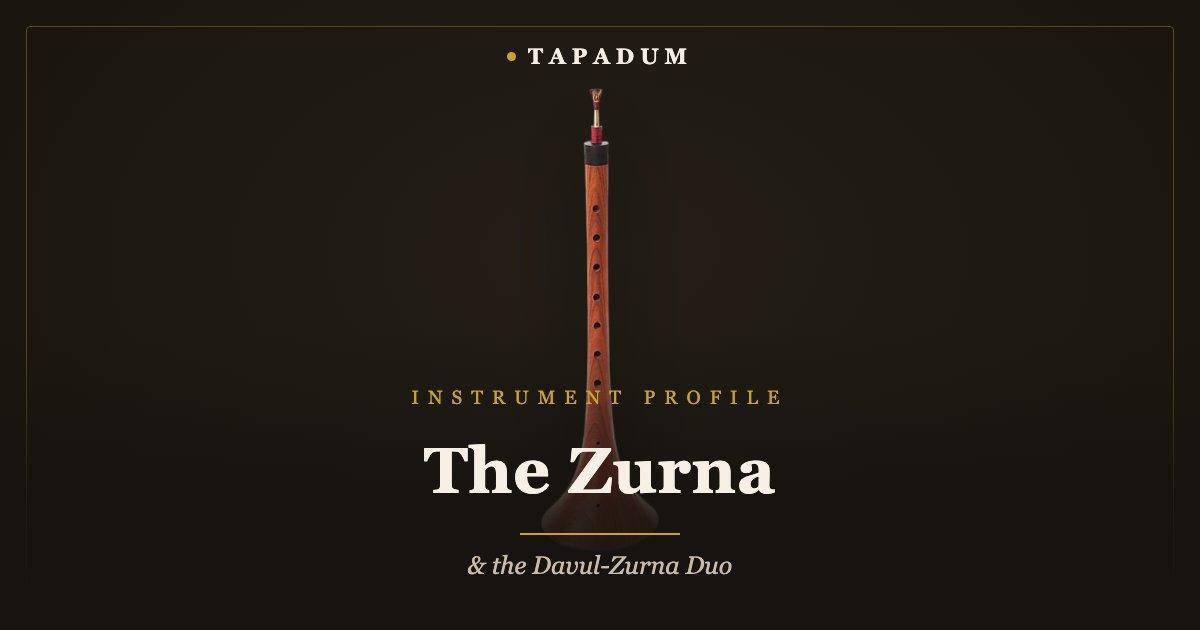
The zurna is a double-reed wind instrument played across Central Asia, West Asia, the Caucasus, Southeast Europe, and parts of North Africa. Its conical wooden body and small double reed produce a bright, nasal, extremely penetrating tone — built by design to be heard outdoors, over crowds, without any electronic help. It sits in the same broad instrument family as the Western oboe and shawm, but with a far louder, more piercing voice suited to open-air performance.
Ancient Roots
The zurna’s history runs deep. Instruments resembling the zurna appear in stone reliefs and artwork left by the Hittites, an ancient Anatolian empire that flourished roughly 2000–1200 BC — making the zurna’s lineage one of the oldest continuously played wind instruments in the region. As the Ottoman Empire expanded into Europe, the zurna traveled with it, taking root in the Balkans, Hungary, and parts of Western Europe alongside the davul.
The Davul-Zurna Duo
A zurna is almost never heard alone. Anatolian, Armenian, and Assyrian folk music pair it with the davul, a large double-headed frame drum, and the combination is so central to celebration that a well-known Turkish saying holds: with no davul-zurna, there is no wedding. The two instruments divide the work cleanly — the zurna carries the high, ornamented melodic line while the davul supplies the low pulse and physical drive that keeps a crowd dancing. Together they’re built for exactly one job: making an outdoor gathering impossible to ignore.
Circular Breathing — The Zurna’s Defining Skill
What makes zurna playing genuinely difficult isn’t fingering — it’s breath. The double reed is taken entirely into the mouth, with the player’s puffed cheeks acting as a small air reservoir. To keep an unbroken tone going for minutes at a stretch, the player uses circular breathing: pushing stored air out through the cheeks while inhaling through the nose in a split second, all without the melodic line ever stopping. It’s one of the most demanding techniques in wind playing, and it’s the reason a skilled zurna player can sustain a piece far longer than their own lung capacity would otherwise allow.
The Tapadum Zurna
Tapadum carries the Professional Turkish Zurna by Ali Riza Acar (€220), built for the volume and durability that outdoor, celebratory playing demands.
Frequently Asked Questions
What is a zurna?
A double-reed wind instrument played across Central Asia, West Asia, the Caucasus, and parts of Southeast Europe and North Africa, known for its loud, bright, penetrating tone built for outdoor performance.
Why is the zurna always played with a davul?
The two instruments divide the musical role: the zurna carries the high melodic line while the davul provides the low rhythmic pulse — together they’re the traditional core of Anatolian wedding and festival music.
How old is the zurna?
Instruments resembling the zurna appear in Hittite stone reliefs from roughly 2000–1200 BC, making it one of the oldest continuously played wind instruments from the region.
What makes zurna playing so physically demanding?
Circular breathing — the player stores air in puffed cheeks and inhales through the nose in a split second, keeping the tone unbroken far longer than normal lung capacity would allow.
Where is the zurna played today?
It remains central to Turkish, Armenian, Assyrian, and broader Anatolian and Caucasus folk celebrations, and it traveled into the Balkans and Hungary with Ottoman expansion.