
The Kaval: Shepherd’s Flute of Anatolia & the Balkans
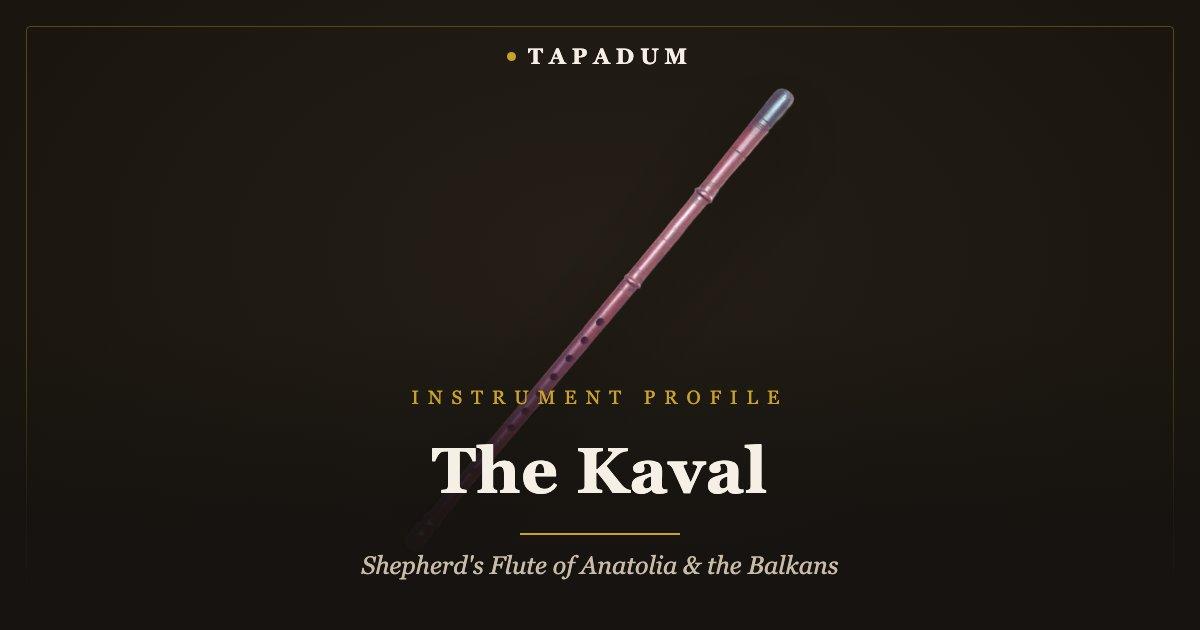
What you’ll learn: what separates a kaval from a ney (open-ended vs. notched), why the instrument has four extra “devil’s holes” you never actually cover while playing, what it’s traditionally made from, and how it fits into the wider Anatolian-Balkan wind family Tapadum carries.
The kaval is an end-blown flute with roots stretching from the Taurus Mountains across Anatolia and into the Balkans. Unlike the ney, it has no notch to shape the airstream — the player blows directly across a sharpened edge at one open end, a technique closer to a Western concert flute than to its Anatolian cousin. For centuries it has been the instrument of mountain shepherds, and it remains one of the defining folk voices of Turkey, Bulgaria, Albania, Romania, and North Macedonia today.
What Is a Kaval?
A kaval is a chromatic, fully open-ended flute — open at both ends, with no mouthpiece or notch of any kind. The player rests the instrument against the lower lip and blows across the sharpened rim of the top opening, shaping pitch and tone with breath angle and embouchure alone. This open-pipe design gives the kaval a breathier, more airy voice than closed-end flutes, and it demands more precise breath control from a beginner than most wind instruments in the Tapadum catalogue.
Origins in Shepherding Culture
The kaval is believed to have spread from the Taurus Mountains into southeast Europe with the Yörük people, a historically nomadic Turkic community. It became inseparable from mountain shepherding — a portable, durable instrument a herder could carry all day and play while watching a flock graze. That pastoral identity is still audible in the repertoire: long, unhurried melodic lines that mirror open landscapes rather than the tighter ornamentation you hear in urban court or café music.
Construction & the “Devil’s Holes”
Traditional kavals are carved from cornel cherry, apricot, or mountain ash wood, though water buffalo horn, metal, and plastic versions exist as well. A kaval has eight playing holes — seven along the front for the fingers and one underneath for the thumb — arranged to give the player a full chromatic range across two-plus octaves.
Near the bottom of the instrument sit four additional holes that a player never covers while playing, traditionally nicknamed the “devil’s holes.” They aren’t fingered at all — instead, their size and spacing fix the pitch and timbre of the kaval’s lowest note and sharpen its overall intonation. A kaval maker tunes these during construction, not the musician during performance, which is part of why a well-made kaval plays true straight out of the box.
Kaval vs. Ney: Two Anatolian Flutes, Different Voices
It’s easy to lump the kaval and the ney together as “Turkish end-blown flutes,” but they’re built and played differently. The ney has a notched mouthpiece (a beveled rim the player angles against the lower lip) and is traditionally associated with Sufi ceremony and classical Ottoman repertoire. The kaval has no notch at all — it’s a plain open tube — and its home is folk and pastoral music rather than the tekke. If you’ve read our guide to ney maintenance, most of that reed-care logic doesn’t apply here; a kaval has no reed to dry out or crack.
The kaval also shouldn’t be confused with the mey, which belongs to an entirely different family — a short double-reed instrument closer to an oboe than a flute, with a compressed, nasal voice built for indoor, intimate performance rather than open-air shepherding. For a full three-way comparison, see our Ney vs Kaval vs Mey guide.
The Tapadum Kaval
Tapadum carries the Professional Kaval by Ali Riza Acar (€149) — a handcrafted instrument built for players moving beyond a beginner practice model, with the tonal accuracy that comes from careful devil’s-hole tuning at construction.
Frequently Asked Questions
What is a kaval exactly?
It’s a chromatic, fully open-ended flute played across Anatolia and the Balkans, blown by directing air across a sharpened edge at one end rather than through a notch or reed.
How is a kaval different from a ney?
The ney has a notched mouthpiece and is tied to Ottoman classical and Sufi repertoire; the kaval has no notch at all, is fully open at both ends, and comes from a pastoral, folk-music tradition.
What are the kaval’s “devil’s holes” for?
Four small holes near the bottom of the instrument, never covered while playing, that the maker uses to set the pitch and timbre of the lowest note and improve overall intonation.
What is the kaval traditionally made from?
Cornel cherry, apricot, or mountain ash wood are the traditional materials, though water buffalo horn, metal, and plastic versions are also made.
Where is the kaval played today?
It remains a core folk instrument across Turkey, Bulgaria, Albania, Romania, North Macedonia, and Armenia, especially in shepherding and rural folk traditions.