
How to Tune an Arabic Oud: A Complete Guide for Beginners and Professionals
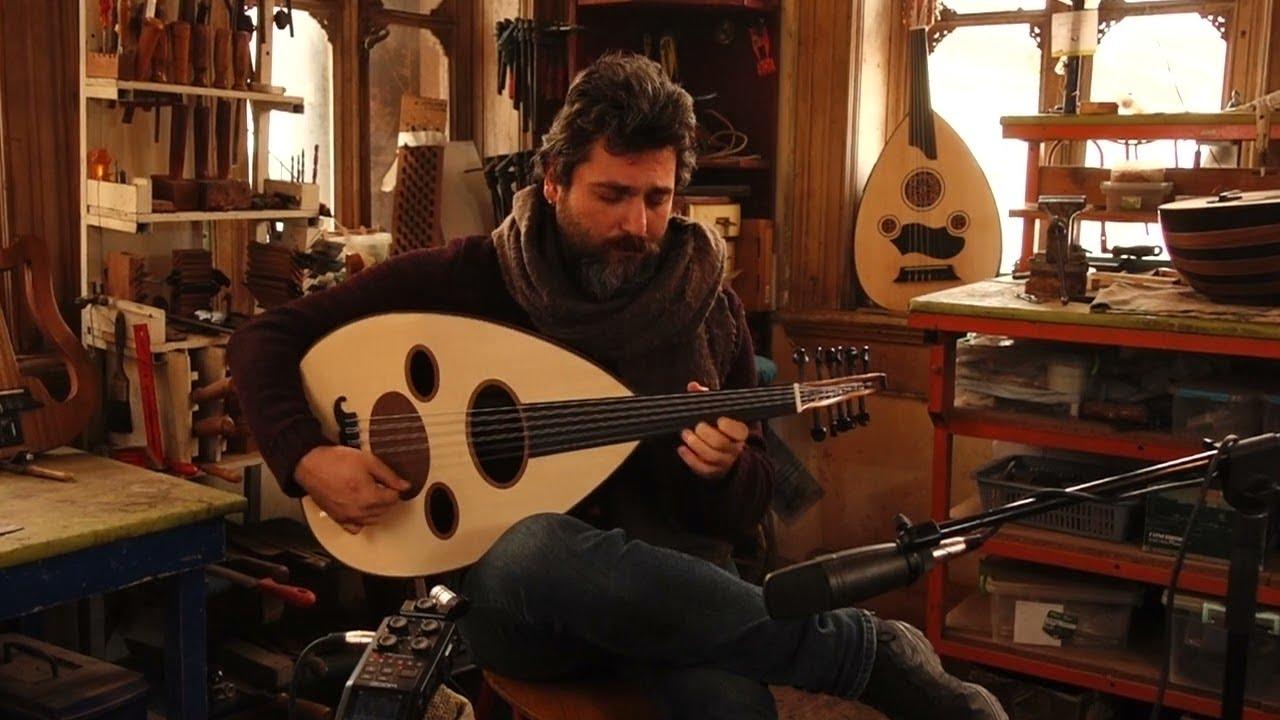
The Most Common Arabic Oud Tuning (Standard “CC” Tuning)
The Arabic oud is most often tuned, from the lowest (thickest) course to the highest (thinnest):
C – F – A – D – G – C
Written the way string makers list it, from the 1st course (thinnest) down to the 6th (thickest): cc – gg – dd – AA – FF – C.
A few things worth knowing about this tuning:
- The top four courses are tuned in perfect fourths (A–D–G–C). This is the same interval logic Turkish ouds use, and it is what gives the oud its even, singing voice across the neck.
- The one interval that is not a fourth sits between the 5th and 4th courses (F up to A, a major third). This small difference is part of what gives the Arabic oud its warm, open low end.
- The lowest course (C) is the deep bass that anchors so much of Arabic maqam playing.
Most Arabic ouds are tuned with the standard A=440 Hz reference, the same pitch used by most instruments you will play alongside.
How to Tune an Arabic Oud, Step by Step
Always tune upward to the target note — bring the string slightly below pitch, then raise it. This keeps the tuning stable and is gentler on the strings.
- Start with the 6th course (lowest, C). Use a tuner, a piano, or a reference tone.
- 5th course — F. A perfect fourth above the C.
- 4th course — A. A major third above the F.
- 3rd course — D. A perfect fourth above the A.
- 2nd course — G. A perfect fourth above the D.
- 1st course (highest, C). A perfect fourth above the G — one octave above your starting note.
Because the courses are paired (double) strings, tune the two strings of each course to the exact same pitch. Listen for the “beating” to disappear — when it is gone, the pair is in unison.
Other Arabic Oud Tuning Systems
The standard above is the most widely used, but the Arabic oud has a long, living tradition of regional and personal tunings:
- High “FF” tuning: A brighter alternative favoured by some players, raising the overall pitch for a more cutting tone. Often chosen for solo (taksim) playing.
- Optional high course: Some 12-string (6-course) ouds add a high f course at the top for extra brilliance.
- Regional preferences: Iraqi, Egyptian, and Syrian schools each have their own habits of pitch and string choice, shaped by the repertoire and the maker’s voice.
If you are a beginner, stay with the standard C–F–A–D–G–C. The alternatives are worth exploring once your ear and your hands know the instrument.
Tips for Tuning Stability
- New strings stretch. Expect to retune a fresh set several times over the first days until it settles.
- Tune up, not down, to land on the note (see the step-by-step above).
- Mind the room. Temperature and humidity move the pitch — an oud carried in from the cold will drift as it warms.
- Check the pairs. A course that sounds slightly “off” is usually two strings just out of unison with each other, not the whole instrument out of tune.
Arabic vs. Turkish Oud Tuning
The two traditions are close cousins but not identical. The Turkish oud is generally tuned higher and brighter (Bolahenk: C♯ – F♯ – B – E – A – D), which raises string tension and lends a crisper attack; the Arabic oud sits lower and warmer. If you play, or are shopping for, a Turkish instrument, see our companion guide: How to Tune a Turkish Oud.
Find an Oud That Is Ready to Play
Every oud in the Tapadum collection is set up, strung, and tuned before it ships, so it arrives ready to play in your hands. If you would like guidance choosing between an Arabic and a Turkish oud — or matching one to the music you want to make — our team builds and plays these instruments every day and is glad to help.
The Arabic ouds in the collection come from makers fluent in both traditions: Yildirim Palabiyik, building since 1994, and Necati Gurbuz, an Izmir master whose lute making has been the subject of a documentary. The maker is named on every product page, so you always know whose bench your instrument left.
Browse our Arabic oud collection, find strings, a risha, and a case in our oud accessories, or explore lessons with our teachers at the Tapadum Music Academy.
Final Notes
Tuning is the first conversation you have with your oud each time you pick it up. Learn the standard, train your ear to the fourths, and the instrument will start to feel like an extension of your hand. When you are ready to go deeper into maqam and technique, our Music Academy is here.
Tune along, free: Tapadum Tuner is a free browser-based tuner with a built-in Arabic oud preset — no app download, no login. It also includes a drone, a Turkish makam scale player, and a usul rhythm metronome.