Amin Golestani
Tar Maker & Oud Player
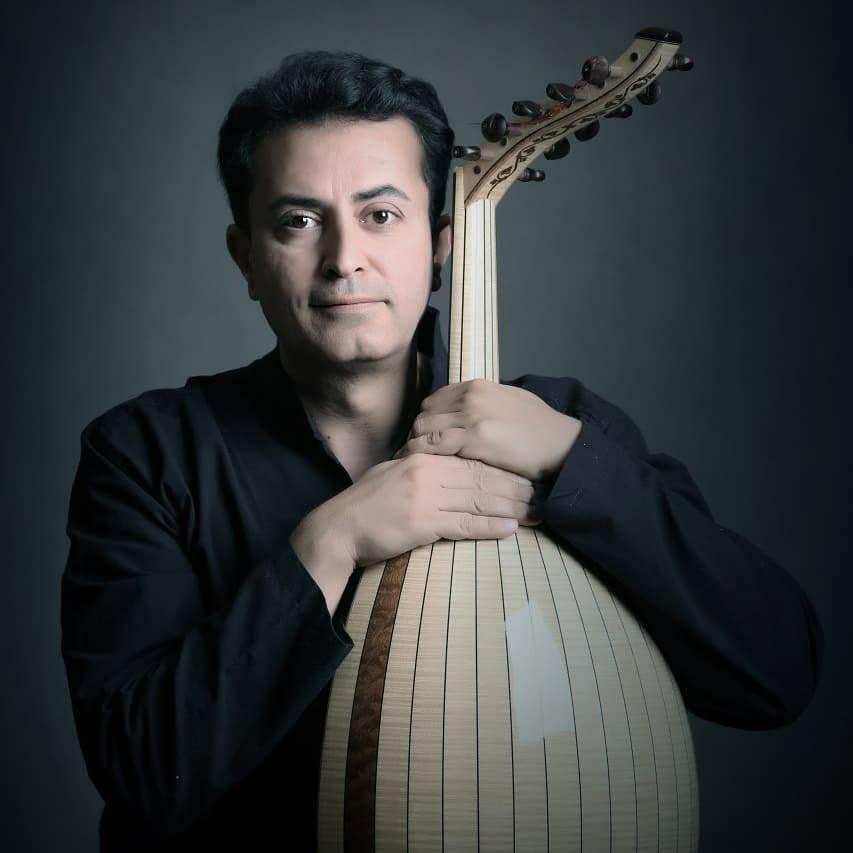
Amin Golestani is a tar maker and oud player. He belongs to a quieter tradition of Iranian artisans who are also musicians — makers who shape an instrument with the ear of someone who plays it. His own playing on the oud informs how he voices a tar, and the line between builder and musician […]
Amin Golestani is a tar maker and oud player. He belongs to a quieter tradition of Iranian artisans who are also musicians — makers who shape an instrument with the ear of someone who plays it. His own playing on the oud informs how he voices a tar, and the line between builder and musician is never quite fixed.
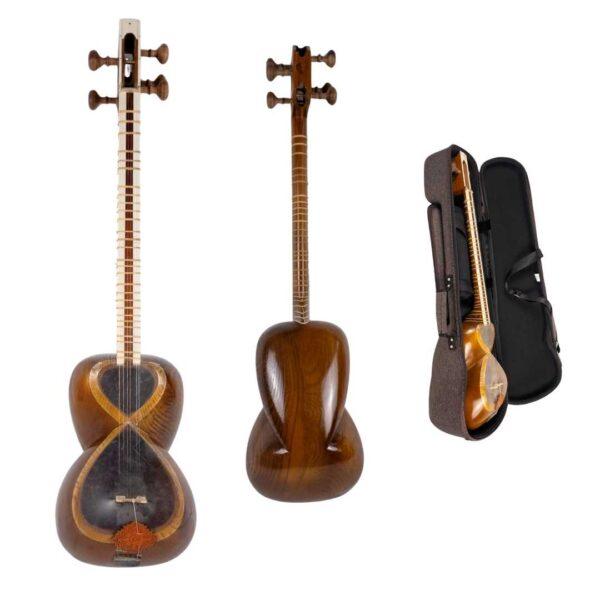
The tar — a long-necked, fretted lute that anchors the Persian classical, or dastgāh, repertoire — is among the most demanding instruments to build well. Its figure-eight body is traditionally carved from a single block of mulberry, and its sound depends on a soundboard of stretched lambskin: a living membrane that answers the lightest touch of the plectrum and gives the tar its bright, responsive voice. Golestani’s instruments follow this classical construction — a carved mulberry body, a lambskin soundboard, a horn bridge and tailpiece for clarity and sustain, a walnut neck, and a bone fingerboard and nut. His one modern concession is at the tuning machines: geared mechanical pegs in place of traditional friction pegs, giving performers faster, more stable tuning on stage.
What sets a maker like Golestani apart is less a published reputation than the quiet circulation of his work. As with many Iranian luthiers, his presence lives mainly through his own workshop and a handful of international players and specialist dealers rather than through press or encyclopedias. That makes provenance harder to document — yet it is also how much of the finest Persian instrument-making has always travelled: maker to musician, by reputation and by ear.
At Tapadum, Golestani’s craftsmanship reaches a wider circle of players. His Professional Iranian Tar carries the materials and voicing described here, prepared for the stage and protected for the journey.