Luthiers · Tehran, Iran
Mehdi Hatami
Persian Tar Maker
Tehran-based maker of the Persian tar — mulberry double-bowl bodies, walnut necks and skin soundboards — whose instruments are part of Tapadum's Persian classical collection.
Mehdi Hatami (Persian: مهدی حاتمی) is a Tehran-based maker of the Persian tar, the double-bowled, long-necked lute at the centre of Iranian classical music. His instruments are built in the traditional Tehran pattern, and Tapadum carries his work as part of its Persian tar collection.
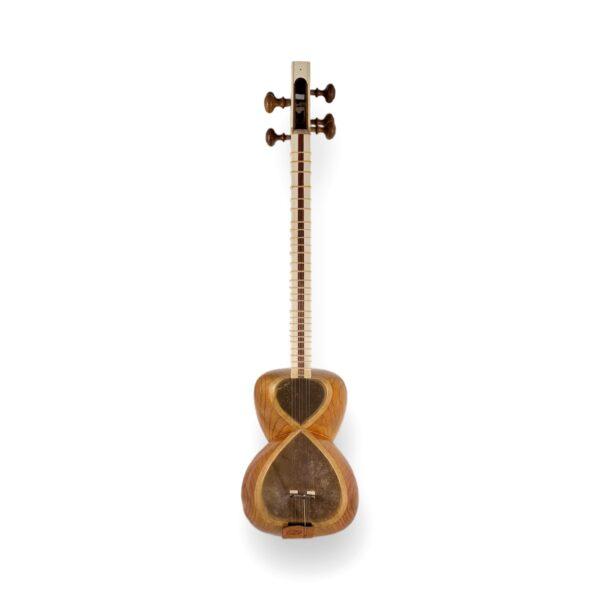
The Hatami tar in our collection shows the choices his workshop makes. The body is carved from seasoned mulberry, the tonewood Tehran makers have used for the tar’s two connected bowls for generations. The neck and tuning pegs are solid walnut, a bone-inlaid binding runs along the fingerboard, and both bowls are covered with a stretched skin membrane — the soundboard that gives the tar its bright, percussive attack. Twenty-five tied frets can be moved along the neck to set the koron and sori quarter-tones of Persian tuning, and the six strings sit in three courses. The current model is described in full on the Persian Tar by Mehdi Hatami page.
Hatami is a common family name in Iran, and more than one instrument maker carries it. Iranian retail listings often sell tars simply as “Hatami” without a first name, so an instrument labelled that way elsewhere is not necessarily Mehdi Hatami’s work. Tapadum also works with Hesam Hatami Sefaareshi, a maker of the Persian kamancheh; we know of no documented family or workshop link between the two. Neither maker should be confused with Shapour Hatami, the 20th-century classical tar player who studied with Abdolhossein Shahnazi — a performer, not an instrument maker.
Mehdi Hatami is an independent maker, not a member of the Tapadum team. Published biographical detail about him — training, teachers, year his workshop opened — is limited, and we do not state what we cannot verify. This profile describes the instruments we have handled and will grow as documented information becomes available. An earlier version of this page carried the name Mohamad Hatami; it now names Mehdi Hatami, the maker of the tars in our current collection. For background on the instrument itself, see the tar entry on Wikipedia.