
Description
Walnut Tombak by Mousavi — A Persian Zarb
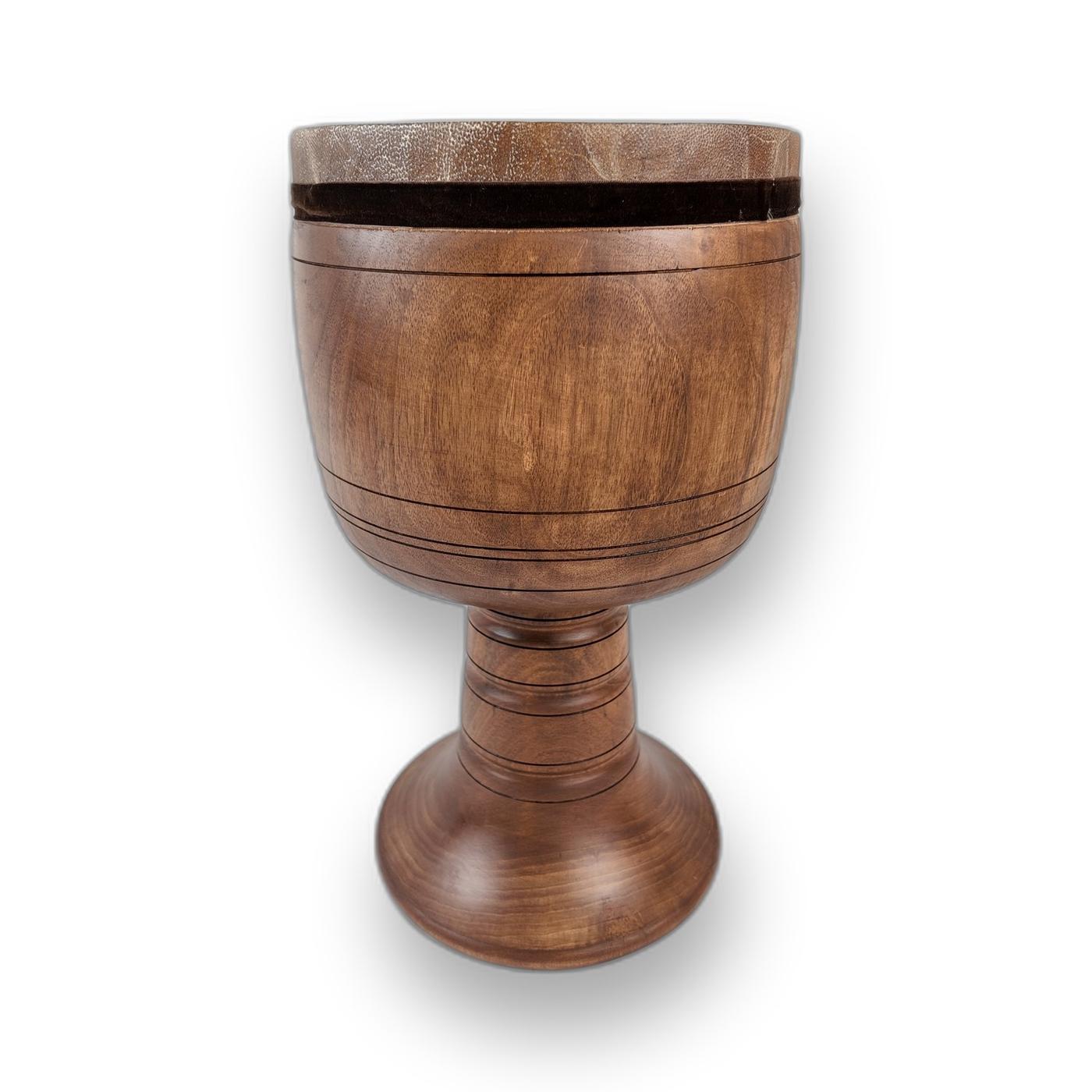
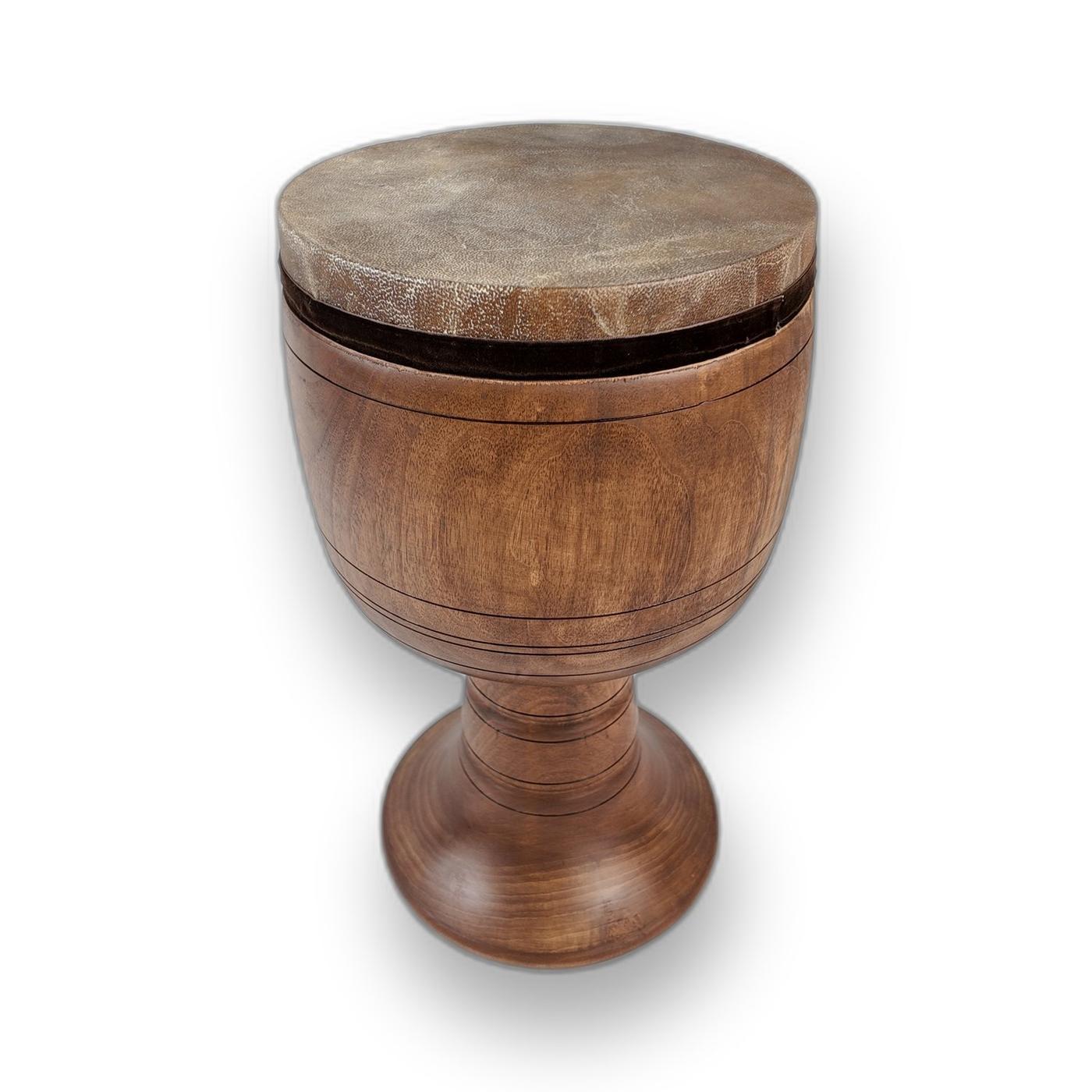
The walnut tombak by Mousavi is a hand-turned Persian zarb built in the Tehran workshop of a maker with some twenty-five years at the bench. The tombak is the principal hand drum of Persian classical and folk music, and this model carries its full rhythmic vocabulary — the deep tom struck at the centre of the skin and the bright bak sounded at the rim that together give the instrument its name.
Walnut Body, Natural Finish
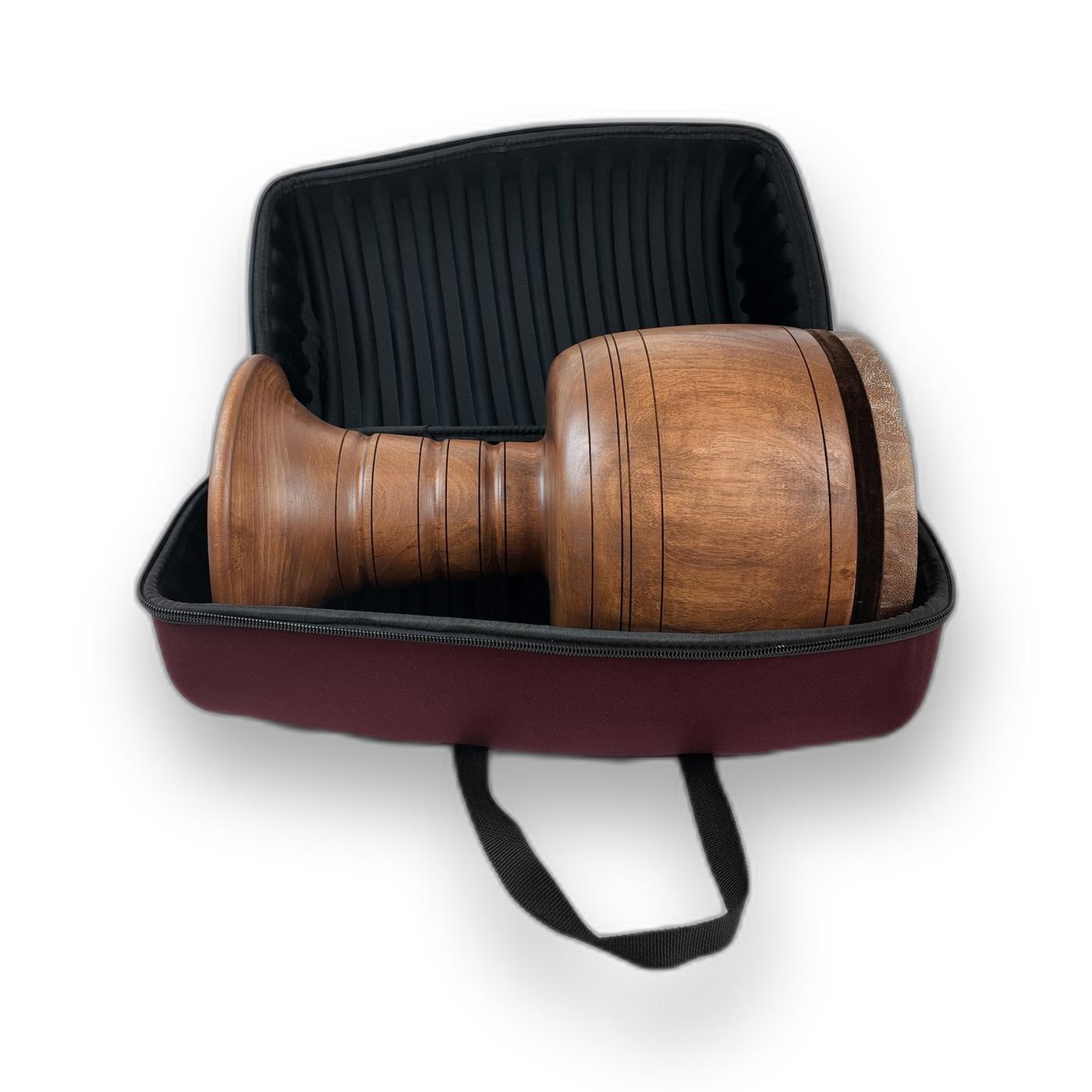
The shell is turned from a single piece of walnut, a dense, warm-toned hardwood long favoured by Iranian makers for the clarity and projection it lends a drum. Mousavi leaves it in a matte natural finish that keeps the grain open to the eye and hand, and decorates the bowl and turned pedestal foot with fine incised rings — a quiet, traditional ornament rather than applied inlay. The open goblet base lets the sound breathe and project.
Calfskin Head & Voice
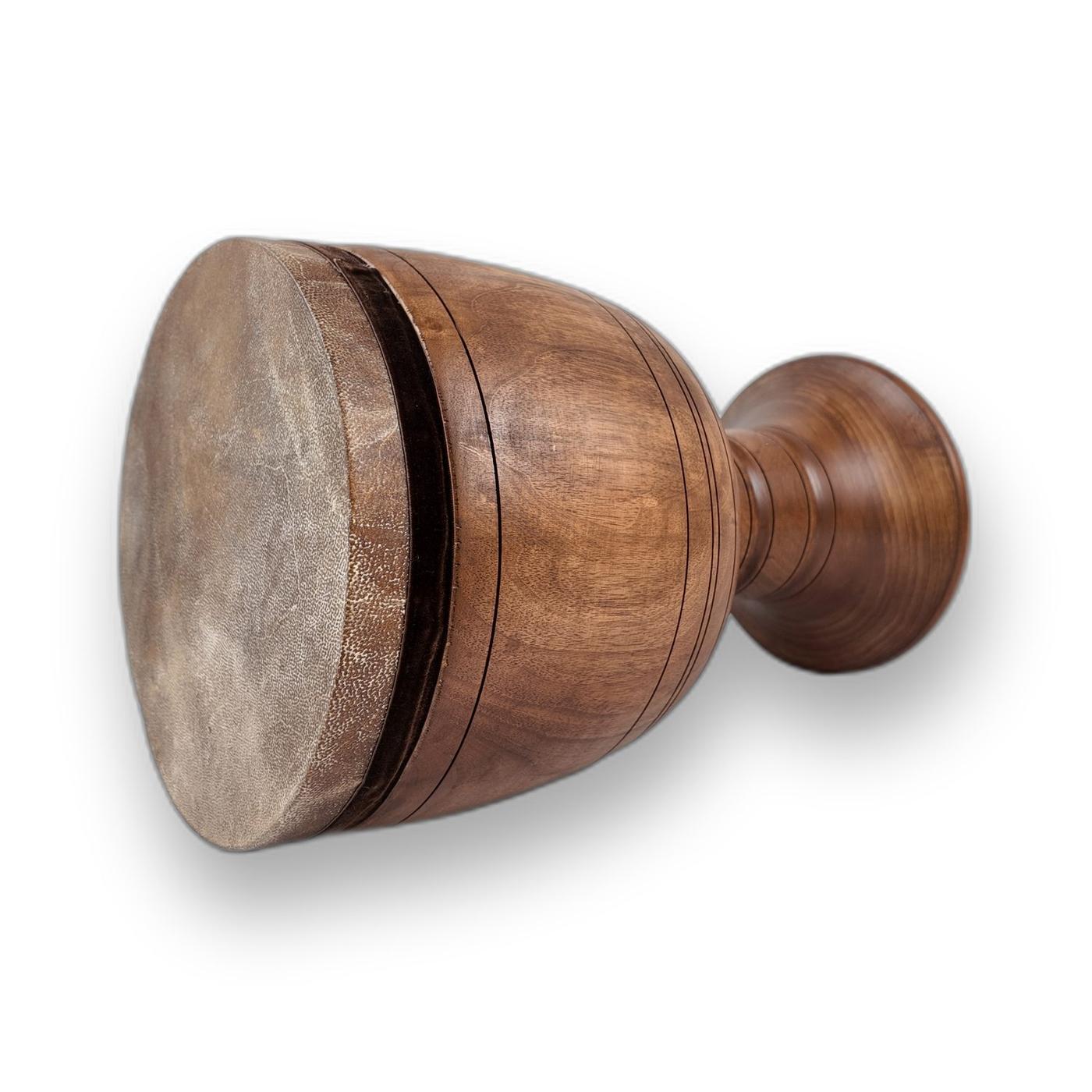
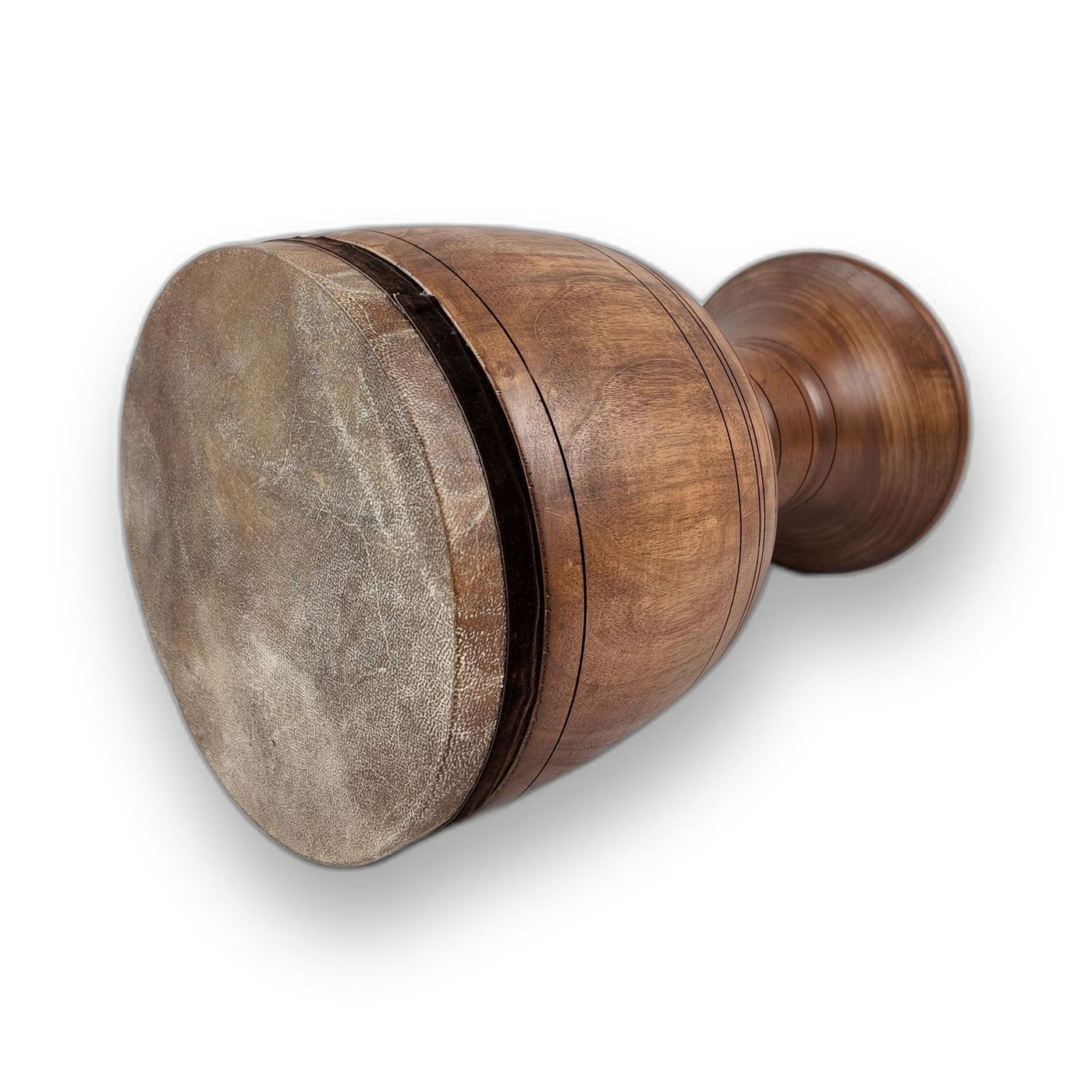
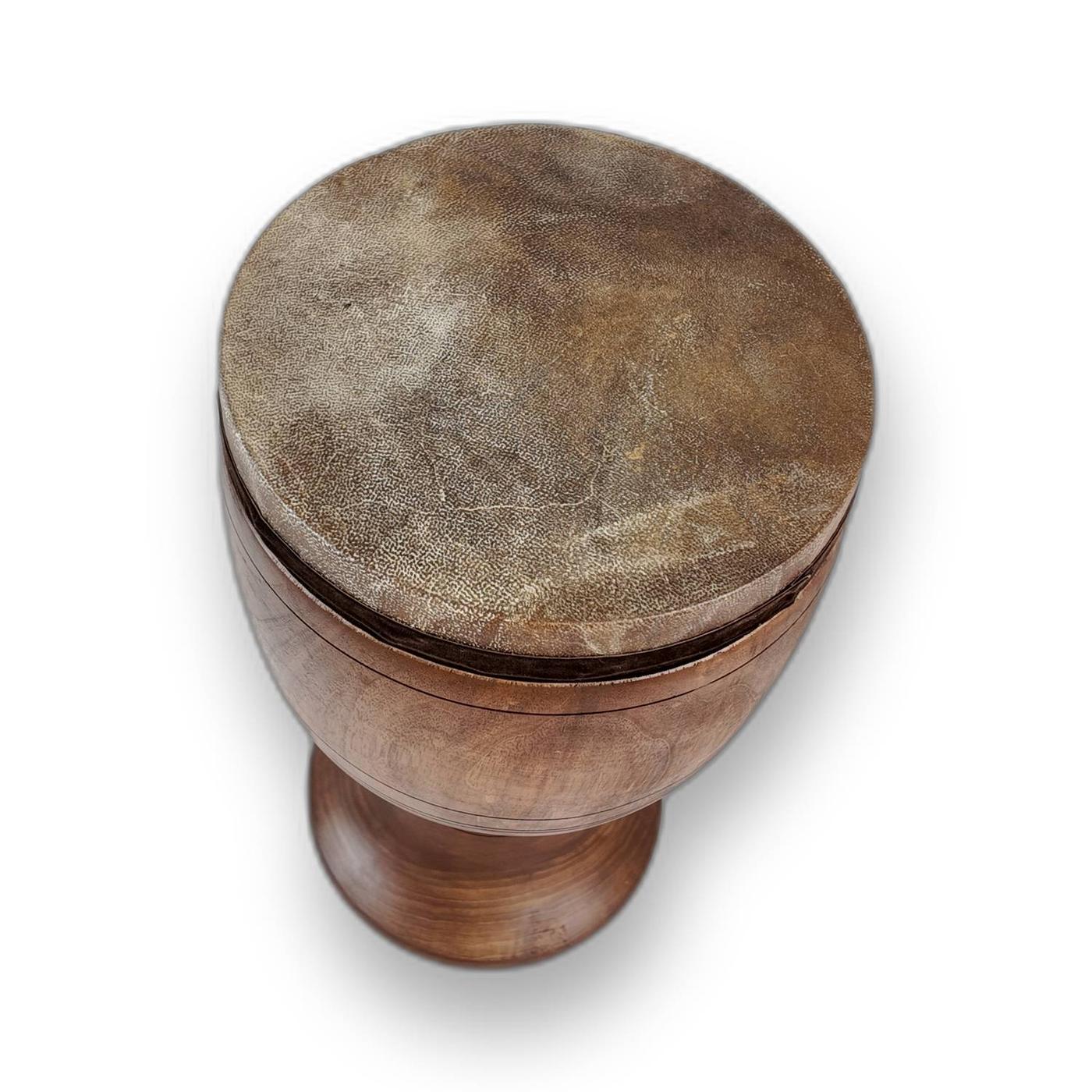
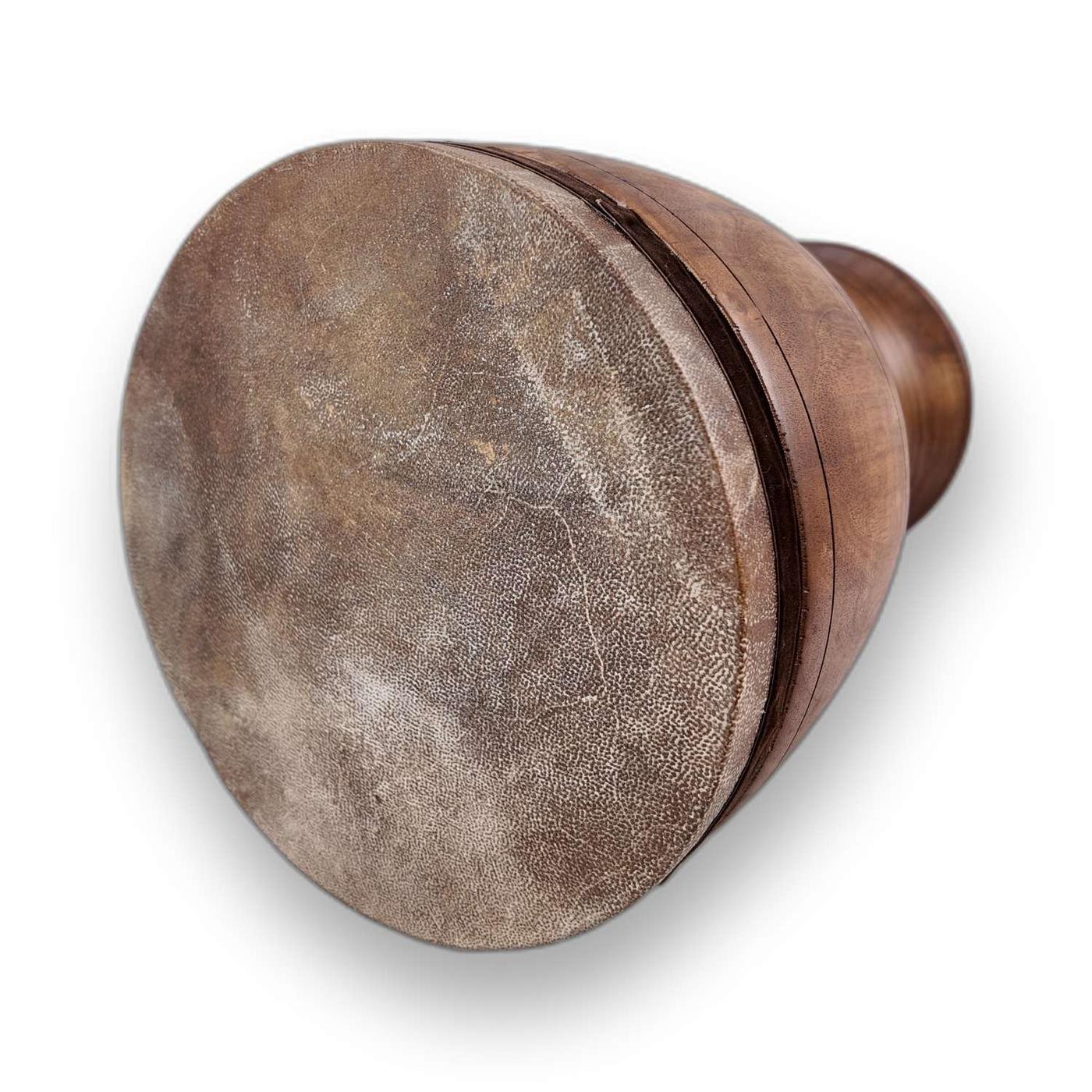
The playing surface is a natural calfskin head, bound to the shell in the traditional way. Calfskin gives the tombak a warm, organic attack and a wide tonal range: a ringing, cutting tek at the edge, a round, resonant tom in the centre, and the snapping riz finger-rolls the repertoire is known for. As a natural membrane it responds to the room — a living quality Persian players prize.
| Specification | Detail |
|---|---|
| Maker | Mousavi (Tehran, Iran) |
| Instrument | Persian Tombak (Zarb) |
| Body | Walnut — single turned shell |
| Head | Natural calfskin |
| Head diameter | 26 cm |
| Height | 46 cm |
| Weight | 2.9 kg |
| Finish | Matte natural |
| Decoration | Incised ring detailing |
| SKU | TM1 |
Who It’s For
This is an instrument for the intermediate to advanced player — a committed student stepping up from a starter drum, or a performing percussionist who wants a hand-made walnut tombak with a serious voice. At 46 cm and 2.9 kg it is a full-scale concert tombak rather than a travel piece.
In the Persian Repertoire
The tombak sits at the heart of the Persian dastgāh tradition, anchoring radif performance and accompanying the tar, setar and santur. Mousavi’s walnut model is equally at home in Persian folk music and in contemporary, cross-cultural projects, where its dynamic range and clear articulation cut through an ensemble. Explore more Persian tombak drums in our percussion collection.
Care & Maintenance
Treat the calfskin head as you would any natural skin: keep the drum away from direct heat and sudden humidity changes, and let it acclimatise to a new room before playing. Wipe the walnut shell with a dry, soft cloth — the matte finish needs no polish. Stored well, a hand-made tombak like this matures in tone for years.
Worldwide shipping & 15-day return.

&url=https://tapadum.com/product/walnut-tombak-by-mousavi-tm1/&media=https://tapadum.com/wp-content/uploads/2026/06/handpan-24-1024x1024.jpg)