
Description
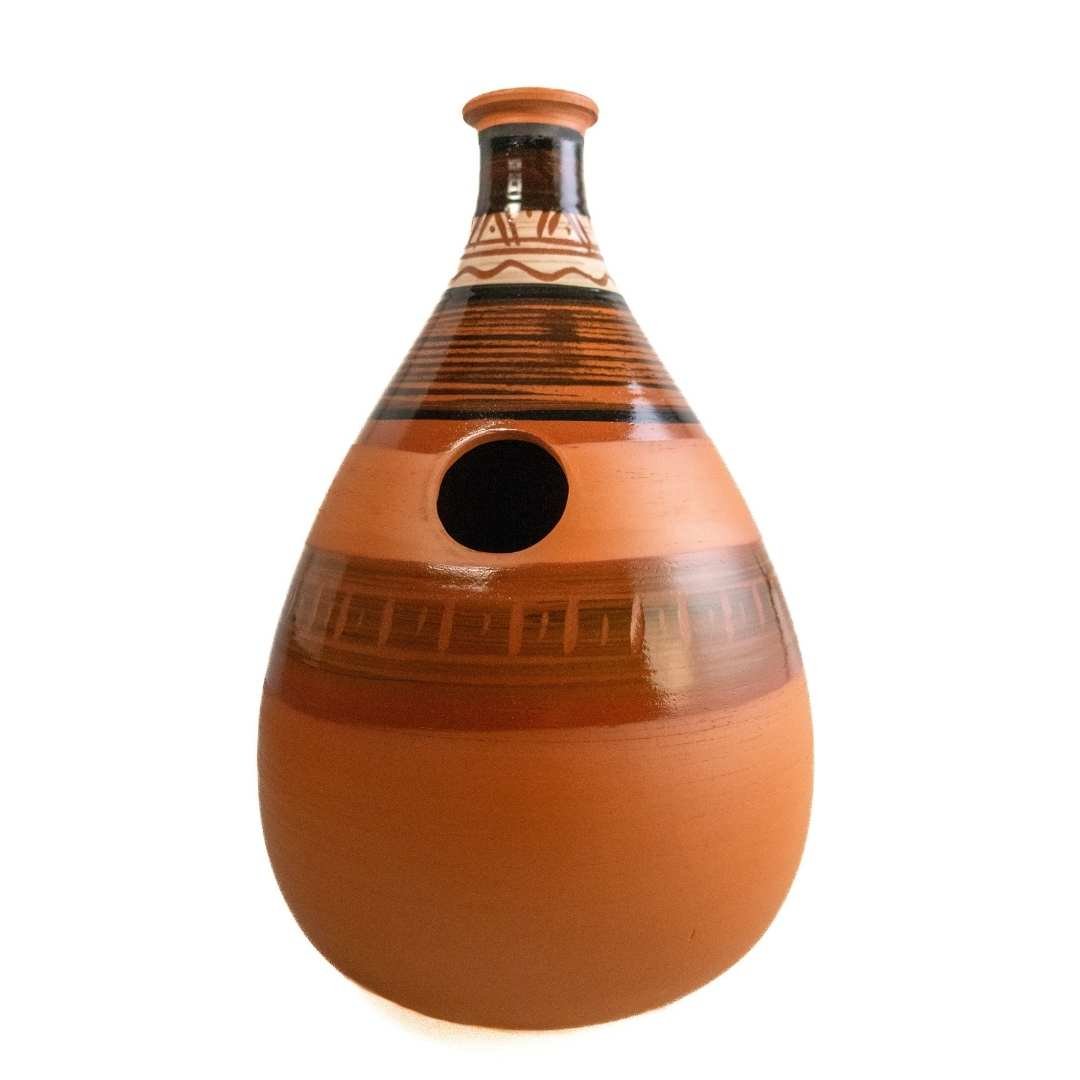
The Professional Udu Drum n.8 is a wheel-thrown clay udu decorated with brown and black bands, with a deep bass that bends in pitch and bright, dry tones across its body. Udus began among the Igbo people of Nigeria as water jugs with an extra hole, played by women in ceremonies; the word means “vessel” or “pot” (see the udu on Wikipedia).
Decoration of the n.8
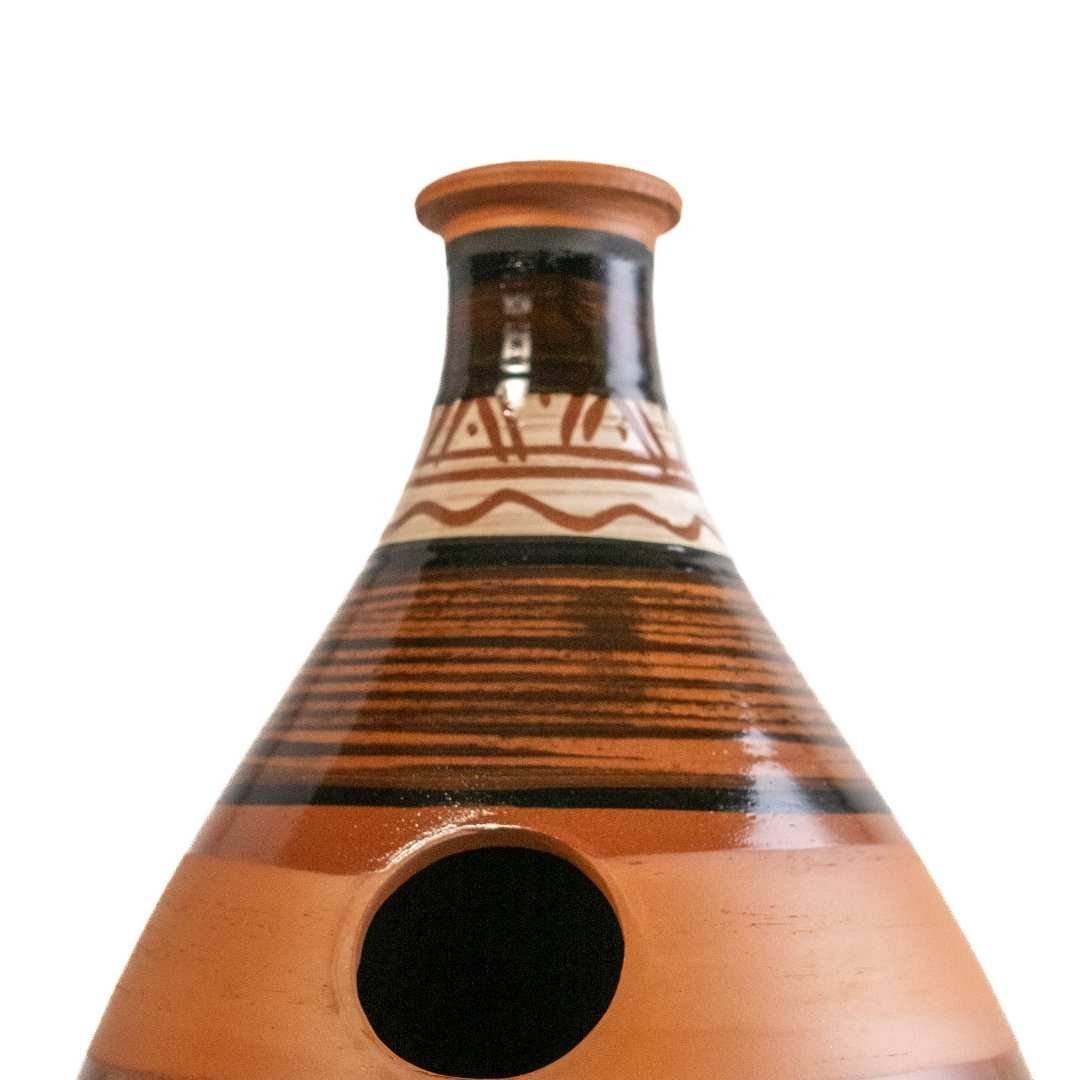
The pot keeps the classic teardrop chamber, short neck and single round side opening, but it is the most decorated drum in the brown palette of our range. A dark band and a cream band with a wavy line and leaf-like strokes circle the neck, brushed dark stripes ring the shoulder, and a wide brown frieze of rectangular panels runs below the side opening. The lower belly is left in plain terracotta. For a simpler look, the Udu Drum n.7 has a single patterned band on the neck; the Udu Drum n.9 carries a similar layout in dark green.
| Feature | Detail |
|---|---|
| Instrument | Udu — clay vessel drum |
| Body | Wheel-thrown Menemen red clay, fired |
| Openings | Round side opening and open neck |
| Tuning | Fixed pitch, set by the chamber volume and openings |
| Decoration | Brown and black bands; wavy-line neck band; frieze of rectangular panels |
| Maker | Ahmet Tashomcu, Menemen (Izmir) |
How the Udu Sounds
An udu works like a drum and a wind instrument at once. A quick strike with an open palm on the side opening pushes air through the chamber and gives the low, bending bass; fingertip taps on the shoulder and belly add dry, bright accents; and a hand moved over the neck opening changes the pitch of the air inside. Players usually sit with the drum on the lap or on a stand, keeping both openings within reach.
Nothing on an udu can be tuned: its note follows the volume of air in the pot and the size of its openings, fixed when the clay is shaped and fired. Each drum therefore has its own fundamental. If you need a particular pitch, ask us before ordering and we will check the drum in stock.
Made by Ahmet Tashomcu in Menemen
The n.8 comes from the wheel of Ahmet Tashomcu, a master potter from Menemen in the province of Izmir who has thrown clay since childhood. A world pottery champion in 2017 and 2019 and a name in Turkey’s National Inventory of Living Human Treasures, he shapes both the udu drums and the clay darbukas of the Tapadum range from the iron-rich red clay of Menemen, firing each pot after shaping.
Who It Is For
Beginners find the core udu sounds quickly, because a light touch works better than force; experienced percussionists spend their time on the long bass and on how fully the side opening is sealed. The n.8 suits hand-percussion setups, acoustic ensembles and studio sessions, and its warm, dry voice sits well in ambient and meditative music. Browse the full udu drum collection or read our guide to the udu drum for more on its history and technique.
Caring for a Clay Udu
Fired clay does not dent, it cracks: protect the n.8 from hard knocks and from sudden changes of temperature. Lift it with both hands under the body rather than by the neck, clean it with a soft dry cloth, and never soak it. Keep it upright on a padded surface where it cannot be knocked over, let it settle to room temperature before playing, and carry it in a padded case when you travel.


Reviews
There are no reviews yet.