Description
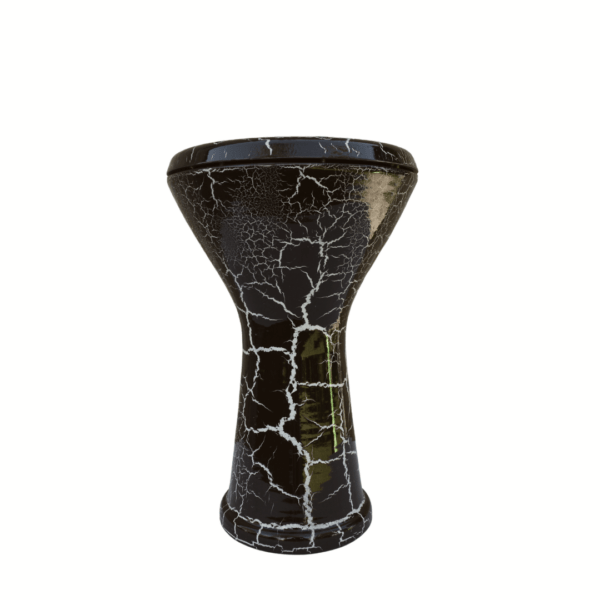
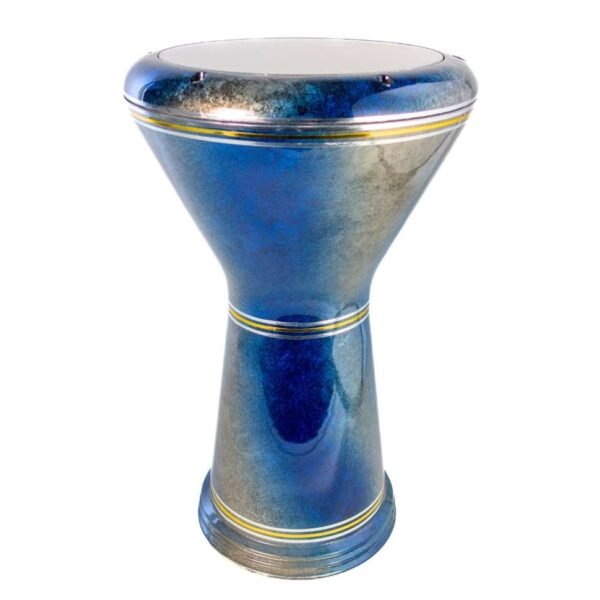
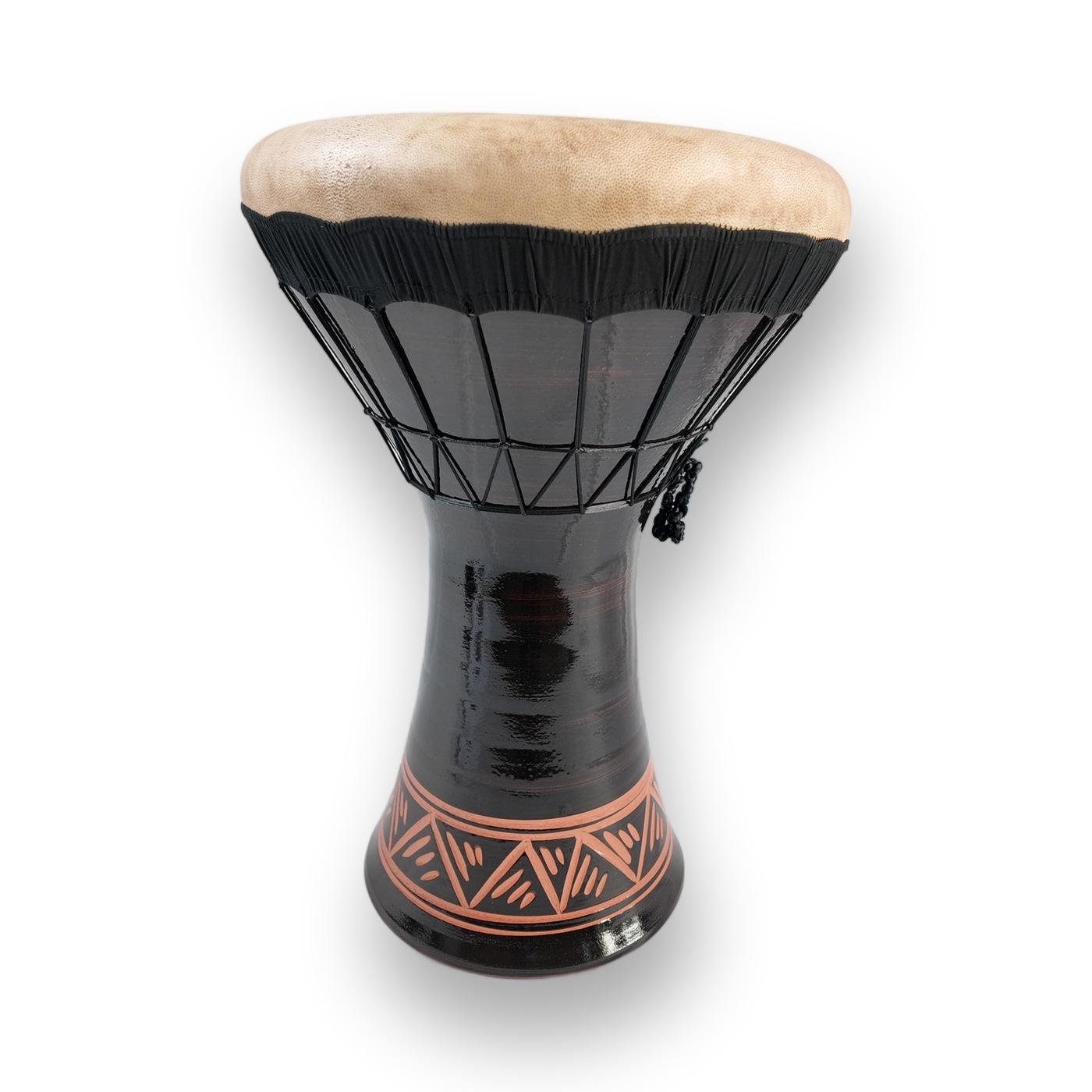
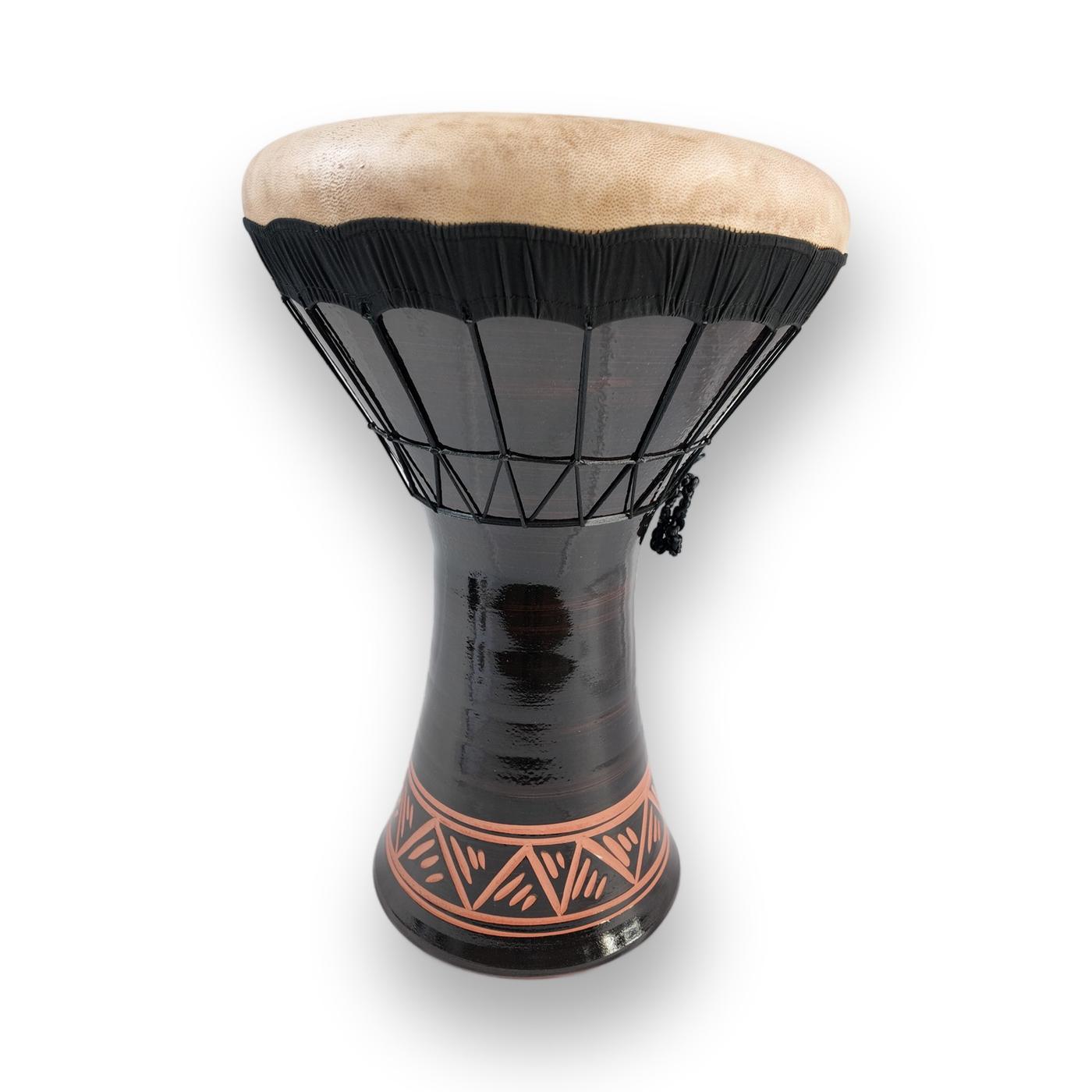
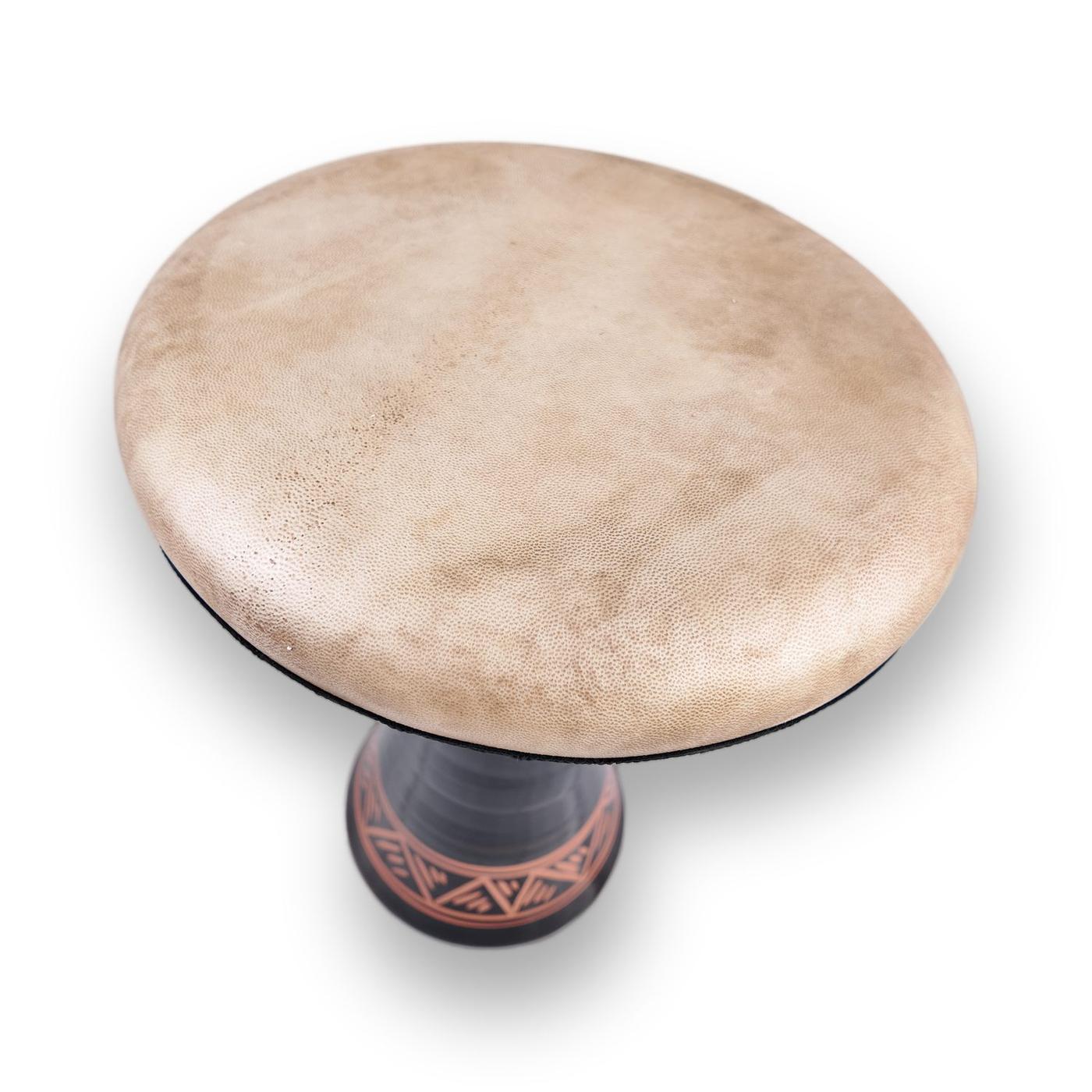
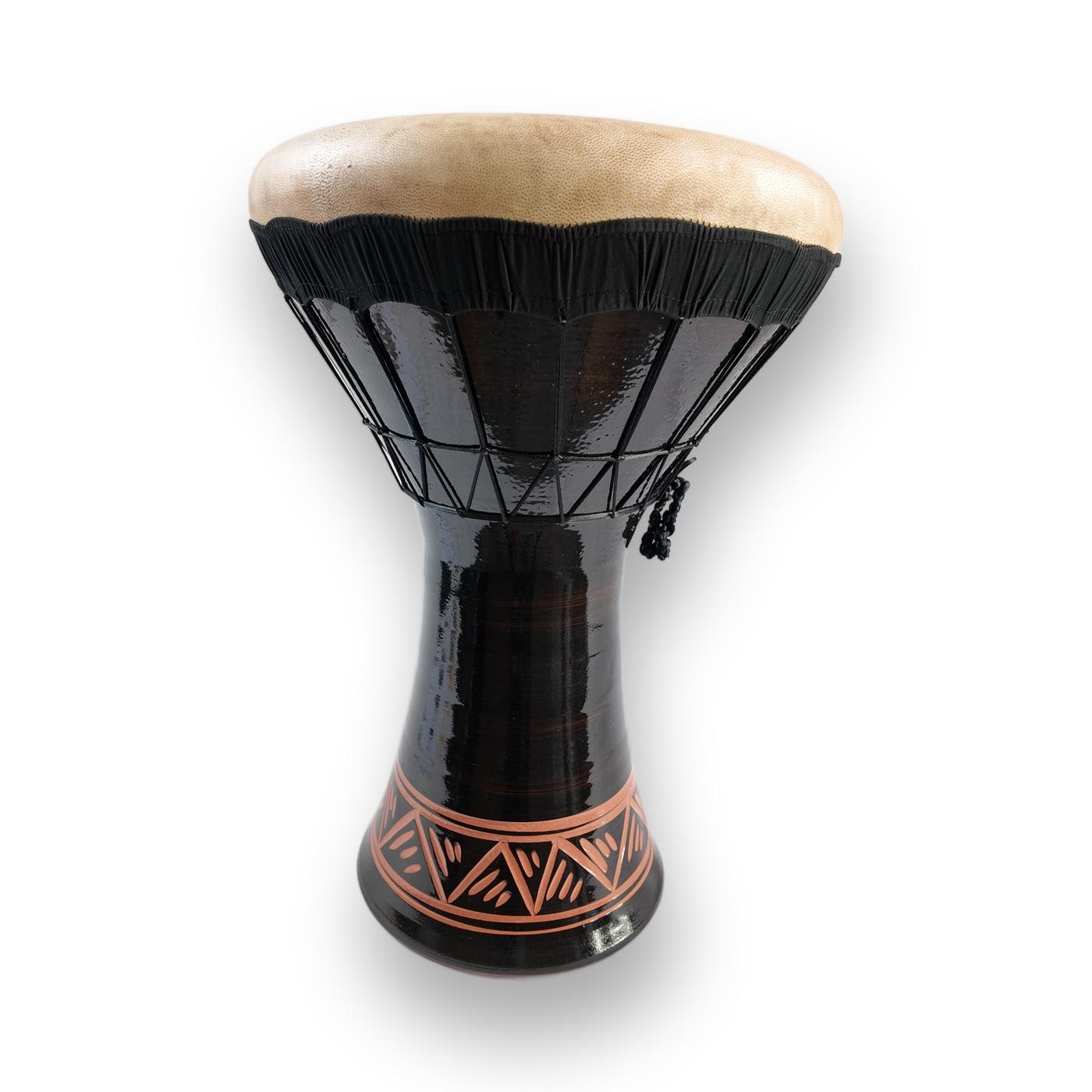
The Dohola drum is the deep bass voice of the Egyptian goblet-drum family — the large darbuka also spelled Doholla or Duhulla. This model pairs that low, resonant doum with a glossy black clay body and a hand-carved geometric band around the base, hand-shaped at Tapadum’s İzmir workshop. It lays the rhythmic foundation beneath a solo darbuka, giving Arabic and Egyptian ensembles their low-end pulse.
Black Clay Body & Carved Geometric Base
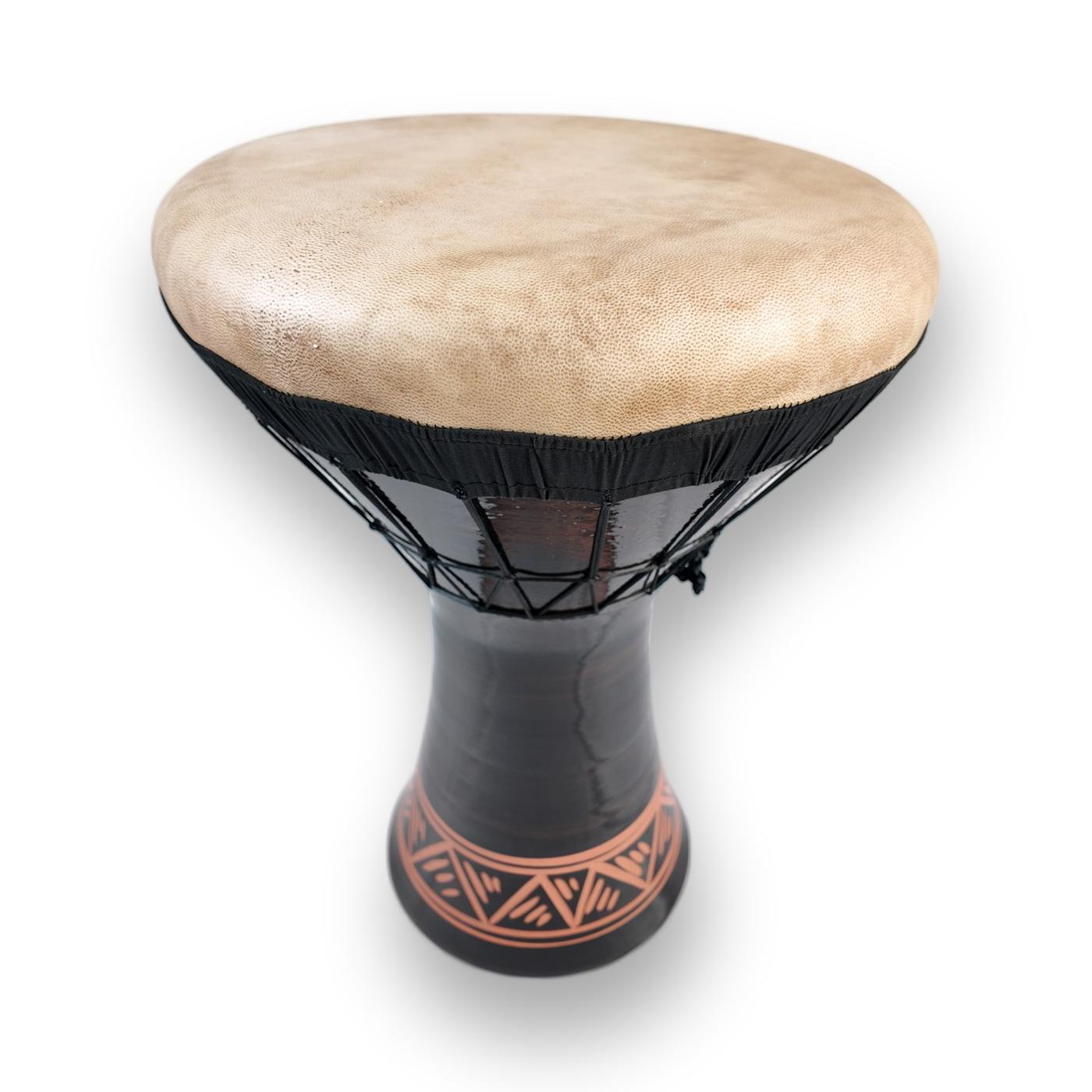
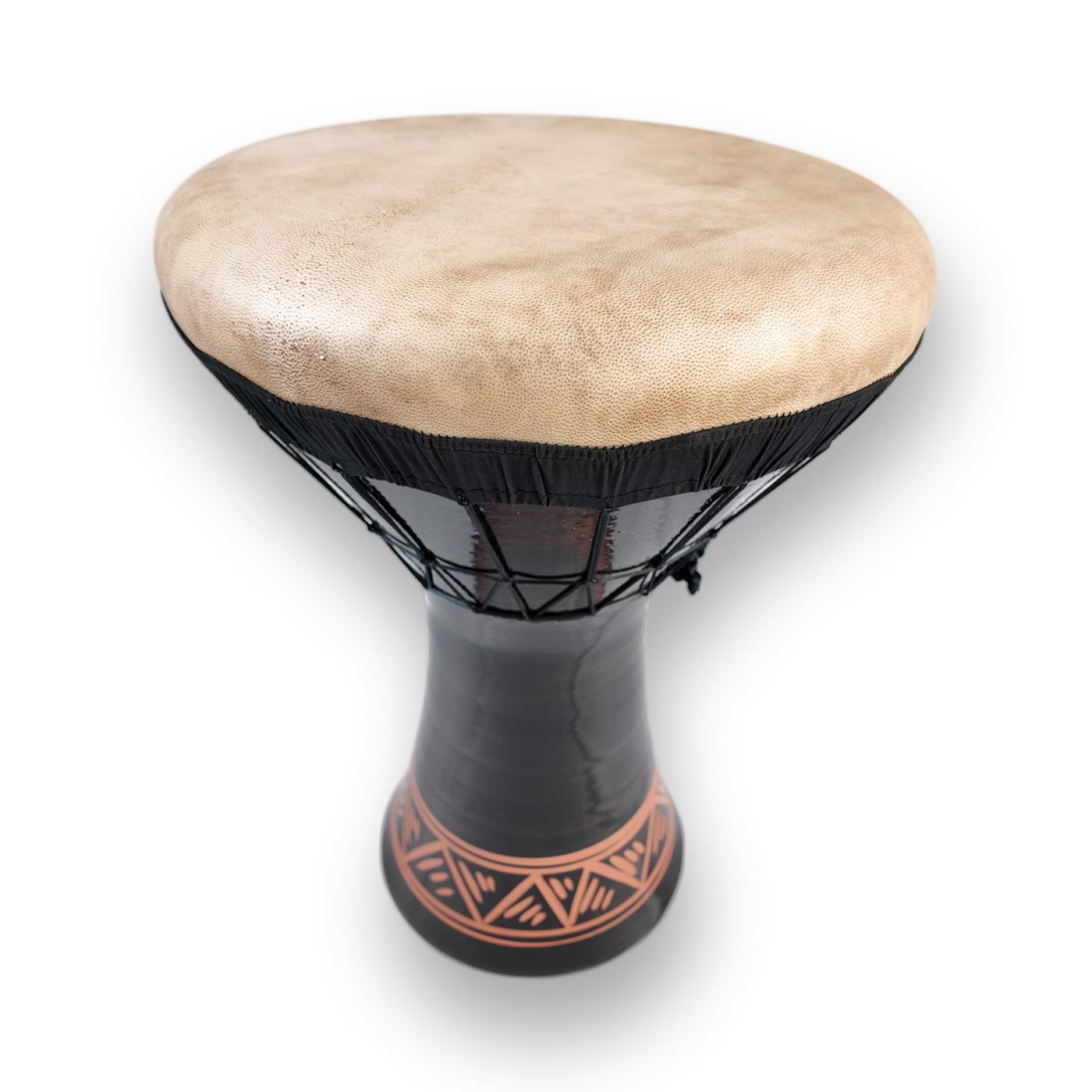
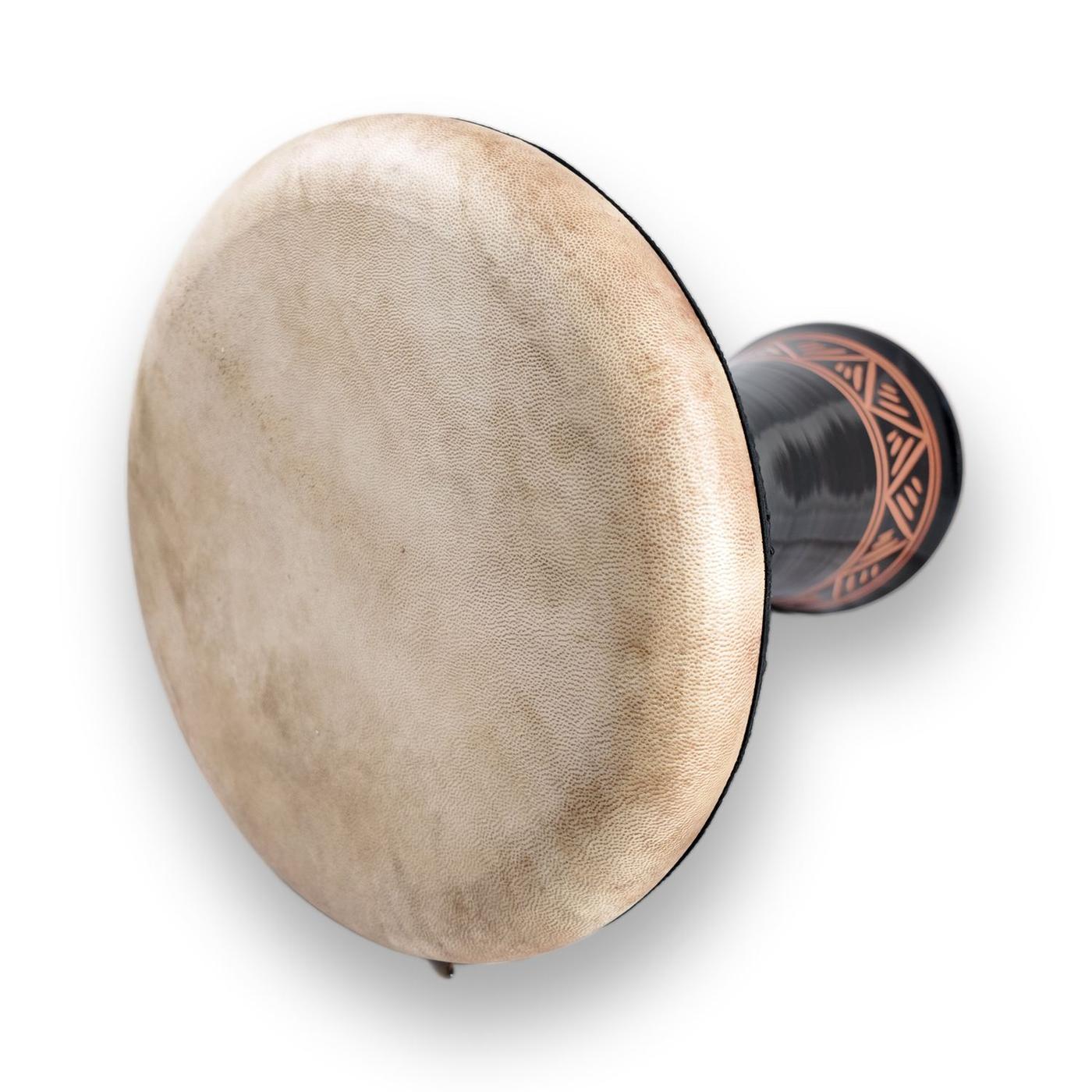
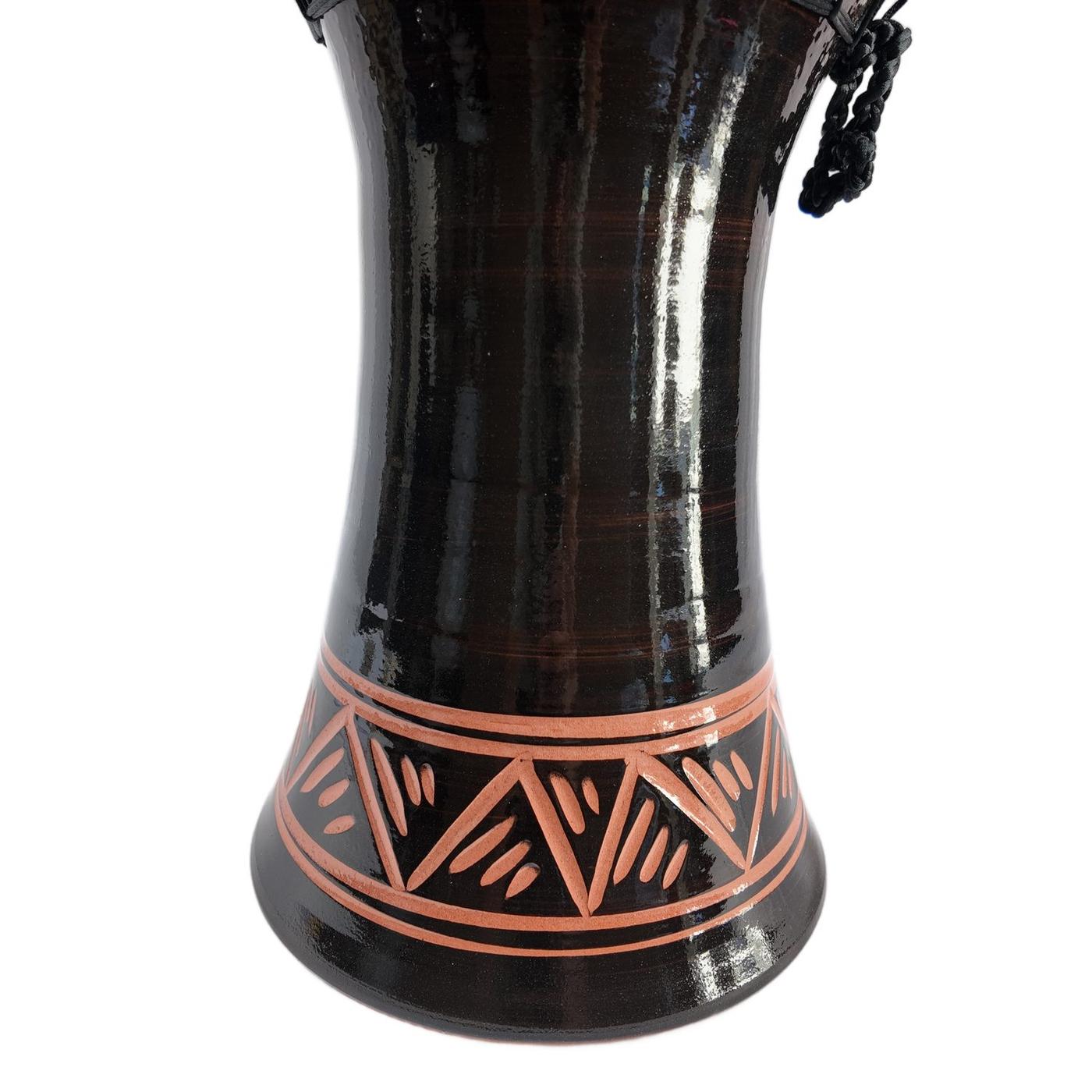
The shell is finished in a deep glossy black, with a band of hand-carved geometric relief cut around the flared base — triangles and channels that expose the warm terracotta clay beneath the dark surface, a striking contrast unique to this drum. The finish is more than decorative: the fired clay body rounds the attack and reinforces the low frequencies that a bass drum lives on. At 36 cm across and 50 cm tall, the wide resonance chamber turns the goblet profile into a genuine amplifier for the doum.
28 cm Goatskin Head & Tuning Light System
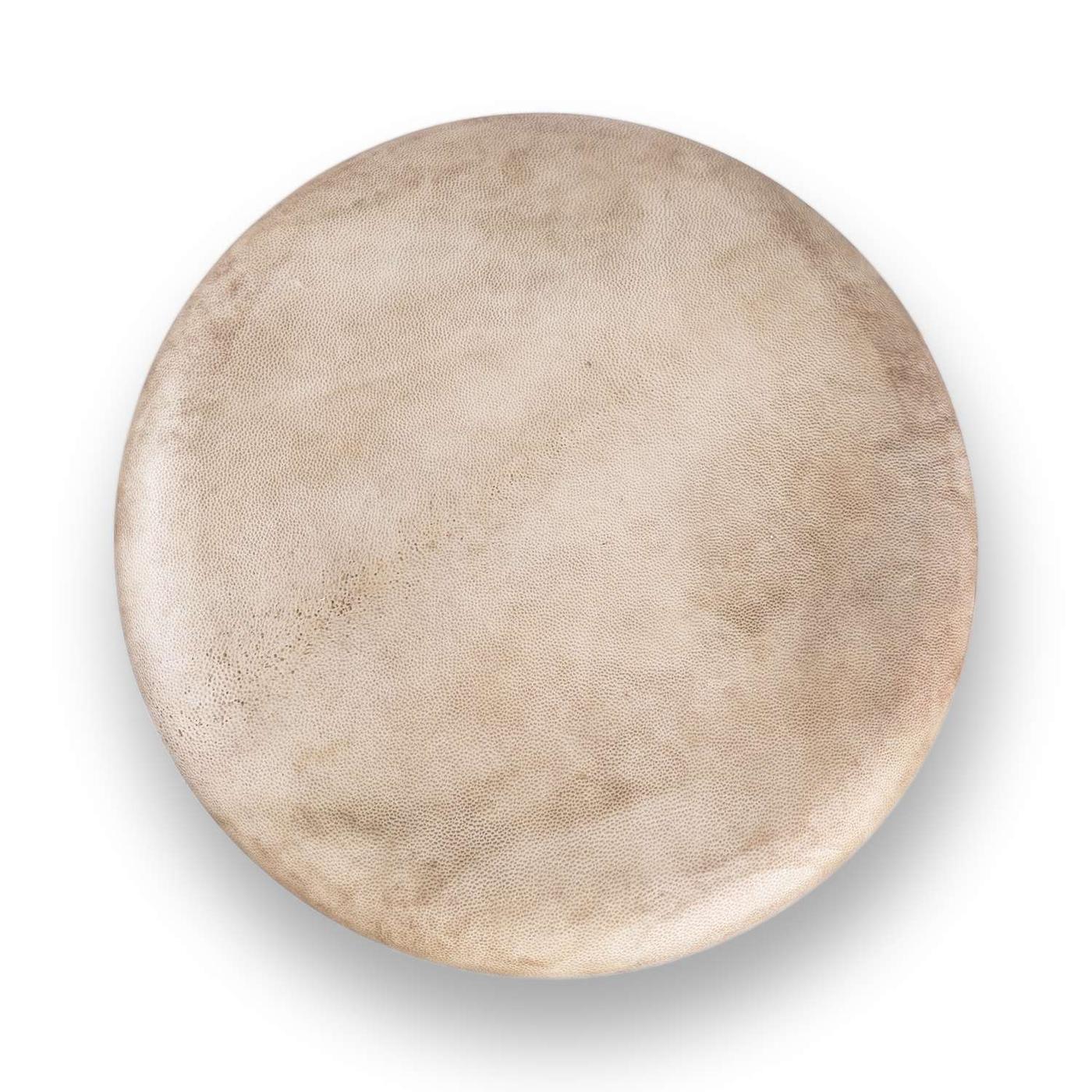
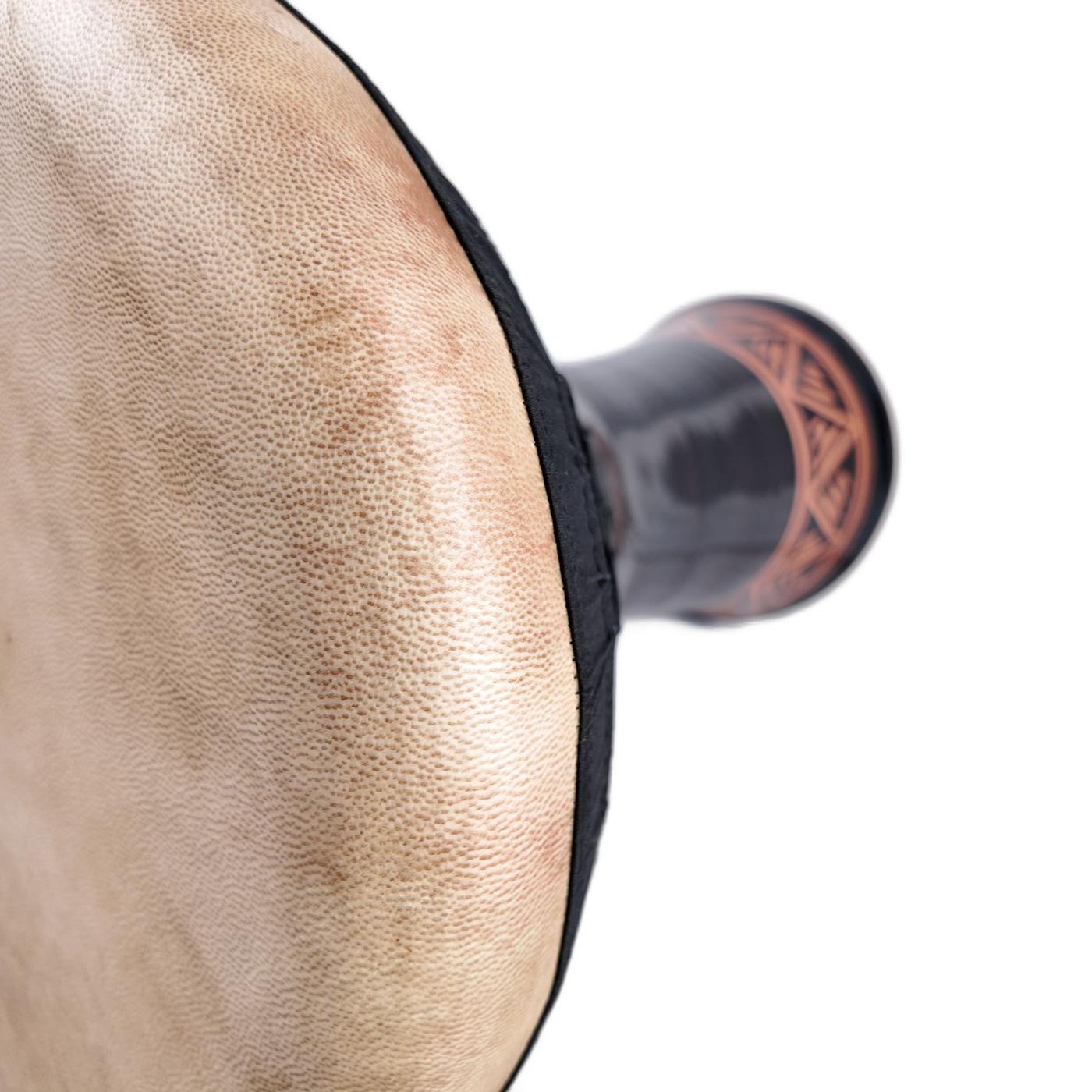
The 28 cm playing surface is tensioned natural goatskin, sized to voice a focused, articulate bass rather than a loose boom — deep but defined, so the low notes stay musical in an ensemble. Because natural skin moves with humidity, the drum carries Tapadum’s integrated Tuning Light System: an internal, dimmer-controlled lamp that gently warms the head to hold a stable pitch through practice and performance, with no external heat source.
Technical Specifications
| Type | Bass Clay Darbuka (Dohola) |
| Body material | High-fired clay, glossy black finish |
| Head material | Natural goatskin |
| Head (skin) diameter | 28 cm |
| Total (rim) diameter | 36 cm |
| Height | 50 cm |
| Weight | 7.2 kg |
| Decoration | Glossy black glaze with hand-carved geometric base band |
| Tuning | Integrated Tuning Light System (dimmer-controlled) |
| Includes | Padded gig bag |
| Handcrafted in | İzmir, Turkey |
Who This Darbuka Is For
The Dohola is an ensemble and recording instrument — the bass beneath the lead. It suits percussionists who need a dedicated low voice under a solo drum such as the solo clay doumbek, together covering the full doum-tek vocabulary. If you prefer a different bass finish, compare it with our green-glazed clay bass darbuka. At 7.2 kg it is a seated drum for stage and studio rather than travel.
Music Genres & Traditions
The bass darbuka anchors Egyptian classical and folk repertoire — saidi, malfuf, masmoudi, and baladi rhythms — and runs through Arabic raqs sharqi ensembles, Turkish fasıl, and Levantine and Maghrebi music. In world-fusion projects its deep, defined low end grounds metal and synthetic percussion, giving the section a foundation to sit on.
Care & Maintenance
Store the drum at moderate humidity (45–55%) and never wet the body or head. Wipe the goatskin with a dry cloth after playing, and warm it with the Tuning Light System — not a radiator or hair dryer — if the pitch drops. The glossy glaze wipes clean with a soft, dry cloth; the carved base needs no treatment. Always transport in the included padded gig bag, since fired clay can chip on impact.
Explore the Clay Darbuka Collection
Browse the full Clay Darbuka range within our wider Darbuka collection, from solo to bass. Every shell is hand-shaped by master potter Ahmet Tashomcu and completed by Mehmet Nihat San, who tensions and sound-tests every head. Inspected at our Brisighella, Italy showroom before dispatch. Worldwide shipping & 15-day return.