

Description
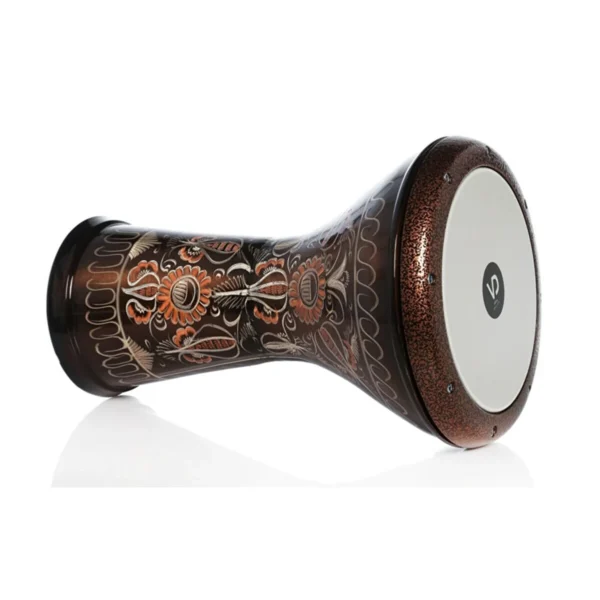
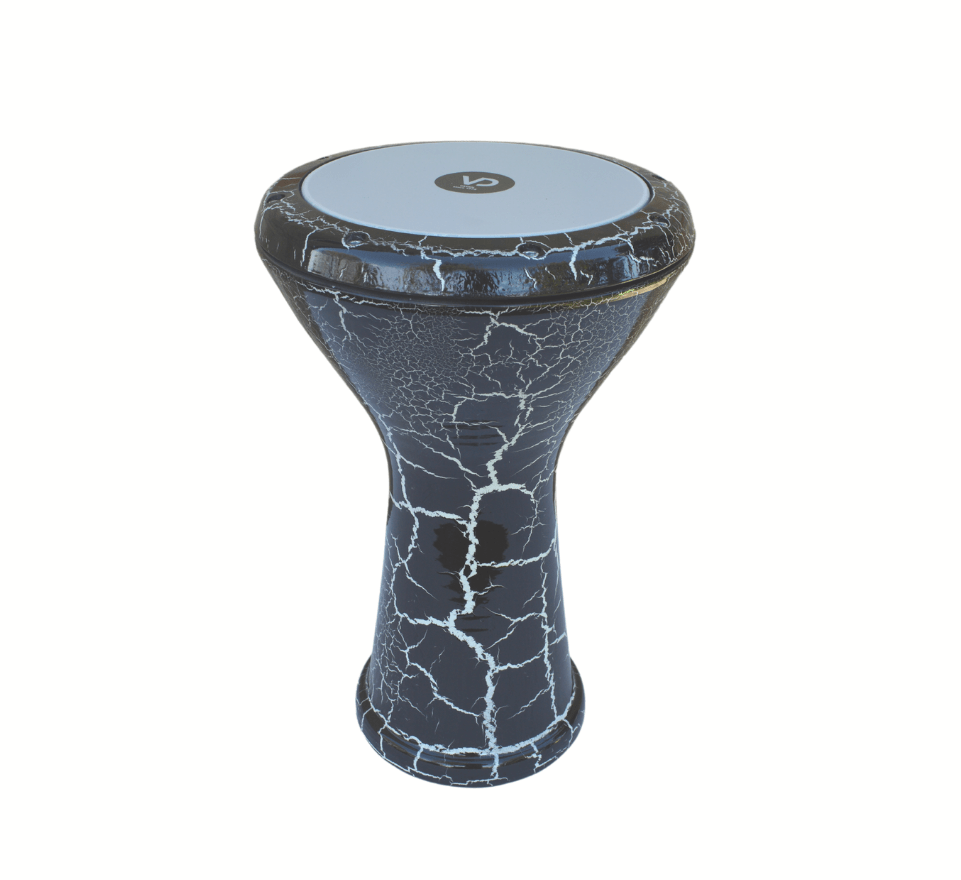
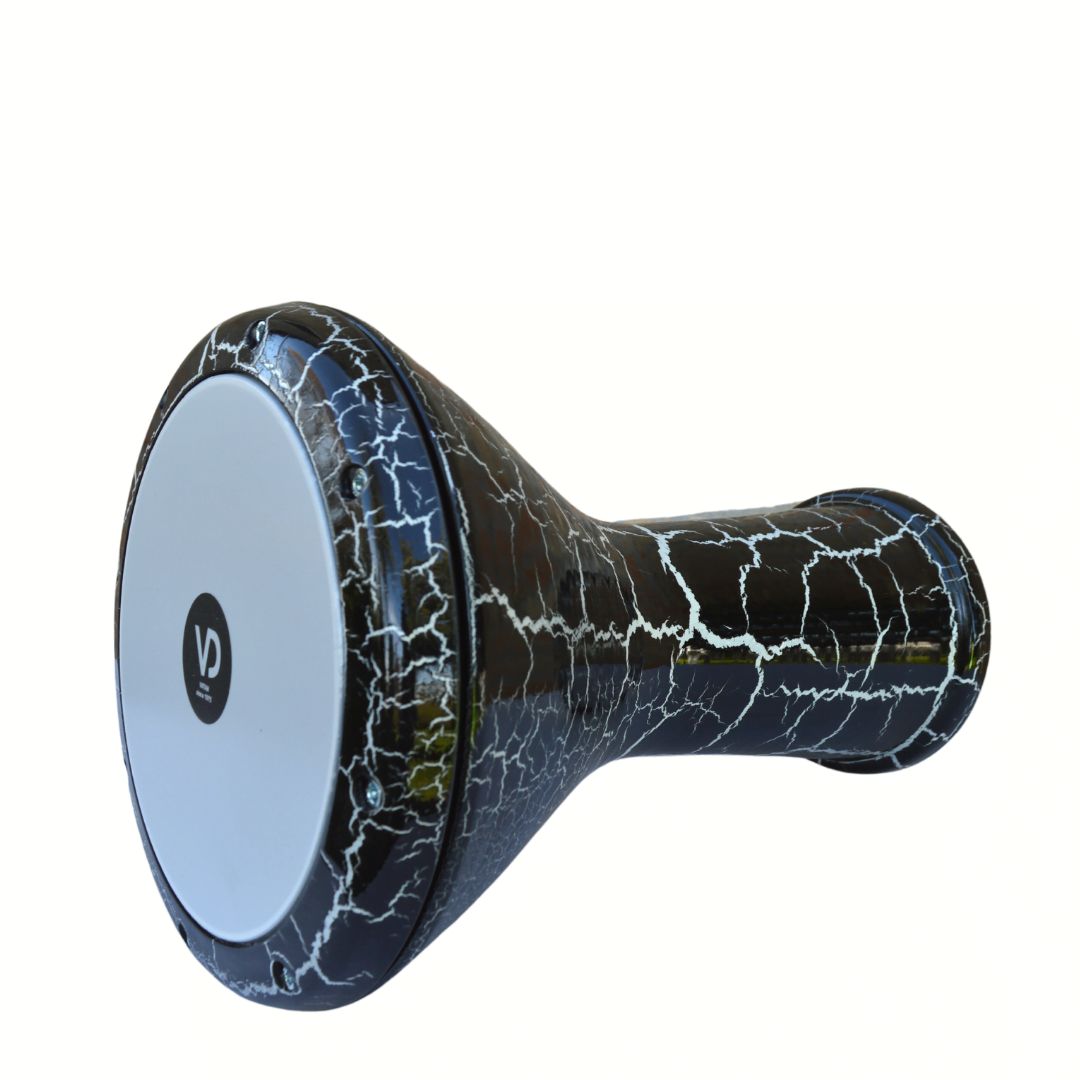
The Egyptian travel darbuka is a lightweight goblet drum built for players who need an authentic Middle Eastern sound they can carry anywhere. At 2.4 kg and 44 cm tall, the Egyptian Darbuka Travel Light pairs a fiberglass body with a 22 cm synthetic head, so it holds its tuning through the humidity and temperature swings of travel that would trouble a natural-skin drum. It gives you the crisp doum-and-tek voice of the Egyptian goblet drum in a form built for the road.
Materials & Body
The body is moulded from durable fiberglass, which keeps the drum light and rugged while still projecting a warm, focused tone. Fiberglass shrugs off the knocks and temperature changes of touring far better than cast metal or fired clay, and it will not shatter the way a fired-clay Egyptian clay darbuka can if it is dropped. The result is a drum you can take to a workshop, an outdoor session or a rehearsal room without babying the case.
Head & Tuning
A 22 cm synthetic head gives a bright, cutting attack that carries over other instruments and stays stable when humidity would slacken a goatskin. The head is fully tunable: the included Allen key lets you raise or lower the pitch at each tension bolt around the rim, so you can match the drum to a song or dial in the sharp, ringing sound Egyptian players favour. Because the skin is synthetic, it can be replaced if it ever wears, and it needs none of the drying or re-seating a natural head demands.
Technical Specifications
| Specification | Details |
|---|---|
| Skin diameter | 22 cm |
| Height | 44 cm |
| Weight | 2.4 kg |
| Body material | Fiberglass |
| Head | Synthetic, tunable |
| Tuning system | Allen key (bolt tuning) |
| Country of origin | Egypt |
Sound & Who It’s For
The synthetic head and fiberglass shell give a bright, clear tone with a fast response — well matched to quick finger rolls and the snap of Egyptian technique. It is an easy drum to start on and a practical second instrument for a gigging player who does not want to risk a clay or aluminium darbuka on the road. Beginners get a forgiving head that stays in tune; touring and outdoor players get an instrument that ignores damp and heat. Anyone chasing the deeper, woodier voice of a traditional shell may prefer a clay darbuka or a cast-aluminium model instead.
Rhythms & Traditions
The Egyptian travel darbuka sits at the centre of Arabic percussion. It is the drum that drives the Egyptian maqsoum and baladi rhythms, carries the pulse of raqs sharqi (belly dance), and leads the percussion of the classical Arabic takht ensemble. Turkish players use the same goblet drum for roman and folk rhythms, and its light weight makes it a natural fit for drum circles and street sessions. It belongs to the wider goblet drum family found across the Middle East, North Africa and the Balkans.
Care & Maintenance
Store the Egyptian travel darbuka in a dry place away from direct sunlight and extreme heat, and it will need very little upkeep thanks to its synthetic head. Check the skin tension from time to time and adjust it with the Allen key, wipe the body with a soft, dry cloth, and avoid harsh chemicals that could dull the finish. If the head is ever damaged, it can be swapped for a new synthetic skin rather than re-skinned by hand.