
Description
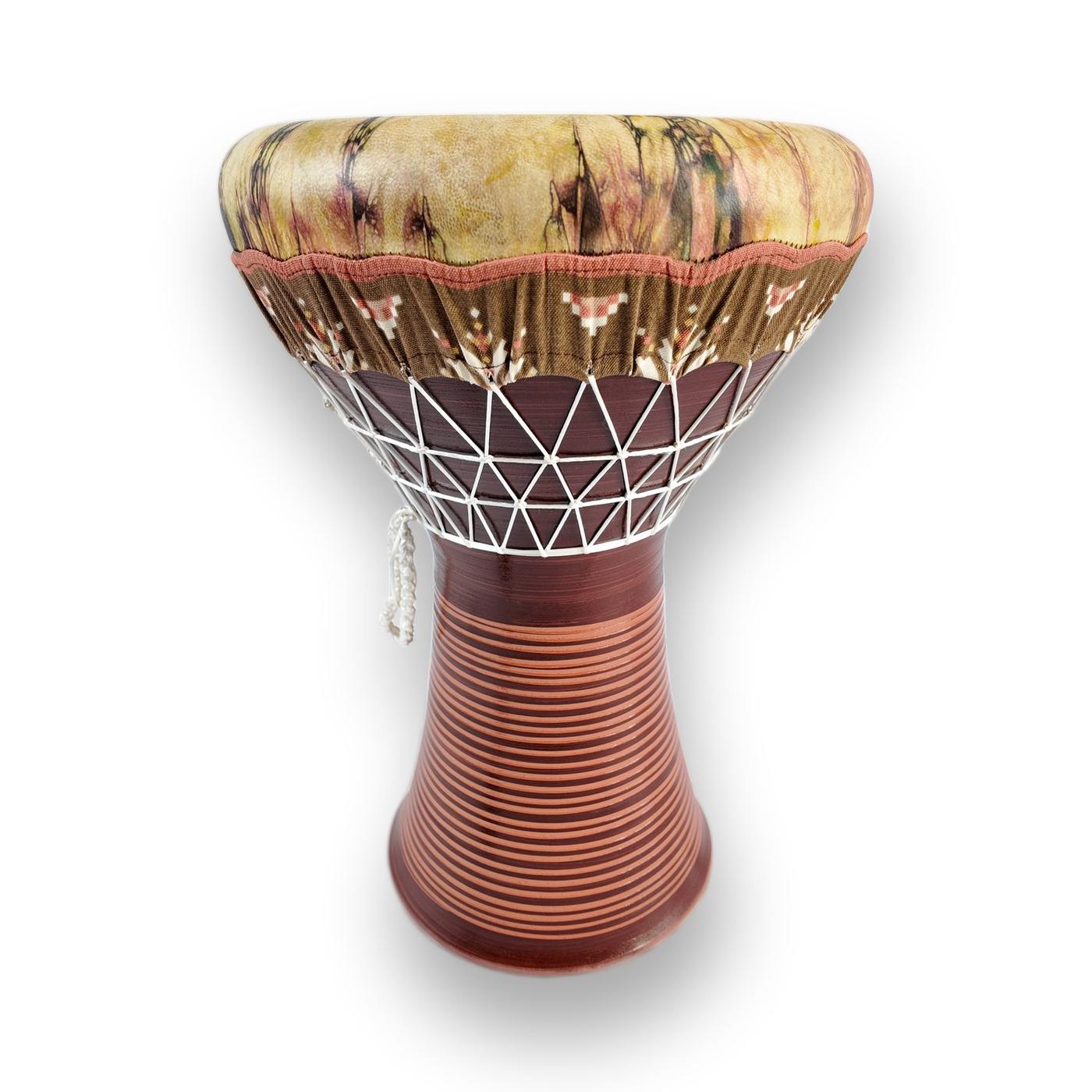
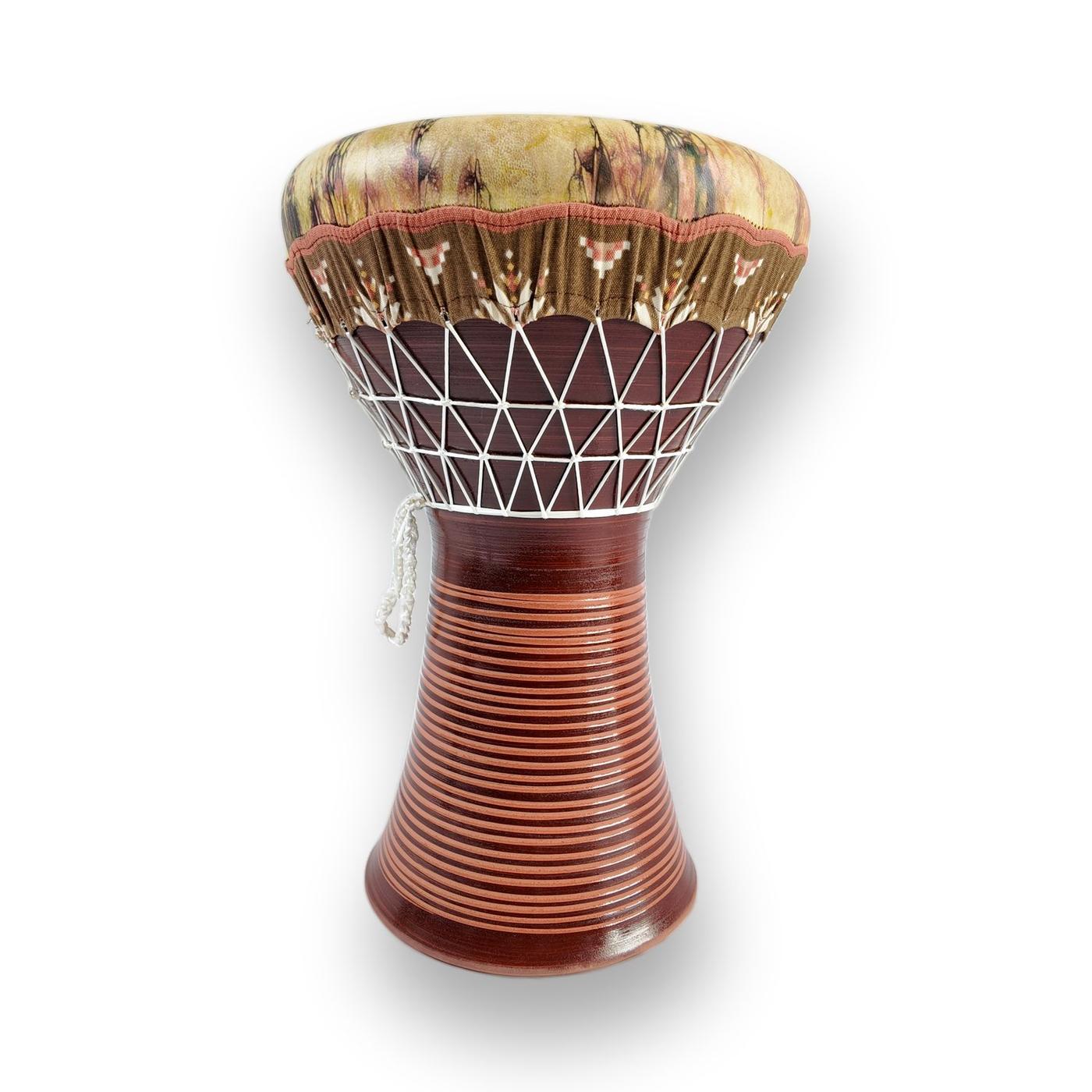
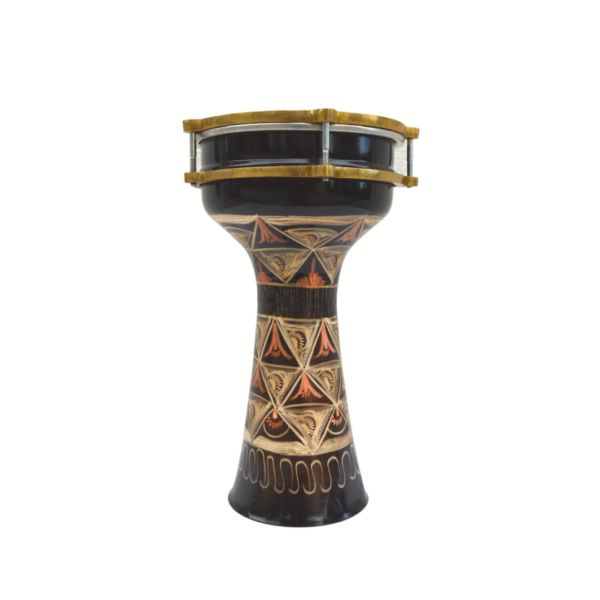
The Sombati darbuka is the mid-bass voice of the Egyptian goblet-drum family — the versatile size that sits between the bright solo darbuka and the deep bass Dohola. Also spelled Sumbati, it carries enough low end to hold a groove yet stays articulate enough to lead, which makes it the single most flexible drum in the clay range. This model pairs that versatility with a marbled natural goatskin head, white geometric rope lacing, and a ringed terracotta body, hand-shaped at Tapadum’s Izmir workshop.
Marbled Goatskin Head & Rope Lacing
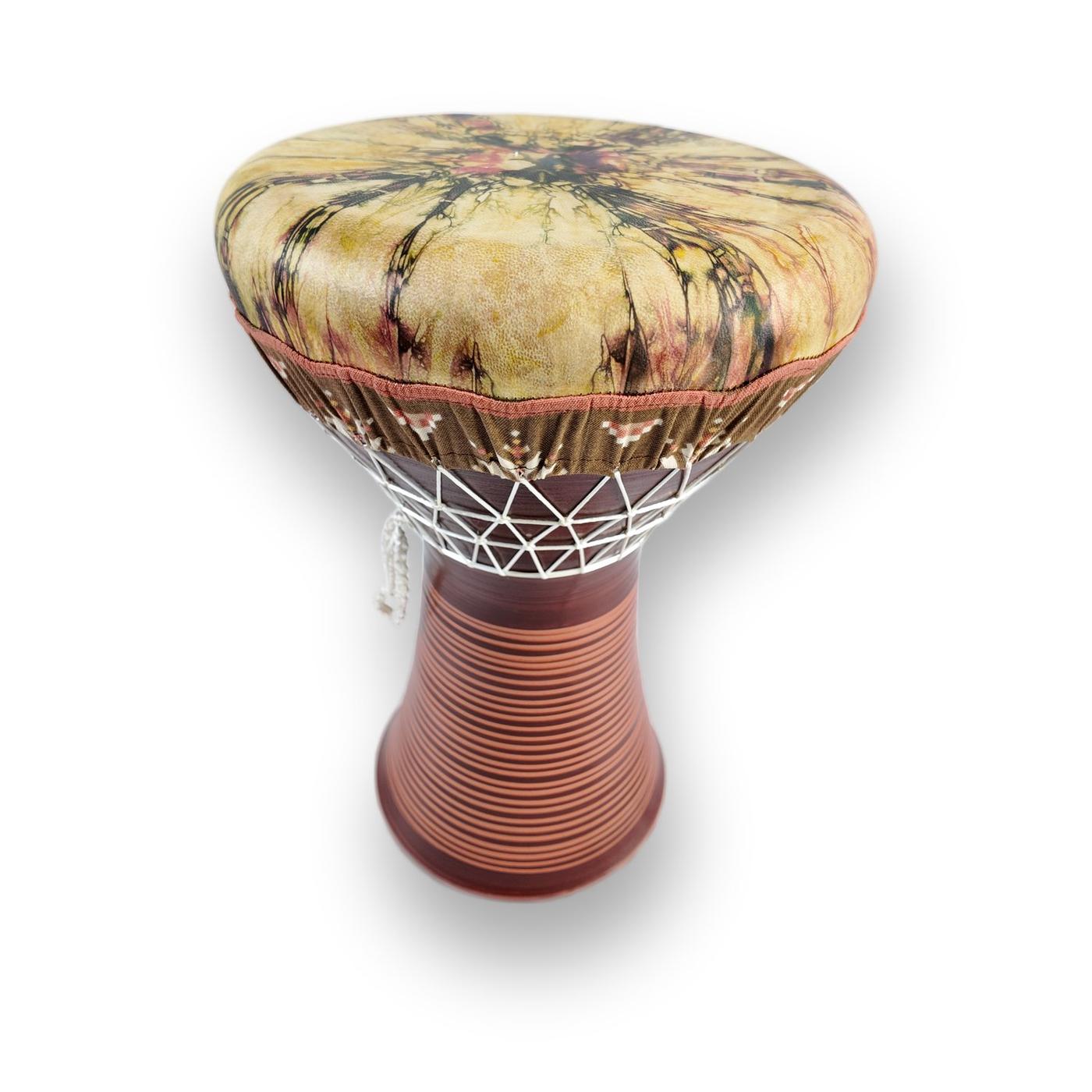
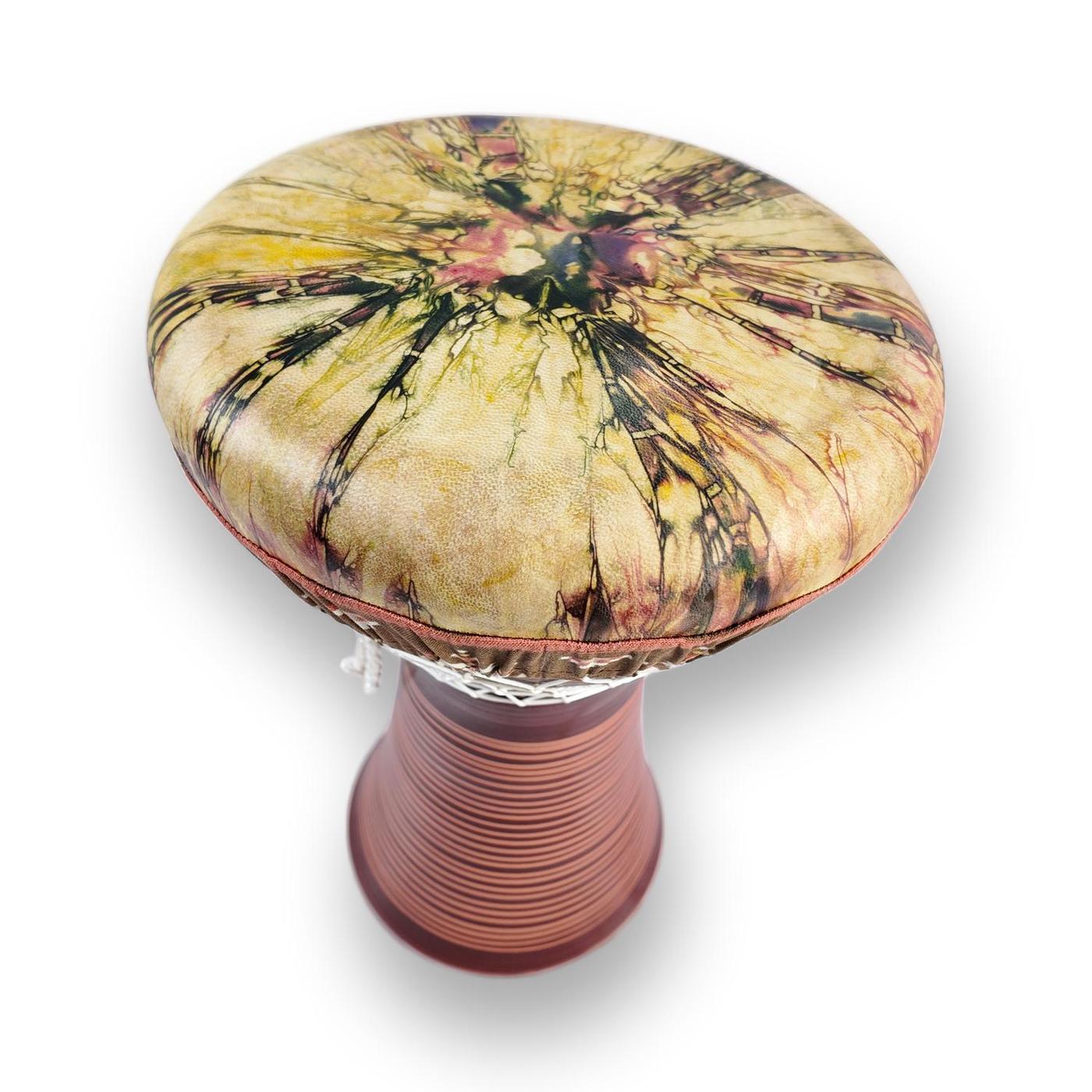
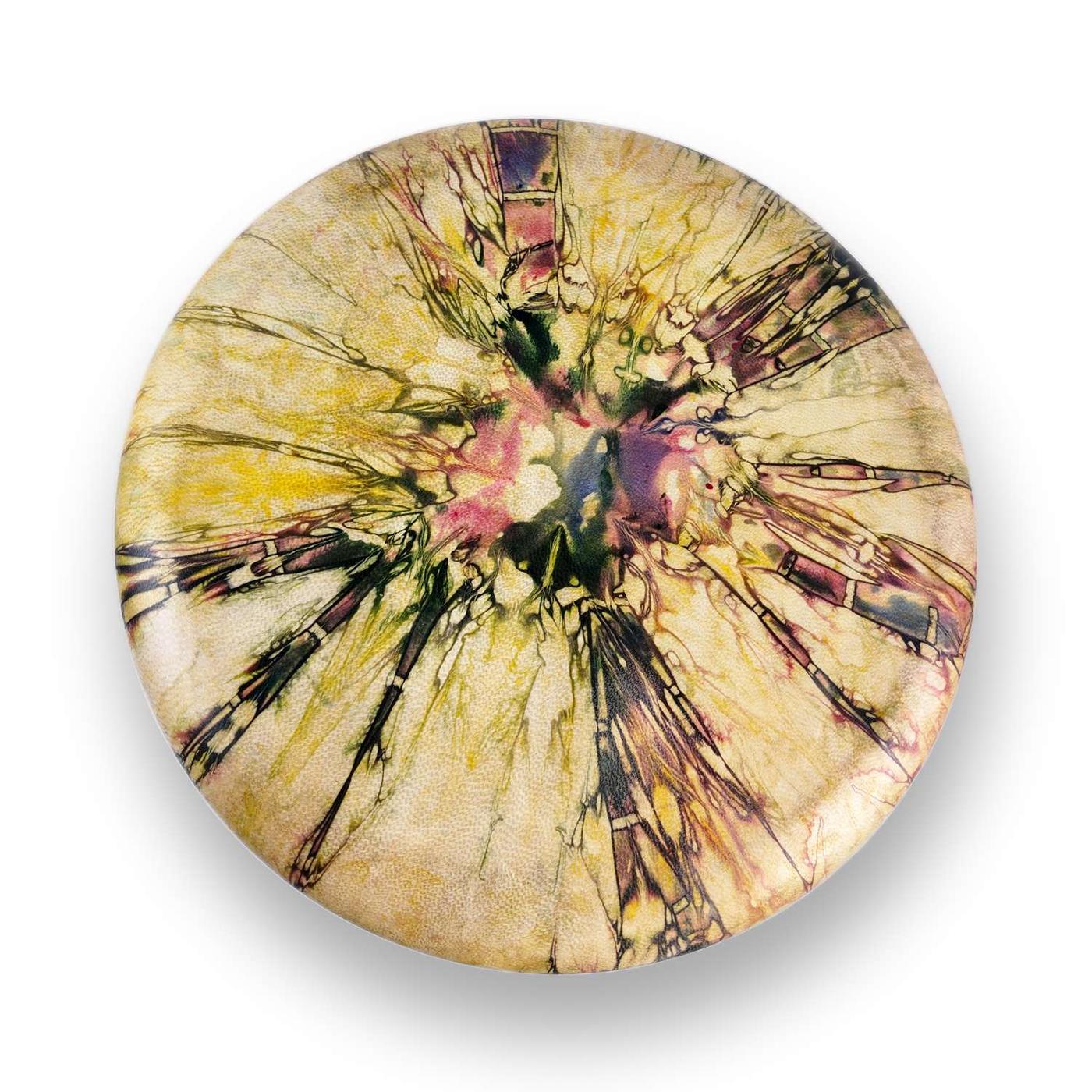
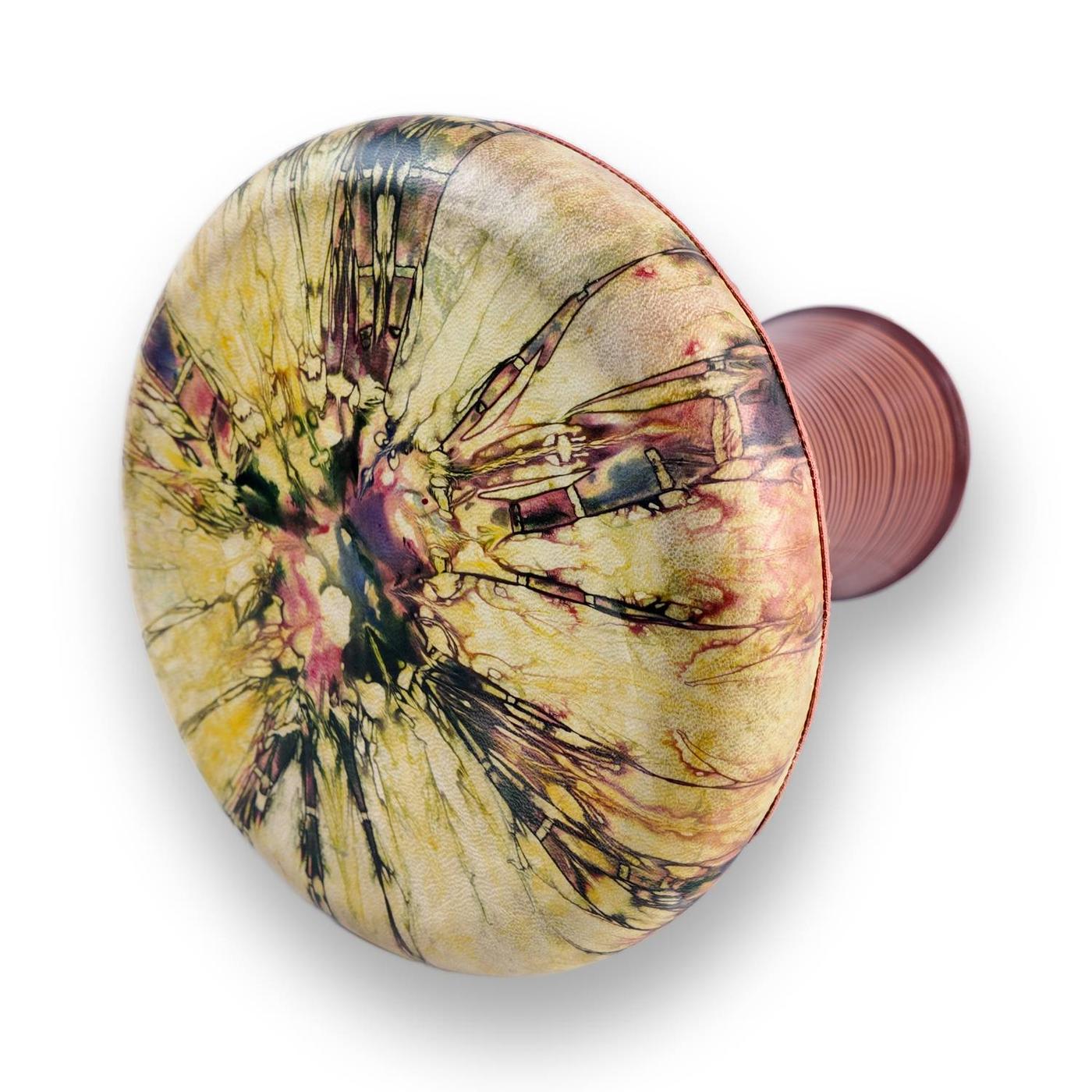
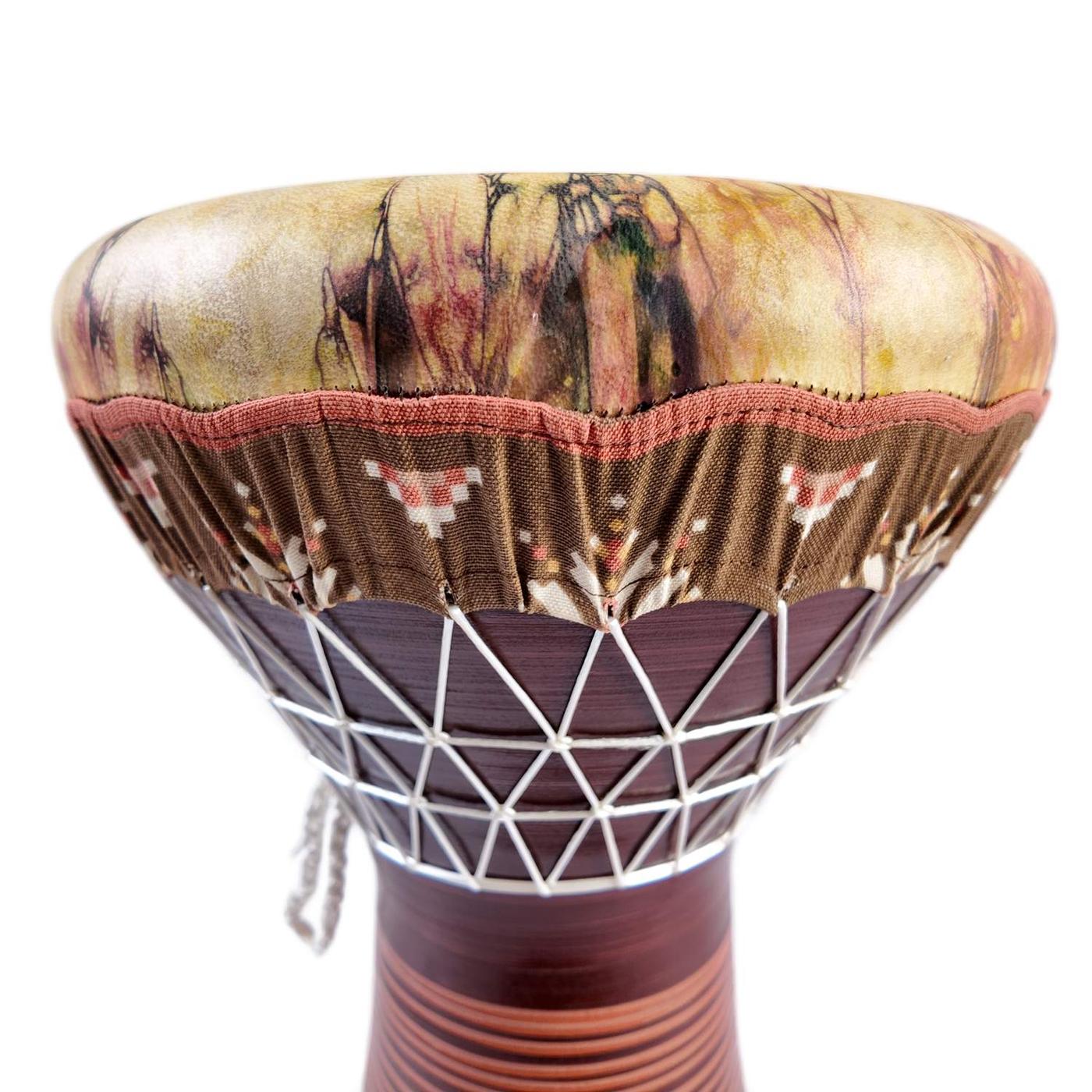
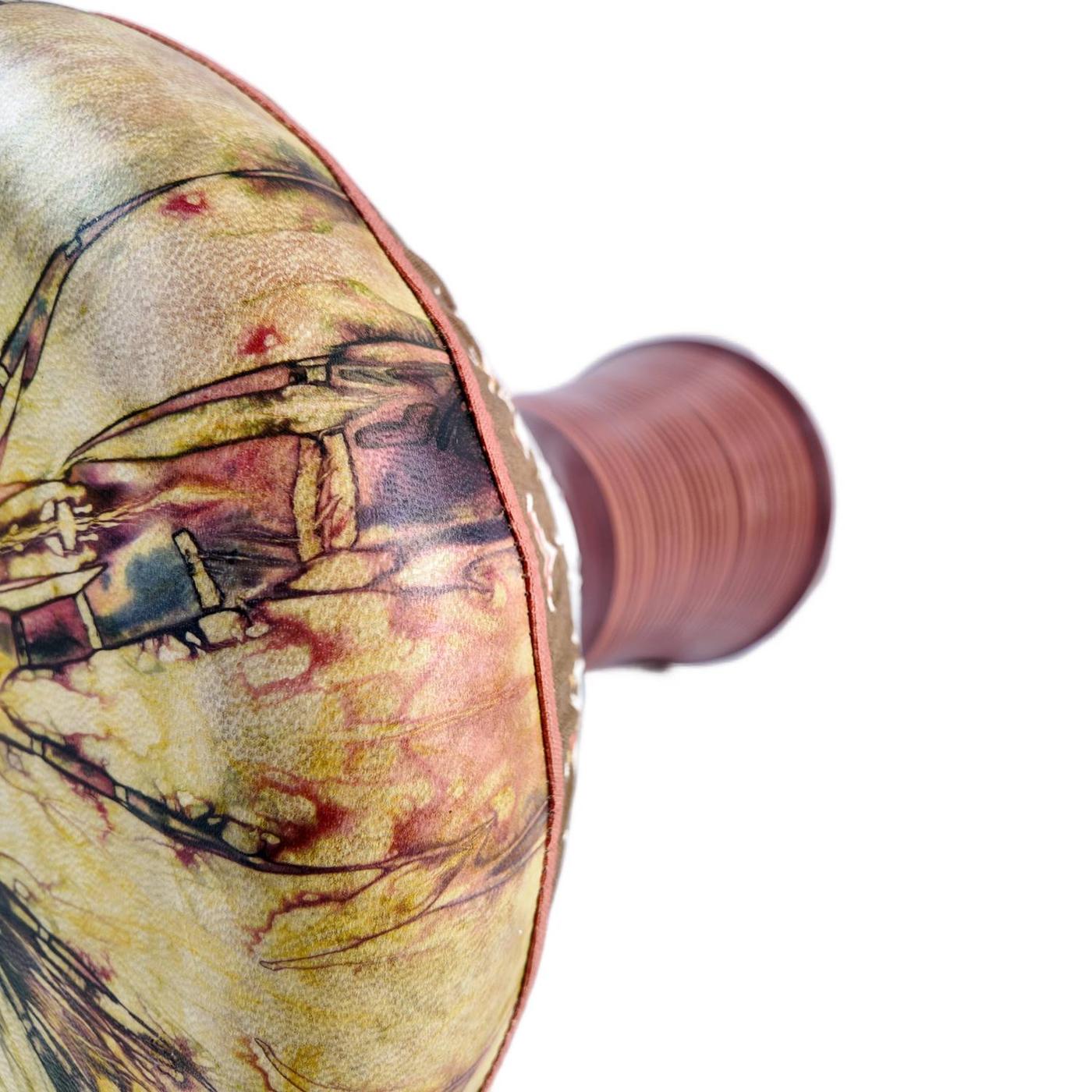
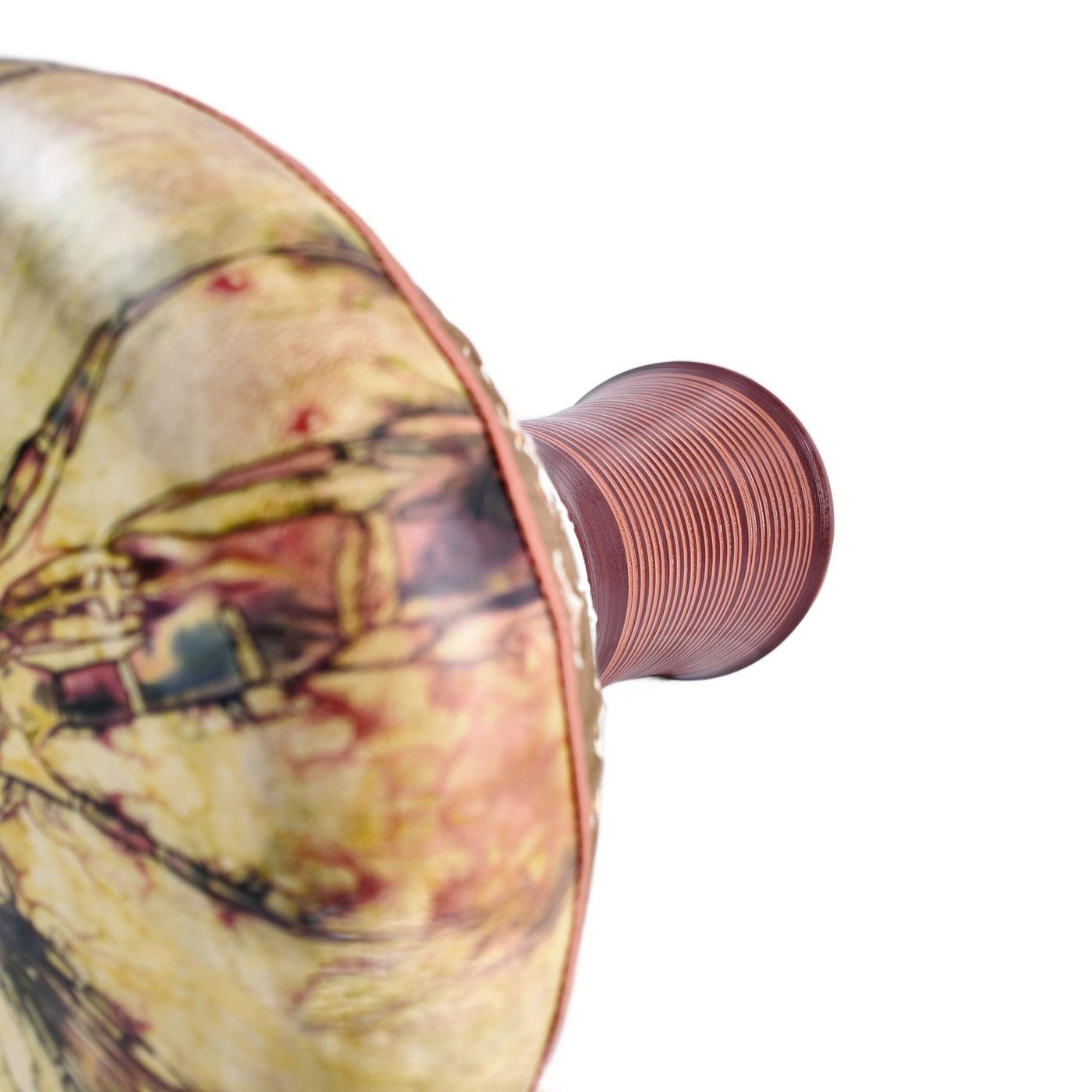
The 24 cm head is a natural goatskin with a striking marbled, mottled surface — the earthy pattern belongs to the skin itself, so no two heads are alike. It is seated with a woven ikat collar band and a white geometric rope lacing, a finish that is both decorative and practical. As a natural skin it gives the full expressive range — a clear tek at the rim, a round doum at the centre — and the drum carries Tapadum’s integrated Tuning Light System, an internal dimmer-controlled lamp that warms the head to hold pitch as humidity shifts.
Ringed Terracotta Body
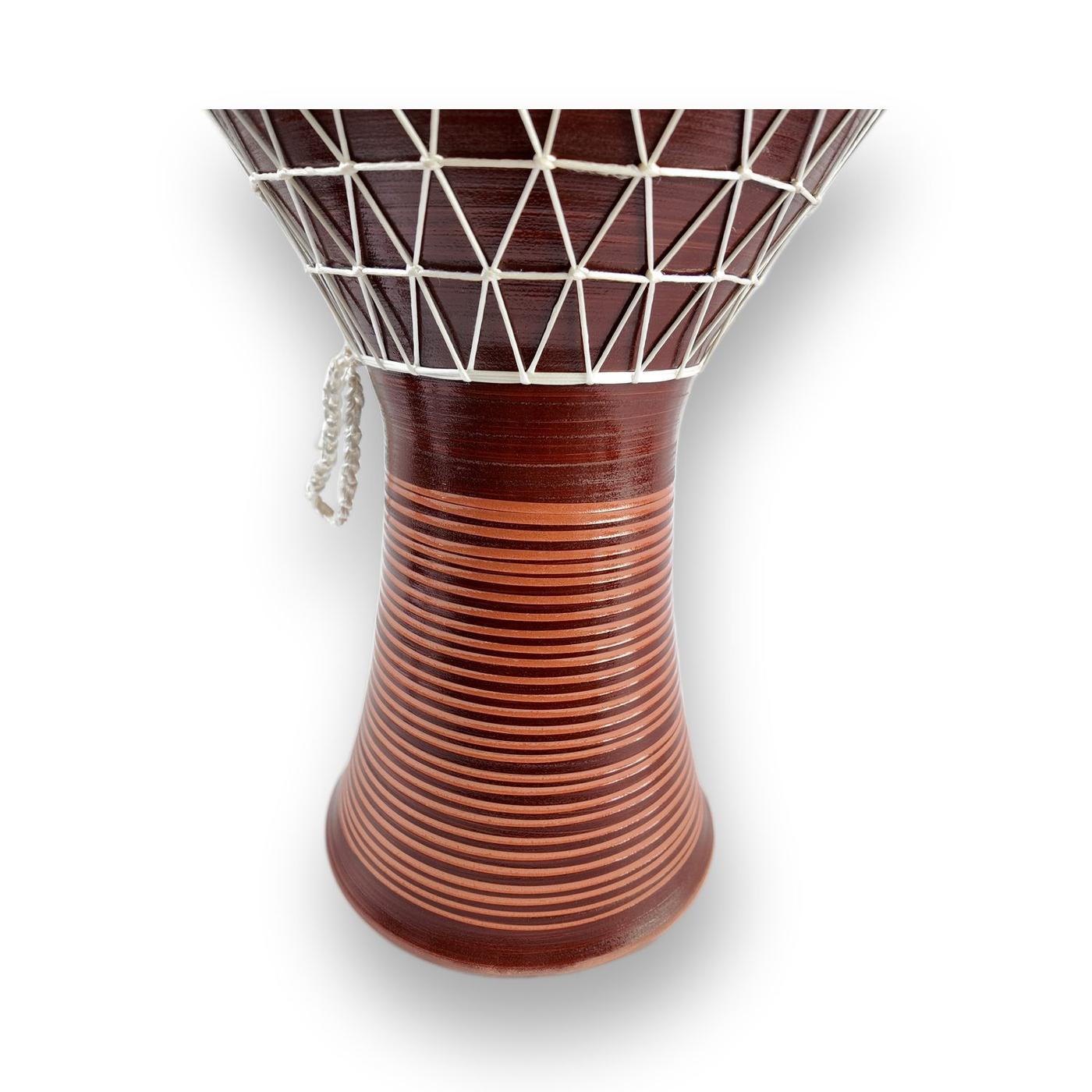
The 31 cm body is hand-shaped from fired clay and finished with a ringed pattern of terracotta and deeper brown bands wrapping the waist down to the flared base. The mid-bass proportions give the Sombati its character: wider than a solo drum so the doum drops lower and fuller, but not so large that it loses articulation. Clay’s density rounds the attack and enriches the low-mids, giving the traditional Egyptian voice that cast aluminum cannot reproduce.
Technical Specifications
| Type | Mid-Bass Clay Darbuka (Sombati) |
| Body material | High-fired natural clay |
| Head material | Natural goatskin, marbled finish |
| Head (skin) diameter | 24 cm |
| Total (rim) diameter | 31 cm |
| Height | 47 cm |
| Weight | 5.5 kg |
| Decoration | Marbled goatskin head, white rope lacing over ikat collar, ringed terracotta body |
| Tuning | Integrated Tuning Light System (dimmer-controlled) |
| Includes | Padded gig bag |
| Handcrafted in | Izmir, Turkey |
Who This Darbuka Is For
The Sombati suits players who want one drum that does most things — a mid-bass that can lead a phrase and then drop into the low pulse, ideal for solo practice, small ensembles, and recording where a single clay voice has to cover ground. At 5.5 kg it is comfortable to hold for long sessions. Pair it with a solo clay doumbek for bright lead lines, or a bass Dohola for the deepest foundation.
Music Genres & Traditions
The mid-bass darbuka moves easily through Egyptian tabla playing, Arabic maqam ensembles, Turkish fasil, and raqs sharqi dance. Core Egyptian rhythms — maqsum, baladi, saidi, malfuf — sit well under its balanced voice, and its warm, full tone carries into Mediterranean folk, world fusion, and modern percussion projects.
Care & Maintenance
Keep the drum at moderate humidity (45–55%) and never wet the body or head. Wipe the goatskin with a dry cloth after playing, and use the Tuning Light System — not a radiator or hair dryer — to bring the pitch back if it drops. Handle the rope lacing gently and transport the drum in the included padded gig bag, since fired clay can chip on impact.
Explore the Clay Darbuka Collection
Browse the full Clay Darbuka range within our wider Darbuka collection, from solo through mid-bass to bass. Every shell is hand-shaped by master potter Ahmet Tashomcu and completed by Mehmet Nihat San, who selects, tensions, and sound-tests every head. Inspected at our Brisighella, Italy showroom before dispatch. Worldwide shipping & 15-day return.

Reviews
There are no reviews yet.