Description
Named for the old port city long known as a crossroads of Aegean and Anatolian craft, the Turkish Oud Smyrna pairs a solid cedar soundboard with a hand-built bowl of alternating mahogany and walnut staves. The result is a warm, rounded voice with enough brightness in the upper register to keep fast maqam ornamentation clear — a Turkish oud built for players taking their first steps into the tradition as much as for anyone who wants a dependable practice instrument.
A Bowl of Mahogany and Walnut
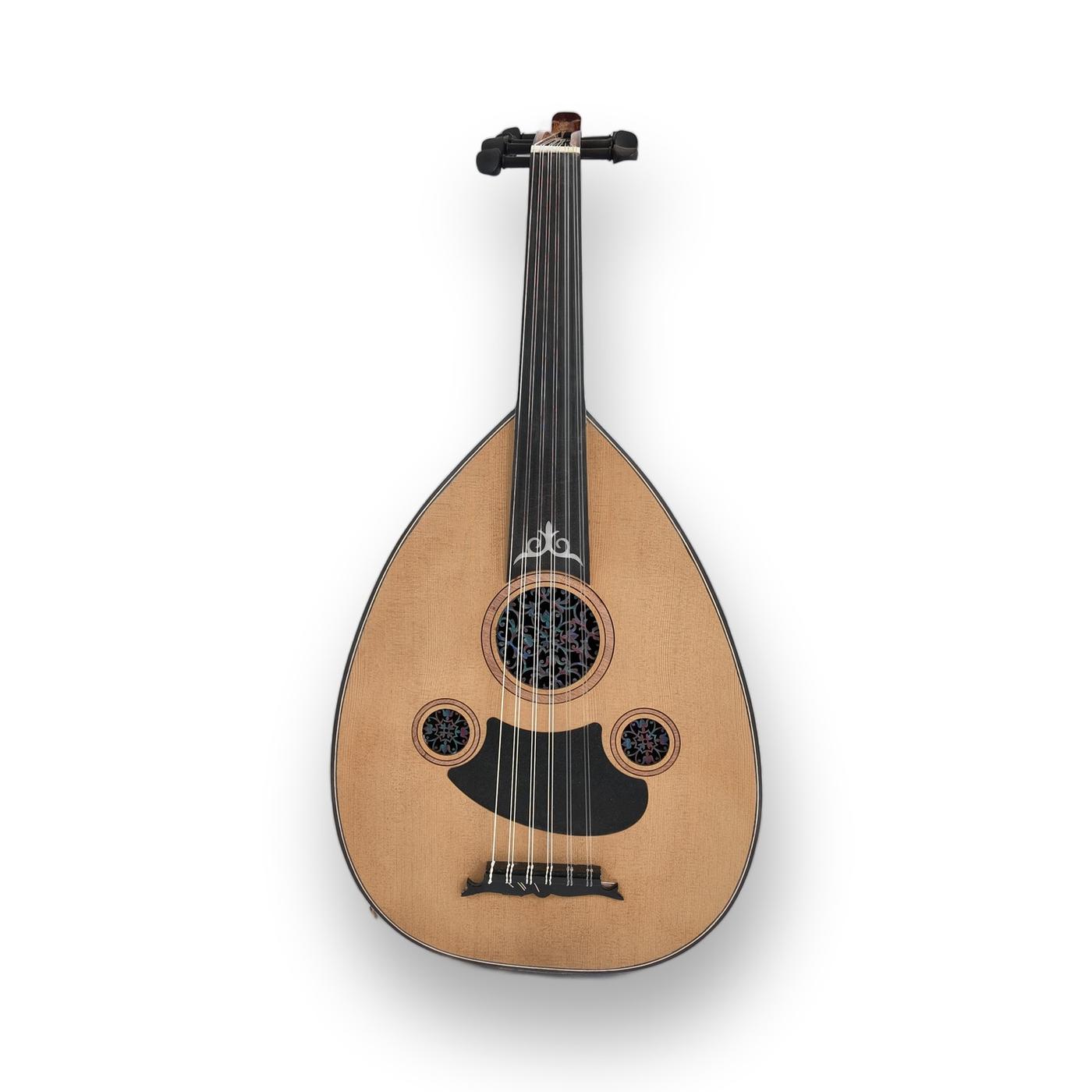
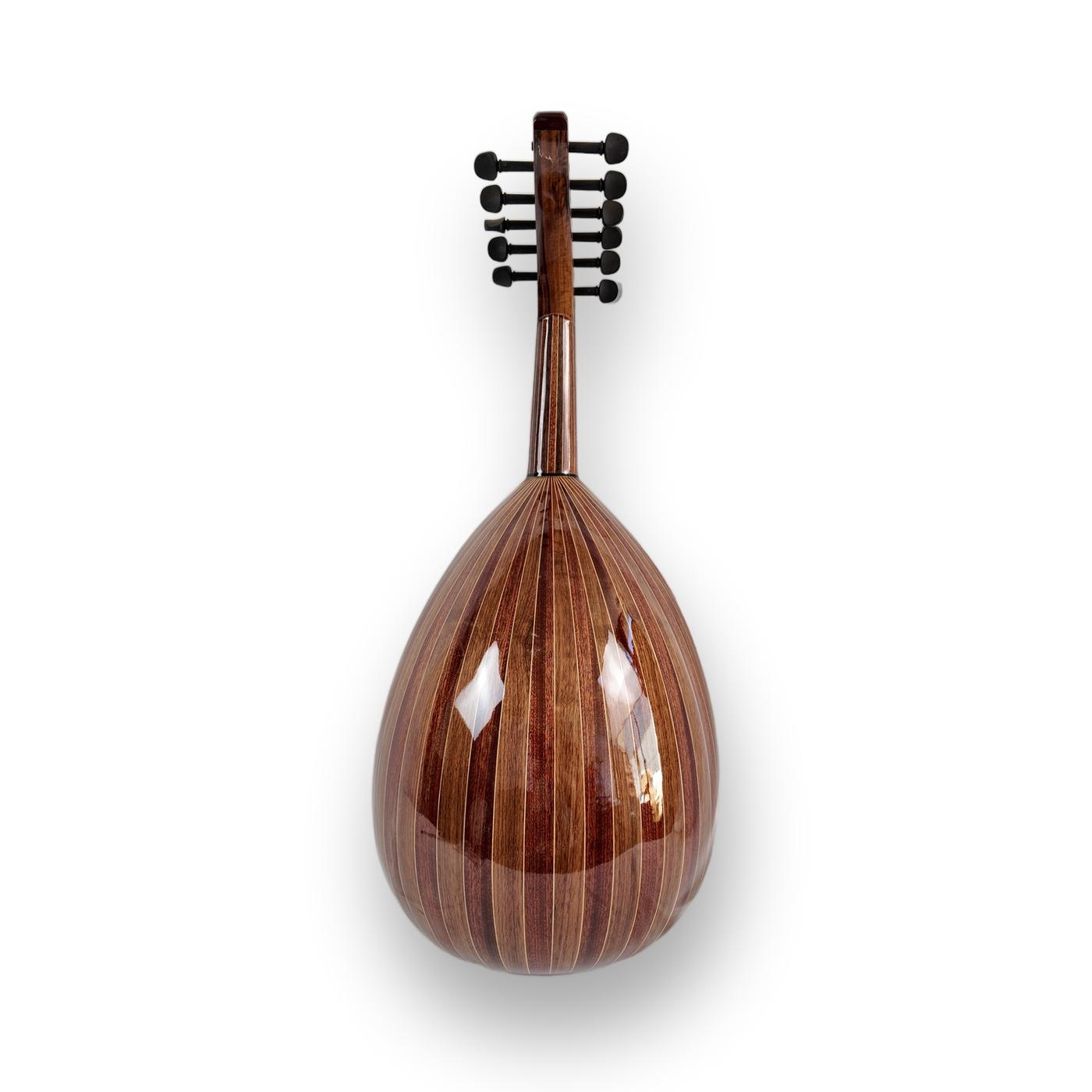
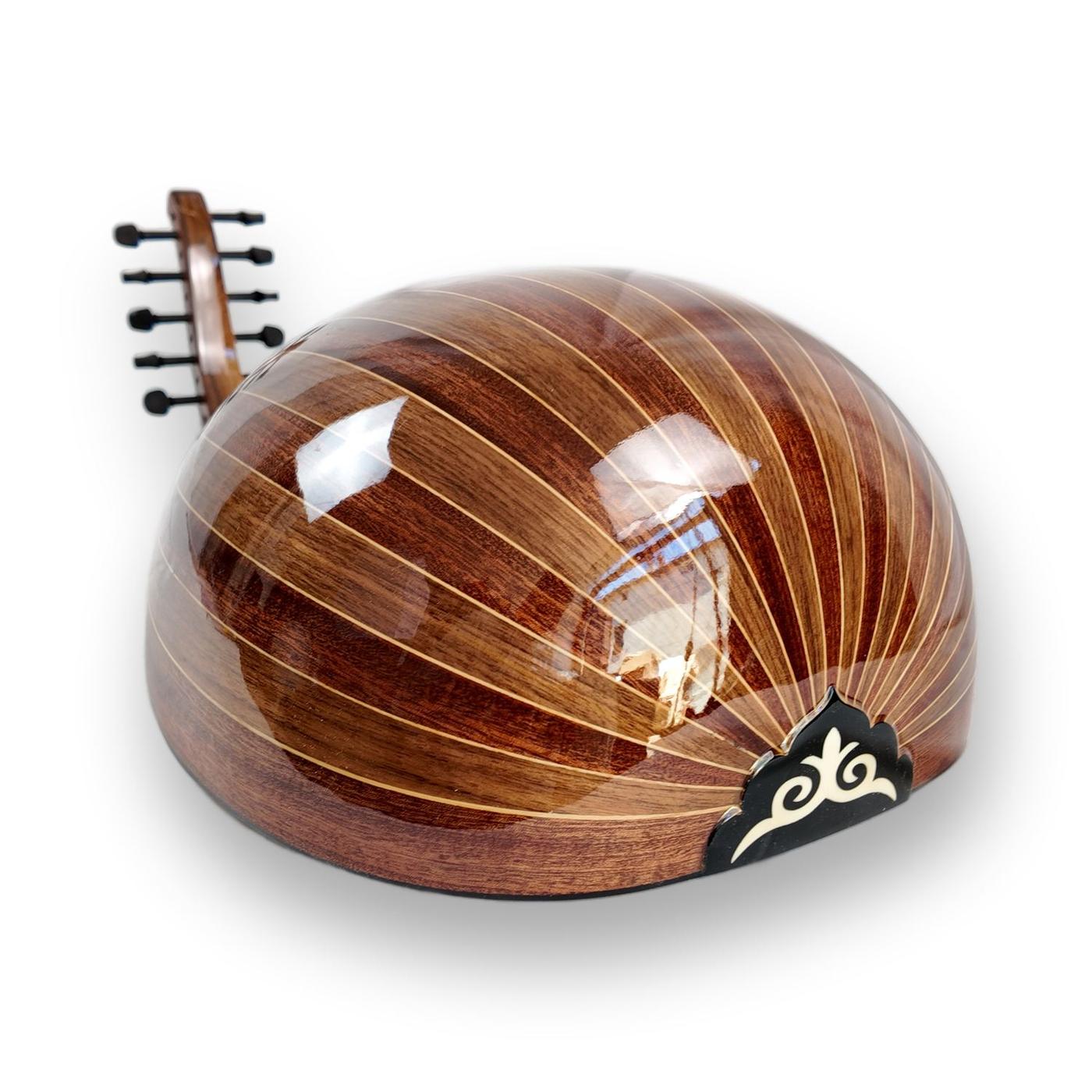
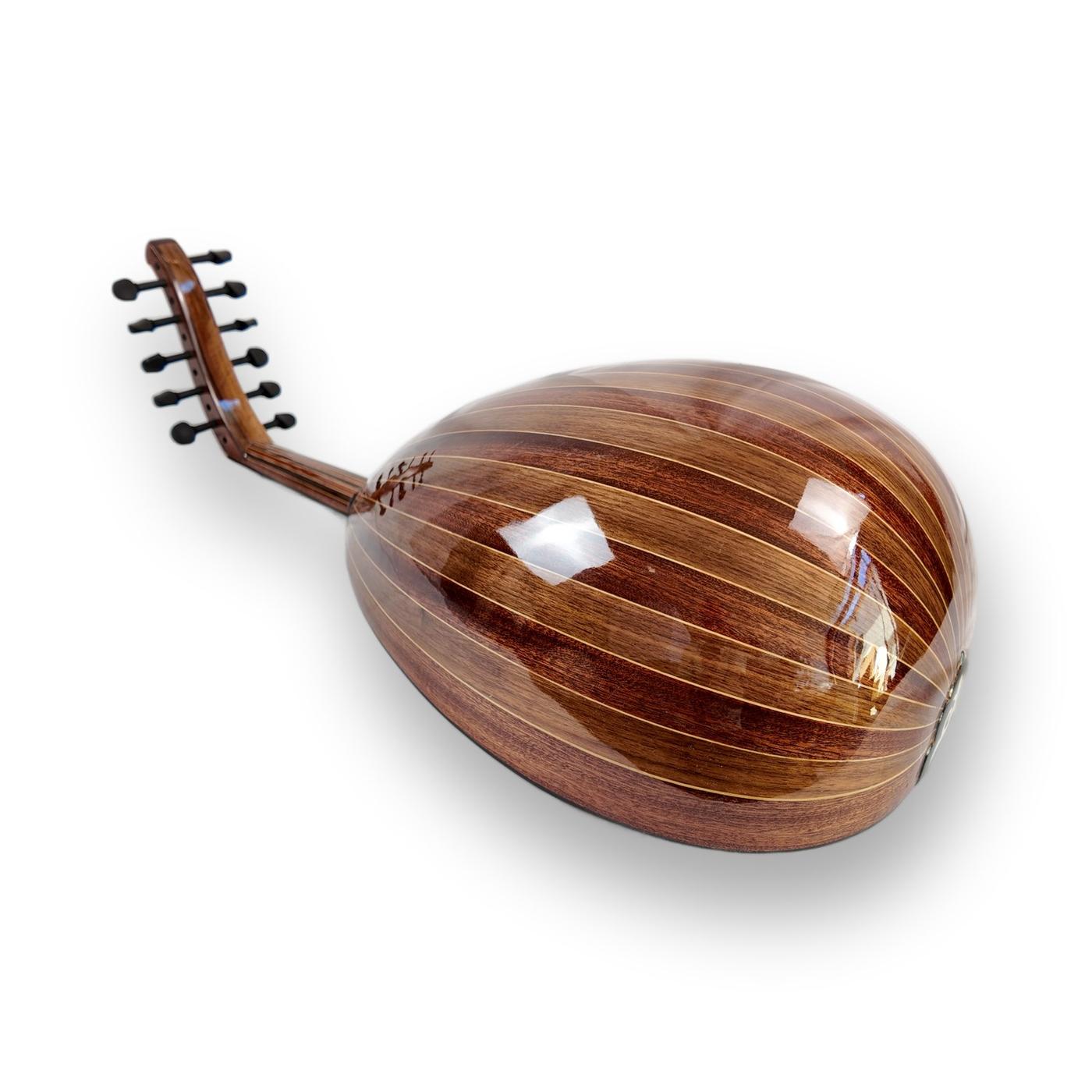
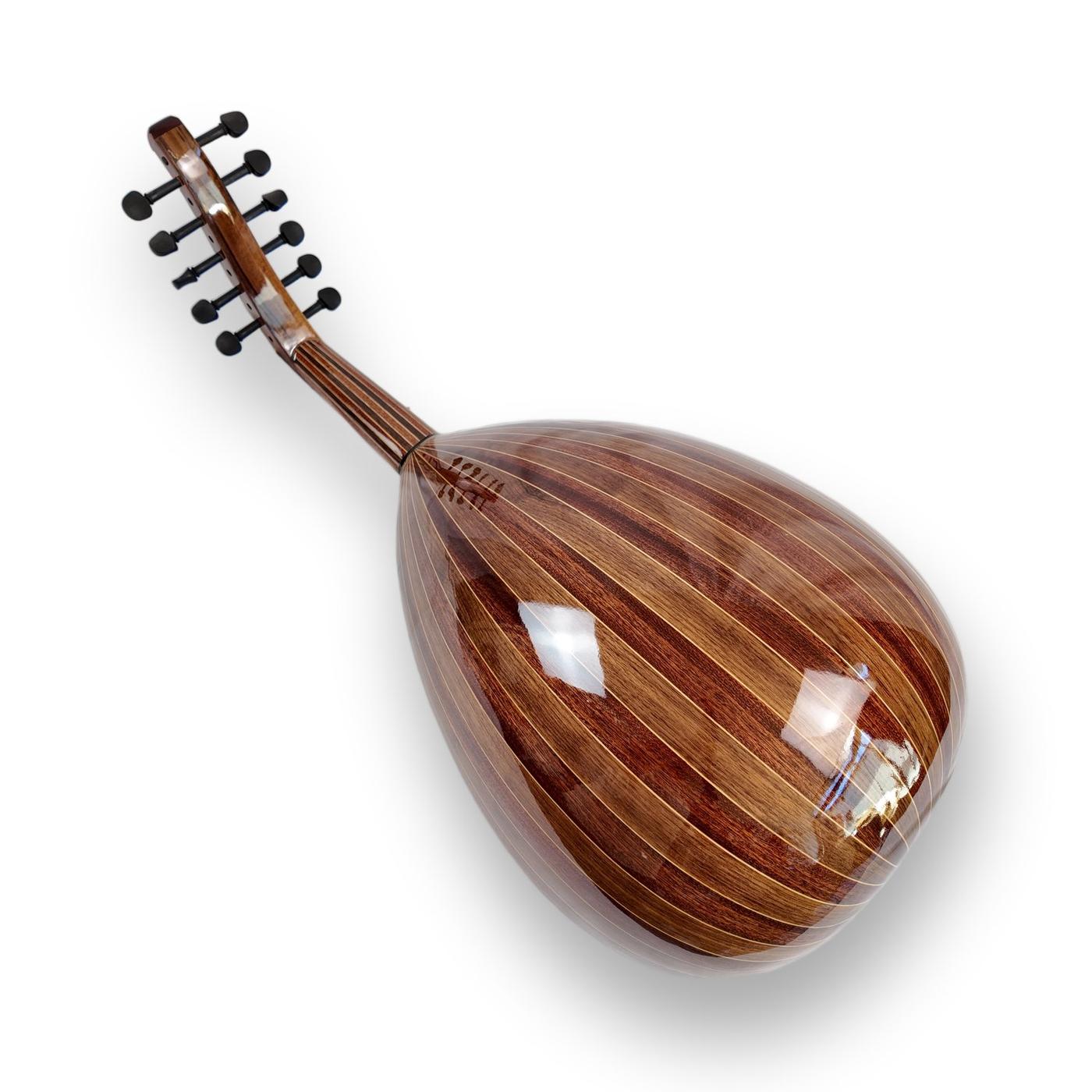
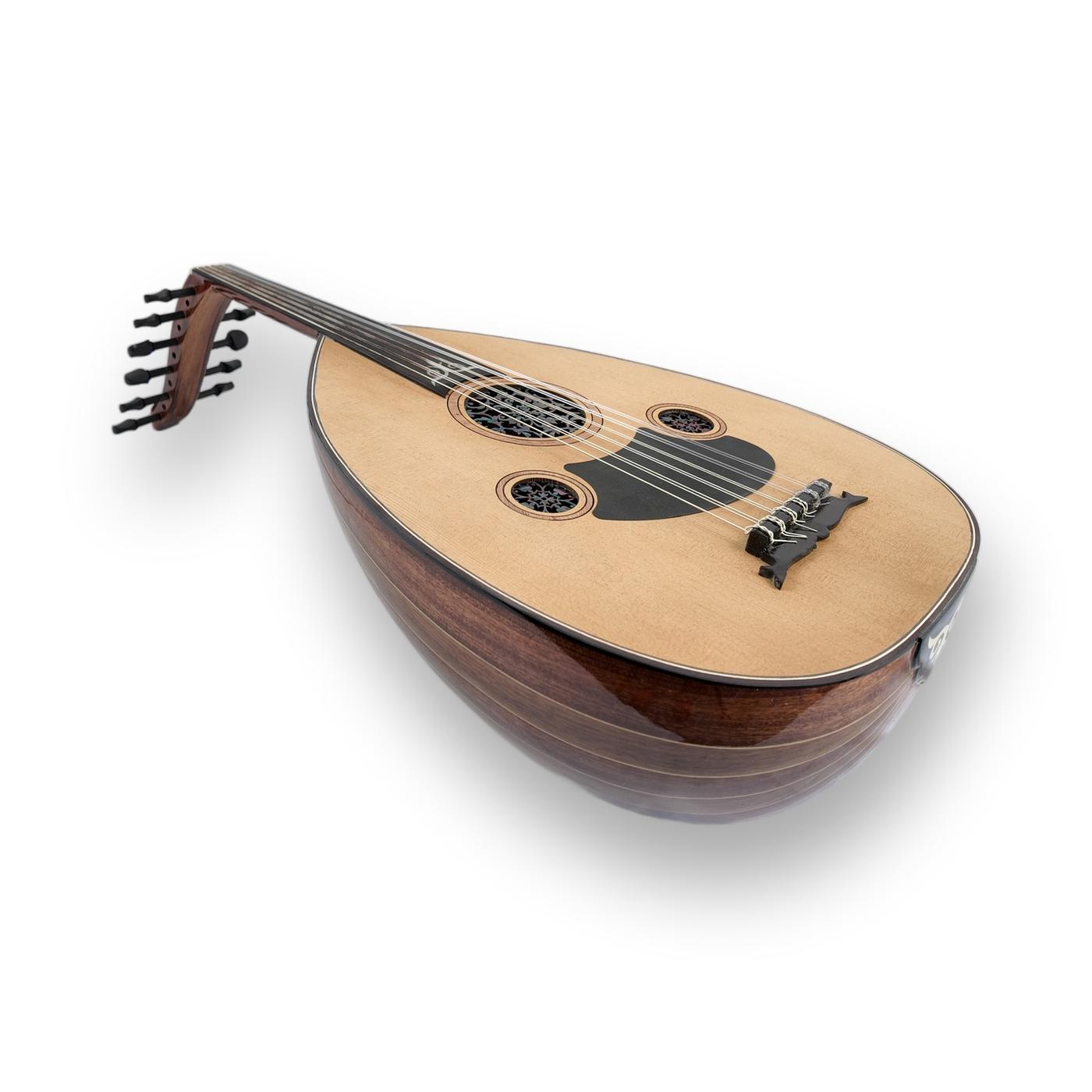
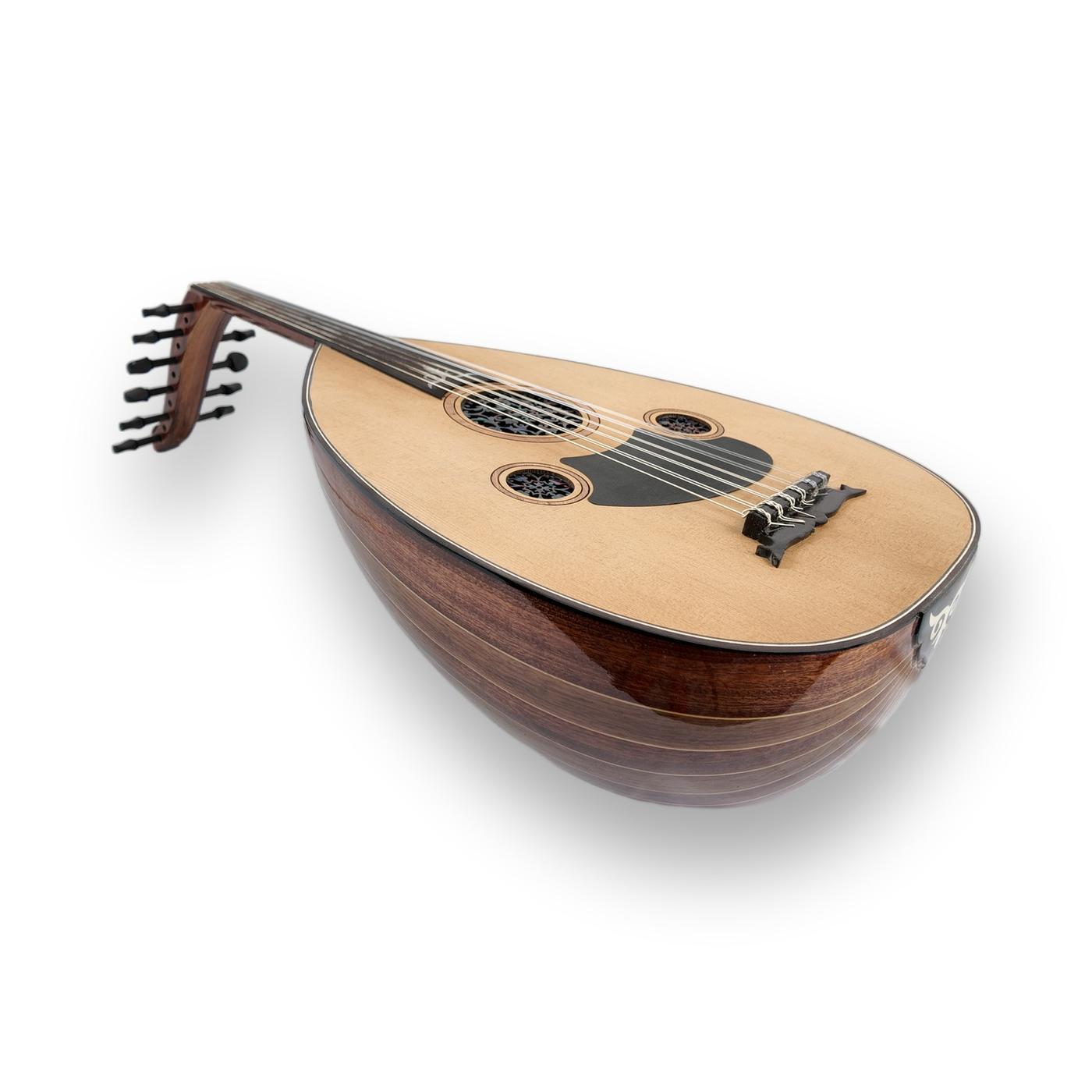
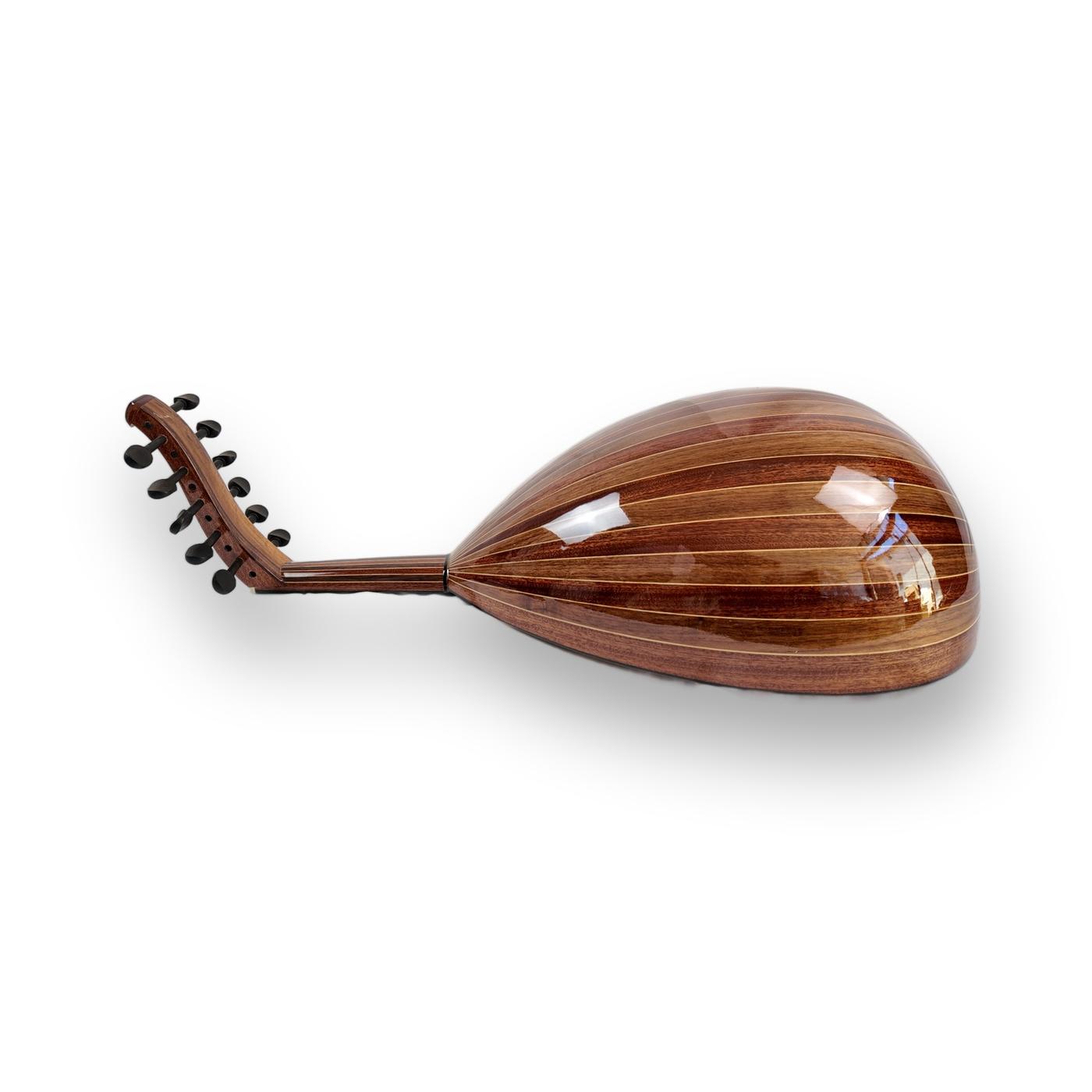
The bowl is assembled from narrow ribs of mahogany and walnut, alternating in tight bands that run from the neck joint to the tail cap, finished in a deep gloss that lets the grain contrast do the work rather than added color. Mahogany contributes low-end warmth and sustain, while the walnut staves add clarity and a touch of brightness — a pairing that keeps the fundamental full without letting it turn muddy. A small ornamented cap closes the tail joint, echoed by the fretboard’s mother-of-pearl inlay at the neck heel.
Cedar Soundboard and Ornamented Rosette
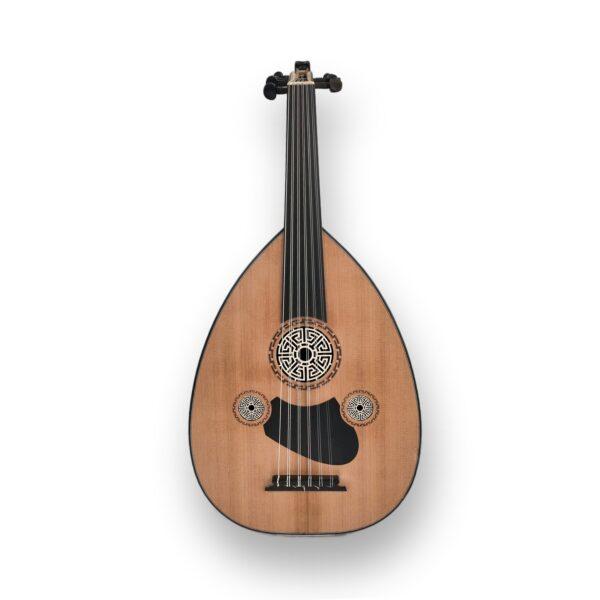
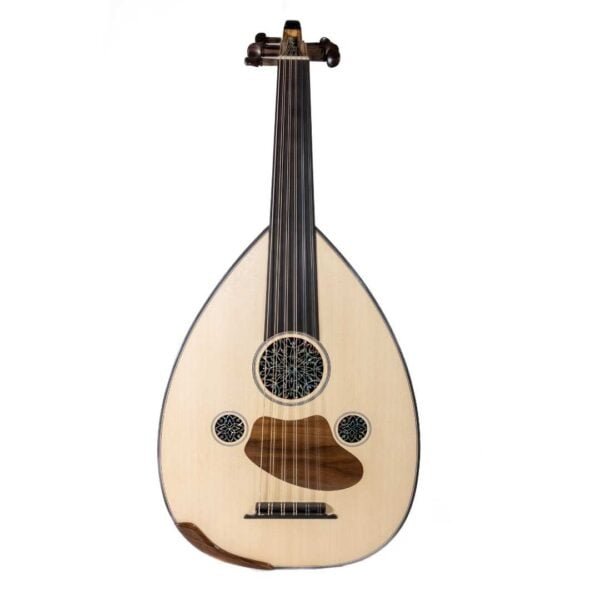
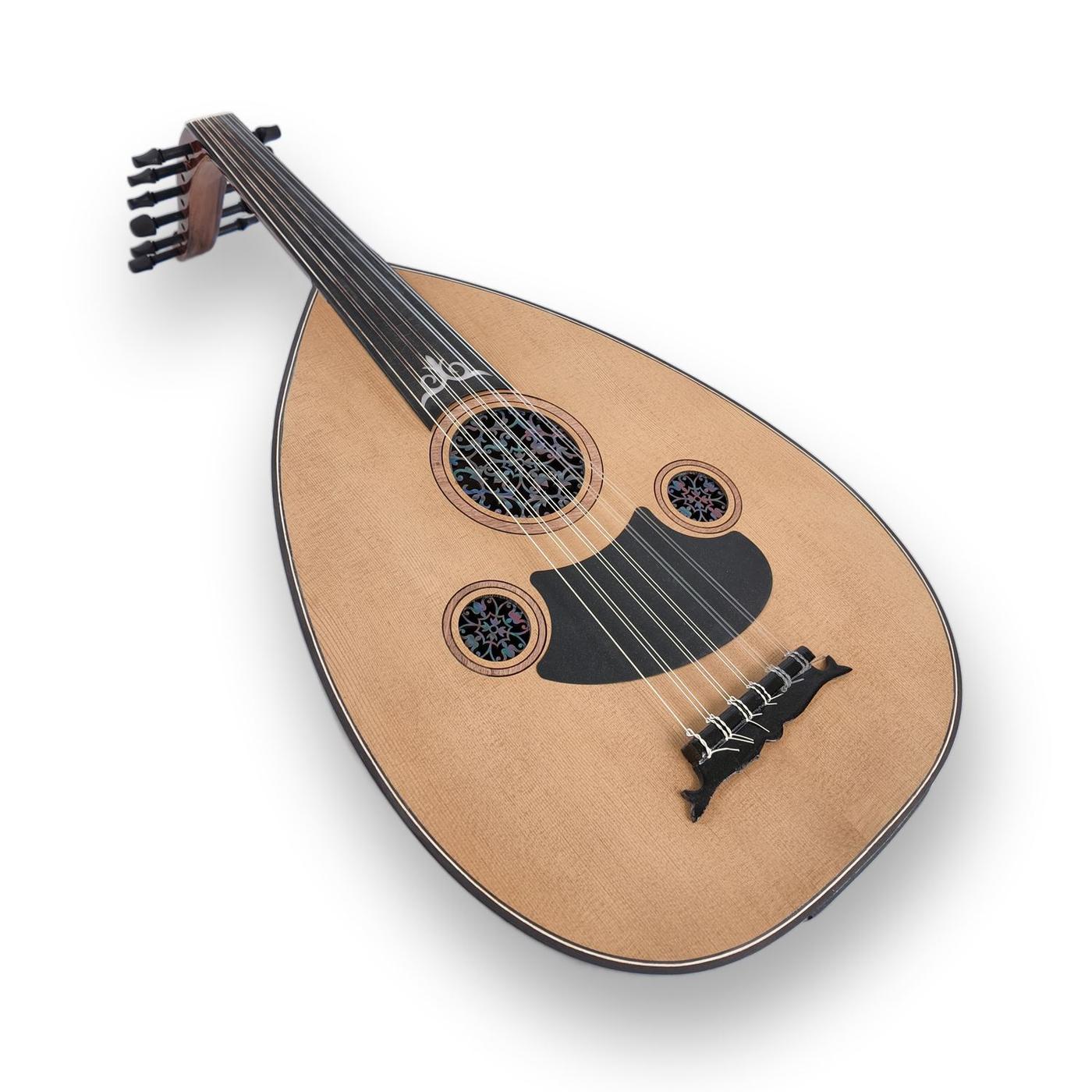
The top is solid cedar, left in its natural pale tone rather than stained, so the soundboard can move freely and respond quickly to the plectrum. A traditional three-hole rosette — the main sound hole ringed in an intricate mother-of-pearl and shell pattern, flanked by two smaller decorative rosettes — sits above a black leather pickguard shaped to protect the top from the risha. The wooden pegbox carries traditional Turkish oud pegs rather than geared machine heads, in keeping with the instrument’s acoustic, hand-tuned character.
Specifications
| Soundboard | Solid Cedar |
| Bowl | Mahogany & Walnut |
| Pegs | Wooden Oud Pegs |
| Strings | Kürschner Classic 109 |
| Body Length | 49 cm |
| Neck Length | 19.5 cm |
| Scale Length | 58.5 cm |
Who This Oud Suits
The Smyrna’s neck and scale length sit in familiar Turkish oud territory, so the reach and string spacing feel immediately natural to anyone who has spent time on a standard oud or a similarly-scaled lute. Its balanced, forgiving tone and moderate price make it a practical choice for players learning the instrument — new fingers benefit from a fundamental that stays warm even when technique is still developing, rather than an unforgiving, thin-voiced budget build. More experienced players will find it a dependable second instrument for practice, travel, or teaching, where a workshop-grade oud earns its keep without demanding concert-level care.
As with any oud finished with traditional friction pegs, expect a short settling-in period: new strings stretch, and wooden pegs may need occasional re-seating until the wood and strings find their working tension. This is normal for oud construction of this kind, not a flaw specific to this instrument.
Turkish Maqam and Musical Fit
Strung with Kürschner Classic 109 strings and built to the standard Turkish scale, the Smyrna is at home in Ottoman classical repertoire, fasıl ensemble playing, and solo taqsim improvisation. The brighter mid-range typical of Turkish-bodied ouds — a product of the shorter body and neck relative to Arabic ouds — keeps fast melodic runs and quarter-tone ornamentation articulate rather than blurred, while the mahogany-walnut bowl adds enough low-end depth to avoid sounding thin in ensemble contexts.
Care and Maintenance
Keep the oud in a stable environment away from direct heat and humidity swings, which can affect the cedar top and the wooden pegs’ fit over time. Wipe the body down with a soft, dry cloth after playing to keep the gloss finish clear of fingerprints and dust. New strings will need a few days of stretching and retuning before they hold pitch reliably; once settled, check tuning before each session, since wooden friction pegs respond to changes in temperature and humidity more than geared alternatives. A padded gig bag or hard case from our oud accessories range, sold separately, is the simplest way to protect the bowl during transport.
Worldwide shipping & 15-day return.