
Darbuka for Kids: Rhythm, Focus, and the ADHD Question

What you’ll learn: what the research actually says about drumming, focus and ADHD in children; why the darbuka — known as the doumbek across much of the English-speaking world and classed by scholars as a goblet drum — is one of the friendliest first instruments; how to choose a model that suits small hands; and three ways to start today.
Choosing a first darbuka for kids starts with a simple truth: hand a child a darbuka and it answers. No frets to press, no bow to control, no reed to tame — just a skin that responds instantly to a fingertip. That immediacy is exactly why the goblet drum of the Middle East and Anatolia — called doumbek in most English-language shops and tabla in Egypt — is one of the friendliest first instruments for a young player, and why more and more parents ask whether it can do more than entertain.
What the Research Actually Says
Let’s be careful here, because the honest answer is more interesting than the hype. Drumming is not a treatment for ADHD, and no reputable study claims it is. What a growing body of research does suggest is that structured, rhythmic activity supports the very skills children with attention difficulties tend to find hardest — impulse control, working memory, and self-regulation.
Rhythm-based training appears to engage the prefrontal cortex, the region that governs inhibitory control. A 2022 study of autistic adolescents who learned to drum found measurable changes in brain connectivity tied to self-control and action monitoring, and earlier work reported improved self-control in adolescents with ADHD after drumming sessions. Reviews of rhythm-based interventions point the same way: modest but real gains in attention and executive function.
The sensible takeaway is not “buy a drum instead of seeing a specialist.” It is that regular, playful drumming is a low-cost, screen-free activity that happens to exercise the exact muscles of attention — and children usually enjoy it, which is half the battle. The same pattern shows up in adult playing too, as we covered in the science of group drumming.
Why the Darbuka in Particular
Plenty of instruments build rhythm. The darbuka earns its place for a few practical reasons. It gives instant reward — a clear doum and tek from the first tap, so a child hears music immediately. It is tactile and physical, using both hands and the whole body. And unlike a full drum kit, it is portable, quiet enough for an apartment, and rooted in a living cultural tradition rather than a toy. For children, that simplicity is the point: two core sounds carry an enormous amount of music, so early wins come fast and frustration stays low.
Choosing a First Darbuka for a Child
Not every darbuka suits a young player. Ornate clay bass models are beautiful but heavy and fragile — the wrong first drum for small hands. Look instead for three things: a synthetic head (durable, weatherproof, and tunable, where natural skin dents and reacts to humidity), a light body in fibreglass or aluminium rather than clay, and a weight a child can actually hold — roughly two and a half kilos is a sensible ceiling.
The Egyptian Darbuka Travel Light fits this profile closely: a fibreglass shell at 2.4 kg, a 22 cm tunable synthetic head, and an Allen-key tuning system that lets a parent bring the pitch back after a season of hard playing. When we check a drum before it leaves the shop, tuning stability is the first thing we test — a child loses interest fast when a drum goes dull and no one can fix it. For heavier grown-up alternatives, the cast-aluminium models in the same family share the bright, crisp voice in a sturdier shell.
If you want to understand why clay drums sound the way they do before ruling them out, our guide to the clay darbuka and its warm tones explains the trade-off; you can also browse the full darbuka collection to compare sizes side by side.
One practical note: even a travel darbuka has some weight, so for smaller children a cushion on the lap or a low stool makes it easier to sit and play comfortably.
Three Simple Ways to Start
You don’t need to read music to begin. Start with these:
- Doum and tek. The deep centre stroke (doum) and the sharp edge stroke (tek). Let the child alternate them slowly — that is already the skeleton of most rhythms.
- Copy-the-leader. You tap a short pattern, the child echoes it. This trains listening and working memory without feeling like practice.
- Play along to a song. Put on a favourite track and keep a steady pulse. Staying with the beat is the whole game — and exactly the self-regulation skill worth building.
When they are ready for real patterns, our guide to essential darbuka rhythms — maksum, baladi and malfuf breaks down the first three every player learns. Families who want structure can also explore lessons at the Tapadum Music Academy.
Keeping It Healthy and Realistic
A few honest guardrails. Drumming should stay play, not therapy homework — the moment it becomes a chore, most of the benefit evaporates. Keep sessions short and frequent rather than long and forced. If your child has a diagnosis, or you have concerns about attention, treat music as a welcome complement to professional guidance, never a replacement for it. And use common sense about volume: a darbuka is not as loud as a drum kit, but long, hard sessions still deserve a break.
Used this way — as a joyful, hands-on habit — the darbuka offers children a rare combination: a real instrument, a real tradition, and a quiet workout for focus, all in the same beat.
Frequently Asked Questions
At what age can a child start the darbuka?
Many children can begin around five or six, once they can sit still and use both hands independently. Younger children can still explore sounds freely with supervision — early play counts too.
Can the darbuka help a child with ADHD?
Research links rhythmic drumming to improvements in self-regulation and impulse control, but it is a supportive activity, not a medical treatment. It works best alongside, not instead of, professional care.
Is a clay or a metal darbuka better for a child?
For most children, a light fibreglass or aluminium darbuka with a synthetic head is the better first choice: easier to hold, more durable, and tunable. Clay models sound wonderful but are heavier and more fragile.
Is a doumbek the same instrument as a darbuka?
Yes. Doumbek is the name used across most of the English-speaking world, darbuka in Turkey and the Levant, and tabla in Egypt. Organologists file all of them under goblet drum. The names describe the same family, not different instruments.
How long should a young child practise?
Short and often beats long and forced — ten enjoyable minutes a few times a week builds more than a reluctant hour.
Starter Drums Worth a Look
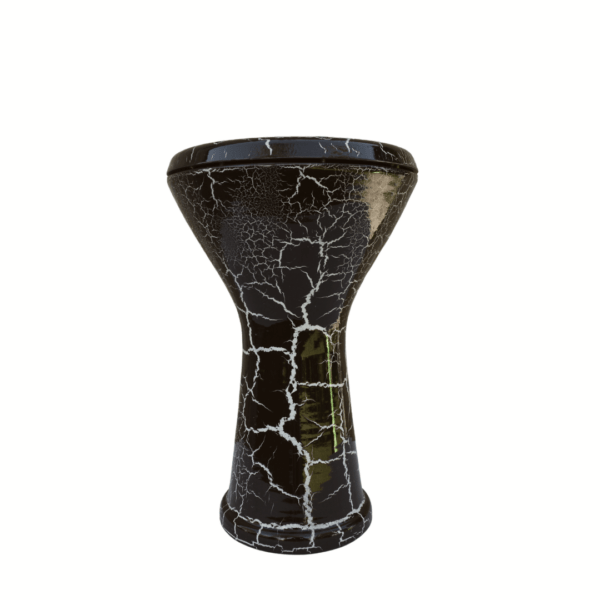
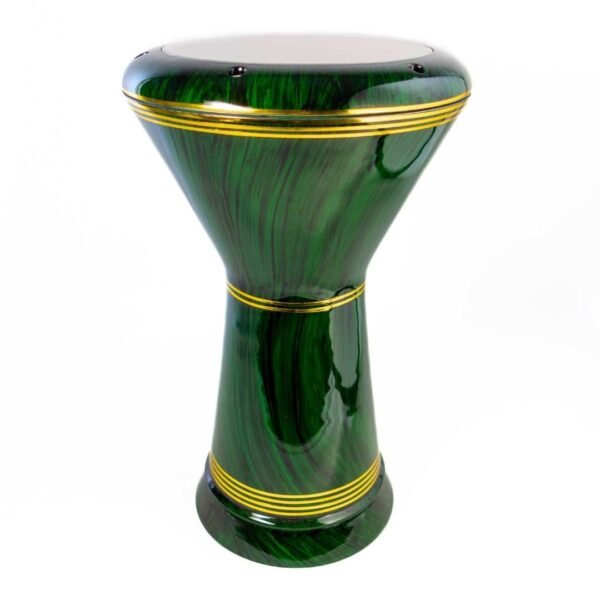
Light bodies, tunable synthetic heads, and shells that survive being carried around the house.

Keep the pulse steady while they play: Tapadum Tuner runs usul rhythm patterns with an adjustable tempo in the browser, so a child can practise doum and tek against a steady beat.