
The Ney Anban: Iran’s Droneless Persian Gulf Bagpipe
What you’ll learn: what makes the ney anban a genuinely rare bagpipe — no drone, a hand-painted goatskin bag, and a sound tied to Iran’s Persian Gulf fishermen — plus its documented history back to the 1600s and how to choose one.
Say “bagpipe” and most people picture a drone note holding steady under a melody — Highland pipes, Balkan gaida, Galician gaita. The ney anban, the bagpipe of Iran’s Bushehr coast, breaks that expectation entirely: it has no drone at all. Every note comes from a double chanter playing melody in both bores at once, producing a bright, buzzing, continuously-driven voice unlike any other bagpipe tradition.
A Bagpipe Without a Drone
Most bagpipe traditions pair a melody chanter with a separate drone pipe that holds a fixed note underneath. The ney anban has no such pipe — its double chanter, cut from cane with twin bores pierced by equidistant fingerholes, plays melody in both bores together, so the instrument speaks as one continuous, buzzing voice rather than a tune floating over a held drone. Air comes from a dedicated blowpipe (called ghamish or pikak locally) rather than a bellows, and the goatskin bag serves purely as a reservoir — letting the player keep sound unbroken while breathing, in effect a form of circular breathing built into the instrument itself.
The Voice of Bushehr’s Fishermen
The ney anban belongs to Bushehr, Hormozgan, and the Persian Gulf islands of Qeshm and Kish, on Iran’s southern coast. There it’s central to Bandari music — the folk tradition of the Gulf coast — where it accompanies sarva, the free-metre sung couplets of Bushehr, and drives the dance rhythms of weddings and community celebrations. Fishermen historically carried it to sea as “music of work,” its steady, breath-driven tone offering both rhythm and company through long hours on the water. The same instrument carries joyful dance tunes and slower, plaintive melodies alike — a genuinely dual-purpose voice within the tradition, typically heard alongside a drum and a singer.
A Painted History Back to the 1600s
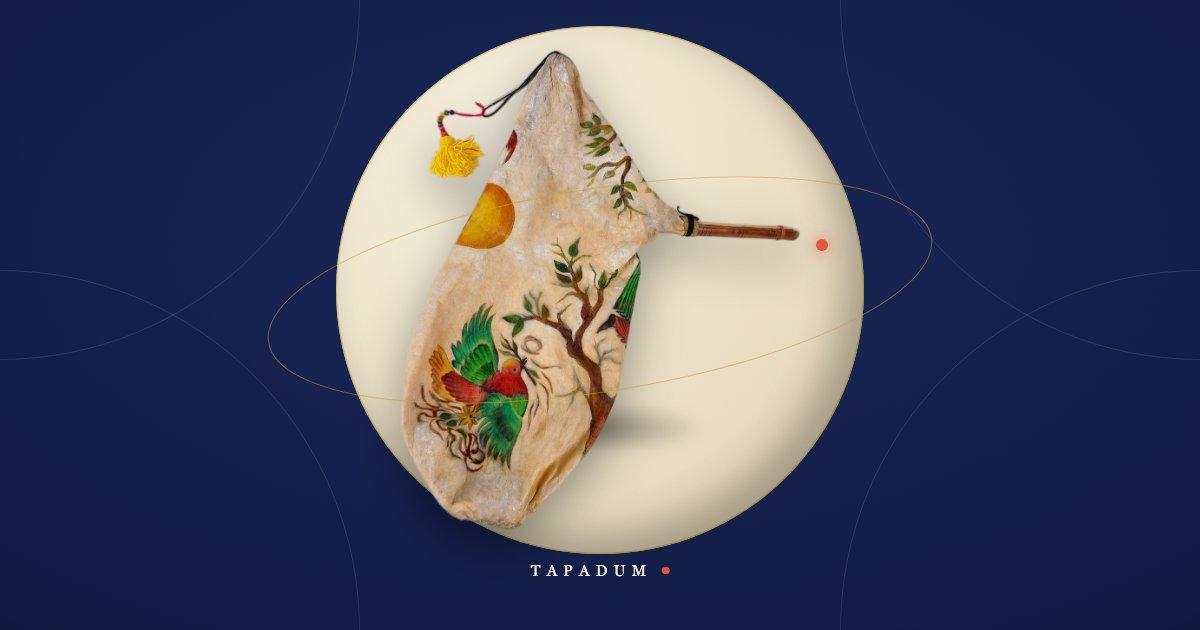
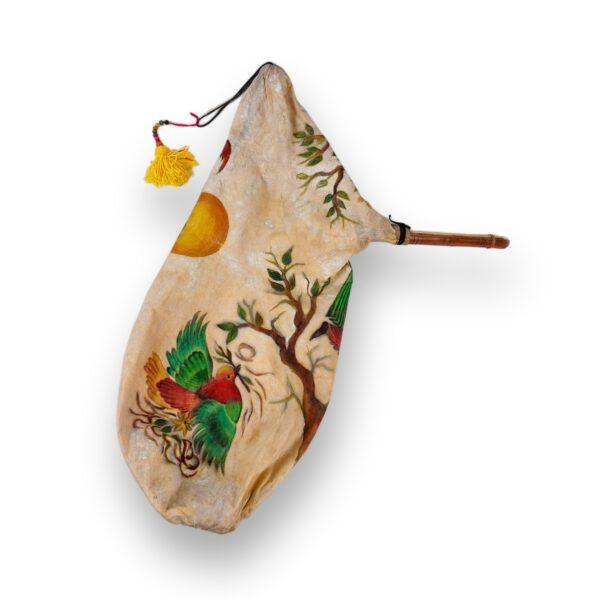
The ney anban’s documented history reaches back further than most bagpipe traditions get credit for: the celebrated Persian miniaturist Riza ‘Abbasi (1560/70–1635) produced a rare illustration of a ney anban player in the early 1600s, and European travelers including Ousely (1819) and Dubeux (1841) later documented the instrument in Southern Iran. That painted lineage carries into the instruments made today — the goatskin bag itself is typically hand-painted in the ornamental style of Persian miniature art, so the artwork sits directly on the leather, its grain and natural creases showing through the color. No two painted bags come out quite the same.
Construction
A full goatskin hide, cured supple, forms the bag and reservoir. The double chanter is cut from cane, its twin bores fitted with single reeds sealed in place with wax — the same basic construction used by makers across Bushehr and Hormozgan. Air enters through the dedicated blowpipe rather than a mouthpiece shared with the chanter, and a tasseled cord with a hand-strung beaded strand often hangs from the bag’s neck as a traditional decorative touch rather than a functional part.
Choosing a Ney Anban
Because it’s one of the rarer wind voices in any world-instrument collection, a ney anban suits collectors of museum-grade folk instruments, world-music performers building a Persian Gulf or Bandari repertoire, and anyone drawn as much to hand-painted craft objects as to sound. It pairs naturally in ensemble with the region’s frame drums — our Persian Daf guide covers a rhythm companion instrument from the same broader tradition. A well-made example should ship with a hardcase, since the painted goatskin bag needs protecting from rough handling and extreme humidity swings just like any hide instrument.
Frequently Asked Questions
Why doesn’t the ney anban have a drone?
Its double chanter plays melody in both bores at once rather than pairing a melody pipe with a separate drone pipe — a genuinely different design from Highland, Balkan, or Galician bagpipes, giving the ney anban its continuous, buzzing character instead of a tune floating over a held note.
Where does the ney anban come from?
Bushehr, Hormozgan, and the Persian Gulf islands of Qeshm and Kish, on Iran’s southern coast, where it’s central to Bandari folk music and historically associated with the region’s fishing communities.
How old is the ney anban tradition?
Documented well before most people would expect — the Persian miniaturist Riza ‘Abbasi illustrated a ney anban player in the early 1600s, and European travelers recorded the instrument in Southern Iran in the 19th century.
Why is the bag hand-painted?
Makers in the Bushehr tradition paint the goatskin bag directly in the ornamental style of Persian miniature art, so the leather’s natural grain and creases show through the color — a decorative practice that makes every bag genuinely unique.
Does the ney anban use a bellows like some bagpipes?
No — air is supplied by mouth through a dedicated blowpipe, with the goatskin bag acting purely as a reservoir rather than being inflated by a bellows.
Tapadum is an ethnic music store based in Italy, specializing in handcrafted instruments from the Middle East, the Mediterranean, and the Balkans. Free EU shipping & 15-day return. Explore the full Winds collection.