
Description
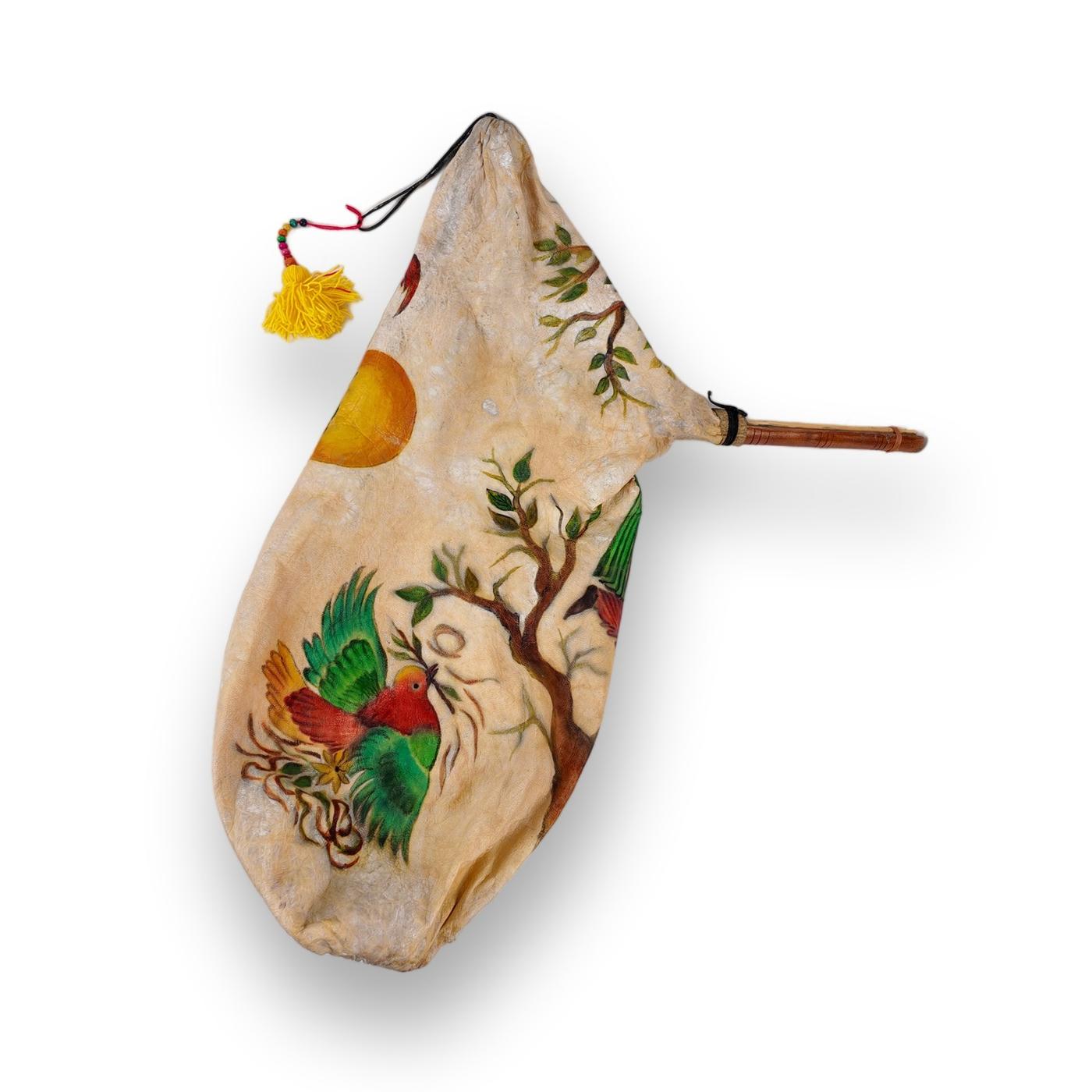
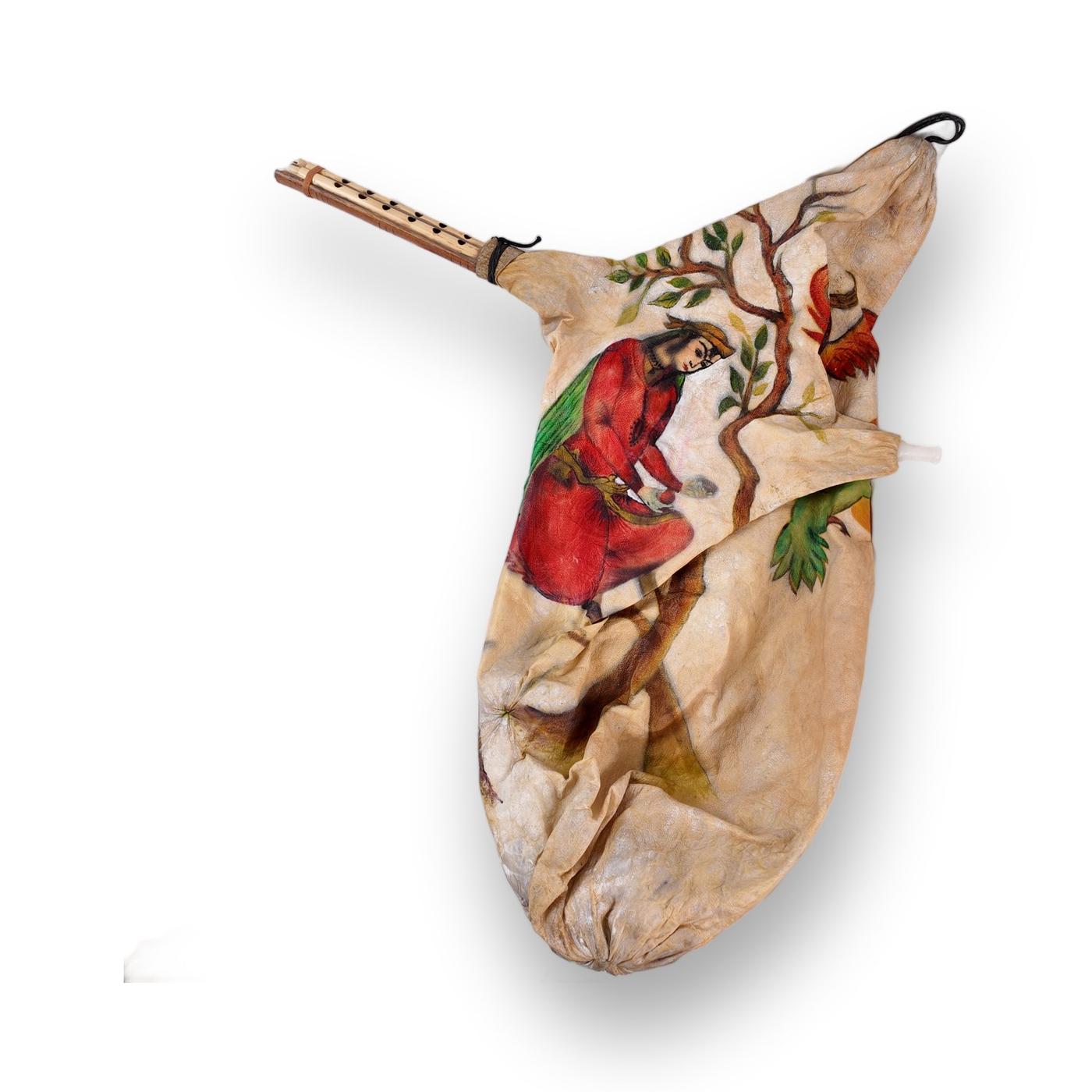
The Ney Anban — the Persian bagpipe of Iran’s Persian Gulf coast — is one of the rarest wind voices in the Tapadum collection. Unlike the Highland or Balkan bagpipes many listeners picture, the ney anban carries no drone: every note comes from a single hand-stitched goatskin bag feeding one blowpipe and one double chanter, producing the bright, buzzing, continuous-breath sound that has driven weddings, celebrations, and the work-songs of Bushehr’s fishermen for generations. This example is hand-built by Behbahani, a maker working in the Bushehr tradition.
A Droneless Bagpipe from the Persian Gulf
The ney anban (also called neyanban) belongs to Bushehr, Hormozgan, and the islands of Qeshm and Kish — the Persian Gulf hinterland of southern Iran. Where most bagpipe traditions pair a melody chanter with a separate drone pipe, the ney anban has none: both bores of its double chanter carry melody, played together, so the instrument speaks as one continuous, buzzing voice rather than a tune over a held note.
Air is supplied by mouth through a dedicated blowpipe (known locally as ghamish or pikak) rather than a bellows, and the goatskin bag acts as a reservoir — letting the player keep the sound unbroken while breathing, much like circular breathing on a wind instrument. It is this uninterrupted drive that gives the ney anban its distinctive, insistent character.
Hand-Painted Goatskin and Twin Cane Chanter
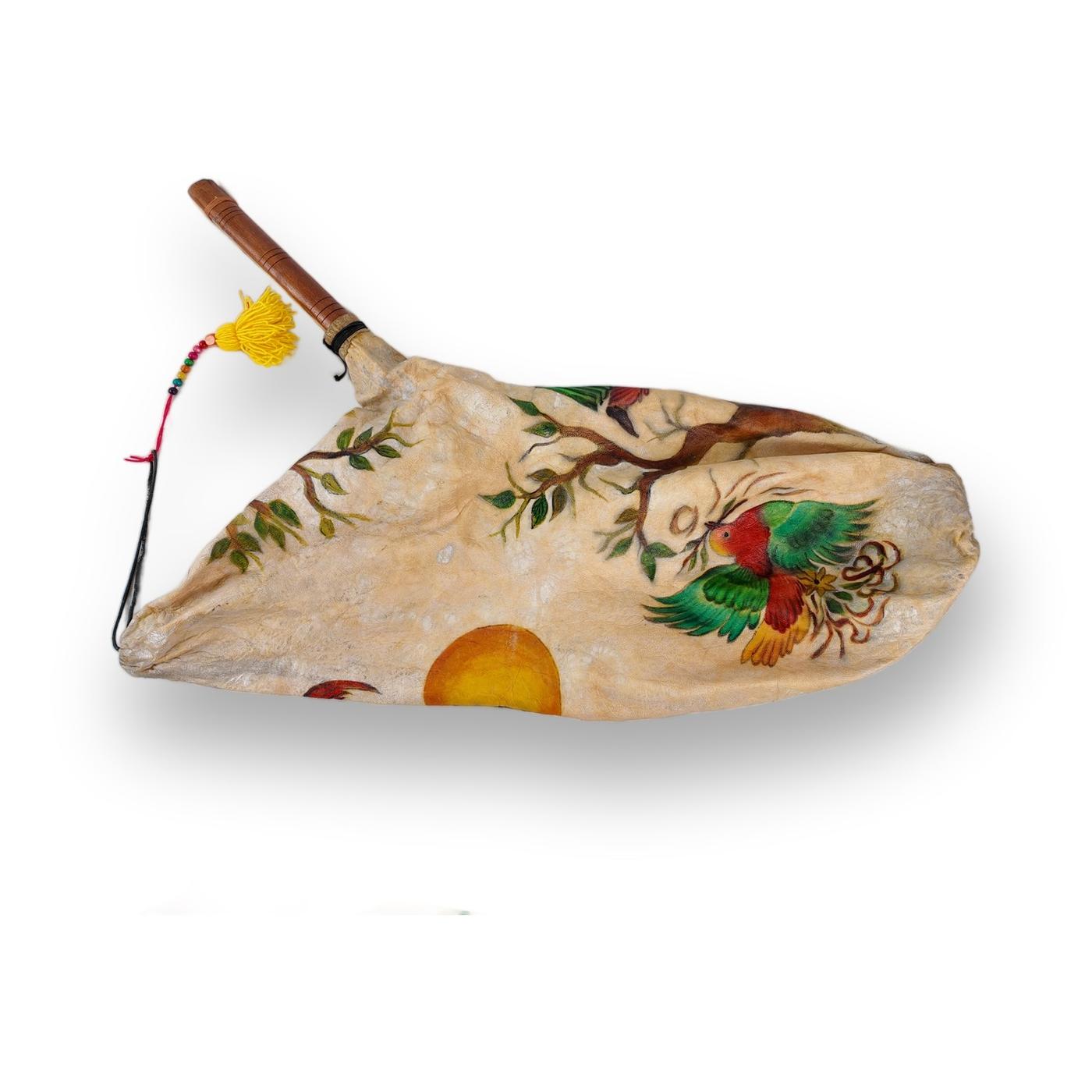
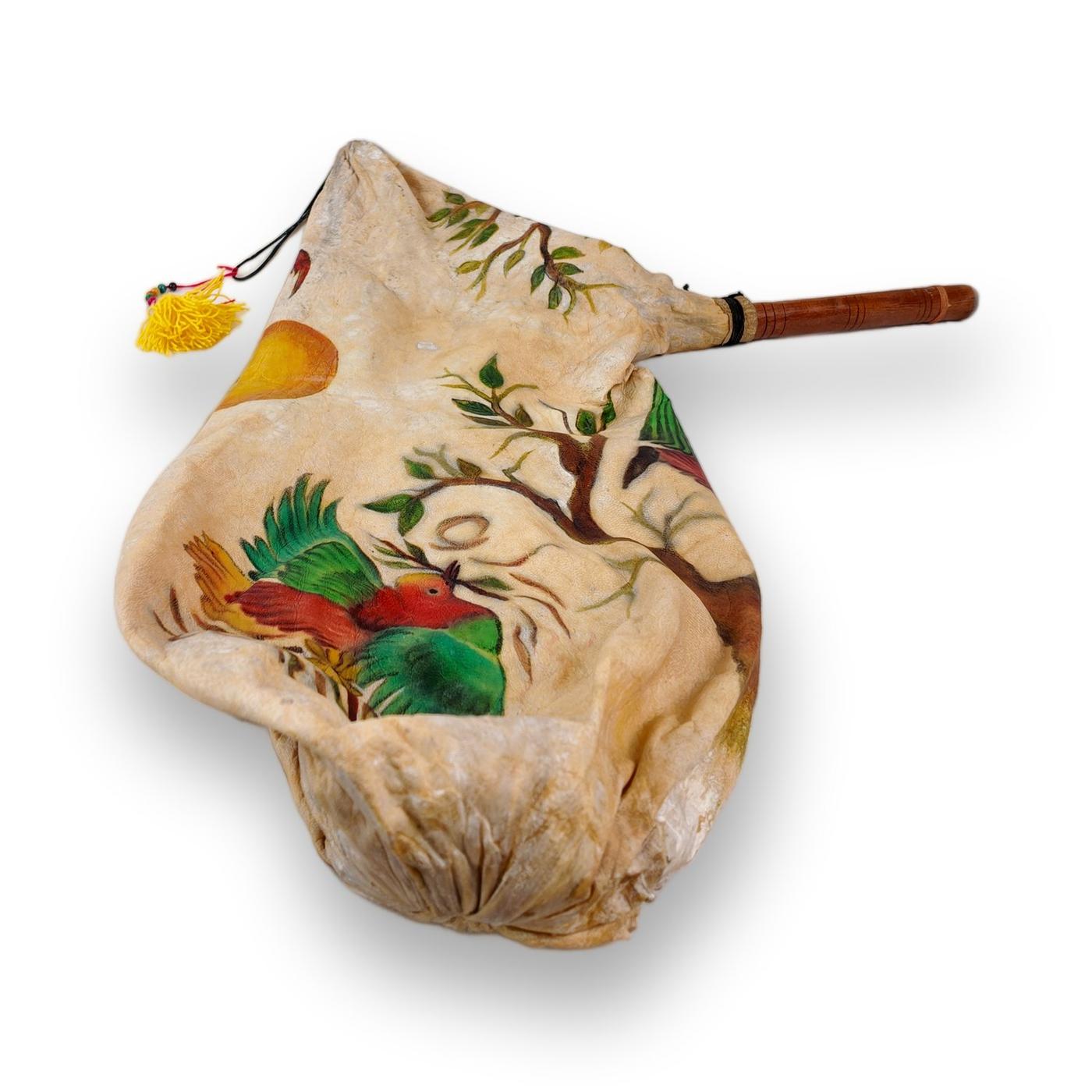
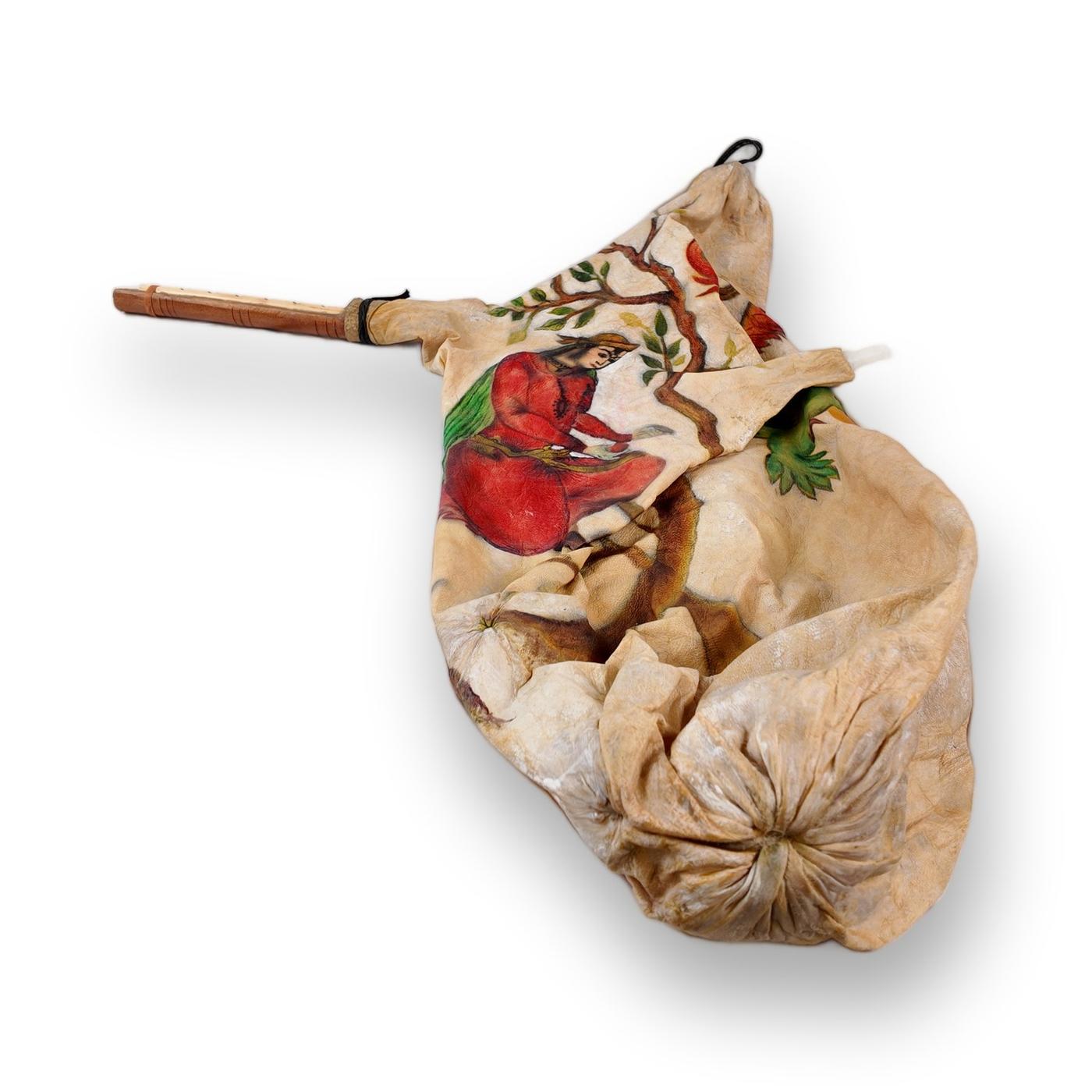
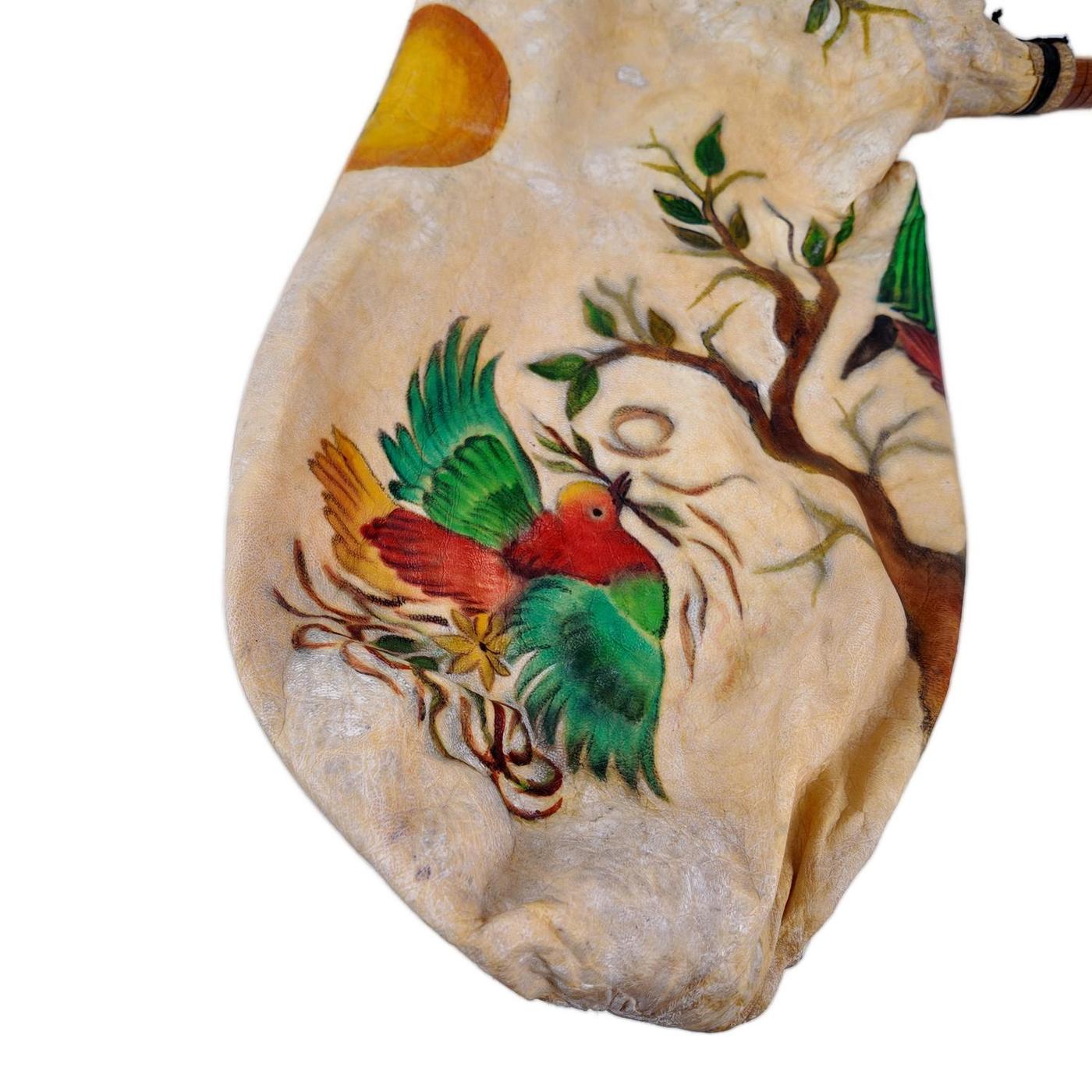
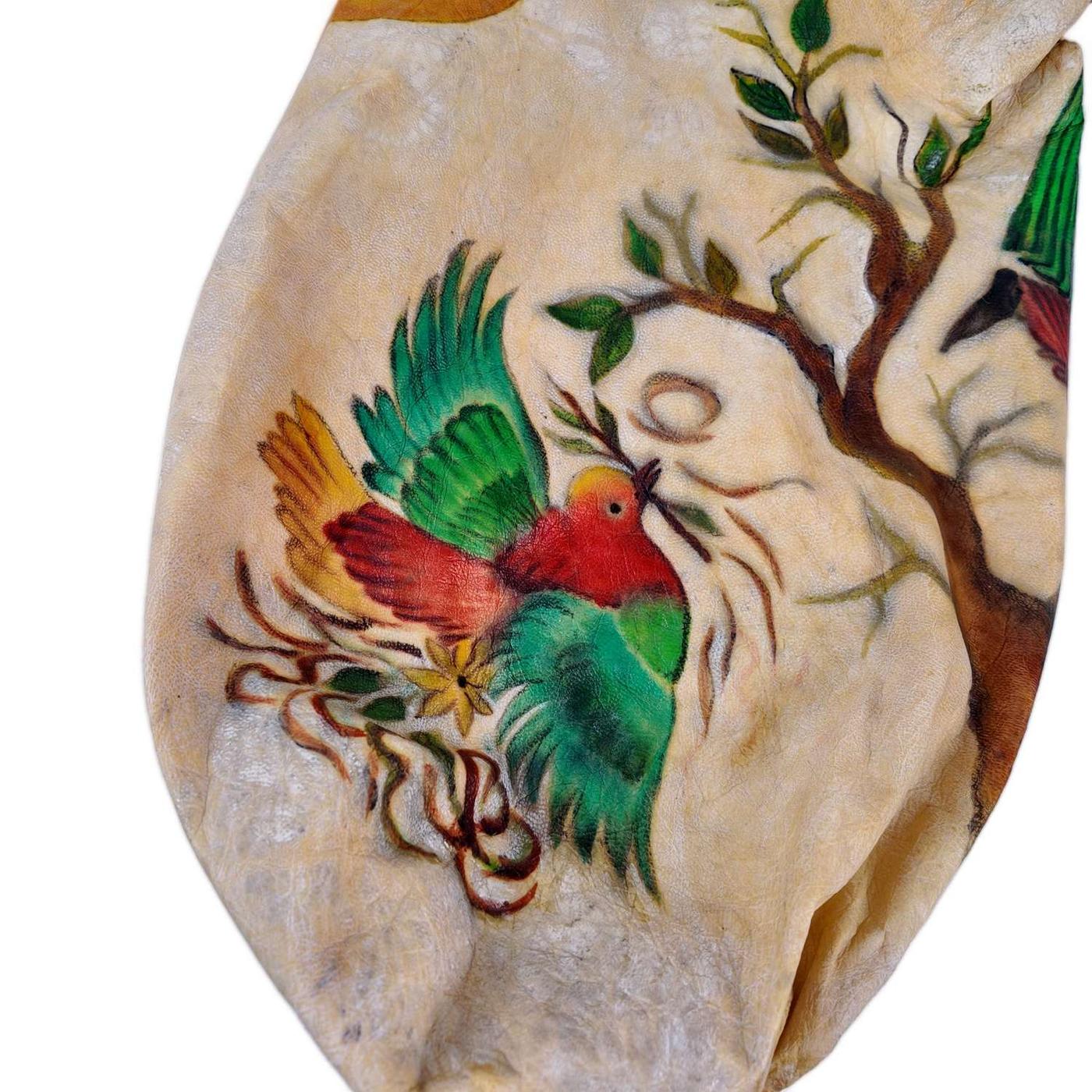
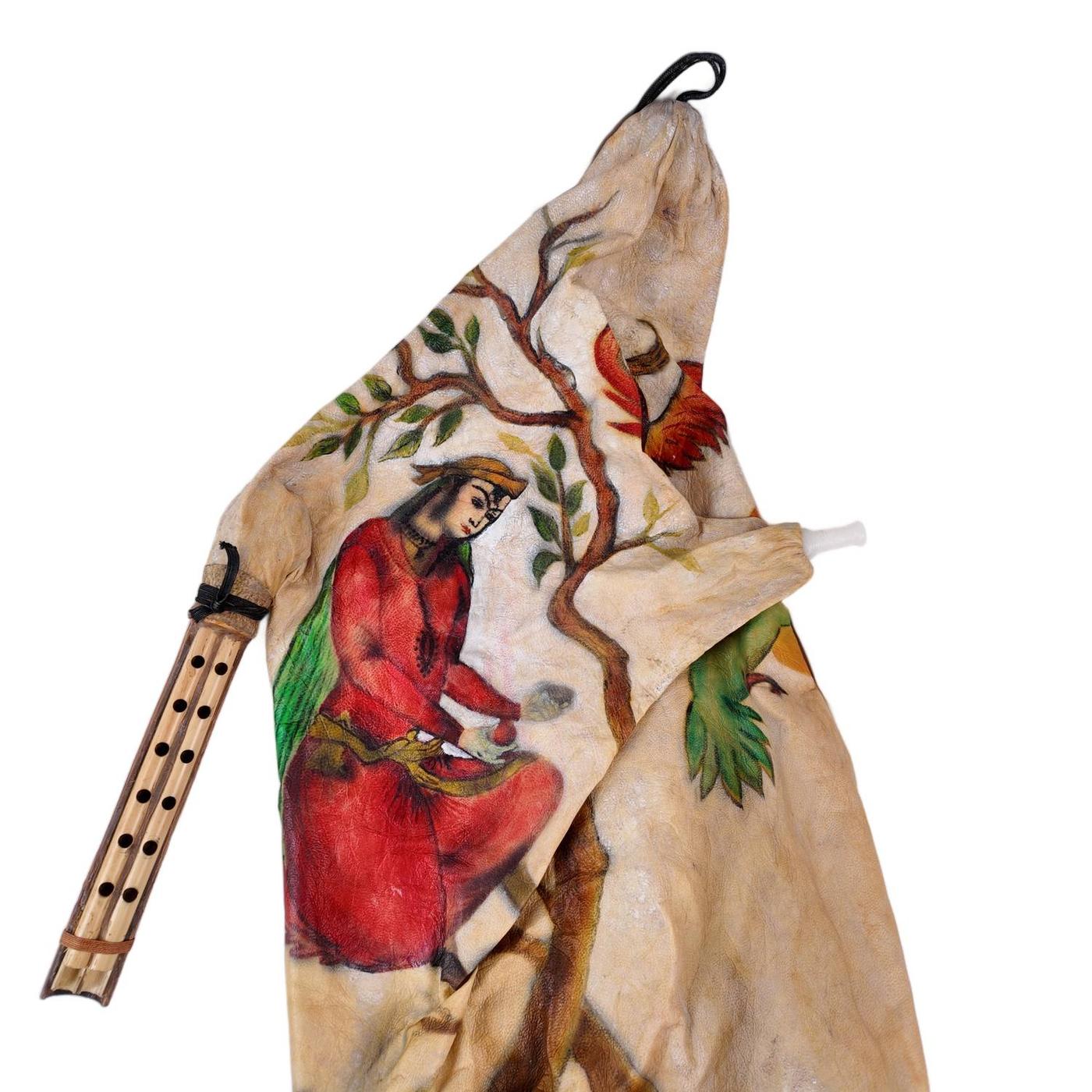
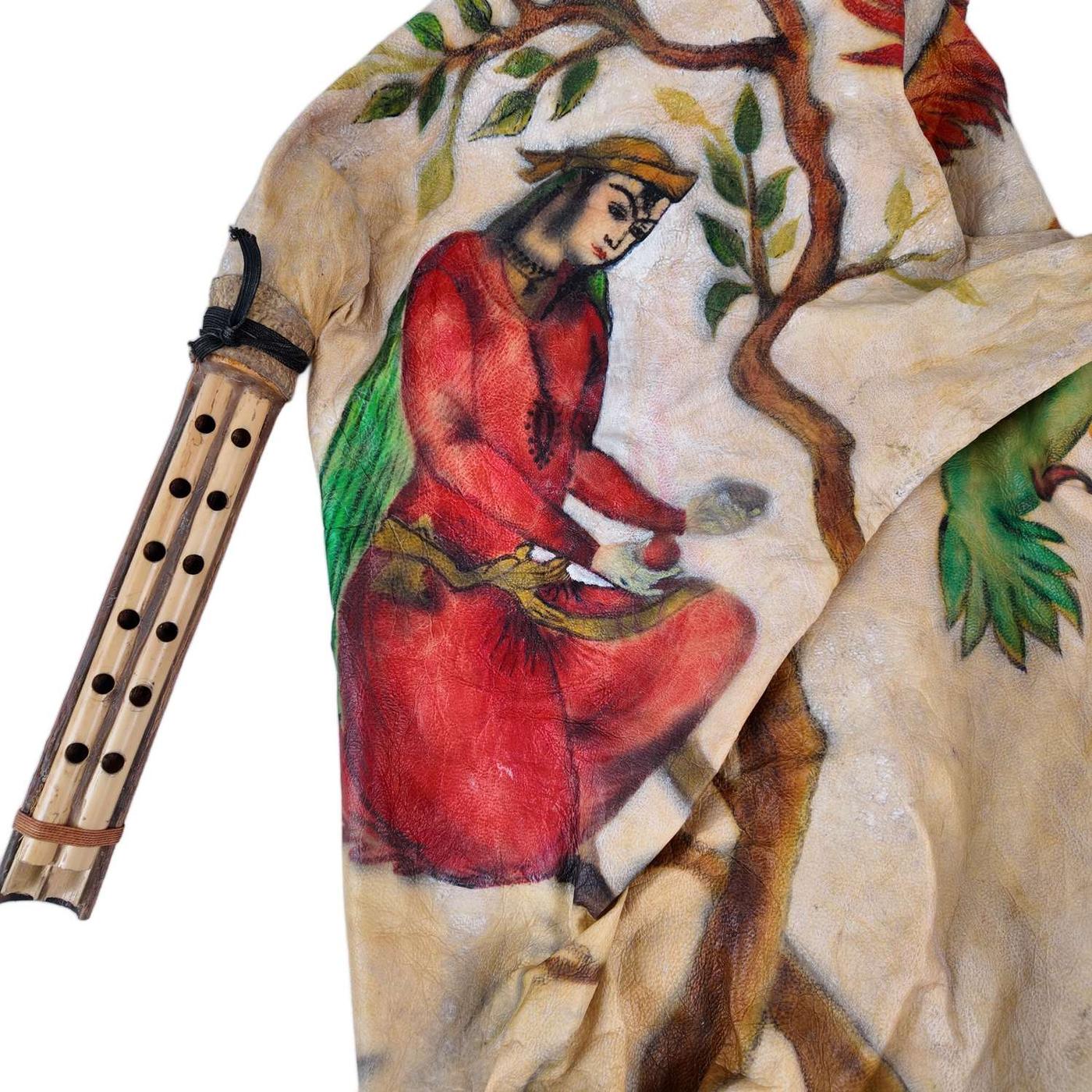
The bag is a full goatskin hide, cured supple and hand-painted in the ornamental style of Persian miniature art: a seated robed figure beneath a flowering tree, a pair of colorful birds perched among the branches beside a woven nest, and a warm sun or moon disc rising behind them. The artwork is painted directly onto the leather, so the grain and natural creases of the hide show through the color — no two painted bags are ever quite identical.
The double chanter is cut from cane, its twin bores pierced with equidistant fingerholes and fitted with single reeds sealed in place with wax — the same construction used by ney anban makers across Bushehr and Hormozgan. A yellow tasseled cord with a hand-strung beaded strand hangs from the bag’s neck, a traditional decorative touch rather than a functional part.
The Voice of Bandari Music
In its home region, the ney anban is central to Bandari music — the folk repertoire of Iran’s southern coast — where it accompanies sarva, the free-metre sung couplets of Bushehr, and drives the dance rhythms of weddings and community celebrations. Fishermen historically played it as “music of work,” its steady, breath-driven tone offering both rhythm and company through long hours at sea. The same instrument carries both joyful dance tunes and slower, plaintive melodies, making it a genuinely dual-purpose voice within the tradition.
Ney Anban Specifications
| Maker | Behbahani |
| Bag material | Goatskin, hand-painted |
| Chanter | Double cane chanter, single reeds, 28 cm |
| Bag total length | 70 cm |
| Weight | 0.6 kg |
| Included | High-quality hardcase |
Who the Ney Anban Suits
This is an instrument for collectors of rare, museum-grade folk instruments; for world-music performers building a Persian Gulf or Bandari repertoire; and for anyone drawn to hand-painted craft objects as much as to sound. Its droneless double-chanter voice has no close equivalent among the Winds already in the Tapadum catalog, and it pairs naturally in ensemble with the region’s frame drums — see our Persian Daf for a Bandari-style rhythm companion.
Care, Hardcase & Shipping
Like any hide instrument, the painted goatskin bag prefers a stable, moderate environment — keep it away from direct sun and dry heat, which can crack both leather and pigment over time. Let the cane chanter dry naturally after playing before returning it to storage, and avoid prolonged high humidity, which can swell or warp the reeds. The instrument ships in a high-quality hardcase that protects the painted hide and the reed pipes in transit and on the shelf.
Explore the wider Persian Instruments collection for more of Iran’s string, percussion, and wind traditions. For the instrument’s documented history and regional variants, see the Wikipedia entry on the ney-anbān. Worldwide shipping & 15-day return.



Reviews
There are no reviews yet.