
The Complete Darbuka Buying Guide: Clay, Aluminum & Copper
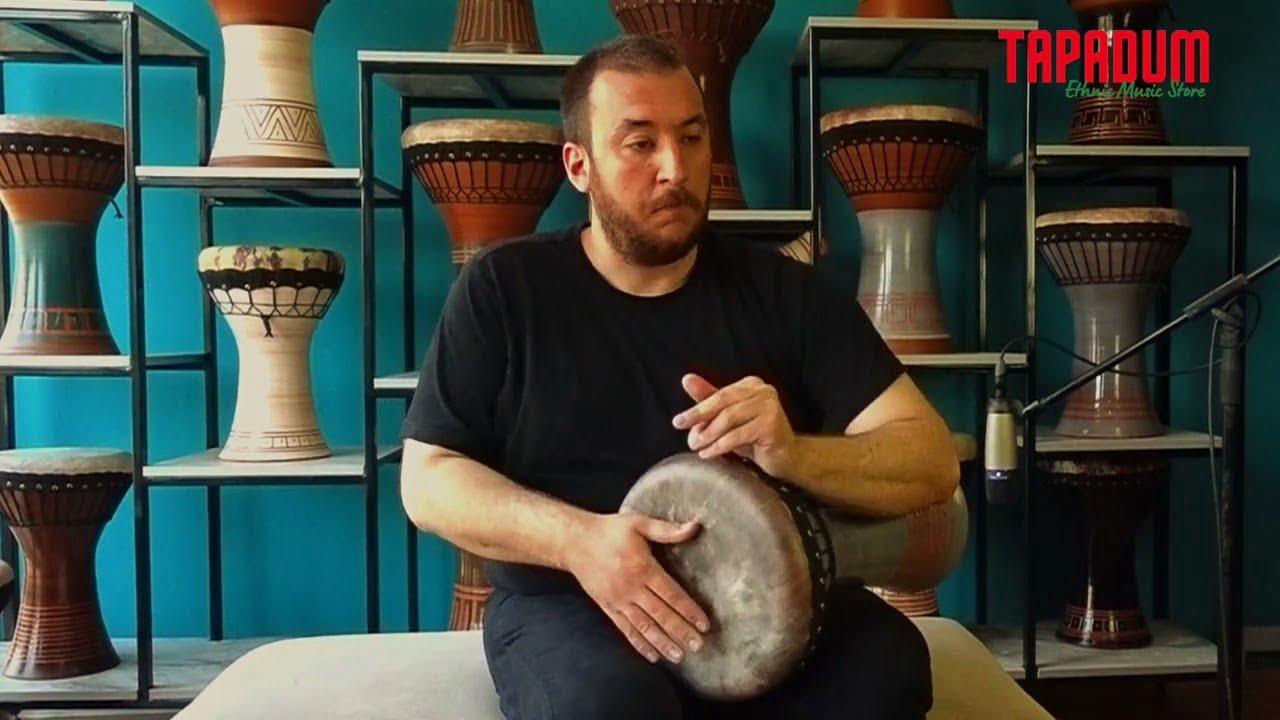
What you’ll learn: how the three darbuka shells — clay, cast aluminum, and copper — change tone, weight, and durability, what the size names Solo, Sumbati, and Dohola actually mean, how goatskin and synthetic heads compare, and which of our 42 in-stock darbukas fits a beginner, a touring player, or a home studio.
The darbuka — also called doumbek, tabla, or goblet drum — is the rhythmic backbone of Middle Eastern, North African, and Turkish percussion. Its hourglass body and single struck head let one player produce a wide tonal range, from the sharp tek at the rim to the deep doum at the center. Choosing one comes down to two decisions: what the body is made of, and what size suits your role in the music.
At Tapadum, we handcraft our clay darbukas in-house and stock cast-aluminum and copper models built for the road and the stage. This guide walks through all three shell materials, what the size names mean, and how to match a darbuka to your level and budget.
What Is a Darbuka?
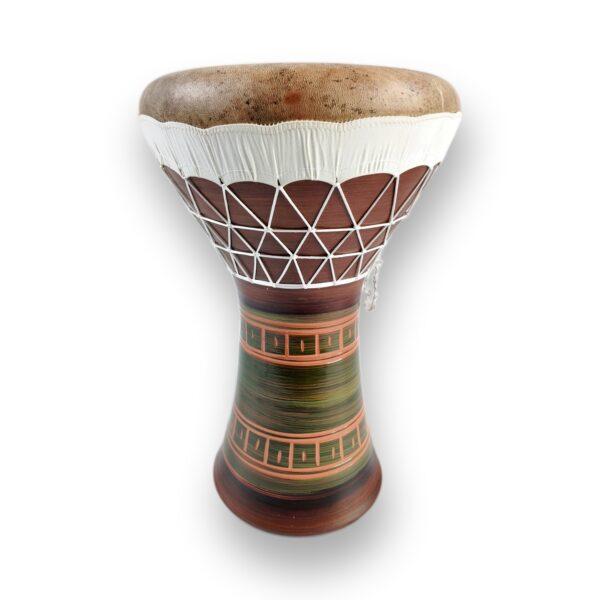
A darbuka is a goblet-shaped hand drum with a single drumhead mounted at the wider end. The player strikes the head with fingers and palms to produce the three core sounds that define goblet drum technique: the deep doum, the sharp tek, and the closed ka or pa.
Goblet drums are ancient. Archaeological and iconographic evidence places them in Mesopotamian and Ancient Egyptian cultures over 3,000 years ago, and clay is the material they were originally made from — long before metal casting techniques were applied to this shape. In that sense, every modern aluminum or copper darbuka is a descendant of the clay instrument.
The Three Shells: Clay, Aluminum & Copper
The body material is not a stylistic choice — it is an acoustic one, and it is the first decision to make.
Clay: The Original Voice
Clay is denser and less uniformly rigid than cast metal. Instead of reflecting sound waves with metallic brightness, it absorbs a portion of the high-frequency content and reinforces the low and mid frequencies. The practical result is a rounder, warmer doum and a more vocal tek. For players who record in studio settings, this matters: a well-made clay darbuka captures on microphone with a naturally balanced frequency response and needs far less EQ correction than a metal counterpart.
The trade-off is fragility. Clay is fired ceramic, and like any ceramic, it breaks if dropped — the honest reason many beginners start on a metal-bodied drum instead. A clay darbuka is, and always has been, a choice for players who prioritize tone over indestructibility.
Cast Aluminum: The Professional Stage Choice
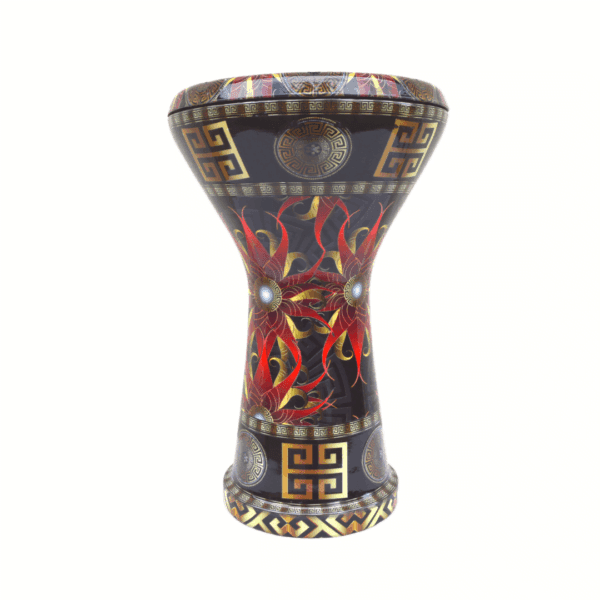
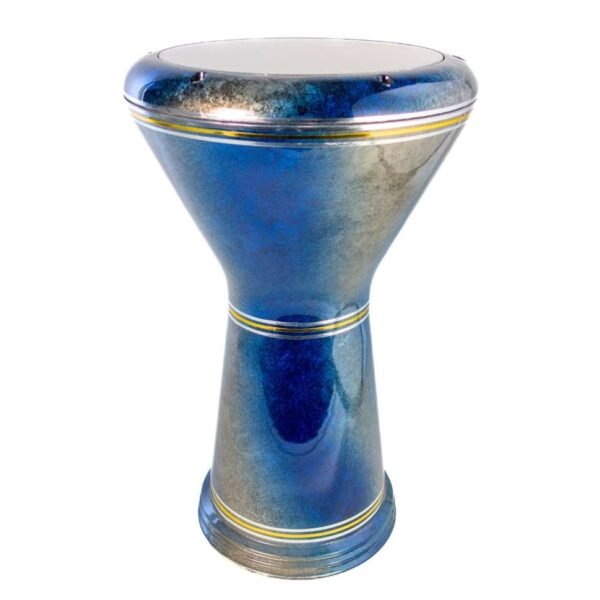
Cast aluminum shells project brighter and louder than clay, and hold up to travel and stage use without cracking. Our Pro Aluminum Darbuka line is built for that context: a 23 cm head, 48 cm body, and a substantial 6.2 kg of cast metal that gives the drum real projection and low-end weight, finished with a padded gig bag. It suits intermediate to advanced players performing in ensembles or amplified settings where a clay drum’s fragility is a liability.
Copper: Warmth in a Travel-Ready Body
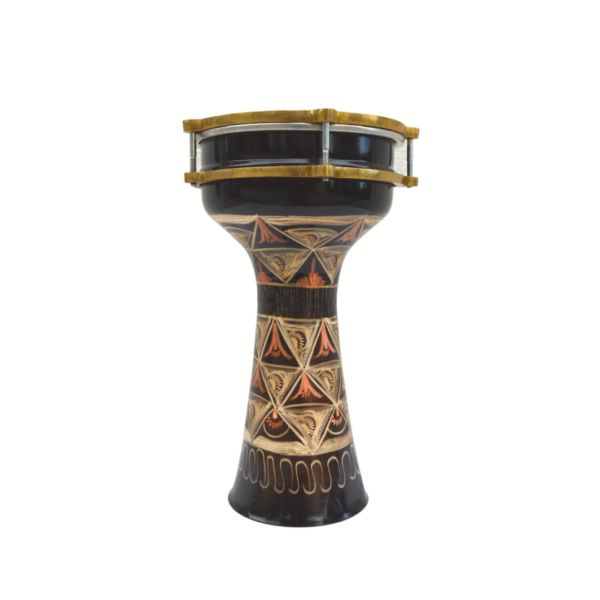
Copper-bodied darbukas — mostly built in the lighter Turkish and Egyptian travel styles — sit between clay and aluminum in character: fuller and warmer than plain cast aluminum, while staying far more robust than fired clay. Every copper model we carry pairs the metal shell with a synthetic head, so it holds its tuning through the humidity and temperature swings that unsettle natural skin.
The Many Names of the Darbuka
If you have shopped for a darbuka before, you have probably encountered a confusing list of names — doholla, dohola, sumbaty, sombaty, sombati, dumbek, dumbelek, tombek, donbek, tarabuka, and more. These are not all synonyms for the same drum; some describe the instrument generically, some refer specifically to size.
| Name | What it refers to |
|---|---|
| Darbuka | The general name for the goblet drum, most common outside Egypt |
| Doumbek / Tabla | Common alternative names; in Egypt “tabla” specifically means this drum |
| Sombaty (Sumbati, Sombati) | A larger darbuka — head diameter around 22–23 cm, a fuller mid-bass voice |
| Doholla (Dohola, Duhulla) | The largest family member — a true bass drum, used for low-frequency foundation |
| Dumbek, Dumbelek, Tombek, Donbek | Regional Turkish and Anatolian variants of the same name |
In short: Solo, Sumbati, and Doholla are size designations, not separate instruments — a clay Doholla and a clay Solo darbuka are built the same way, one is simply larger and voices lower. This is true across all three shells: aluminum and copper models follow the same solo-to-bass logic, scaled to their own travel-friendly proportions.
Choosing a Size: Solo, Sumbati & Dohola
Solo models give the bright, articulate lead voice most players start on. Sumbati is a versatile mid-bass that covers both lead and accompaniment. Dohola provides the deep bass foundation that anchors an ensemble — many players eventually pair a Solo with a bass drum to cover the full doum-tek vocabulary. If you only own one darbuka, a Solo-size instrument in your chosen shell material is the most versatile starting point.
The Head: Goatskin vs Synthetic
Every Tapadum clay darbuka ships with a natural goatskin head — a deliberate choice, not a default. Goatskin responds to a wider dynamic range than synthetic heads, capturing the faintest ghost notes and returning clean, open tones at full-force strikes. Players transitioning from synthetic heads often describe the first few hours on goatskin as a revelation.
The trade-off: natural leather expands and contracts with humidity and temperature. A goatskin head perfectly tuned in a warm room will go flat on a cold stage and tighten in a dry venue — a real working problem outside consistently warm climates. This is exactly why our aluminum, copper, and travel darbukas use a synthetic membrane instead: it holds its pitch through weather and travel, the practical choice when reliability matters more than the last degree of tonal expressiveness.
Tuning: Heat, Screws & the Tuning Light System
Several of our clay darbukas include a Tuning Light System — a small internal heating lamp with an adjustable dimmer that gently warms the body and stabilizes the tension of the goatskin head. This is not a Tapadum invention; it is a traditional Egyptian solution, often improvised for decades with a light bulb placed inside the body, that we build in as an integrated feature. Plug the drum in before a gig, play with confidence, unplug it after.
Metal-bodied darbukas tune differently. Turkish-style aluminum and copper models are typically outside-tuned, with screws on the hoop you adjust with an Allen key in seconds — no heat, and nothing to re-seat after a long journey. If a drifting head mid-performance has ever frustrated you, this is the more predictable route.
Which Darbuka Fits Your Level and Budget?
Across our 42 in-stock darbukas — clay, professional aluminum, and travel models — prices break down roughly by shell and size:
| Type | Body / Head | Typical weight | Price range | Best for |
|---|---|---|---|---|
| Travel (aluminum or copper) | Metal / synthetic | 2.4–3.3 kg | from €130 | Beginners, travel, outdoor playing |
| Pro Aluminum | Cast aluminum / synthetic | ~6.2 kg | from €329 | Stage, ensemble, amplified settings |
| Clay Solo | Fired clay / goatskin | ~4–5 kg | from €249 | Studio recording, acoustic ensembles |
| Clay Bass (Dohola) | Fired clay / goatskin | heavier, larger body | from €399 | Ensemble low-end, experienced players |
New to the darbuka? Start with a travel or Pro Aluminum model. Synthetic heads and metal bodies are more forgiving on tour, in schools, and in transit, and you will not be learning your first doum-tek vocabulary on an instrument that cracks if it tips over. Clay rewards developed technique — it is not usually the right first instrument.
Recording, or playing acoustic sets with oud, ney, or qanun? A clay darbuka’s microphone-friendly, naturally balanced tone sits inside the mix rather than cutting over it.
Playing amplified stages or louder ensembles? A Pro Aluminum darbuka’s projection and durability are built for exactly that.
Musical Traditions and the Darbuka
The darbuka is most deeply rooted in Egyptian classical and folk music — maqam-based classical repertoire, and Baladi and Saidi dance rhythms at the heart of raqs sharqi. Its voice is also central to Turkish classical and folk music (fasıl), Sufi music, and increasingly, contemporary Mediterranean and Balkan fusion. For ensemble players, the darbuka pairs well with melodic instruments that share its acoustic range: oud, ney, qanun, and kemence.
Care and Longevity
A clay darbuka, treated properly, lasts decades. Store it in its padded case away from direct sunlight and heat sources, and avoid sudden temperature changes — bringing the instrument from a cold car into a warm venue can stress both the clay and the skin. Wipe the body with a dry cloth after performances; never use chemical cleaners on a decorated surface. If the head loosens in humid conditions, the Tuning Light System (if equipped) handles most of it; otherwise let the drum acclimate to the venue for thirty minutes before playing.
Aluminum and copper darbukas need far less: wipe the body dry after playing outdoors, store the synthetic head away from direct heat, and re-tension with the Allen key if the pitch drifts. There is no humidity acclimation to think about — one of the reasons these shells travel so well.
Watch a Clay Darbuka Being Made
See the process behind the sound. Master potter Ahmet Tashomcu shapes a clay darbuka entirely by hand on the pottery wheel, from raw Menemen red clay to the finished goblet form — no mold, no machine, just the wheel and five decades of practice.
Frequently Asked Questions
What’s the difference between a darbuka, a doumbek, and a goblet drum?
They are the same instrument. “Darbuka” is the common name outside Egypt, “doumbek” (or “tabla”) is used across the Arab world and increasingly in English, and “goblet drum” is the general organological term for the whole family, regardless of shell material.
What is the difference between a darbuka, a sombaty, and a doholla?
All three are the same instrument family, named by size rather than construction. Sombaty is a larger darbuka (around 22–23 cm head), and doholla is the largest size, producing a deep bass voice.
Which darbuka is better for beginners: clay, aluminum, or copper?
Aluminum or copper, in a travel-weight model. They are more affordable, more durable, and their synthetic heads hold tuning without the humidity sensitivity of natural goatskin — one less thing to manage while you are still learning the doum-tek vocabulary.
Why does a clay darbuka sound warmer than a metal one?
Clay absorbs high-frequency content and reinforces low and mid frequencies, producing a rounder, less metallic tone. This is an acoustic property of the material itself, not a manufacturing difference.
What kind of head do Tapadum clay darbukas use?
All our clay darbukas use natural goatskin. It responds to a wider dynamic range than synthetic heads, which suits the tonal character of clay — the trade-off is sensitivity to humidity and temperature.
What does the Tuning Light System do?
It gently heats the inside of the body, keeping the goatskin head at consistent tension across temperature and humidity changes. It stabilizes tuning during performance — especially useful outside consistently warm climates.
How do aluminum and copper darbukas tune, if they don’t use heat?
Most metal-bodied darbukas are outside-tuned: screws on the hoop let you adjust head tension directly with an Allen key, in seconds, with no heat source needed.
How much does a good darbuka cost?
Across our own range, travel models start around €130, Pro Aluminum darbukas start at €329, and handcrafted clay models run from about €249 for a Solo up to €799 for a premium mother-of-pearl inlaid Dohola bass.
Tapadum is an ethnic music store based in Italy, specializing in handcrafted instruments from the Middle East, the Mediterranean, and the Balkans. Our clay darbukas are handmade at our Izmir workshop with natural goatskin heads; our aluminum and copper models are built for the road and the stage. Free EU shipping & 15-day return. Explore the full darbuka collection.