
The Enchanting Persian Tar
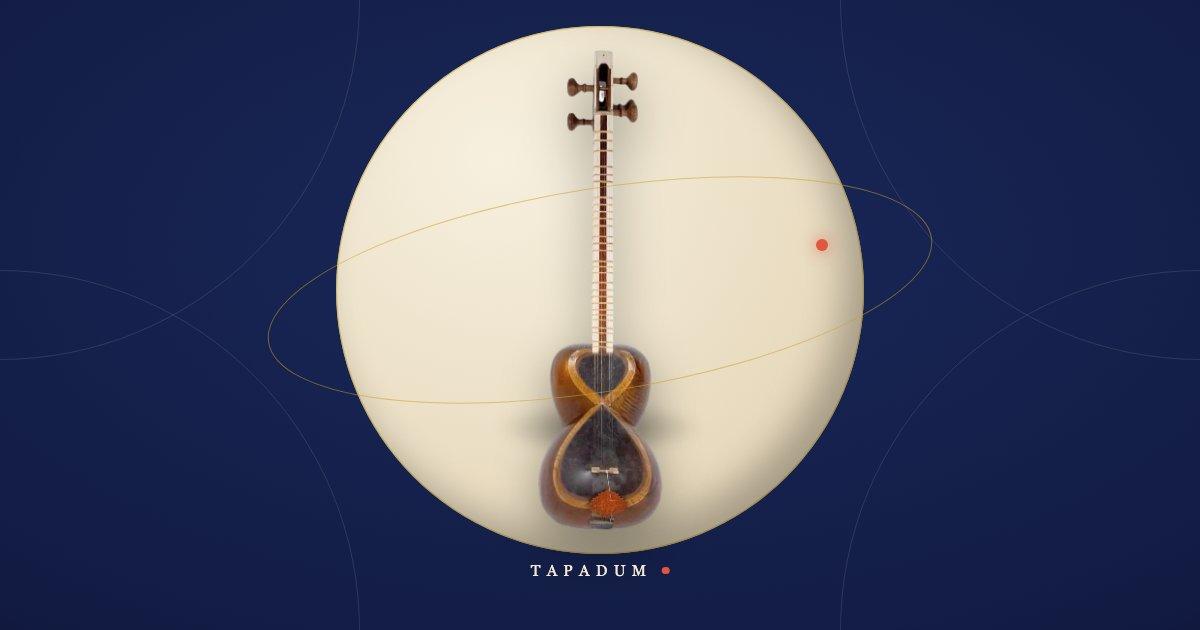
What you’ll learn: what makes the Persian tar’s double-bowl construction distinctive, how its 12 strings and movable frets support Persian classical music’s microtonal system, who systematized the radif repertoire it’s built to play, and what to look for when choosing one.
The Persian tar is a double-bowl, skin-covered long-necked lute at the center of Iranian classical music, built around six courses of paired strings — twelve strings total — and movable, tied frets that let a player produce the microtonal intervals Persian modal music requires. It’s the primary instrument for performing the radif, the structured repertoire that anchors Persian classical training.
This guide covers how the tar is actually built, why its frets move, the history of the radif tradition it serves, and what to check when choosing one.
Construction: A Double-Bowl Body
The tar’s most recognizable feature is its double-chambered body, traditionally carved from mulberry wood and covered with a thin membrane — historically lambskin — that acts as the instrument’s natural amplifier. The long neck is typically walnut, chosen for stability under string tension. This combination gives the tar a voice that’s simultaneously clear and articulate from the skin membrane, and bright from its steel strings.
Twelve Strings, Movable Frets
The tar carries six courses of steel strings — twelve strings in total — typically tuned in unison pairs. That configuration gives it both harmonic depth and enough projection to lead an ensemble, while still allowing a player to combine melody and drone within a single passage.
Its frets are tied on with nylon or gut rather than fixed into the fingerboard, the same principle behind movable frets on the baglama and other Persian and Turkish long-necked lutes. This lets a player set microtonal intervals precisely for whichever dastgah (modal system) they’re performing, rather than being locked into a single fixed-fret scale.
Playing Technique: The Dastaneh
The tar is played with a small brass plectrum called the dastaneh, held between the fingers rather than gripped like a guitar pick. Right-hand technique with the dastaneh controls rhythm, dynamics, and articulation — tremolo, staccato, legato — while the left hand handles fingering, microtonal fret adjustments, and ornamentation like slides and bends. The two hands divide labor in a way that’s fairly distinct from Western plucked-string technique.
The Radif: What the Tar Is Built to Play
The radif is the structured core repertoire of Persian classical music — a body of melodies organized into twelve dastgahs and their secondary modes, functioning simultaneously as a teaching curriculum and a foundation for improvisation. Mirza Abdollah (1843–1918), a Qajar-era court musician, compiled and notated one of the most influential versions of the radif, encompassing over 200 melodic units (gushehs), and his systematization is still central to how the tar is taught today.
In the modern era, musicians like Hossein Alizadeh have carried the tar to international audiences and even extended the instrument’s family — Alizadeh designed the shourangiz, a lighter, more agile relative of the tar built for a different technical approach while preserving its classical voice.
Choosing a Tar
Three things matter most when evaluating a tar. Materials: a mulberry body for authentic resonance and a walnut neck for stability under tension. Craftsmanship: smooth finishing, precise fret placement, and balanced construction between the two bowls. Sound: clear projection, even tone across all six courses, and good sustain from the skin membrane.
Our Professional Iranian Tar by Amin Golestani is built to this standard — a handcrafted instrument aimed at advanced musicians and dedicated students rather than a casual first pickup.
Care and Maintenance
Keep a tar in stable humidity and temperature — the skin membrane is sensitive to swings in either direction. Clean it gently with a soft cloth, avoid excessive direct contact with the membrane itself, and replace strings on a regular schedule rather than waiting for one to fail mid-session.
Frequently Asked Questions
How many strings does a Persian tar have?
Twelve strings arranged in six courses (pairs), typically tuned in unison — a configuration that gives the tar both harmonic depth and strong projection.
Is the Persian tar difficult to learn?
It takes real dedication, particularly around the microtonal fret adjustments the radif system demands, but with proper instruction it’s a rewarding instrument to develop on.
What is the radif, and why does it matter for the tar?
The radif is Persian classical music’s core structured repertoire — a body of melodies organized into twelve dastgahs. Mirza Abdollah’s 19th-century systematization of it is still the foundation most tar students learn from today.
What’s the difference between a tar and a shourangiz?
The shourangiz, designed by Hossein Alizadeh, is a lighter, more agile relative of the tar built for a different technical approach while keeping the same classical Persian voice — not a beginner version, but a distinct instrument for a different playing style.
What wood is a Persian tar made from?
The double-bowl body is traditionally mulberry, chosen for authentic resonance; the neck is typically walnut, chosen for its stability under the tension of six string courses.