Darbuka
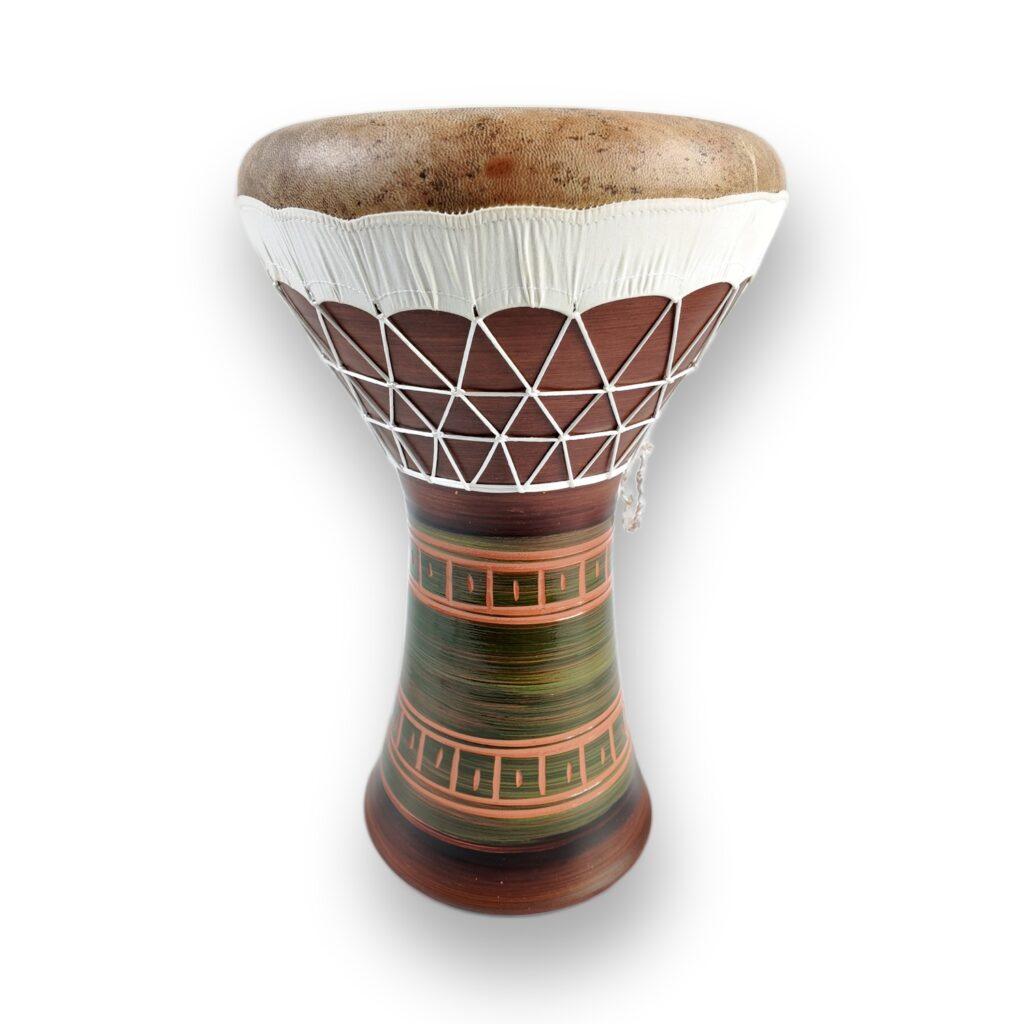
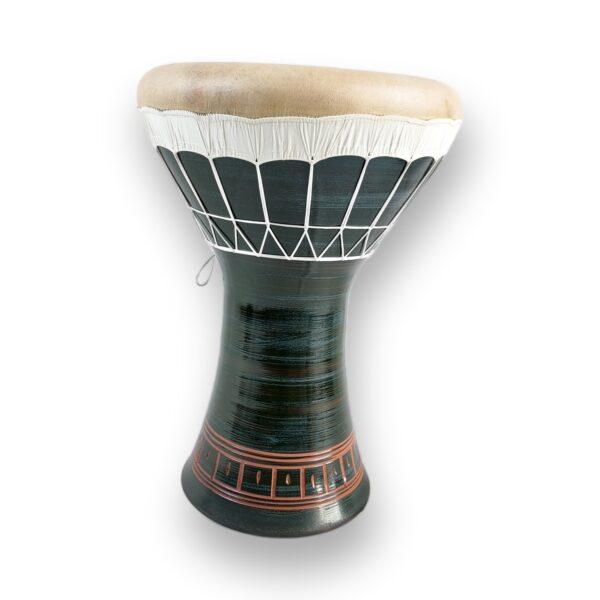
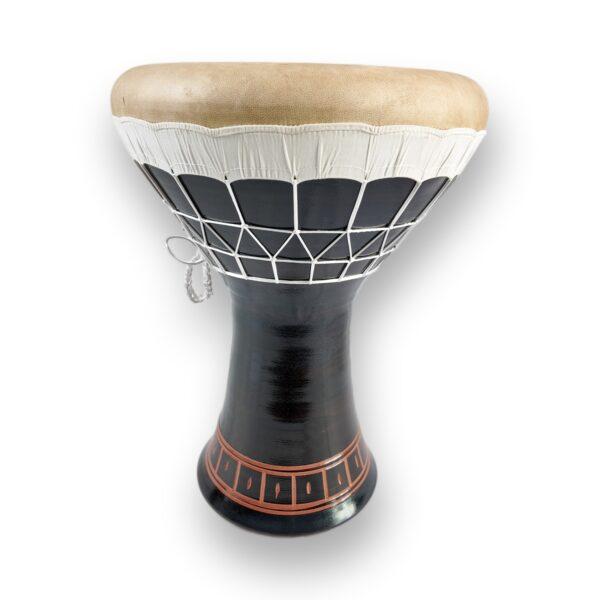
The darbuka — also called the doumbek, tablah, or goblet drum — is the rhythmic backbone of Middle Eastern, North African, and Turkish percussion. Its hourglass body and single struck head let one player produce a wide tonal range, from the sharp tek at the rim to the deep doum at the centre. Tapadum’s darbuka collection brings together the three families our workshop produces — clay, professional aluminum, and travel — along with size variants spanning solo to bass.
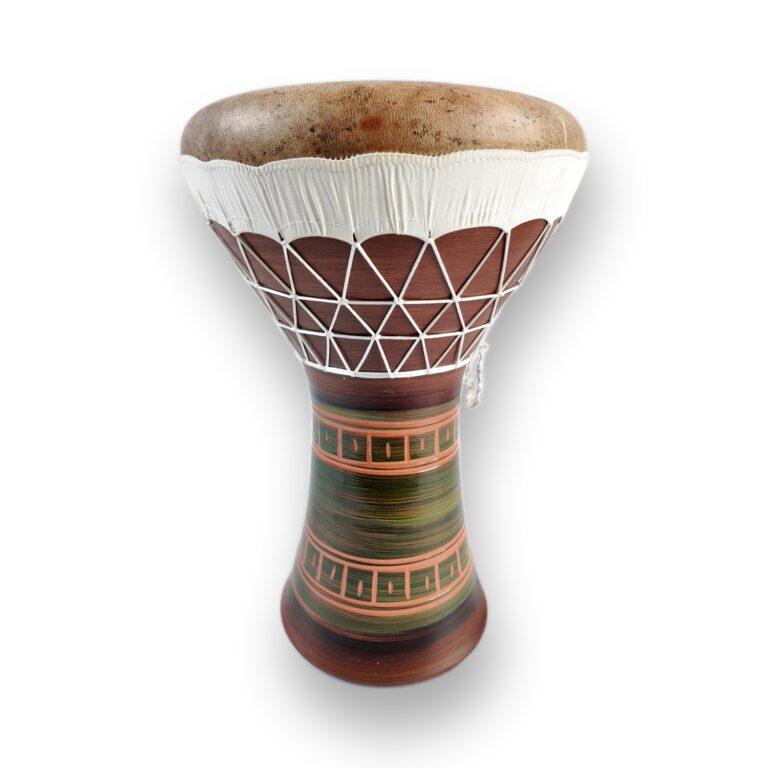
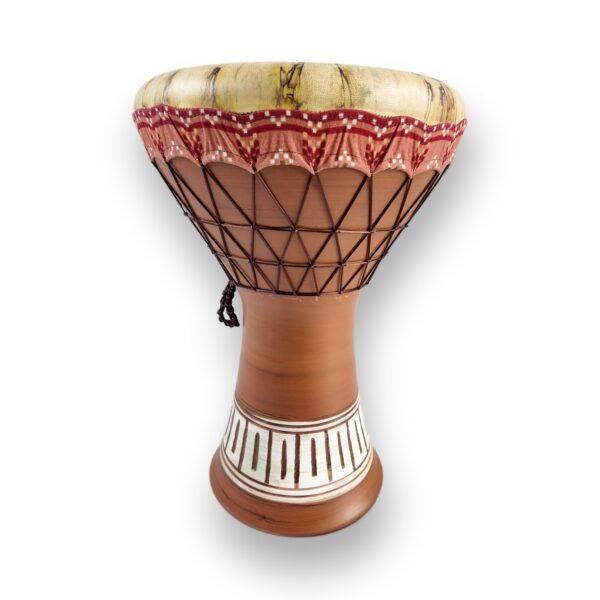
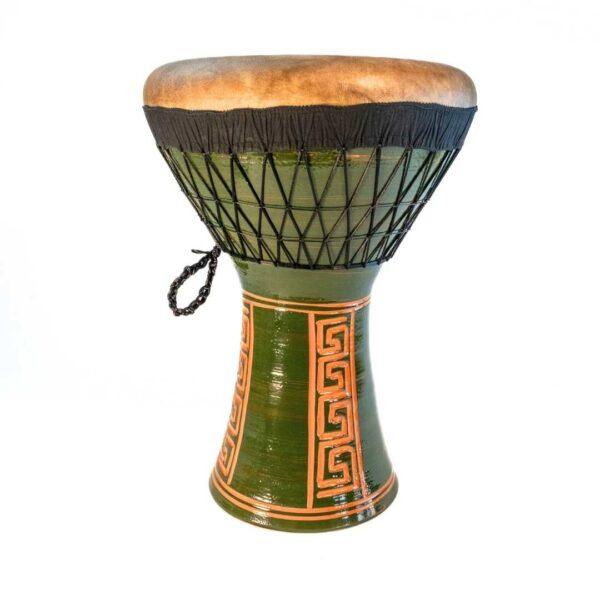
Darbukas are built around two acoustic decisions: shell material and head. Clay shells, fired from iron-oxide-rich earth, give a warm and naturally compressed voice with strong overtone presence — the traditional Egyptian sound. Cast aluminum shells project brighter and louder, the choice of professionals on stage and in studio. Heads are either natural goatskin, expressive and humidity-responsive, or synthetic membrane, stable across climates for travel and outdoor use.
The instrument occupies the centre of raqs sharqi and Arabic classical ensembles, the drive of Turkish folk and fasıl music, and an increasingly common voice in world-music fusion. Egyptian repertoire — saidi, malfuf, masmoudi, baladi — relies on solo and bass darbukas working as a single tonal pair. Turkish darbukas are often outside-tuned, with screws on the hoop letting the player set head tension precisely; Egyptian players historically tune using heat, a tradition Tapadum has adapted into our integrated Tuning Light System.
At our Izmir, Turkey workshop, two master craftsmen handle every drum we build. The clay shells are hand-shaped by Ahmet Tashomcu — a master potter listed in Turkey’s National Inventory of Living Human Treasures and a two-time World Pottery Champion. Skin selection, tensioning, and the final sound test are completed by Mehmet Nihat San, whose ear has approved every drum before it leaves the workshop. Our percussion specialist Gurkan Ozkan curates this collection alongside the workshop team. Browse our Clay Darbuka, Pro Aluminum Darbuka, and Travel Darbuka selections, or return to the full Percussions collection.
What a Darbuka Costs — and What Sets the Price
Darbukas in this collection run from about €130 for a travel-weight Egyptian drum to €799 for a bass clay instrument with mother-of-pearl inlay, with most models sitting between €250 and €500. Three things move the figure. Size comes first: a Solo drum costs less than a Sumbati, and a Dohola sits at the top of the range — more shell, more skin, and more hours go into the bass of the family. Shell material follows: cast aluminum and hammered copper drums land around the middle, while hand-thrown clay climbs with the finishing it carries. Decoration accounts for the rest — hand-painting, carved tribal bases, and mother-of-pearl are done one drum at a time.
Whichever spelling brought you here — darbuka, doumbek, derbake, or tablah — the instrument is the same, and so is the way we prepare it: individually sound-tested, shipped with a gigbag. Budget a little beyond the drum itself for a darbuka stand, which keeps the shell and head clear of hard surfaces between sessions.
Darbuka Buying Guide — Choosing the Right Darbuka for Sale
Every darbuka for sale in this collection is workshop-built, so the choice comes down to where and what you play. Start with the shell. If you record, play acoustic sets, or work in classical Arabic ensembles, a clay darbuka gives the warm, naturally compressed Egyptian voice with rich overtones. If you play amplified stages, louder ensembles, or simply want maximum projection and durability, choose a professional aluminum darbuka. If you are often on the road — lessons, festivals, street sessions — the lightweight metal-bodied travel darbuka family (roughly 2,4–3,3 kg) takes the knocks that would crack fired clay.
Then pick the size for your role: Solo for the bright, articulate lead voice; Sumbati for a versatile mid-bass that covers both lead and accompaniment; Dohola for the deep bass foundation that anchors an ensemble. Many players pair a Solo with a bass drum to cover the traditional doum-tek vocabulary. On heads, natural goatskin rewards controlled indoor settings with expressive overtones, while synthetic membrane holds its pitch through weather and travel. Finally, consider tuning: screw-tuned models adjust with a key in seconds, while our clay drums carry the integrated Tuning Light System for stable heat-based tuning without an external source. If you are undecided, our percussion team will match shell, head, and size to your style — every drum ships individually sound-tested with a gigbag.
Every Tapadum darbuka is inspected at our Brisighella, Italy showroom before shipping. Worldwide shipping & 15-day return apply to every order. Reach out — our percussion team will help you match shell, head, and size to your style and traditions.
Frequently Asked Questions
What's the difference between a darbuka and a doumbek?
How much does a darbuka cost?
Clay or aluminum darbuka — which should I choose?
What sizes do darbukas come in?
What should I look for when choosing a darbuka?
How do I tune a darbuka?