




Description
The Bass Clay Darbuka N.1 with Mother-of-Pearl Inlay combines a hand-thrown clay shell, a black finish inlaid with iridescent mother-of-pearl and a 25 cm natural goatskin head. The shell comes from the wheel of master potter Ahmet Tashomcu in Menemen, and the head is fitted and laced by skin craftsman Mehmet Nihat San. It is a Tapadum goblet drum made for players who want a deep voice and a drum that is a pleasure to look at.
Menemen Clay Shell
The shell is thrown in Menemen, a pottery town near Izmir, from the iron-rich red clay of the region. Ahmet Tashomcu, who has worked at the wheel since 1977 and won the World Pottery Championship in 2017 and 2019, shapes the clay shells of Tapadum’s darbukas. Clay gives the drum a warm, rounded resonance and a long, soft decay on the bass stroke.
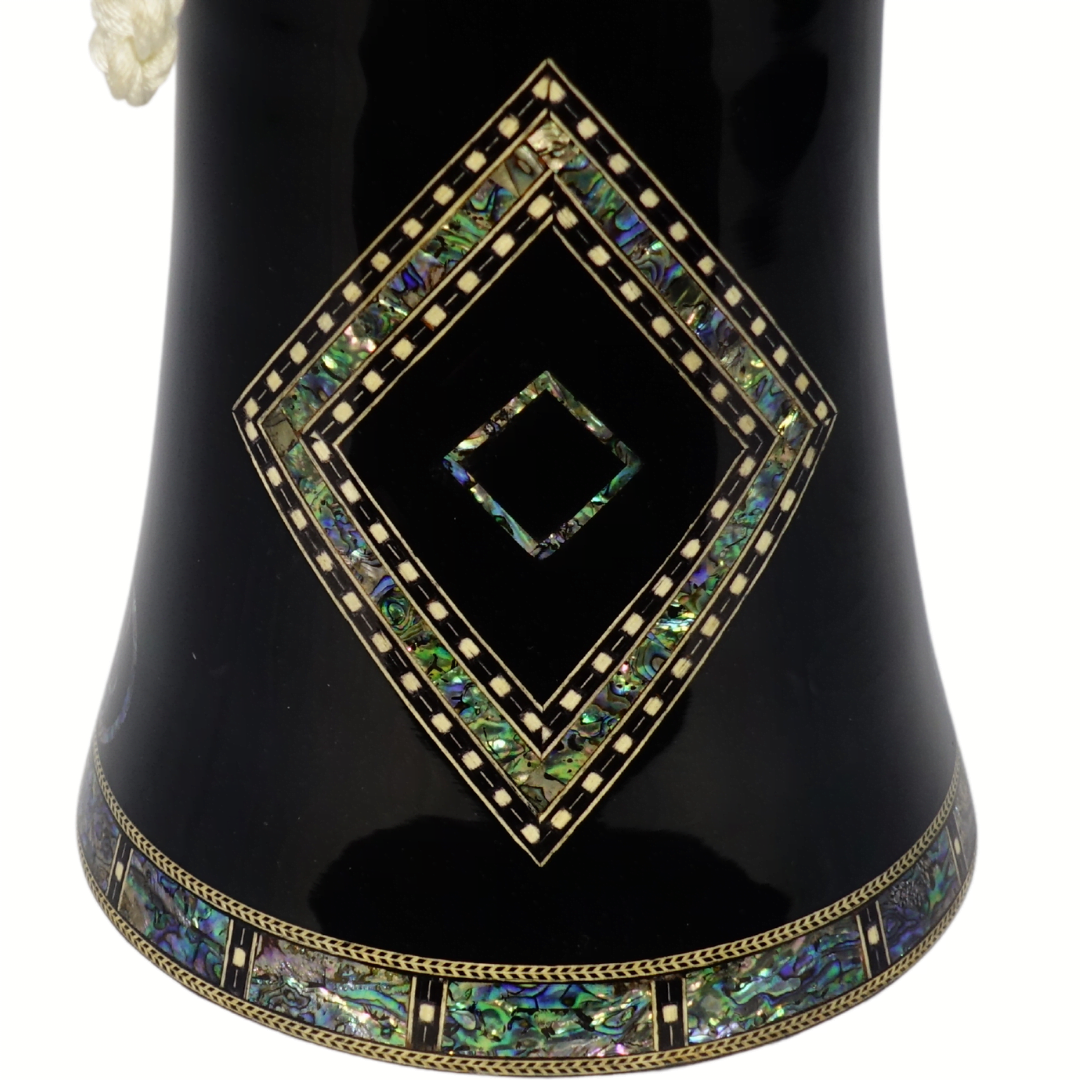
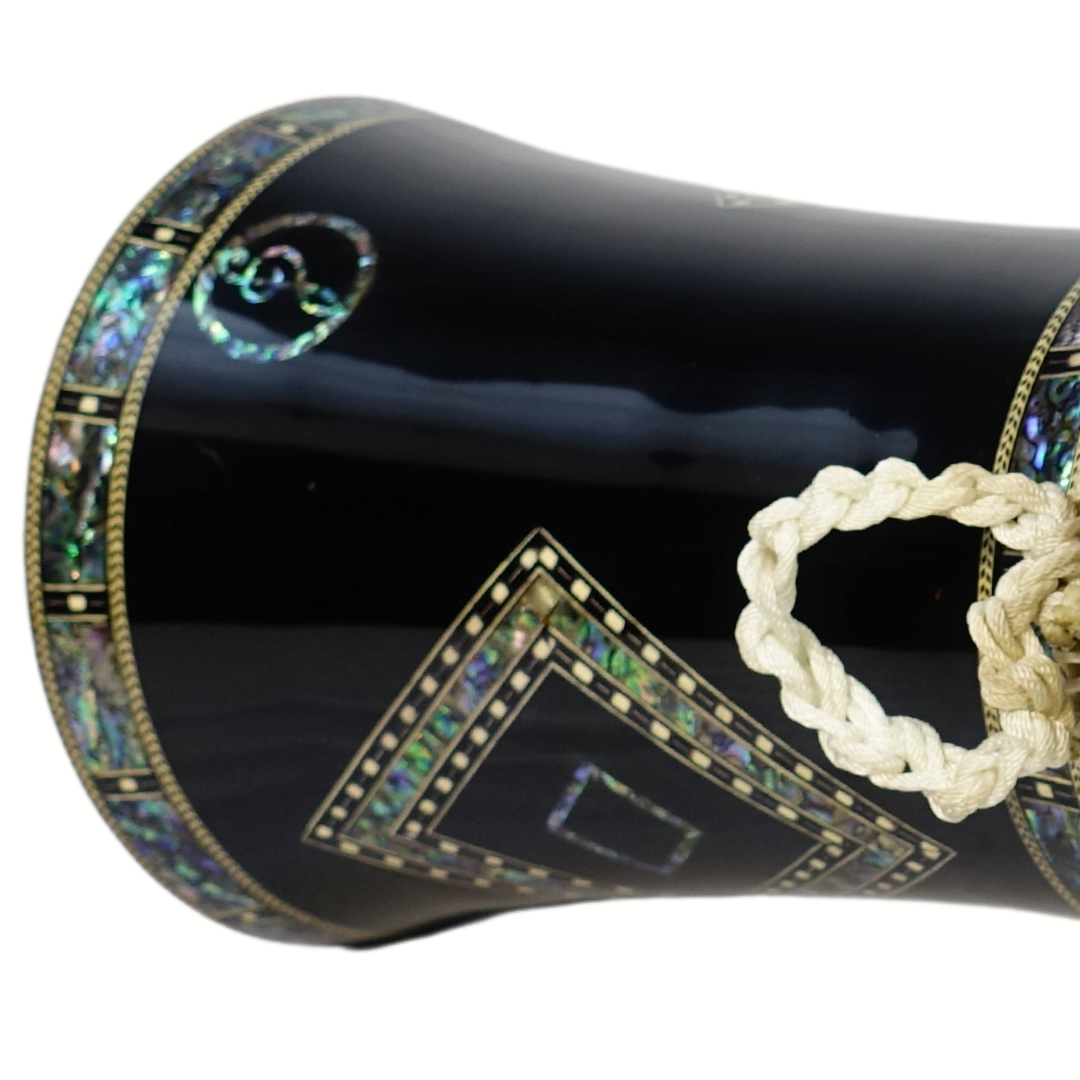
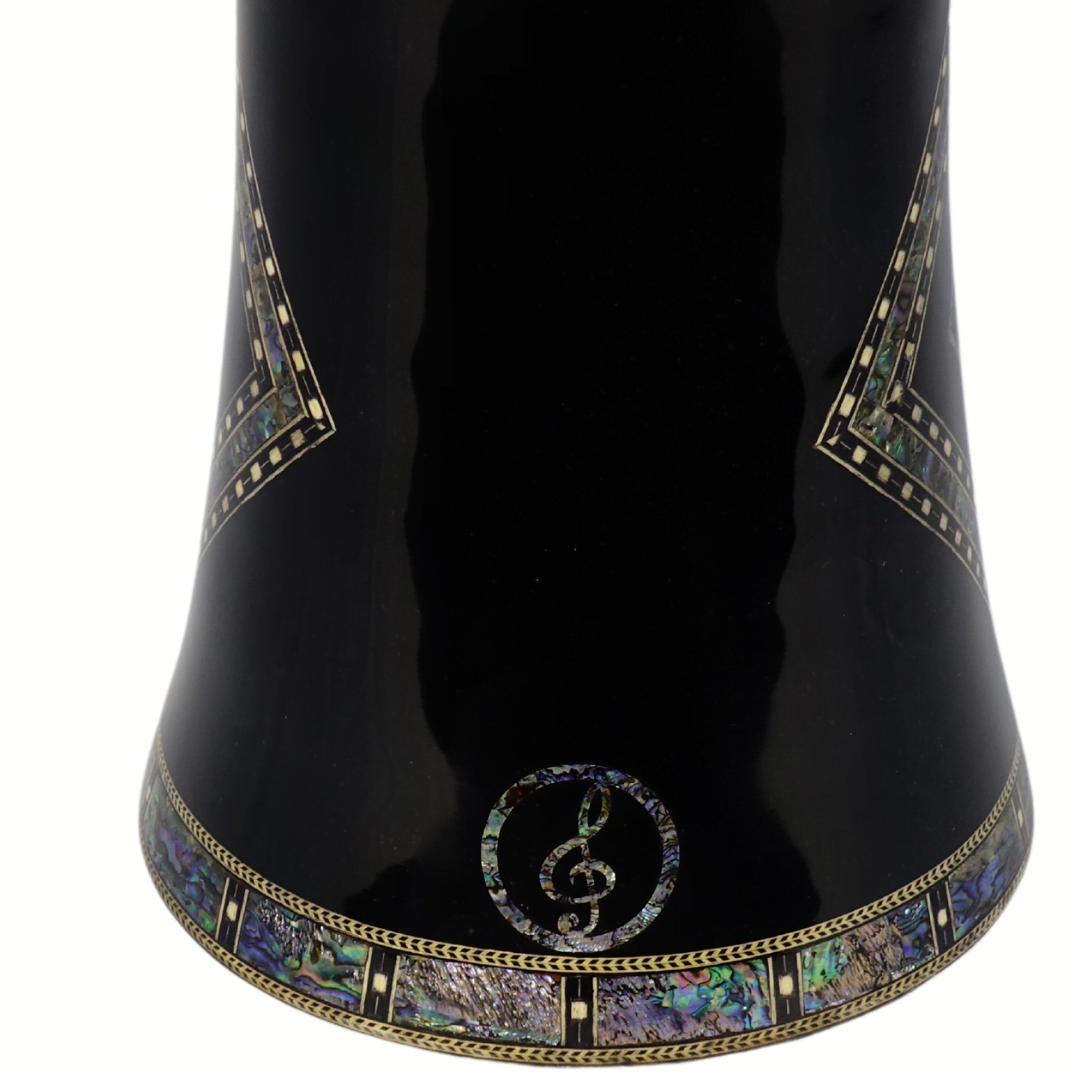
The body is finished in black and decorated with mother-of-pearl inlay: a large diamond motif on the lower body and bands of shell pieces around the waist and the base. The inlay catches the light in blue and green tones as the drum moves.
Goatskin Head and Tuning Light System
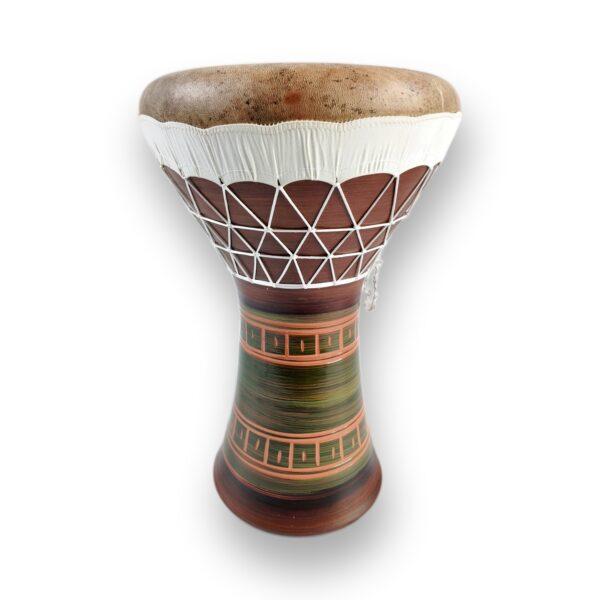
The head is natural goatskin coloured with natural dyes, stretched over the shell and hand-laced with a cord net. Mehmet Nihat San selects and laces each head and sound-tests the finished drum.
A natural skin loosens in humid air and tightens in dry air. The Tuning Light System supplied with the drum is a small lamp on a stand that sits inside the shell: its gentle warmth dries the skin and brings the pitch back up, in place of the traditional open flame. Switch it on for a short while before playing, check the pitch with a few doum strokes, and remove it once the skin sounds clear and firm.
In our clay darbuka sizing, a 25 cm head sits in the sombati (mid-bass) class, between solo drums (19–23 cm) and the large doholla (27–32 cm). The doum is deep and full, yet the drum stays agile enough for tek and ka strokes.
| Specification | Detail |
|---|---|
| Shell | Menemen red clay, black finish with mother-of-pearl inlay |
| Head | Natural goatskin, naturally dyed, hand-laced |
| Head diameter | 25 cm |
| Overall diameter | 32 cm |
| Height | 45 cm |
| Weight | 5.31 kg |
| Included | Padded backpack gig bag, Tuning Light System |
| Clay shell | Ahmet Tashomcu, Menemen |
| Head and lacing | Mehmet Nihat San |
Who This Darbuka Is For
This darbuka suits players who want more depth than a solo drum without the weight of a doholla, and performers and collectors who value a handmade instrument with a striking finish. A natural goatskin head responds to the room, so it rewards players who are happy to warm the skin before playing; those who need a head that never changes may prefer a synthetic-head model.
Rhythms and Traditions
The drum is at home in Mediterranean and Anatolian music. Maqsoum, saidi and chiftetelli sit naturally on its deep doum, and it works as the lower voice beside a solo darbuka in a percussion duo, where its longer bass decay fills the space between the higher drum’s strokes. See the full clay darbuka collection or browse every model in our darbuka collection.
Care
Clay is strong under the hands but fragile against hard knocks: rest the drum on a padded surface and carry it in its gig bag. Wipe the inlay with a soft, dry cloth. Keep the goatskin away from rain, steam and direct sun, and never leave the tuning lamp running unattended.