
Description
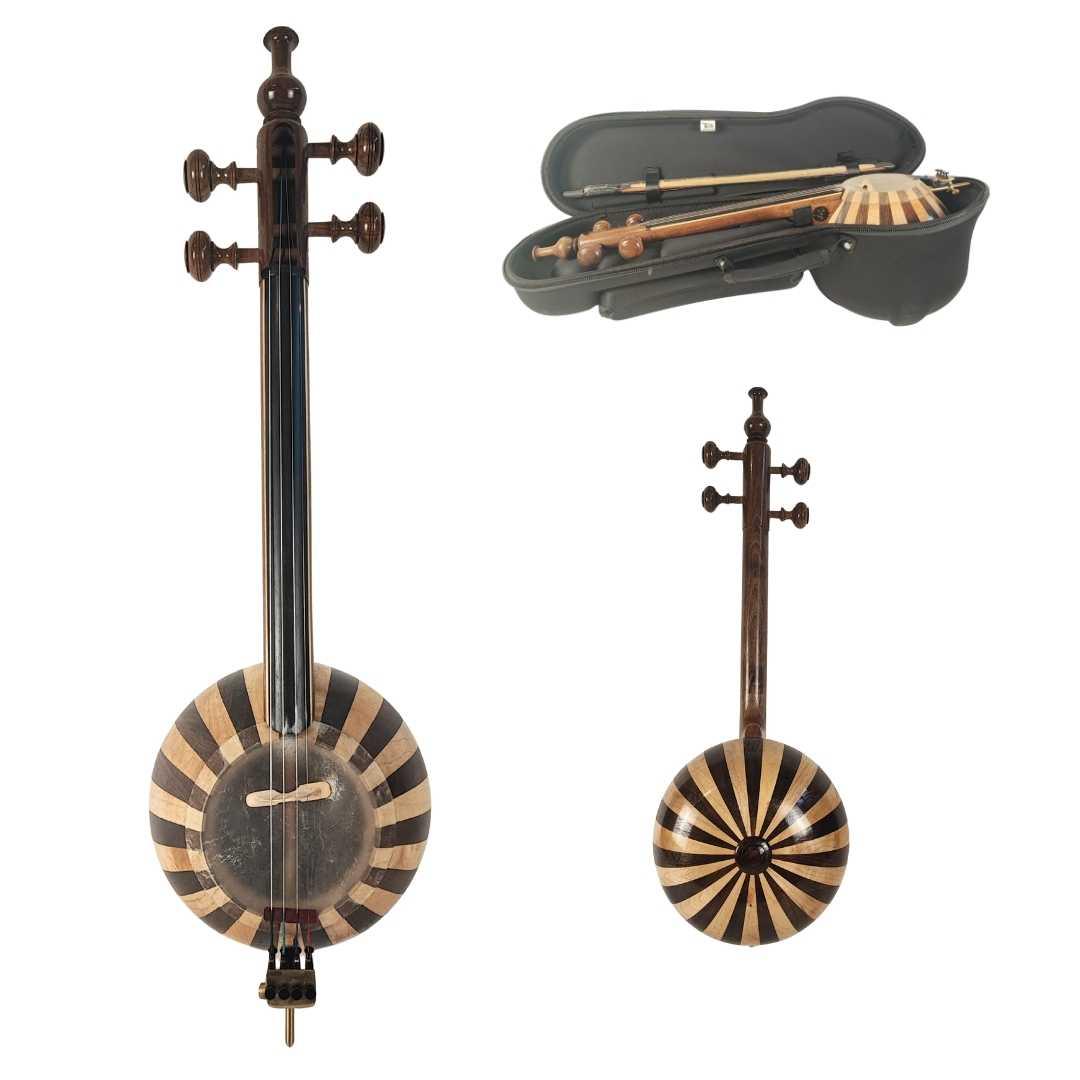
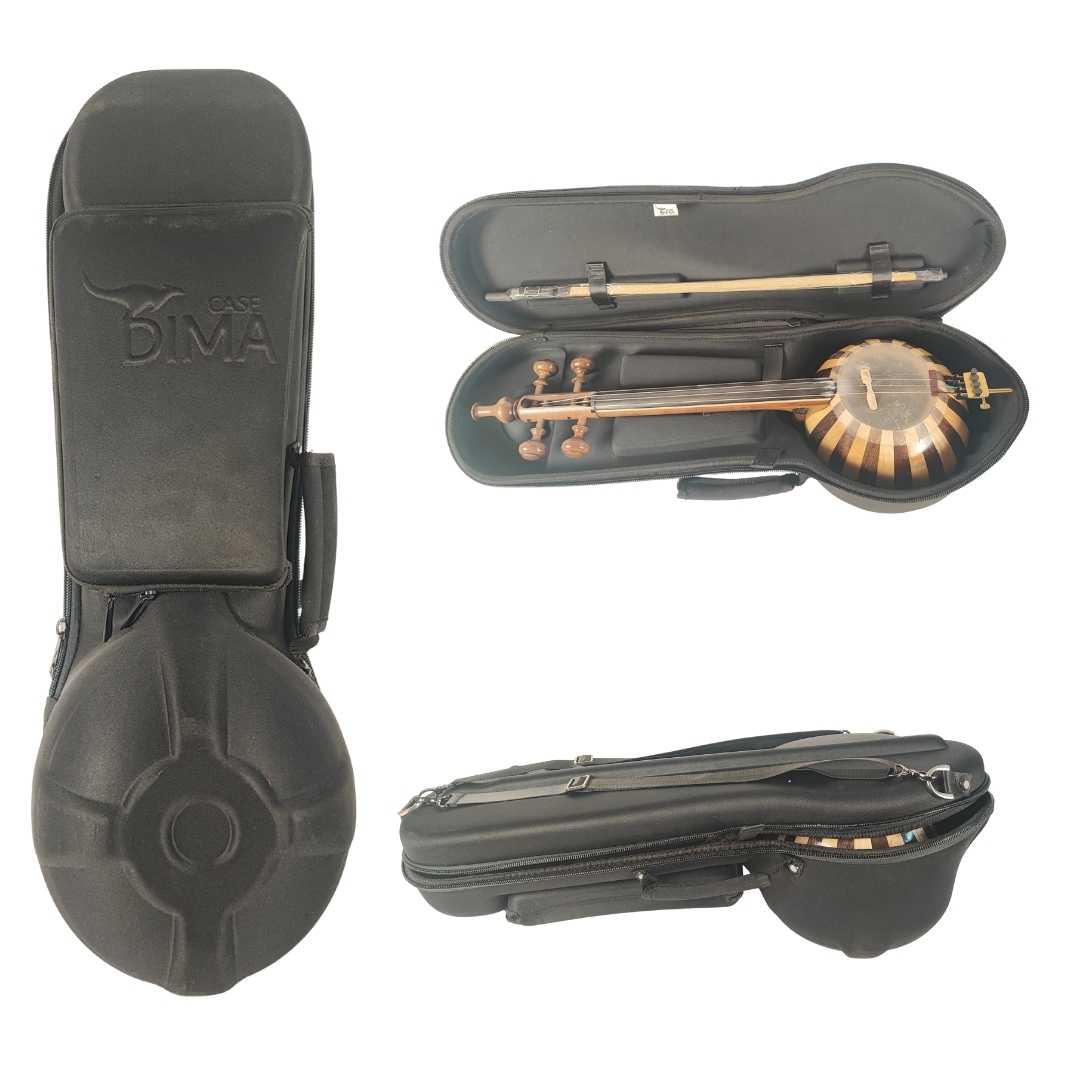
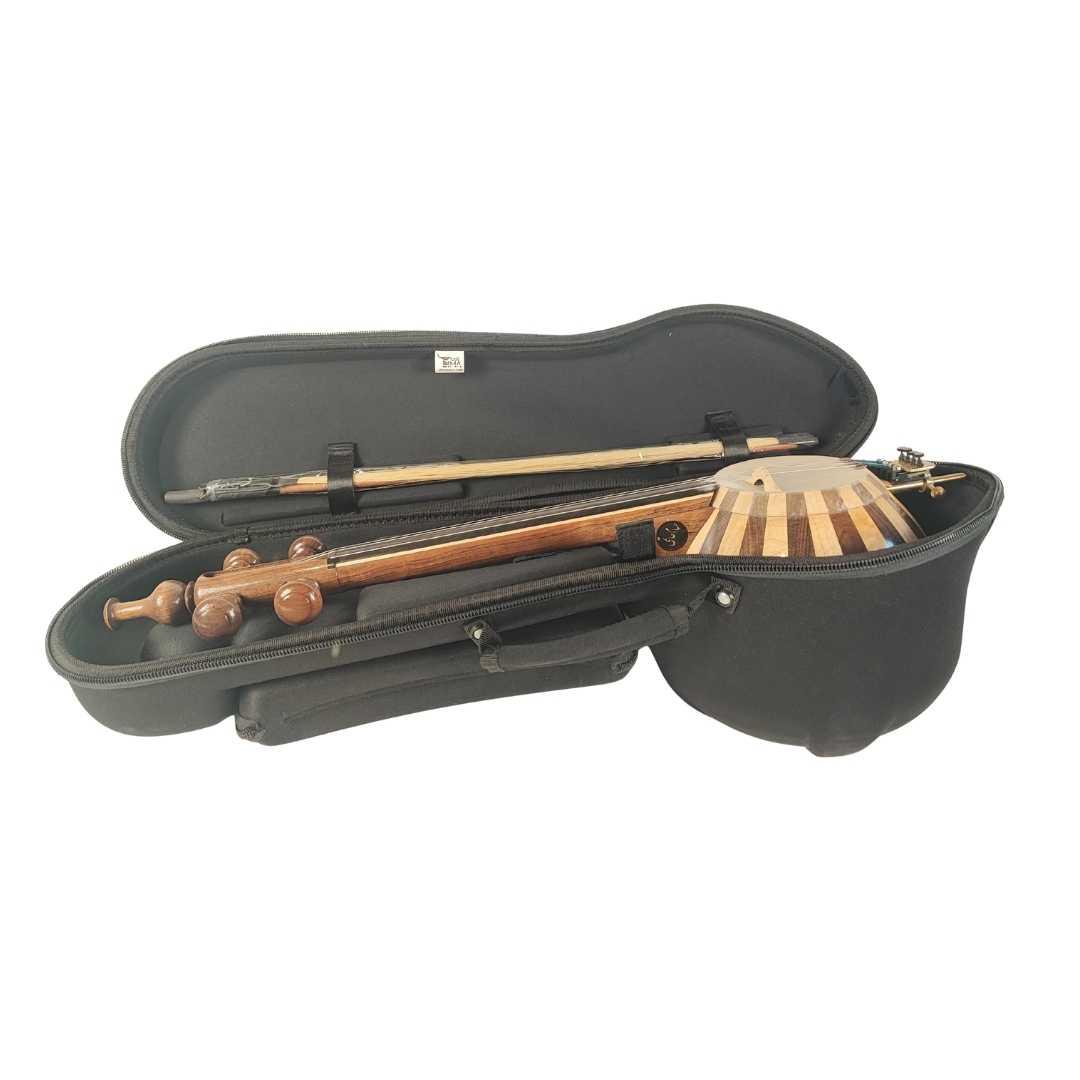
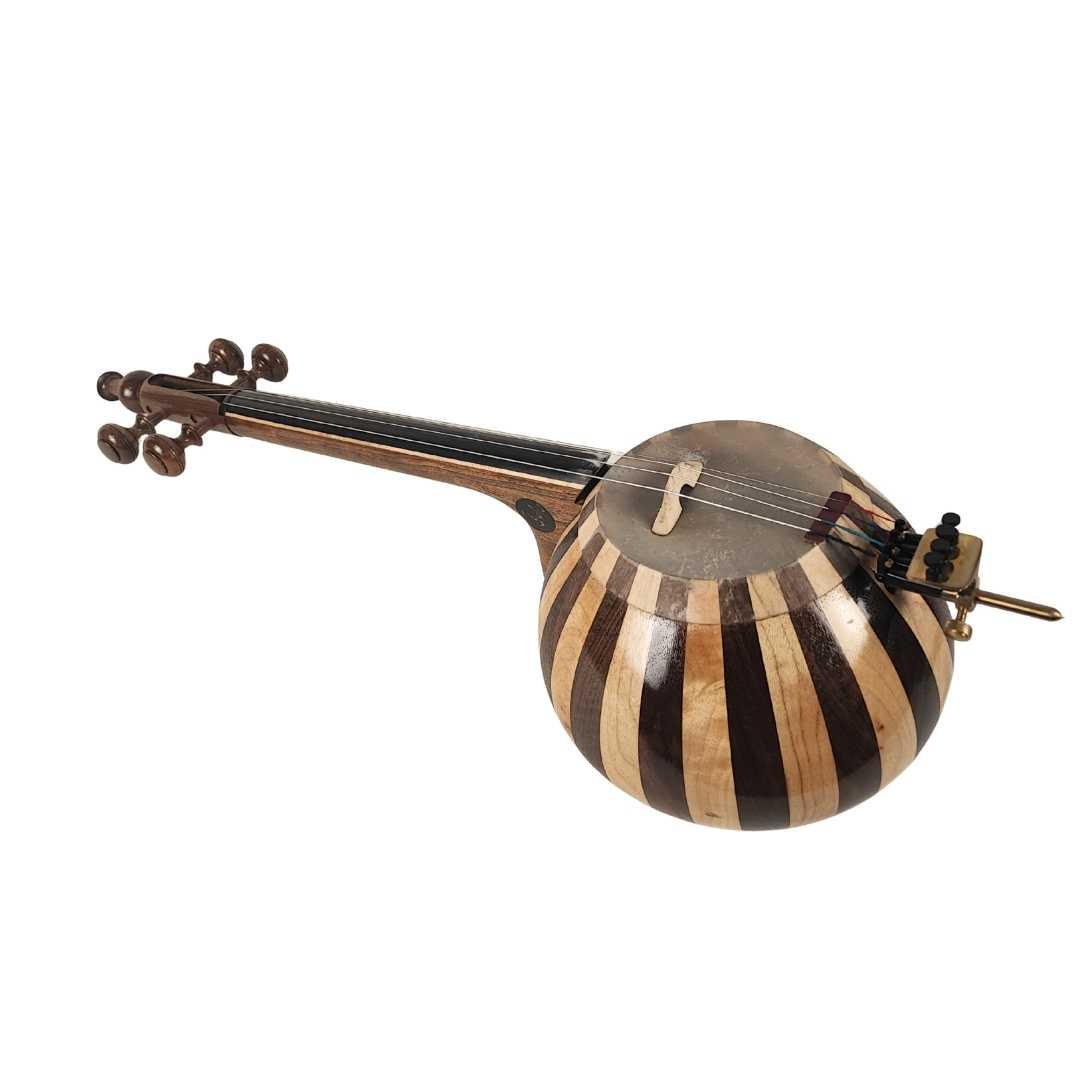
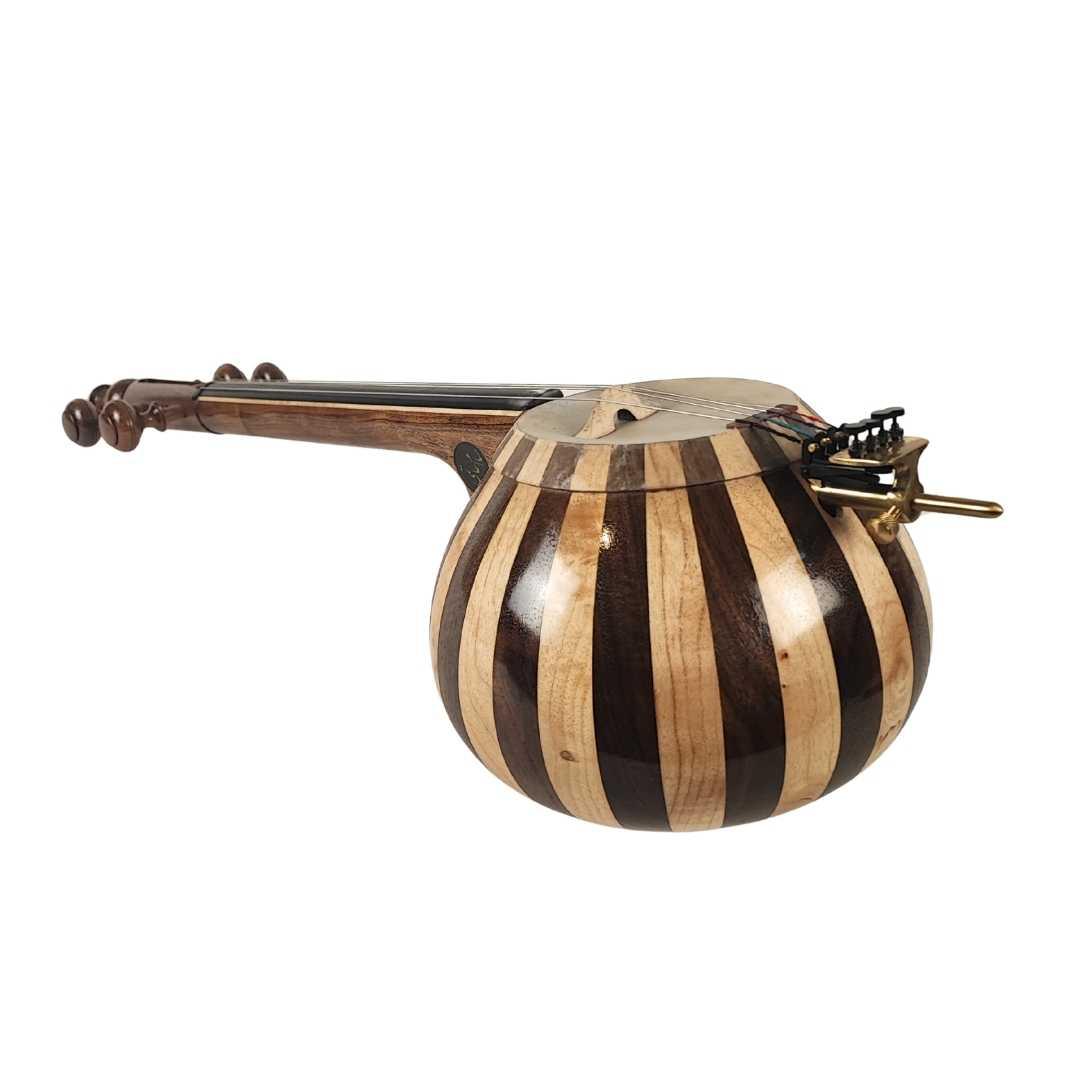
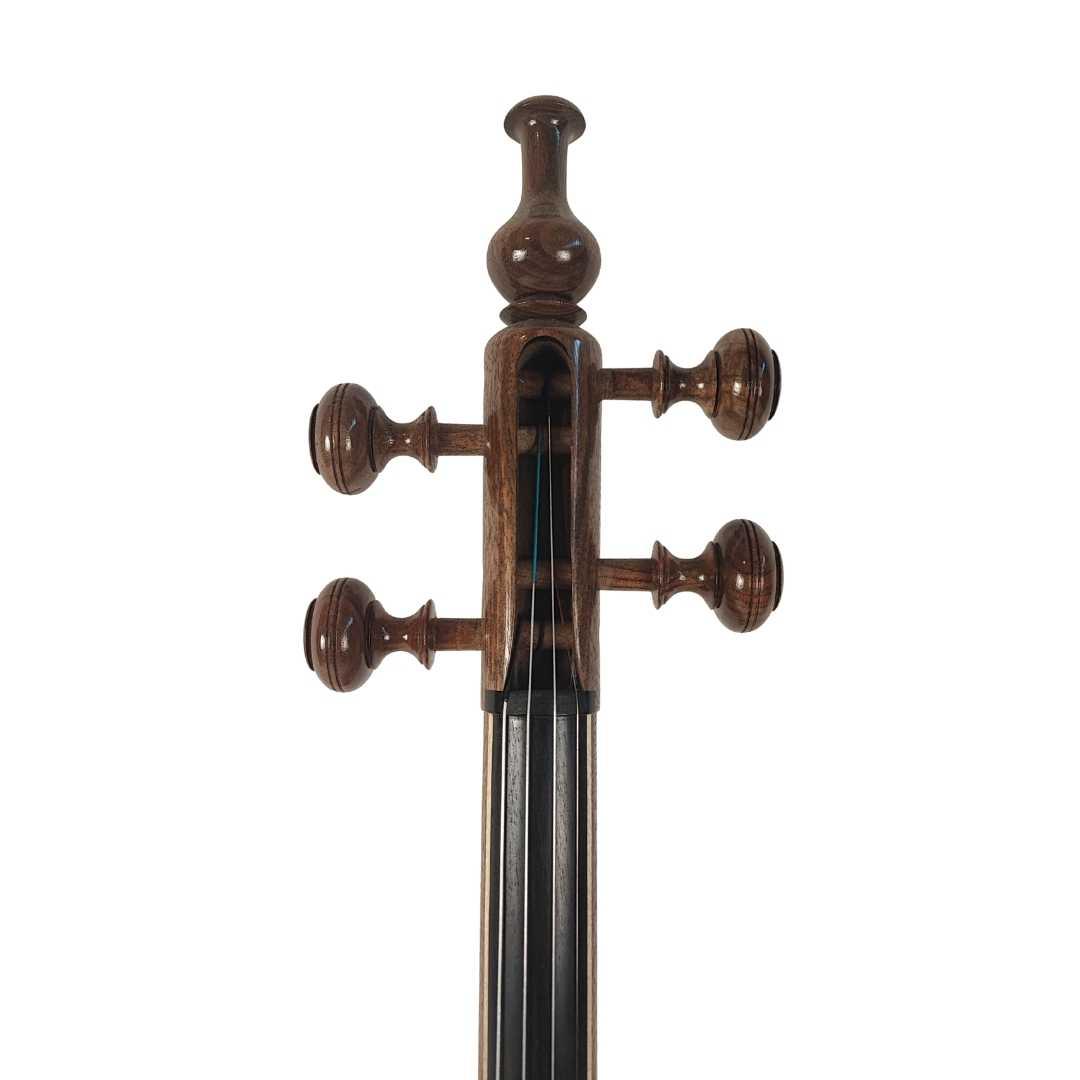
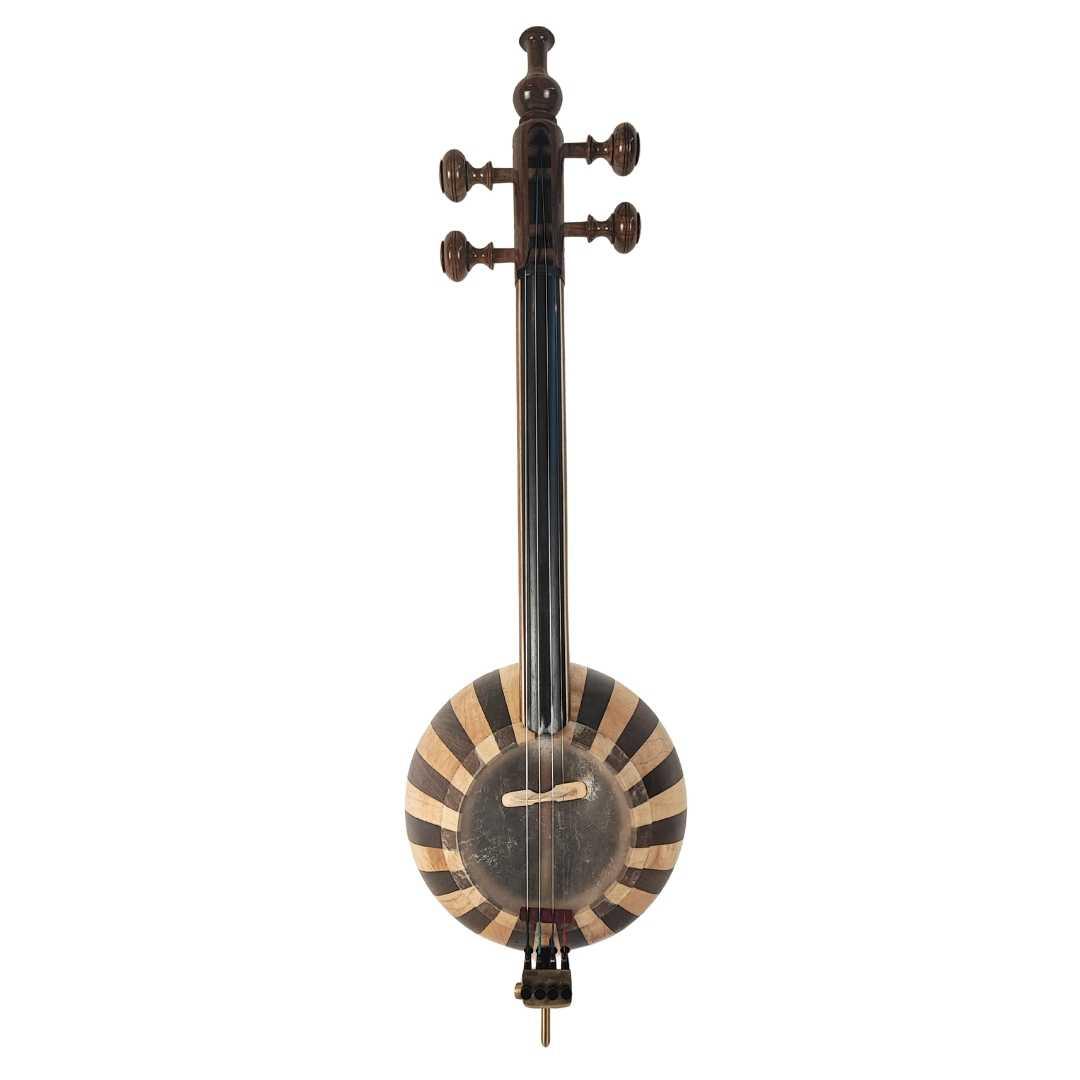
The High-Quality Persian Kamancheh by Hatami is a handmade Persian spike fiddle built for players of Persian classical and folk music. Made by Iranian luthier Hesam Hatami and supplied with a horsehair bow and a fitted hard case, it is a serious performance kamancheh with the warm, vocal voice that defines the Persian bowed-string tradition.
Handmade by Hesam Hatami
This kamancheh is the work of Hesam Hatami, an Iranian maker of Persian bowed instruments. Each instrument is finished by hand from selected tonewoods, and the bowl, neck, and skin are matched so the instrument speaks evenly across its range. Buying from a named maker means the woods, the skin, and the setup are the choices of a working luthier rather than a factory line.
How the Kamancheh Is Built
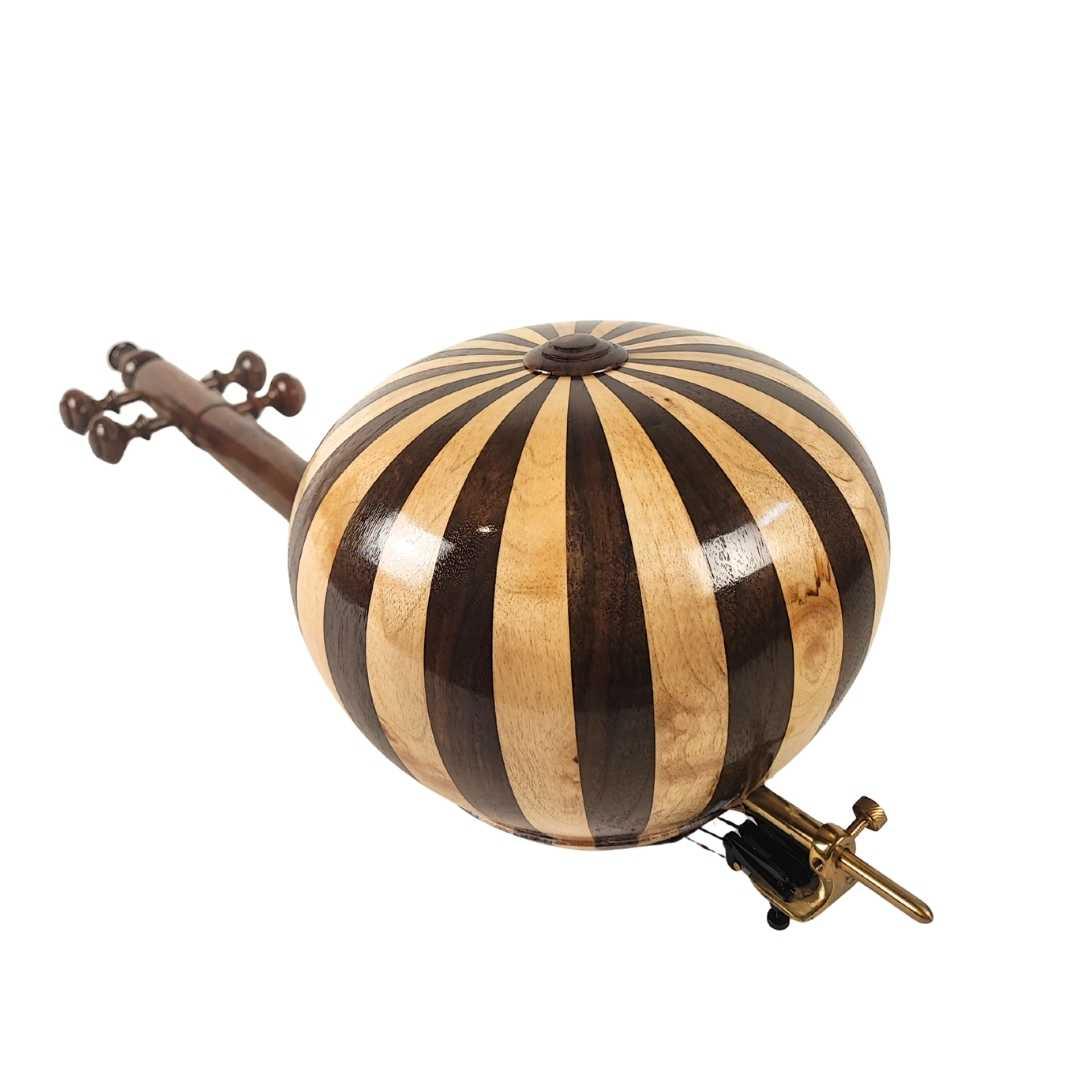
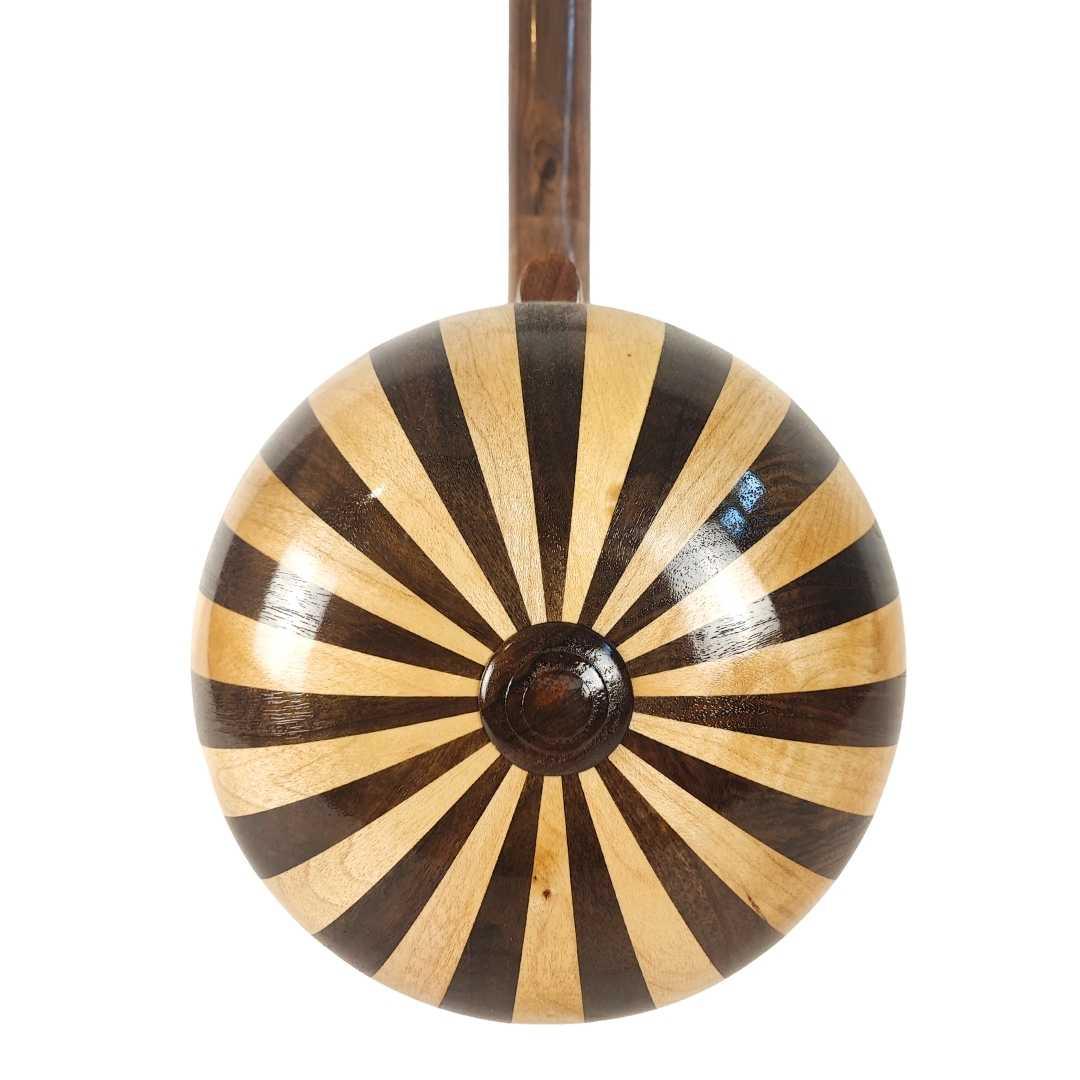
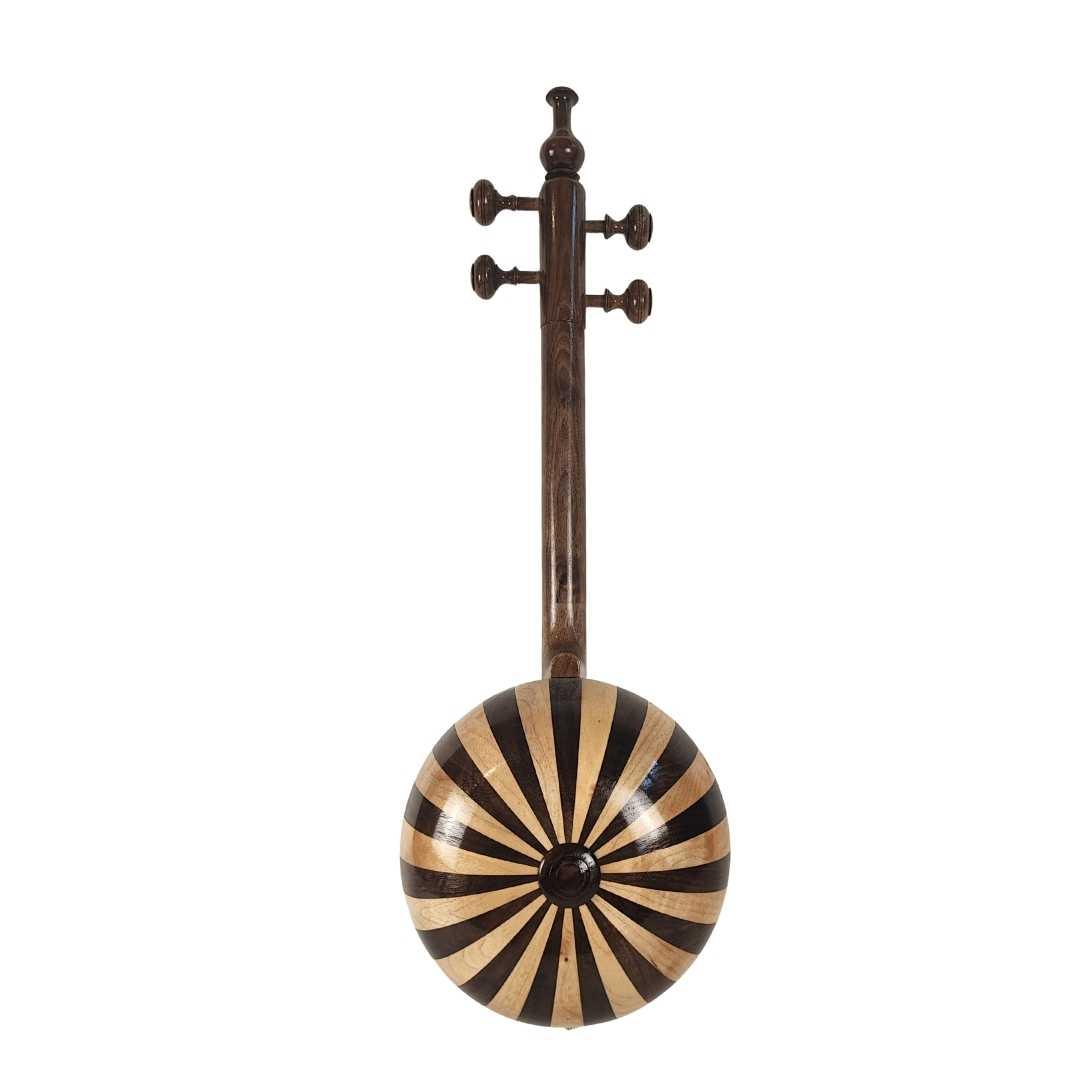
The kamancheh is a spike fiddle: a spherical resonator bowl carved from hardwood, closed with a stretched natural skin membrane that acts as the soundboard. A metal spike passes through the bowl and rests on the player’s knee, so the instrument is played upright and can be rotated to reach the strings. Its four strings are sounded with a horsehair bow held beneath the hand. The skin soundboard responds to every change of bow pressure, which is what gives the kamancheh its singing, voice-like tone.
Technical Specifications
| Specification | Details |
|---|---|
| Type | Persian Kamancheh (spike fiddle) |
| Maker | Hesam Hatami |
| Strings | 4 strings, bowed |
| Soundboard | Natural skin membrane |
| Resonator | Spherical hardwood bowl |
| Included | Horsehair bow and fitted hard case |
The Kamancheh in Persian Music
The kamancheh is the principal bowed instrument of Persian classical music, where it carries the modal repertoire of the radif through the dastgah system. It is equally at home in Iranian folk music, Azerbaijani mugham, and Kurdish traditions, and its vocal character makes it a favoured melody voice in ensembles where a violin would sound too Western. Because it is fretless, the player shapes the continuous slides and microtonal intervals that give Persian melody its character.
The Kamancheh’s Voice
Musicians choose the kamancheh for a tone that sits between a human voice and a bowed string. Because a stretched skin reacts faster than a wooden top, small changes in bow speed and pressure translate directly into phrasing — the rise and fall, the breath-like pauses, and the tahrir ornaments that define Persian melody. Played close to the bridge the instrument can be bright and piercing; drawn softly it turns intimate and reed-like, which is why it so often leads the melodic line in Persian classical ensembles alongside the tar and setar.
Who It’s For
This kamancheh suits students of Persian classical music and experienced bowed-string players — including violinists and cellists — who want an authentic Persian voice. The fretless fingerboard and upright bowing technique reward developed intonation; a committed beginner can start on it, especially with prior bowed-string experience, and the included hard case protects the instrument between sessions and on the road.
Care & Maintenance
Store the kamancheh in its hard case at moderate humidity — the skin membrane is sensitive to humidity swings, tightening in dry air and slackening in damp conditions; very dry air can even split it. Keep the bow hair rosined for grip, and loosen the bow when it is not in use to preserve hair tension. Wipe the strings and bowl with a soft, dry cloth after each session, and have the skin and spike checked by a luthier every couple of years.
Explore more of Tapadum’s bowed instruments, the wider family of string instruments, and Persian relatives such as the setar.


Reviews
There are no reviews yet.