
Description
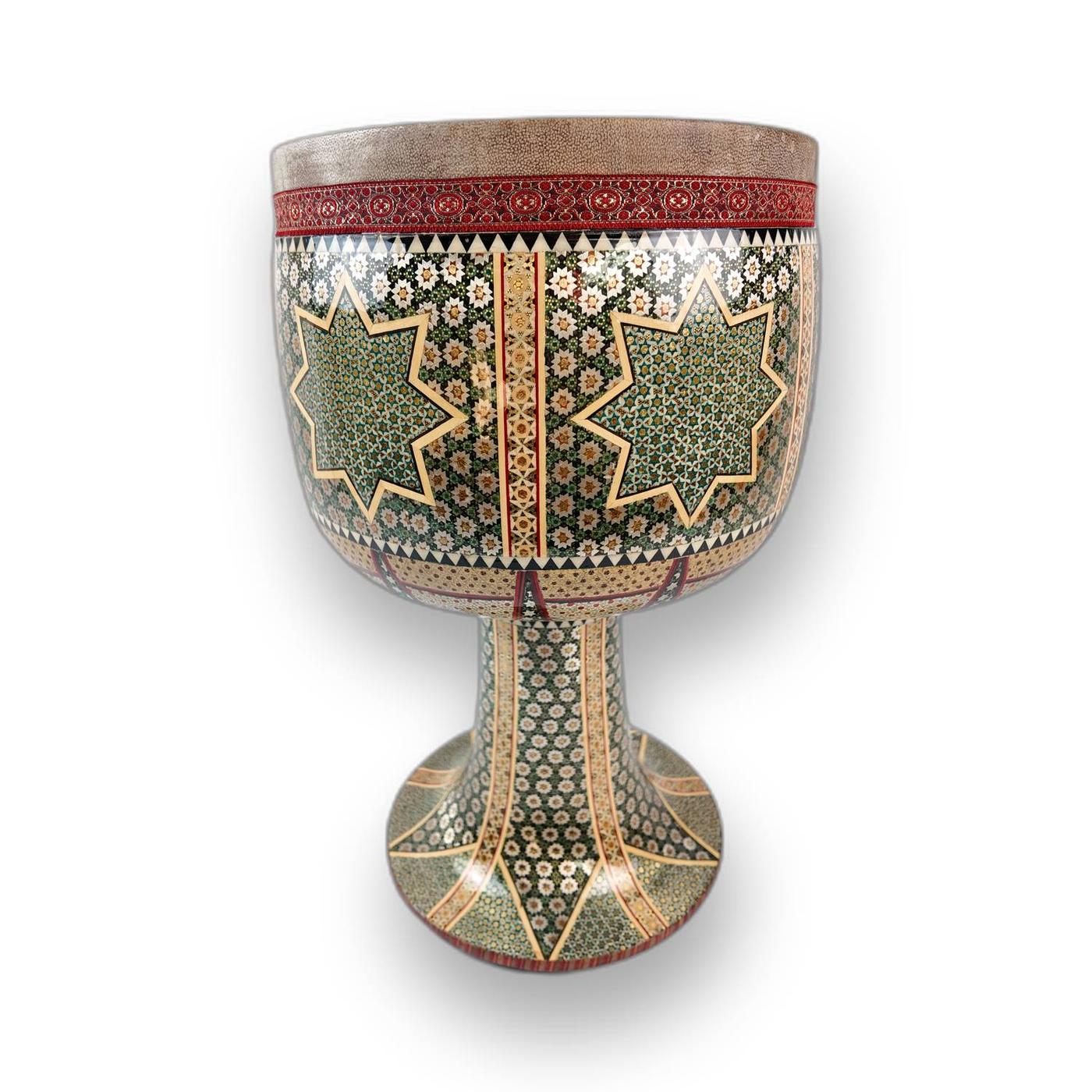
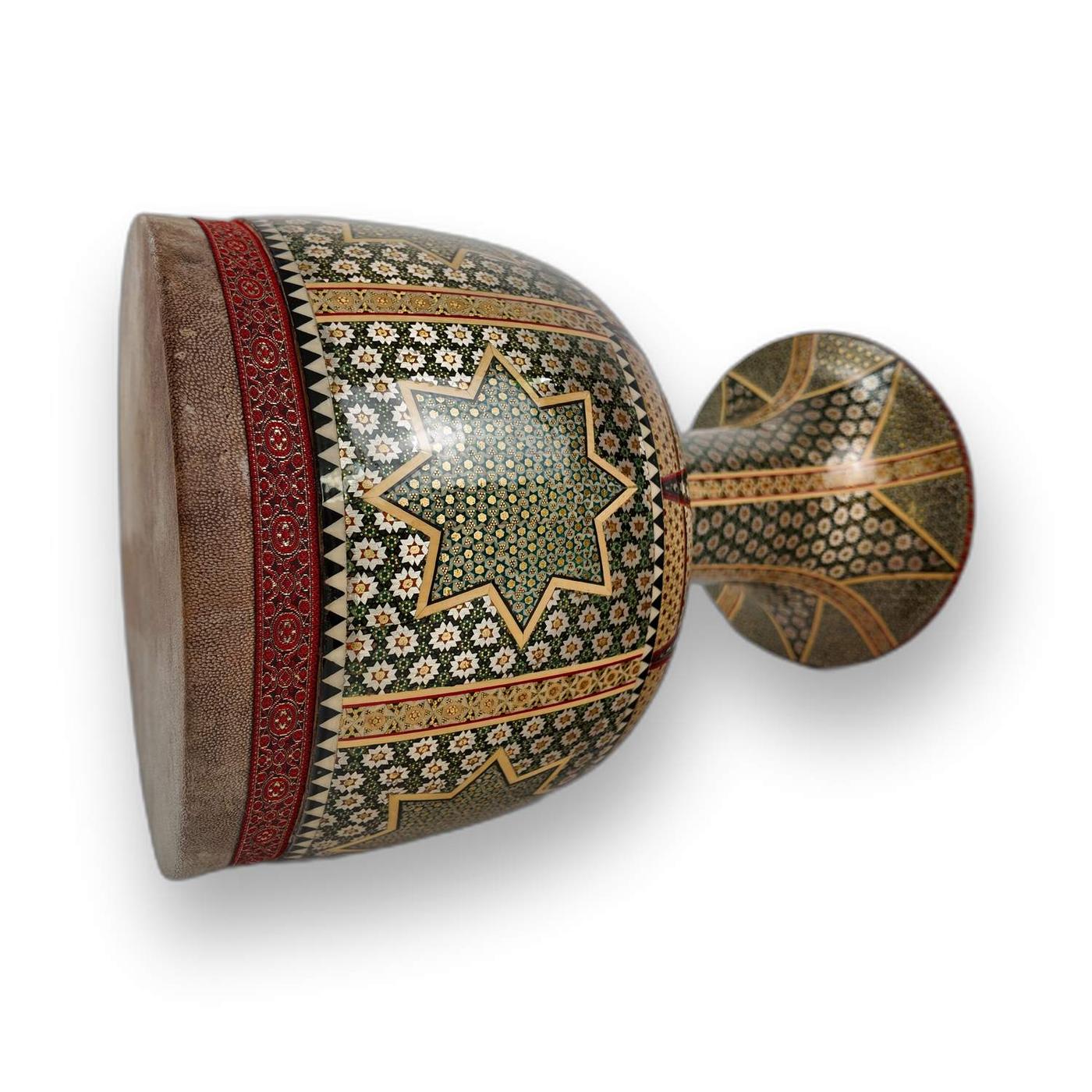
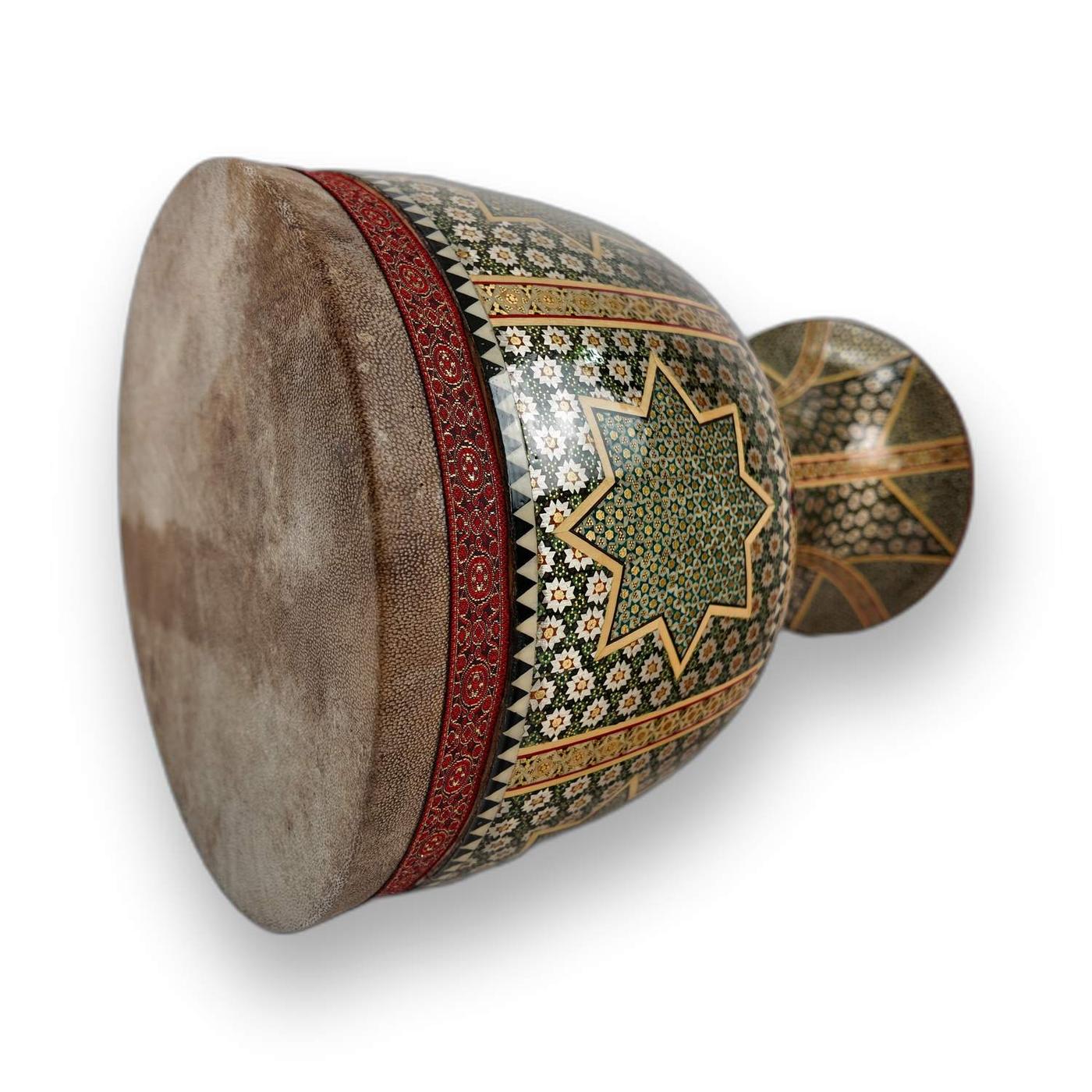
The Khatam Tombak Ghamar is a professional Persian goblet drum whose entire body is dressed in khatam — the micro-mosaic inlay that ranks among Iran’s most demanding decorative crafts. This is a fully playable zarb, not a display object: a walnut shell, a tuned calfskin head, and a surface where tens of thousands of hand-cut fragments form an unbroken geometric skin from rim to foot.
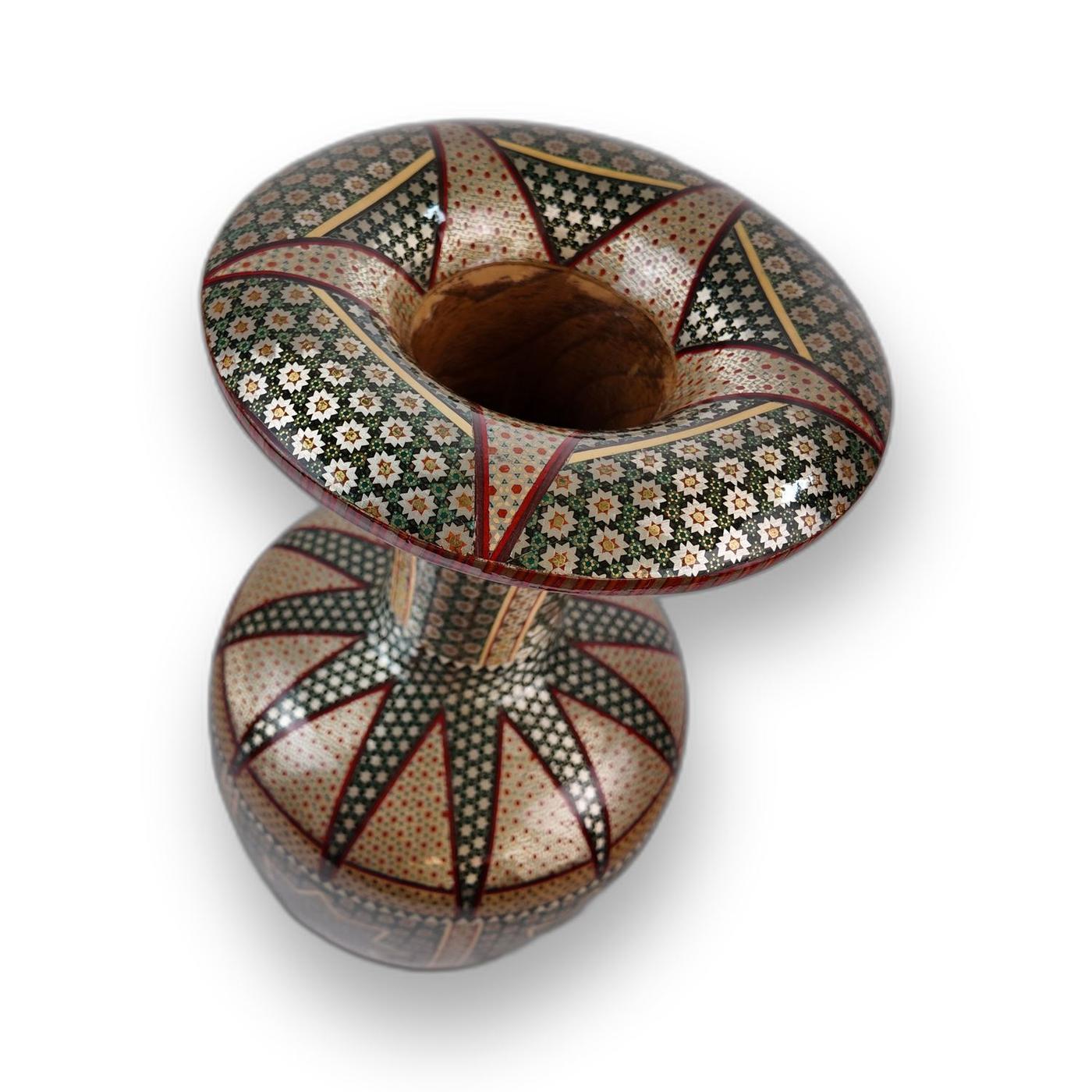
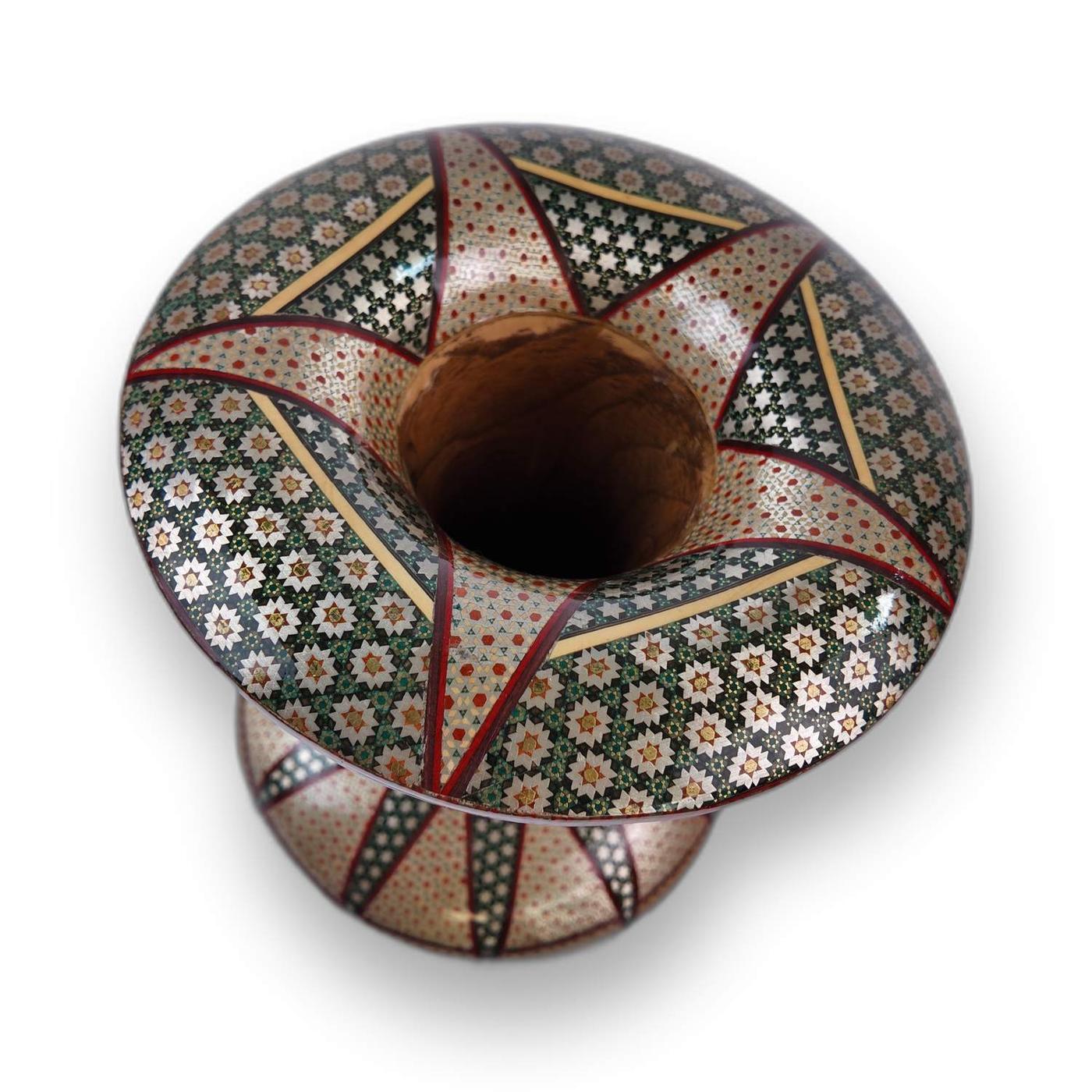
The name Ghamar (Persian for “moon”) suits a piece this luminous. Two large eight-pointed shamseh stars anchor the bowl, framed by repeating rosettes and fine triangular borders that run down the long stem to the flared base. At 46 cm tall with a 27.6 cm head, it has the full, projecting body of a concert instrument.
The Art of Khatam
Khatamkari is built from slender rods of wood, brass and camel bone, bundled into triangular beams and glued in a strict order so that each sliced cross-section repeats a star-in-hexagon motif. Born in Shiraz and brought to its height in Isfahan during the Safavid era, the craft was once prized enough that princes studied it alongside music and painting. On the Ghamar, this same technique wraps a compound-curved drum — far harder than veneering a flat box — which is what makes a fully inlaid tombak a collector-grade instrument as much as a working one.
The golden lines come from brass, the white from bone and the warm fields from natural hardwoods; no paint is used, so the pattern is the material itself. You can read more about the tradition in this overview of Persian khatam marquetry.
Walnut Body and Calfskin Head
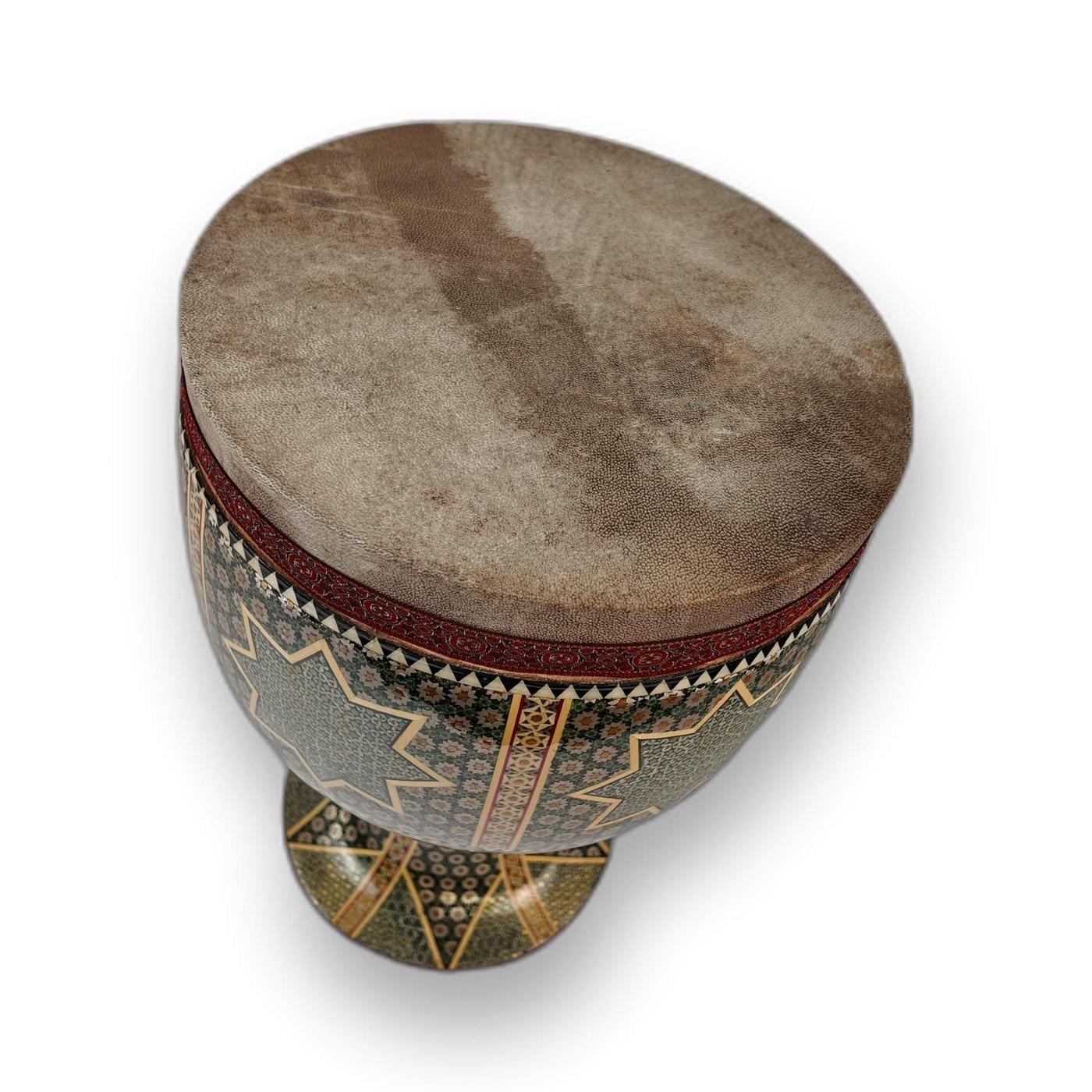
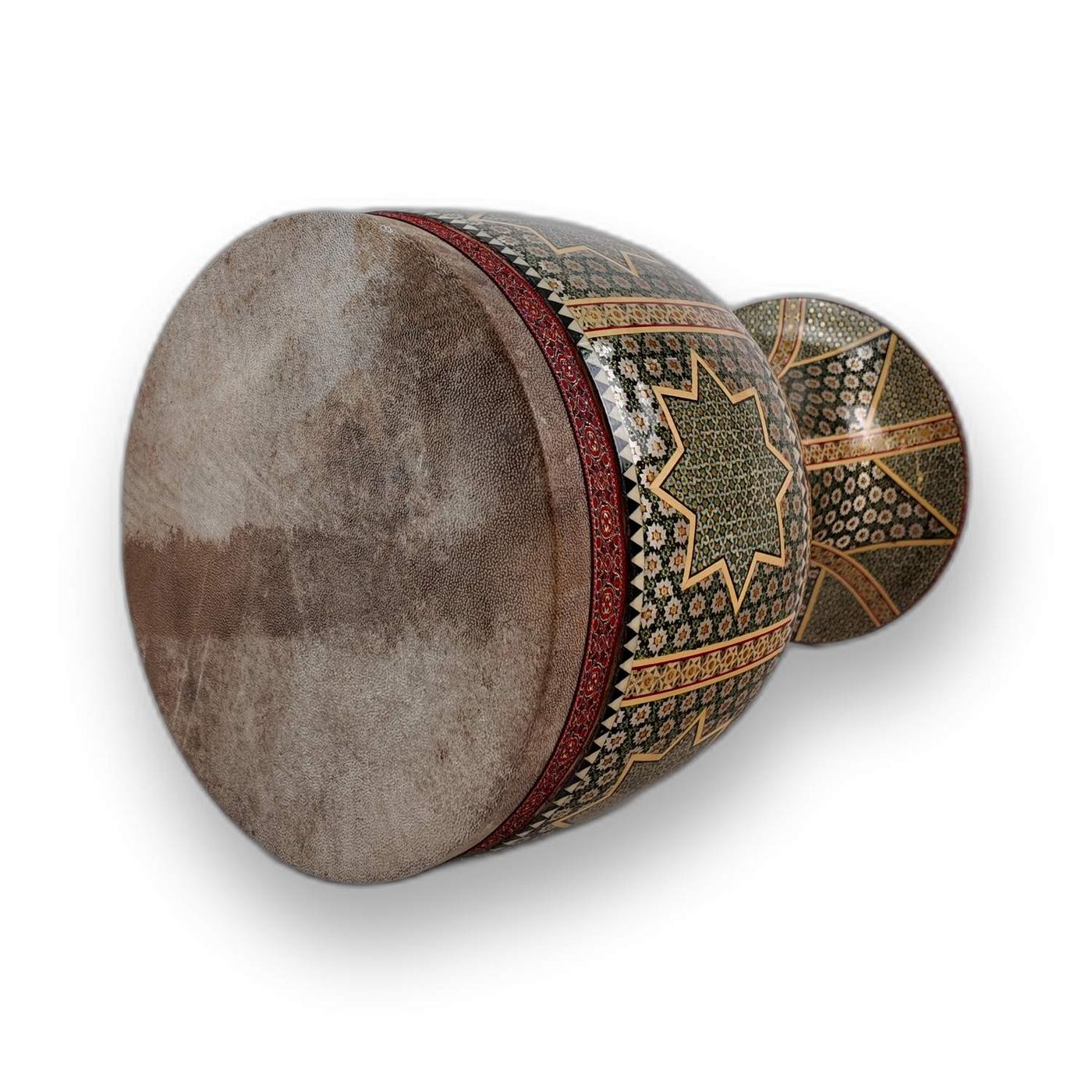
Beneath the inlay, the drum is turned from walnut, a dense hardwood that gives the tombak its characteristic weight, projection and long sustain on the bass tom. The head is natural calfskin, which responds with a deep, round bass at the centre and crisp, articulate fingertip strokes (bak, riz, snaps) toward the rim — the full tonal range Persian classical percussion asks for. The 4.8 kg mass is part of the sound: it anchors the drum on the knee and lets the head ring freely.
| Specification | Detail |
|---|---|
| Instrument | Persian Tombak (Zarb) |
| Decoration | Full khatam (hatamkari) micro-mosaic inlay |
| Body material | Walnut |
| Head | Natural calfskin |
| Diameter | 27.6 cm |
| Height | 46 cm |
| Weight | 4.8 kg |
| Pattern | Twin shamseh (eight-point star) medallions |
| Availability | Single piece (one of a kind) |
| SKU | KHT-1 |
Who This Khatam Tombak Is For
This is an instrument for the advanced player, performer and collector who wants a concert-ready zarb that is also a piece of Persian decorative art. The substantial walnut body favours seated classical playing and recording, where its projection and sustain carry. Because it is a single, fully hand-inlaid piece, no two are alike — what you receive is the drum shown in the photographs.
Playing the Tombak
The tombak is the principal percussion instrument of Persian classical music, played across the knee with both hands and all ten fingers. It leads the rhythmic cycles behind the santur, setar and tar, and is equally at home in contemporary fusion and solo tombak-navazi. The Ghamar’s voice — round lows, bright highs — suits both delicate accompaniment and driving solo passages. Pair it with other Persian instruments in your setup, or explore the wider Tombak collection at Tapadum.
Care and Maintenance
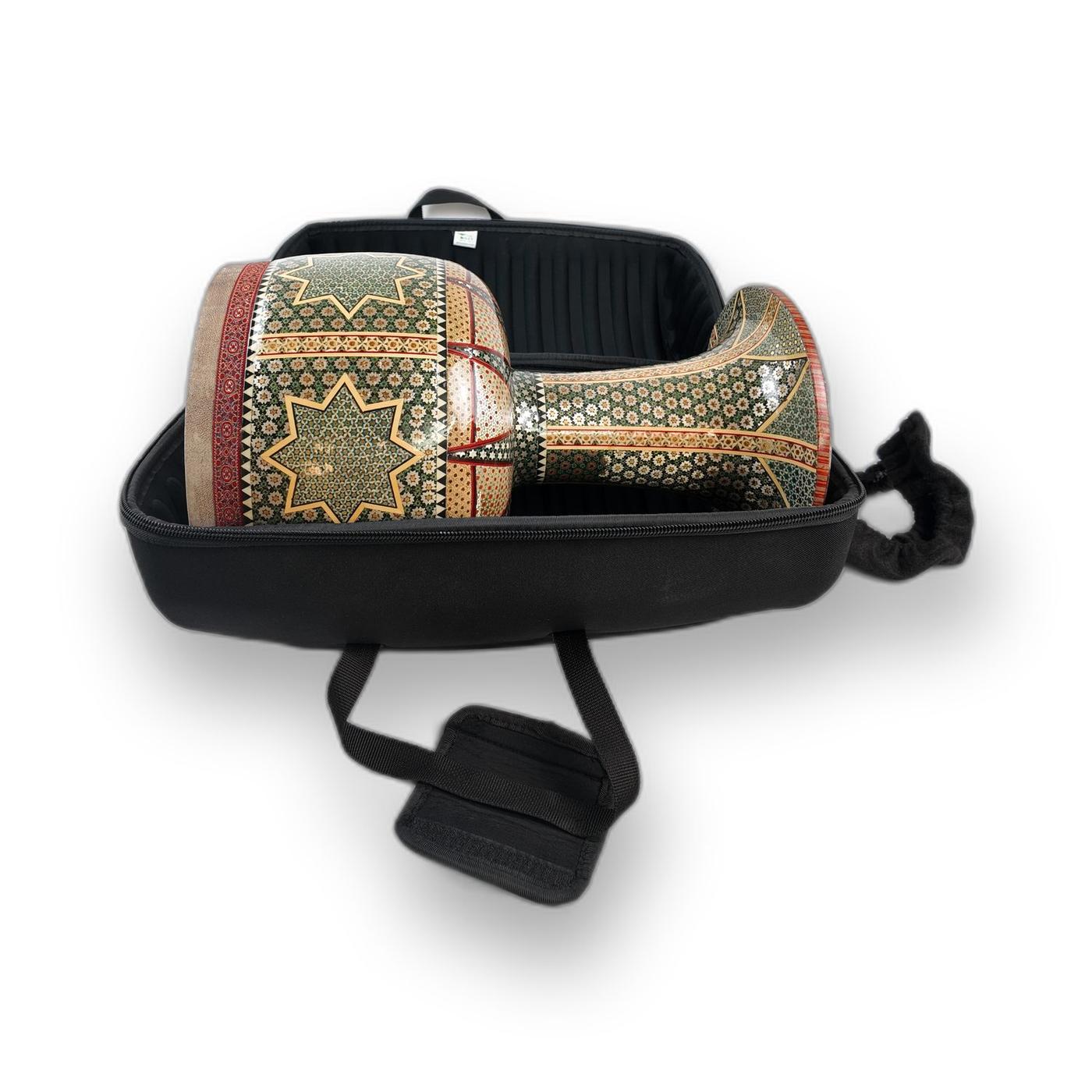
Calfskin is sensitive to humidity and temperature. Keep the tombak away from direct heat, radiators and damp, and let it acclimatise before playing in a new room. Wipe the inlaid surface gently with a dry, soft cloth — never use water or solvents on khatam, as moisture can lift the mosaic. Store it upright, ideally in a padded case, and avoid leaving it in a hot car or near a window.
Worldwide shipping & 15-day return.


Reviews
There are no reviews yet.