Description
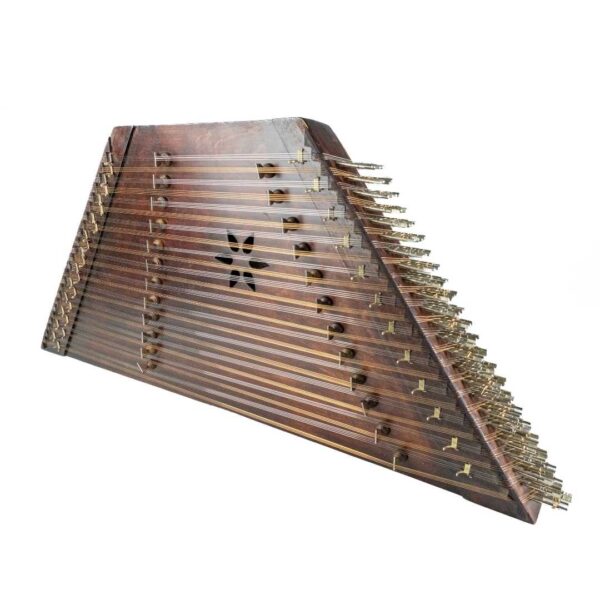
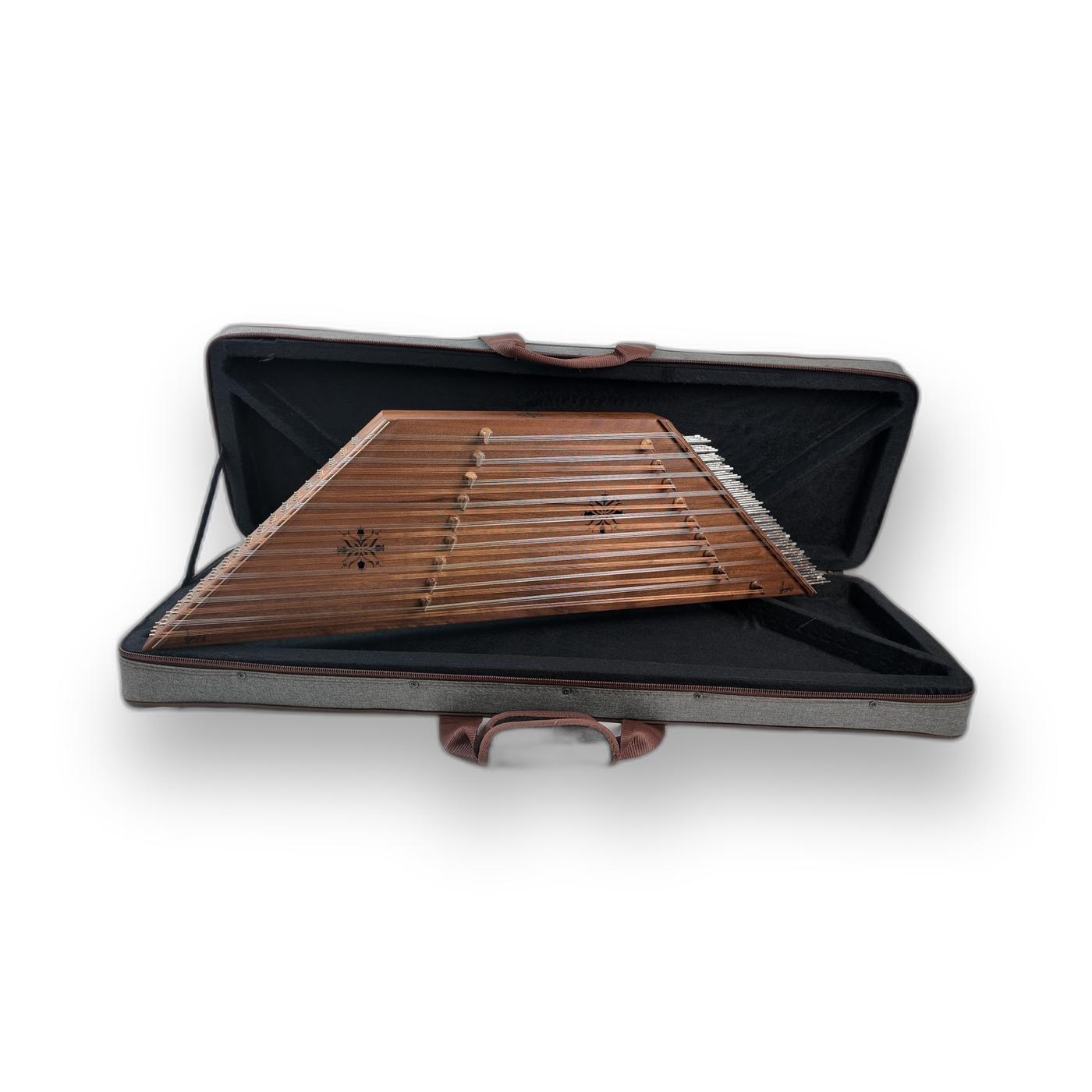
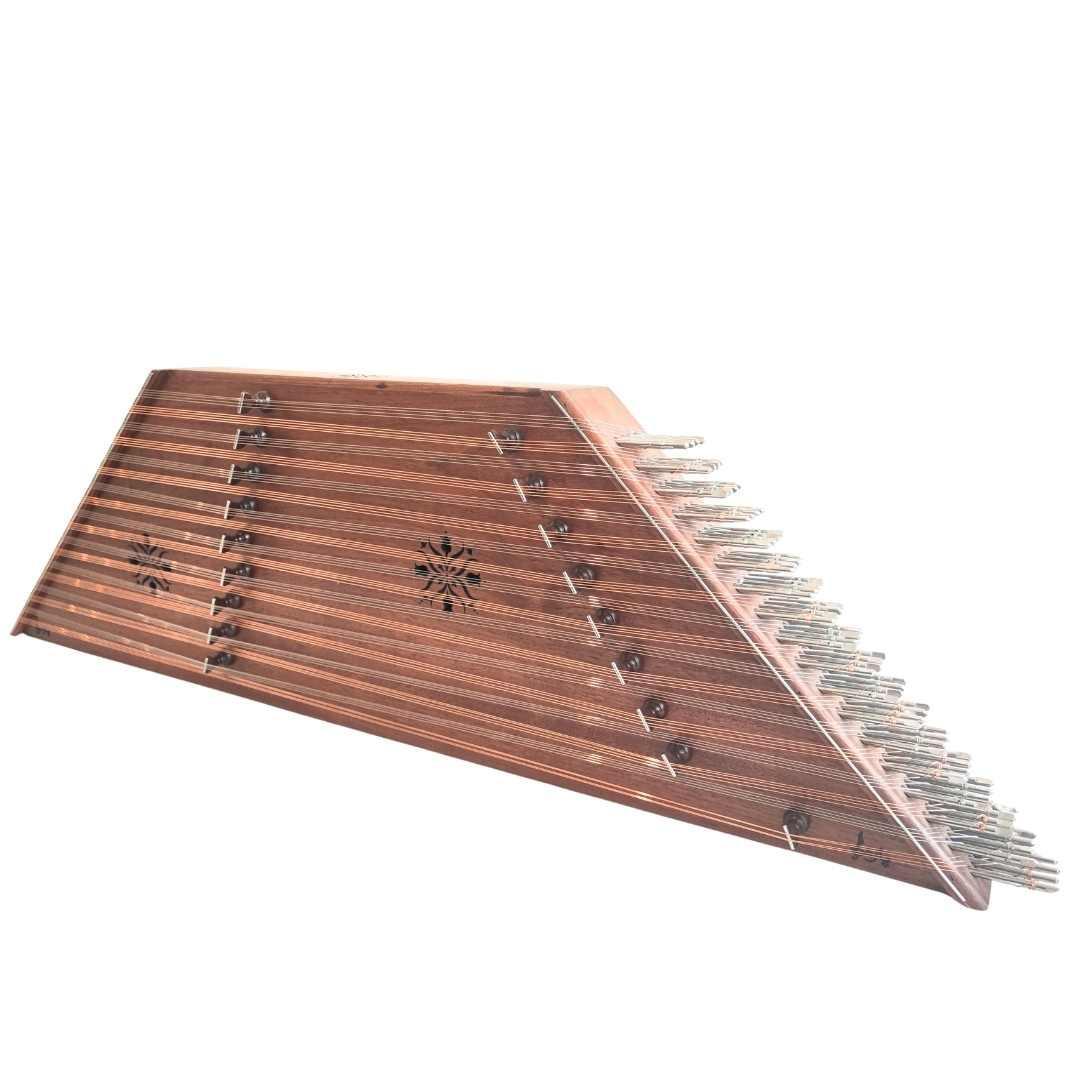
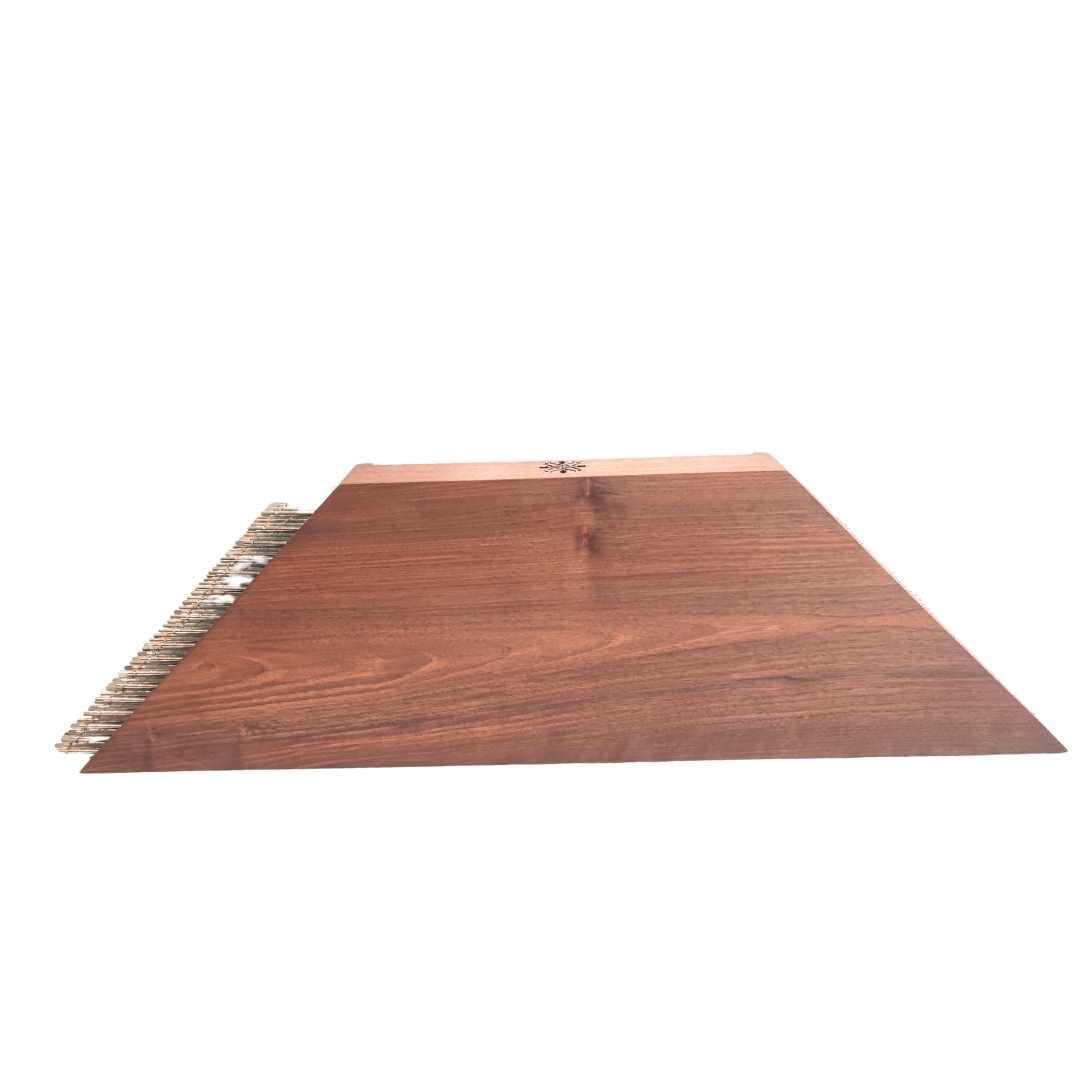
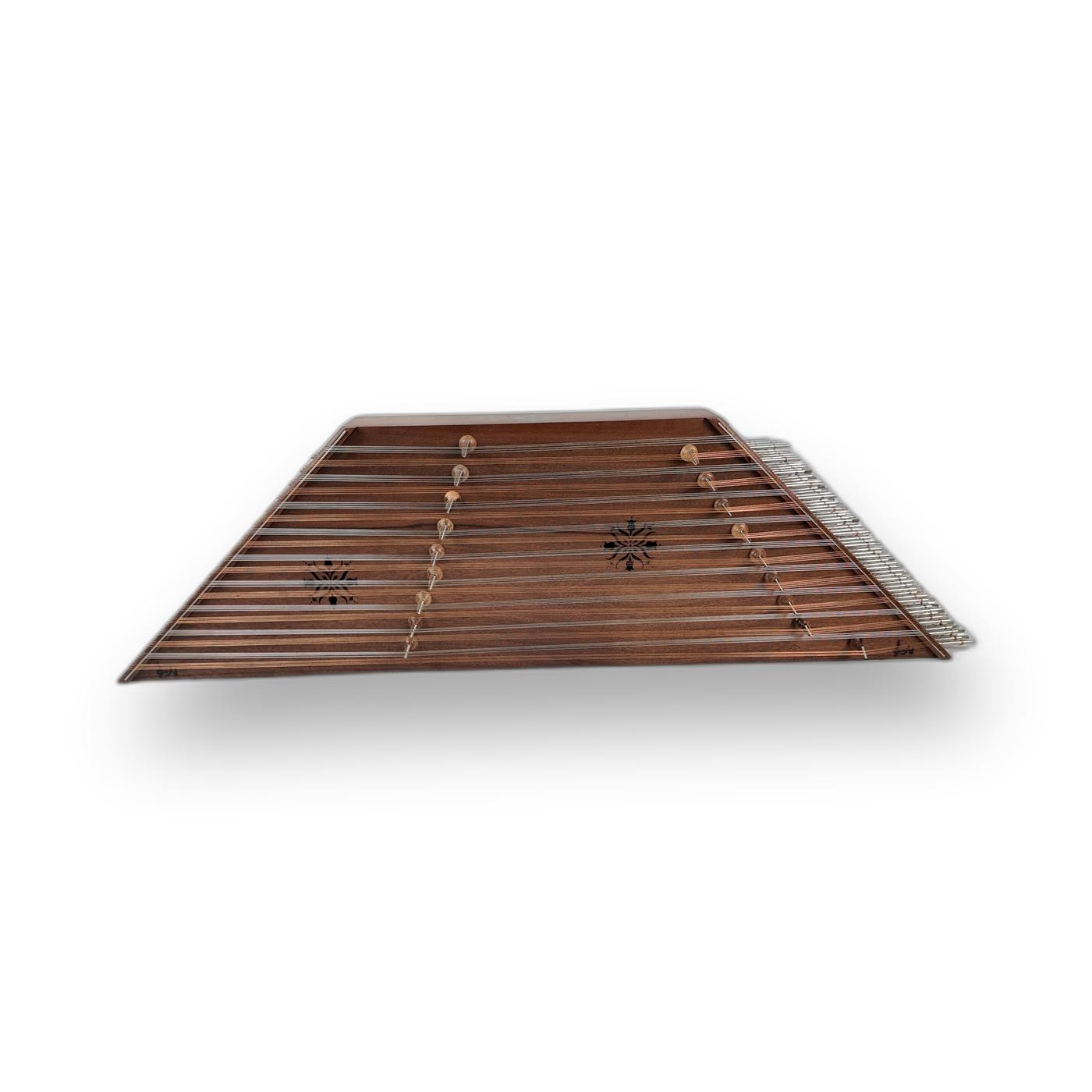
The Professional Persian Santur by Parsa is a three-seal Vizhe-grade instrument — the workshop’s highest standard — built entirely by hand in black walnut. The santur is the Persian hammered dulcimer, a trapezoidal string instrument struck with light mallets, and the Parsa Vizhe takes its construction to the most demanding level: each soundboard, frame, and bridge is shaped from the same dense, resonant wood, then stamped three times by the maker as a mark that nothing was left to chance.
A Persian Santur Built Entirely in Black Walnut
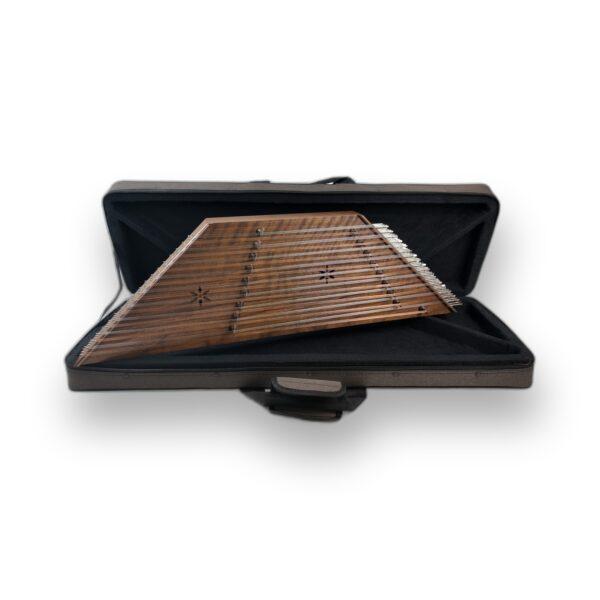
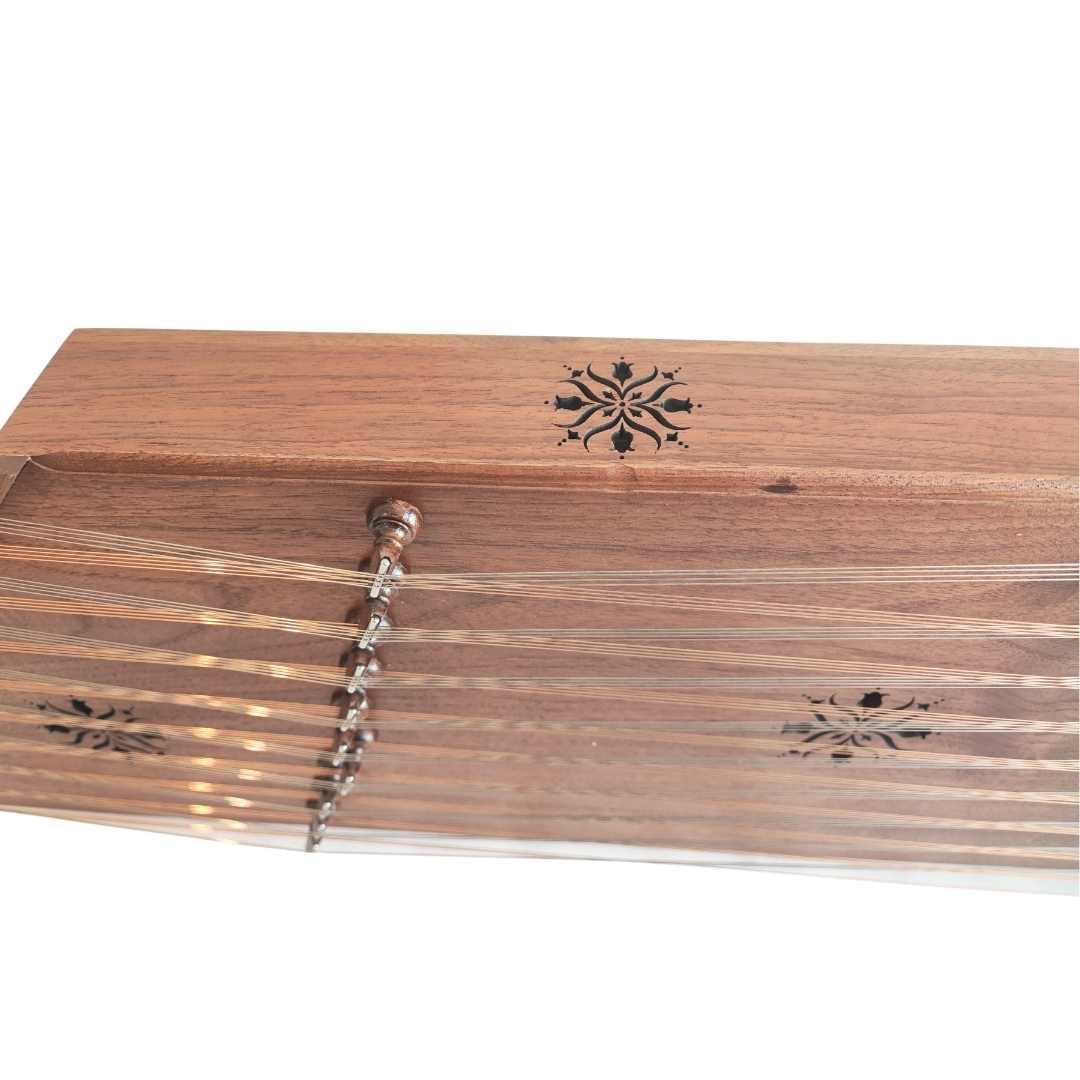
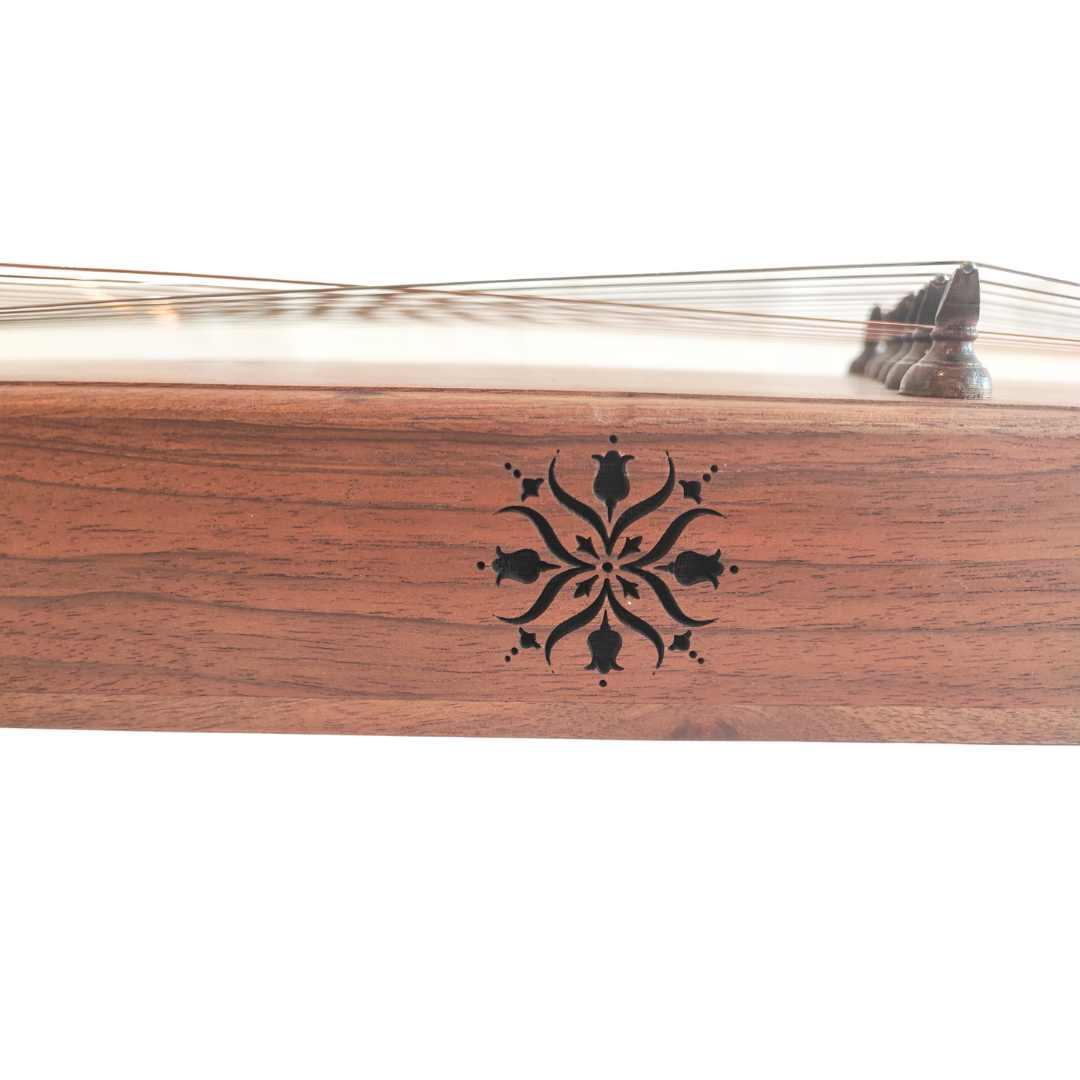
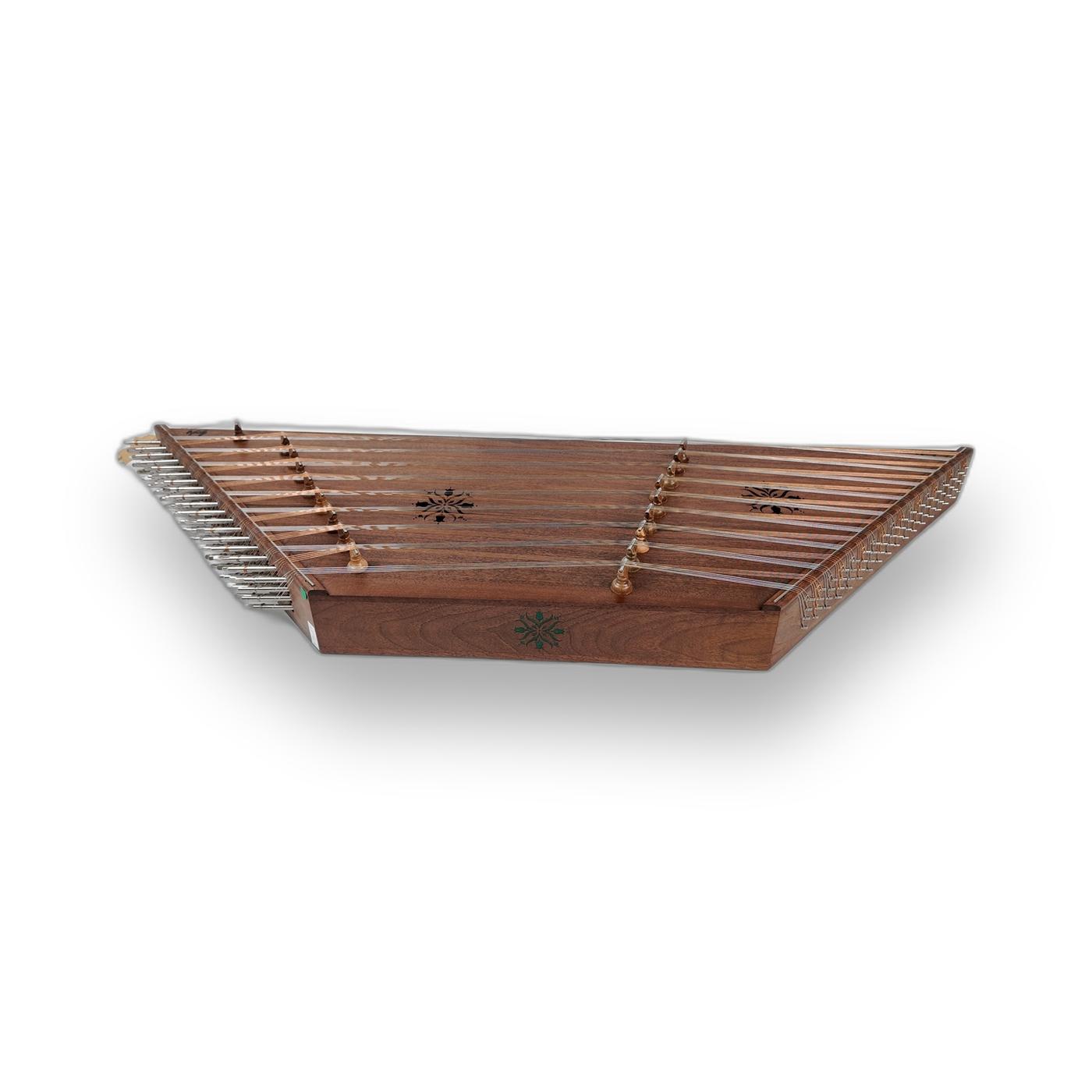
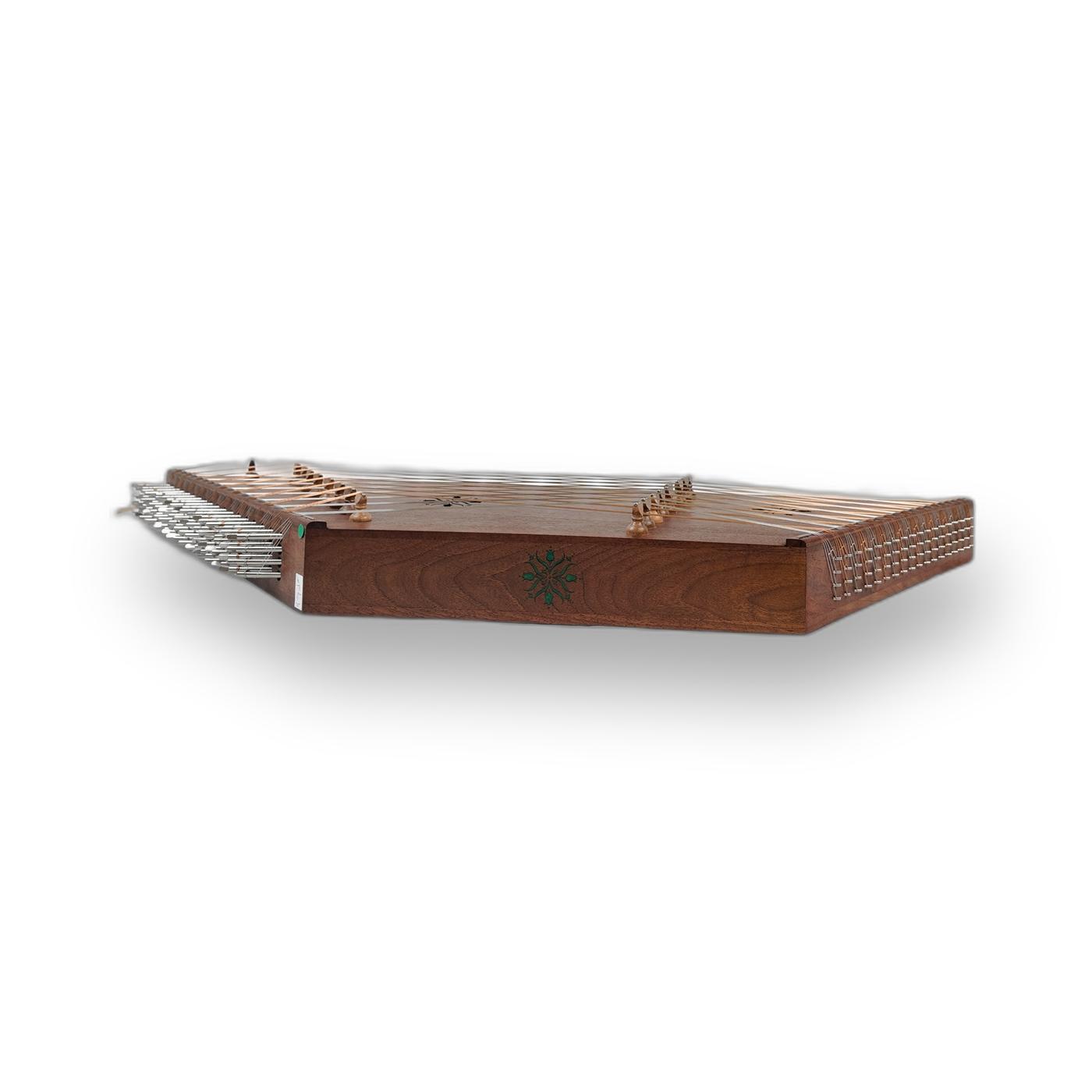
Where many santurs combine different woods, the Parsa 3 Mohr uses black walnut throughout — soundboard, frame, and bridges alike. Black walnut is a dense, resonant tonewood that rewards patient construction: its voice deepens with age, and its response under the mezrab (the lightweight mallets used to strike the strings) is notably soft. That softness matters in practice — long sessions and recording work stay less taxing on the player’s technique, and the tone remains warm rather than brittle as you move up the range. Two carved rosettes set into the soundboard complete a quietly elegant instrument.
Steel-and-Bronze Strings on Eighteen Walnut Bridges
The Parsa 3 Mohr carries 72 strings arranged in 18 courses of four — nine treble courses in steel and nine bass courses in bronze — each course resting on its own walnut bridge (kharak), eighteen in all. The steel courses give the upper register its clarity and shimmer, while the bronze courses add the depth and warmth that ground the instrument’s voice. Just as important for a serious player, the Vizhe grade holds its tuning reliably across a full session, a quality that counts when you move between several dastgahs without stopping to correct drift.
Parsa 3 Mohr Specifications
| Maker | Parsa — Persian santur makers |
| Model / Grade | Parsa 3 Mohr — three-seal Vizhe (top grade) |
| Soundboard | Black walnut |
| Frame / Body | Black walnut |
| Bridges (kharak) | Black walnut — 18 (9 treble + 9 bass) |
| Strings | Steel (treble) and bronze (bass) |
| Courses | 18 courses of 4 strings — 72 strings total |
| Dimensions (W × D × H) | 90 × 28 × 7 cm |
| Played with | Mezrab hammers (included) |
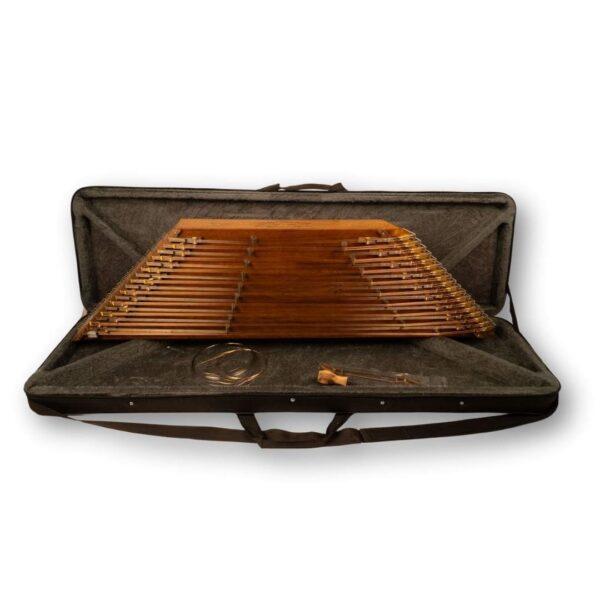
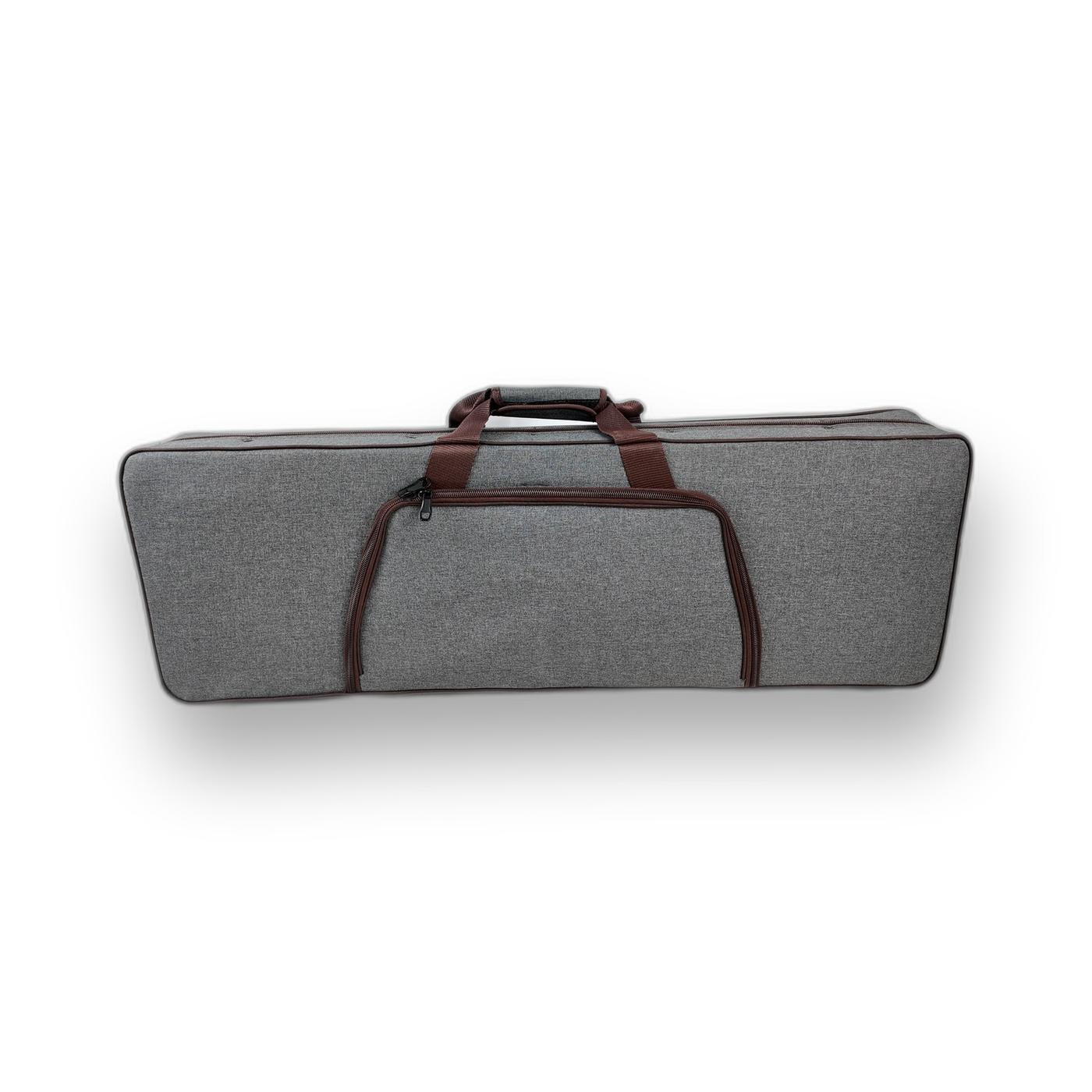
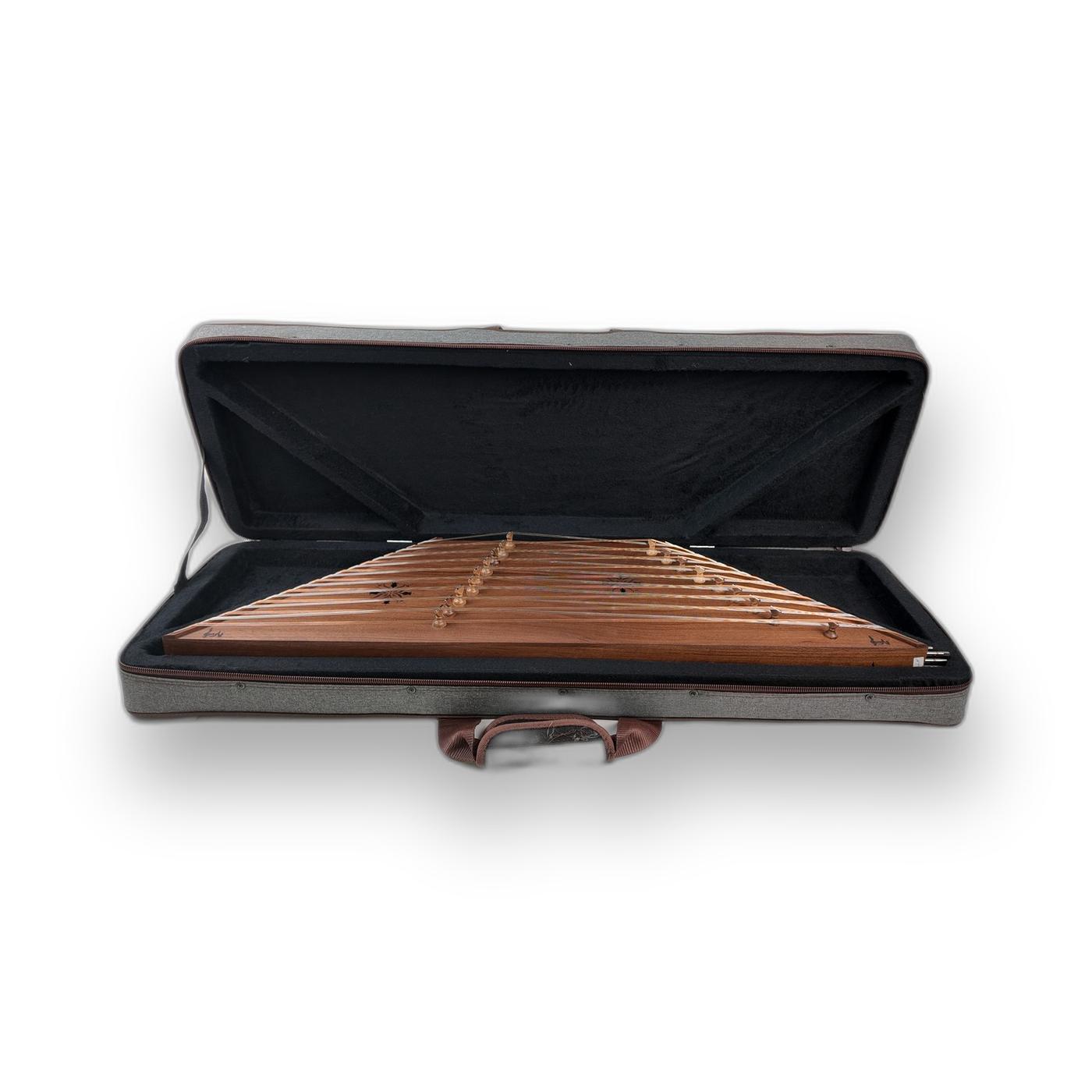
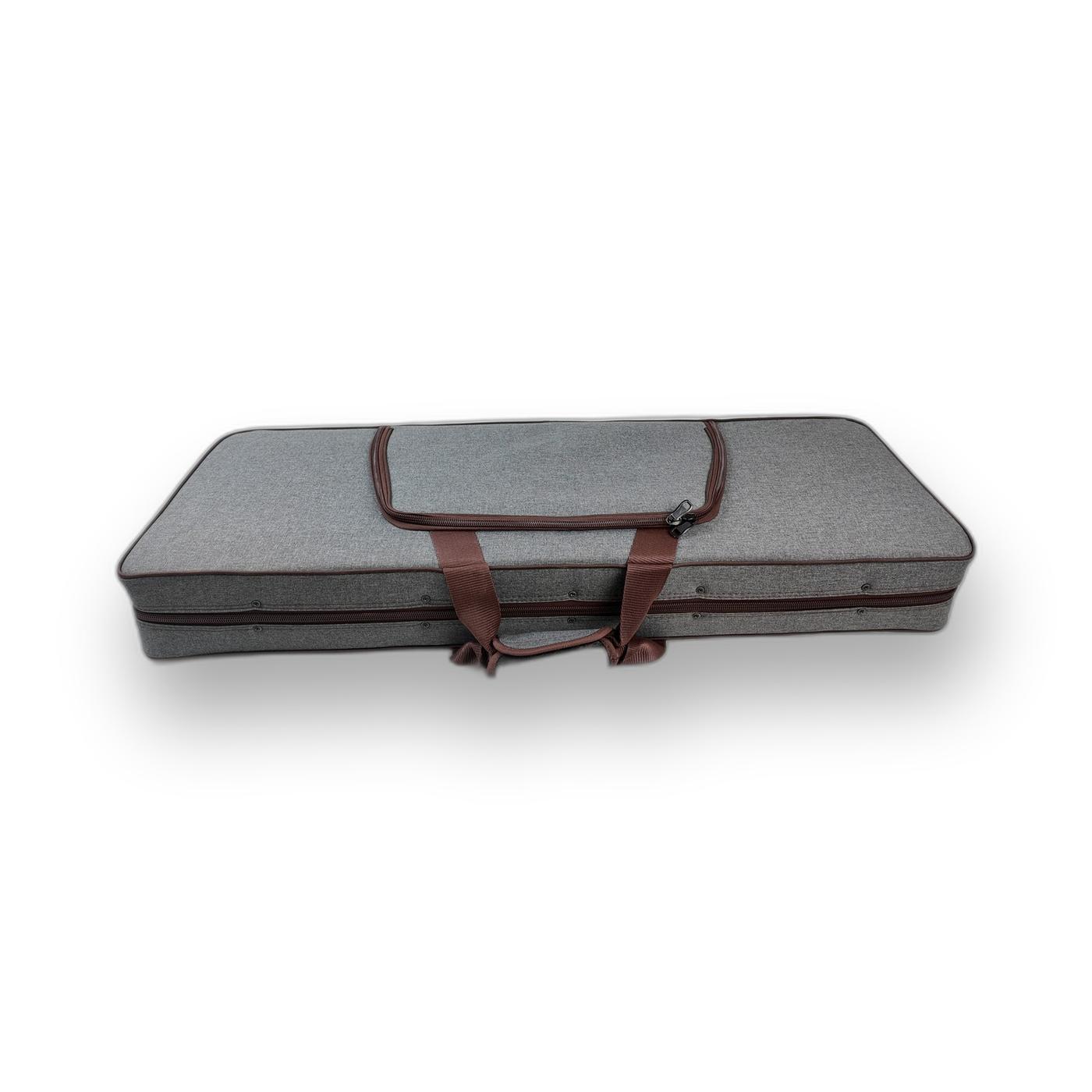
| Included | Hard case, spare steel & bronze strings, mezrab hammers, tuning key |
Who This Persian Santur Is For
The Parsa Vizhe is made for players who take the instrument seriously — committed students moving into the classical radif, performers, and recording musicians. Its soft mezrab response and stable tuning suit long practice sessions and studio work, while the three-seal build gives collectors an instrument made to the workshop’s top standard. If you are after an inexpensive first santur to test the water, this is more instrument than you need; the Vizhe is chosen for consistency and longevity rather than as an entry point. You can compare it with the rest of our Persian santur collection to find the right fit.
Persian Classical Music and the Dastgah Tradition
The santur sits at the heart of Persian classical music, where it accompanies the radif and moves through the modal system of the dastgah. Its bright, sustaining voice also carries well in folk and contemporary settings, and many players pair it with the tombak and kamancheh in ensemble. The Parsa Vizhe’s even response across the range makes these modal shifts feel natural rather than forced.
Care and Maintenance
Keep the santur in its hard case when not in use, and store it away from direct heat and sudden humidity changes — black walnut is stable but, like any acoustic instrument, prefers a steady environment. Retune regularly with the included tuning key, and keep the spare steel and bronze strings on hand so a single broken string never interrupts your practice.
Tune Your Santur
Use our free online tuner at tuner.tapadum.com — it includes a chromatic mode that makes setting and checking each course straightforward, whether you are tuning from scratch or fine-adjusting after replacing a string.
Curation & Craftsmanship
Every santur we carry is the three-seal Vizhe from the Parsa workshop, where each instrument is built entirely by hand and stamped three times only when it meets the maker’s full standard. At Tapadum, the santur is selected by Sertan Sarioglu, our strings specialist, and inspected at our Brisighella, Italy, showroom before it ships to you. It arrives complete with a high-quality hard case, a set of spare steel and bronze strings, the mezrab hammers, and a tuning key — everything you need to play from the day it arrives.