
The Oud: A Complete Guide to Types, Tuning, and Choosing Your First One (2026)
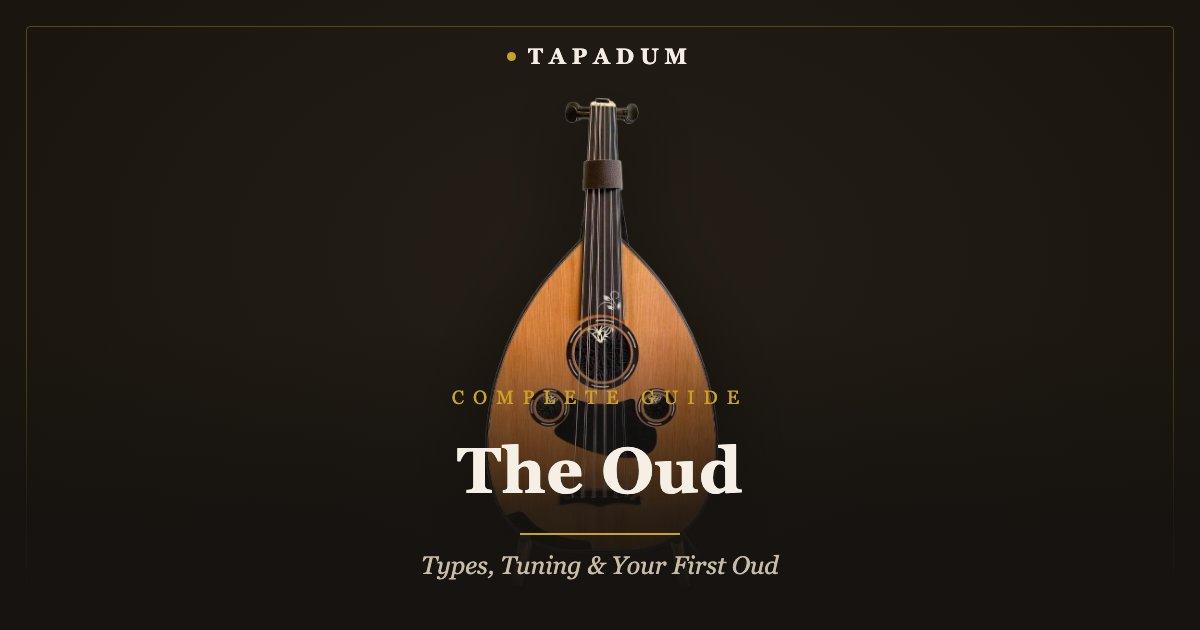
The oud is a fretless, short-necked lute at the very heart of Middle Eastern, Turkish and Mediterranean music. Its deep, pear-shaped body and warm, vocal tone have made it the leading melodic instrument of the region for over a thousand years, and it is the direct ancestor of the European lute. Because it has no frets, the oud can play the microtonal intervals of Arabic maqam and Turkish makam that a guitar or piano cannot. This guide is the hub for everything you need to know: what an oud is, where it came from, the differences between Turkish, Arabic and Iraqi ouds, how it is built, tuned and played, and how to choose your first one. Every oud we sell is hand-built by master luthiers in our Izmir workshop and inspected before it ships worldwide.
TL;DR — The Oud at a Glance
- What it is: a fretless short-necked lute with a deep pear-shaped bowl, played with a plectrum called a risha.
- Strings: usually 11 strings — five paired courses plus a single bass string (some ouds have 12, in six courses).
- Main types: the brighter, higher-tuned Turkish oud and the deeper, lower-tuned Arabic oud, plus the Iraqi school and modern electric ouds.
- Why fretless: to play the microtones of maqam / makam.
- Best first oud: a hand-made instrument with a spruce top and a well-set neck, in the tradition (Turkish or Arabic) you want to play.
- Price range: roughly €430 for a solid instrument up to €1,100+ for professional maker ouds.
What Is an Oud?
An oud is a stringed instrument with a large, rounded bowl-shaped back, a short fretless neck bent back at the pegbox, and a flat soundboard pierced by one or more decorative rosettes. It is played by plucking the strings with a long, thin plectrum — the risha (Arabic) or mizrap (Turkish). The strings are arranged in courses: most ouds carry five paired courses plus a single low bass string, giving eleven strings in total. Because the fingerboard has no frets, the player stops the strings anywhere along the neck, which is what allows the oud to produce the quarter-tones and subtle inflections central to Middle Eastern music.
Origins and History
The oud is one of the oldest instruments still in use. Its ancestry reaches back to ancient Mesopotamia and Persia, and the modern instrument took shape in the medieval Islamic world under the name al-ud (“the wood”), from which the European word “lute” derives. Carried into Europe through Al-Andalus, the oud became the lute that dominated Renaissance music. In the Middle East it remained the central melodic instrument, refined over centuries by great players and theorists. For deeper background, see the oud entry on Wikipedia, the Encyclopaedia Britannica article, and the history of the related European lute.
Types of Oud: Turkish, Arabic, Iraqi and Electric
The single most important choice when buying an oud is which tradition you want to play, because Turkish and Arabic ouds are built and tuned differently. The table below summarizes the main types.
| Type | Size & tuning | Sound | Best for |
|---|---|---|---|
| Turkish oud | Slightly smaller, tuned higher | Brighter, more penetrating | Turkish classical and folk music |
| Arabic oud | Larger body, tuned lower | Deeper, warmer, fuller | Arabic maqam and vocal accompaniment |
| Iraqi oud | Arabic type, often floating bridge | Very resonant, vocal | The Iraqi solo school |
| Electric / silent oud | Semi-hollow or solid, with pickup | Amplifiable, low feedback | Stage, recording, quiet practice |
The difference between the two main schools deserves its own read: see our detailed comparison of Arabic oud vs Turkish oud. If you perform live or need to practice quietly, our guide to the electric and silent oud covers the amplified options.
Anatomy and Materials
A fine oud is a balance of light, resonant woods. The bowl (back) is built from many thin ribs of wood — walnut, maple, rosewood or padouk are common — bent and glued into the deep pear shape that gives the oud its volume and warmth. The soundboard (top) is the acoustic engine: spruce is the classic choice for a bright, responsive voice, while cedar gives a warmer, darker tone favoured in some Iraqi ouds. The neck is short and fretless, and the pegbox is bent sharply back. Strings are usually nylon and wound metal, plucked with the risha.
Pro tip from our workshop: when we assess an oud, we look first at the soundboard and the neck angle. A light, well-braced spruce top with a straight, correctly angled neck will play in tune and project — no amount of decoration on the bowl compensates for a heavy top or a neck that pulls forward under string tension.
How the Oud Is Played and Tuned
The oud is held across the lap and plucked with the risha in fast down-and-up strokes, while the left hand stops the fretless strings to shape melody and ornamentation. Because there are no frets, intonation lives entirely in the player’s ear and finger placement — which is both the challenge and the beauty of the instrument.
Tuning differs by tradition. Turkish ouds are tuned higher and Arabic ouds lower, and there are several accepted tuning schemes within each. Rather than memorize a chart here, follow the dedicated walkthroughs: how to tune a Turkish oud and how to tune an Arabic oud. Whichever you play, tune from the bass course upward and check octaves across the courses.
Choosing Your First Oud
Start with the tradition: decide whether you want to play Turkish or Arabic music, because that determines the size and tuning of the instrument. Then focus on the build. Soundboard: a solid spruce (or cedar) top is essential — avoid plywood tops, which sound lifeless. Neck: it must be straight and correctly angled so the action is comfortable and the oud stays in tune. Bowl: cleanly joined ribs of solid wood. Maker: a hand-built instrument from a known workshop will hold value and sound better than a factory oud. Make sure a case and a spare set of strings are included.
For a step-by-step buyer’s walkthrough, see our comprehensive guide to buying an oud.
Red flag to avoid: extremely cheap ouds with plywood soundboards and warped necks cannot be set up to play in tune and will discourage a beginner. A modest step up to a solid-top, hand-made oud transforms both tone and playability.
Care and Maintenance
An oud is a light, thin-topped instrument under constant string tension, so it is sensitive to humidity and temperature. Keep it in its case away from direct sun, heat and damp, and aim for stable room humidity of around 45–55% to protect the soundboard. Loosen nothing unnecessarily, wipe the strings after playing, and replace them periodically as they dull. For a full routine, read our guide to oud care and maintenance.
Our Oud Collection
Every oud we sell is hand-built in our Izmir workshop and set up before dispatch, across both traditions and all budgets:
- Turkish Oud with Maple Bowl — a bright, resonant instrument for Turkish repertoire.
- Arabic Oud (Maple, Matte) — a warm, full-bodied Arabic oud by master luthier Ahmet Topan.
- Arabic Iraqi Oud (Cedar Top, Floating Bridge) — a deeply resonant instrument from our Sultan Collection for the Iraqi school.
- Professional Turkish Oud by Feramis Aktas — concert-grade craftsmanship from a renowned maker.
- Electric / Electro-Acoustic Turkish Oud — an amplifiable oud for stage and recording.
Browse the full range, plus strings and accessories, on our oud collection page. Worldwide shipping & 15-day return apply to every instrument.
Frequently Asked Questions
What is an oud?
An oud is a fretless, short-necked lute with a deep pear-shaped body, central to Middle Eastern and Mediterranean music. It usually has eleven strings in five courses plus a bass string, and is played with a plectrum called a risha. Its fretless neck lets it play the microtones of maqam and makam.
What is the difference between a Turkish oud and an Arabic oud?
The Turkish oud is slightly smaller and tuned higher, giving a brighter, more penetrating sound suited to Turkish music. The Arabic oud is larger and tuned lower, producing a deeper, warmer tone ideal for Arabic maqam and vocal accompaniment. They are built and strung differently, so choose by the music you want to play.
How many strings does an oud have?
Most ouds have eleven strings: five paired courses plus a single low bass string. Some ouds have twelve strings arranged in six paired courses. The strings are usually nylon and wound metal.
Does an oud have frets?
No — the oud is fretless. This is essential to Middle Eastern music, because it lets the player produce the microtonal intervals of maqam and makam that fretted instruments cannot. It also means intonation depends entirely on the player’s ear and finger placement.
Is the oud good for beginners?
Yes, with the right instrument. The oud is welcoming to start on, though the fretless neck means developing accurate intonation takes practice. A hand-made oud with a solid spruce top, in the tradition you want to play, is the best foundation for a beginner.
How much does a good oud cost?
A solid, hand-made oud starts around €430, while professional instruments from named makers reach €1,100 or more. Price reflects the woods, the quality of the soundboard and neck, and the maker’s pedigree. Avoid very cheap plywood-top ouds, which cannot be set up to play well.
The oud is a lifelong instrument, and choosing the right one starts with the tradition you love. When you are ready, explore our hand-built oud collection, compare the two main schools in our Arabic vs Turkish oud guide, or read our oud buying guide before you decide.
Published by Tapadum Ethnic Music Store — reviewed by our oud luthiers. Worldwide shipping & 15-day return.