Saz Accessories: Strings, a Tezene, a Gig Bag and a Stand for Your Baglama
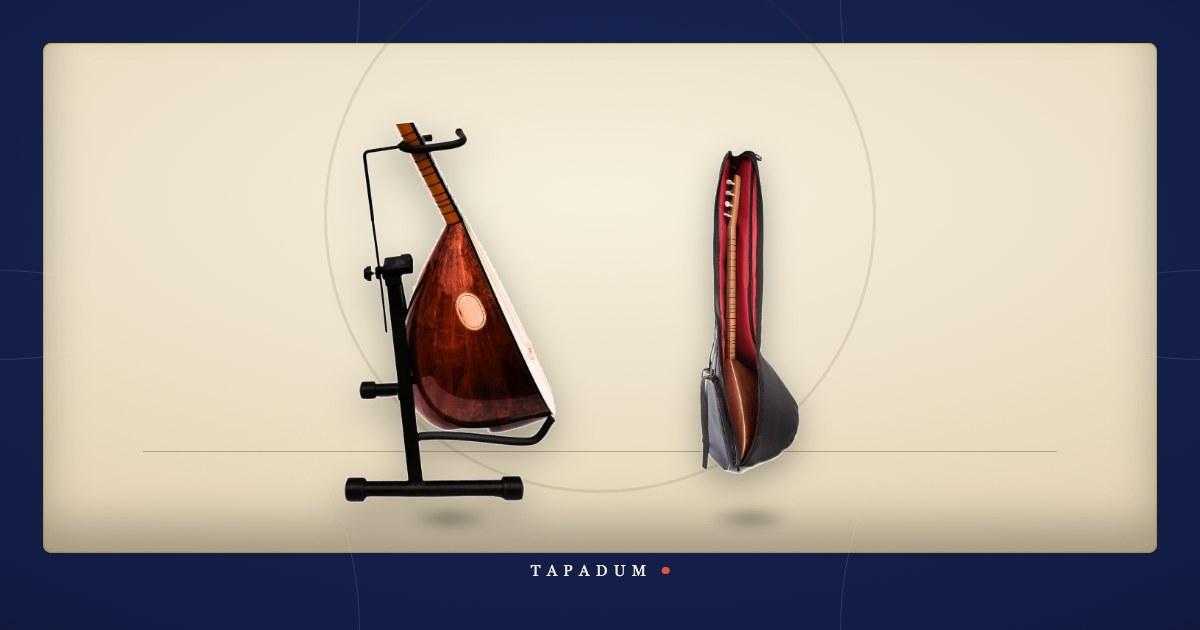
What you’ll learn: which saz strings fit a short-neck instrument and which fit a long-neck one, what the gauge numbers on a string pack actually mean, why the tezene in your hand shapes your tone as much as the strings do, and when a gig bag and a stand are worth the money.
Saz accessories do three jobs: they keep the instrument strung, protect it while it travels, and hold it safely between sessions. Strings are the only part you buy again and again, and the decision there is simpler than most string catalogues make it look — neck length sets the gauge. A short-neck baglama (kisa sap) takes a set built around a 0.18 mm top string; a long-neck instrument (uzun sap) takes 0.20 mm. A bag, a stand and a tezene are bought once and last for years.
This guide covers each of those in the order a player usually needs them, with the actual gauge layout of the four sets we stock and what to check on the listing before you order.
Saz Accessories: What a Player Actually Buys
The baglama is a low-maintenance instrument. There is no reed to replace, no head to tension, no bow to rehair. Over a playing year, four things come up:
| Accessory | How often | What the choice depends on |
|---|---|---|
| String set | Several times a year, with regular play | Neck length (short or long), then gauge and brand |
| Tezene (plectrum) | Once, then when it wears down | Material and thickness |
| Padded gig bag | Once | Body and total instrument length |
| Stand | Once | Body size — most are universal |
Strings are where the real decision sits, so they come first.
Strings: Neck Length Decides the Gauge
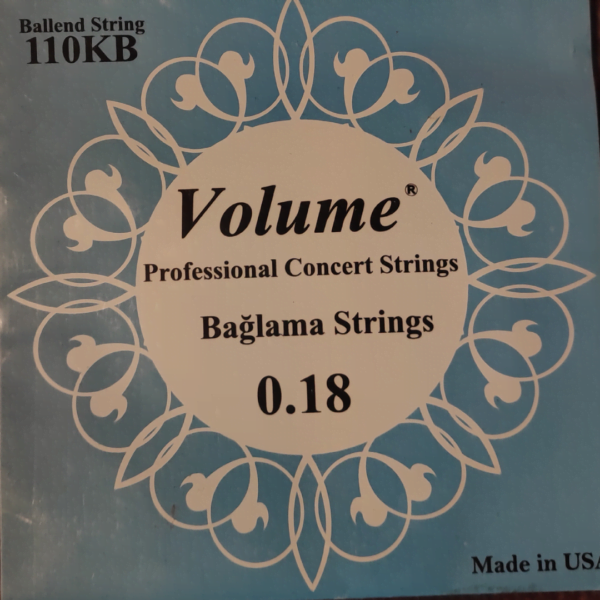
A saz string set is seven strings arranged in three courses: a course of three thin melody strings, a middle pair, and a bass pair — the bam strings — whose two members are deliberately different gauges rather than a matched pair. That is why a pack lists four numbers rather than seven. A typical short-neck layout reads three strings at 0.18 mm, two at 0.28 mm, one at 0.40 mm and one at 0.50 mm.
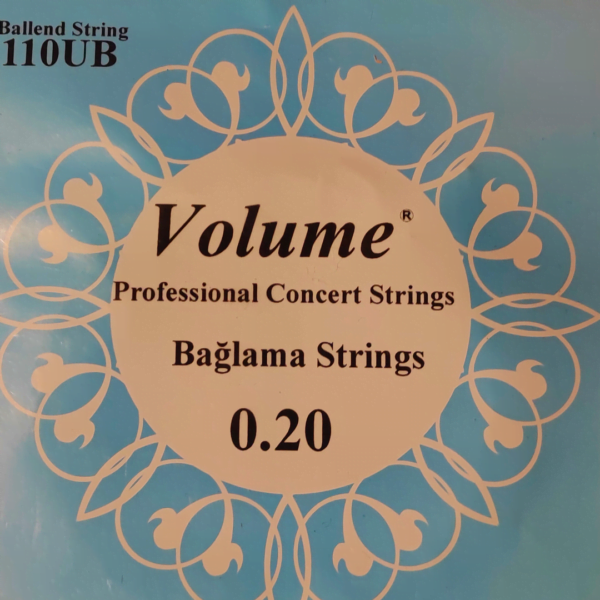
The number that matters is the first one. Short-neck instruments have a shorter scale and sit brighter, so they are strung lighter, around 0.18 mm on top. Long-neck instruments have a longer string length and a lower, wider range, so they take a slightly heavier 0.20 mm top string. Fit a long-neck set to a short-neck instrument and the tension climbs where you do not want it; go the other way and the instrument feels slack and loses definition.
Everything else on a modern set is convenience. All four of the sets we carry are ball-ended, which means you thread and seat a string in seconds rather than winding a loop end onto the pin, and all four are sold as three complete sets in one pack — a working player goes through them, and a pack lasts most of a year.
| Set | Neck | Gauges in the pack | Price |
|---|---|---|---|
| Baglama Strings Set for Short Neck Saz (×3) | Short | 3 × 0.18 · 2 × 0.28 · 0.40 · 0.50 | €44,16 |
| Volume Professional Saz Strings Set, short neck (×3) | Short | 3 × 0.18 · 2 × 0.28 · 0.43 · 0.58 | €51,15 |
| Professional Long Neck Baglama String Set (×3) | Long | 0.18 · 0.28 · 0.40 · 0.50 (see listing) | €46,36 |
| Volume Strings Set for Long Neck Saz Baglama 0.20 mm (×3) | Long | 3 × 0.20 · 2 × 0.30 · 0.43 · 0.58 | €61,15 |
Read the gauges on the listing before you order rather than trusting the neck label alone. Packs from different makers group their gauges differently, and the heavier bam pair in particular varies — 0.40 and 0.50 in one set, 0.43 and 0.58 in another. Across all four, the only thing that changes compatibility is neck length; brand differences are about tension and feel, not fit.
Once a fresh set is on, the instrument will need retuning several times over the first days as the strings settle. Our short-neck tuning guide and long-neck tuning guide cover the reference pitches for each form.
The Tezene: Cherry Bark, Plastic, and Playing With Your Fingers
The tezene — mizrap in most of Turkey — is a long, thin, flexible plectrum, closer to a strip than to a guitar pick. Traditionally it was cut from cherry bark, which is light and springy and gives a soft attack with a bright edge. Most tezenes sold today are a plastic or rubber-plastic strip; horn appears occasionally on higher-end pieces.
Two things decide how one plays. Thickness sets the attack: a thinner strip flexes into the string and produces a rounder, quieter sound, while a stiffer one drives the course harder and cuts through an ensemble. Length sets control, since the tezene is held between thumb and index finger with the tip doing the work, and a longer strip whips more on fast passages.
There is a second tradition worth knowing about. Selpe playing uses the fingers directly — plucking and strumming the courses, and tapping the soundboard for percussive accents — and needs no plectrum at all. It is softer and more intimate than tezene playing and is a standard technique rather than a beginner shortcut. Museum collections record both approaches: the Met’s late-19th-century divan saz, the largest member of the baglama family, is documented as an instrument played with the fingers or a cherry bark plectrum.
We do not currently list a tezene, so if you are ordering strings you will want to source plectrums separately. Buy several: they wear at the tip, and a worn tezene dulls the attack long before it visibly breaks.
The Gig Bag Is the Cheapest Insurance You Will Buy
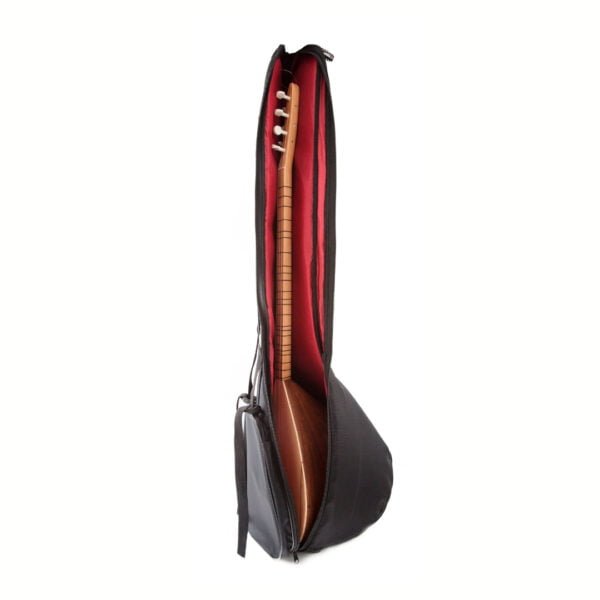
A saz is mostly thin wood over air. The damage that actually happens to it is dull and preventable: a knock against a door frame, a scratch from a car seat belt, dust settling into an unvarnished soundboard over a winter of standing in a corner. A padded gig bag at €49 protects an instrument that starts around €489 in our own baglama and saz range.
What you are paying for is padding thickness, a water-resistant outer shell, and a shoulder strap that leaves both hands free on stairs and public transport. Our bag is cut for the long body of the saz and is built for lessons, rehearsals and car journeys — the everyday movement that causes most of the damage. Air travel with an instrument in checked baggage is a different problem, and a rigid case is the safer answer there.
One practical check before ordering: measure your instrument end to end, headstock tip to base, and compare it against the bag’s listed length. Long-neck instruments are the longer of the two forms, and the neck is where a bag runs short.
A Stand, Not the Wall
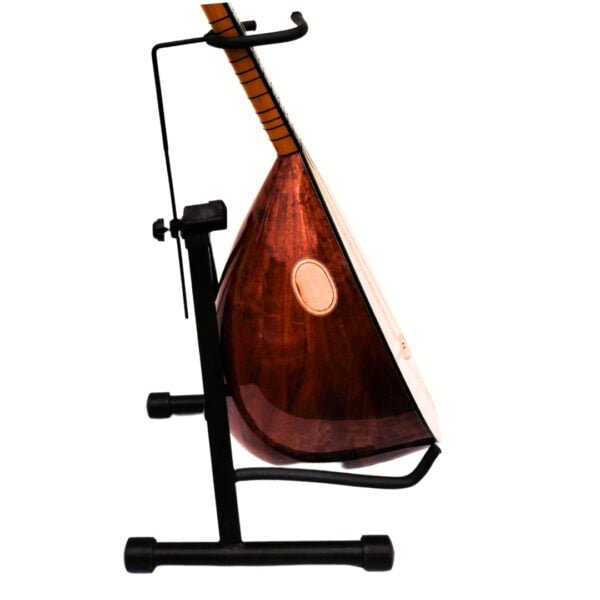
Most players lean the instrument against a wall between sessions, which is how it ends up sliding down the wall, resting against a radiator, or being knocked over by a door. A baglama stand at €89 fixes that and also changes how often you pick the instrument up — an instrument in view gets played more than one in a bag under the bed.
What to look for is straightforward. The height should be adjustable so the neck rest sits where your instrument’s body actually ends, the feet need non-slip bases, and the cradle should be wide enough for the deep bowl of a saz rather than a guitar’s flat back. Ours is a universal design: one stand covers all baglama body sizes, which matters if you own both a short-neck and a long-neck instrument.
Wherever it stands, keep it out of direct sun and away from a heat source. Warm dry air is what opens seams and pulls a neck out of alignment, and no accessory undoes that.
What to Buy First
Three realistic starting points, depending on where you are:
- A student carrying an instrument to lessons. The gig bag first, then a string set matched to your neck length. Transport is where beginner instruments get damaged, and a set of strings you cannot yet hear the difference in can wait.
- A player who practises at home. The stand first. It keeps the instrument visible, off the floor and off the wall, and a saz that is easy to pick up gets an extra ten minutes a day.
- A performing or recording player. Strings in the three-pack, plus both bag and stand. You are changing strings on a schedule rather than when they fail, and the pack price per set is what makes that practical.
If you are still choosing the instrument itself, our baglama buyer’s guide covers the short-neck versus long-neck decision, and the pickups guide covers amplification for players who already know they will be playing plugged in. Every accessory in this guide is checked at our Brisighella, Italy showroom before it is listed, matched to the instrument it serves rather than sold as a generic part.
Frequently Asked Questions
What accessories does a saz or baglama need?
Four things cover it: a string set matched to the neck length, a tezene to play with, a padded gig bag for transport, and a stand for storage between sessions. Strings are the only recurring purchase; the rest are one-time buys that last for years.
What gauge strings does a short-neck baglama take?
A set built around a 0.18 mm top string. Short-neck (kisa sap) instruments have a shorter scale and are strung lighter than long-neck ones, which take 0.20 mm. A full set is seven strings in three courses, so the pack will also list a middle gauge around 0.28 mm and two heavier bam strings.
How often should saz strings be changed?
There is no fixed interval. Change them when the tone goes dull, when a string stops holding pitch, or when you can feel corrosion under your fingers — for a regularly played instrument that usually means a few times a year, which is why sets are sold three to a pack.
Can you play a saz without a tezene?
Yes. The selpe technique uses the fingers to pluck and strum the courses and taps the soundboard for percussion, and it is a traditional approach in its own right rather than a workaround. Tezene playing is brighter and more percussive; selpe is softer and better suited to quiet accompaniment.
Will one stand fit both a short-neck and a long-neck saz?
Yes, with an adjustable universal stand like ours — the height and cradle position adapt to the body size, so a single stand covers both forms. Check that the feet have non-slip bases and that the cradle is deep enough for the bowl-backed body of a saz.
Strings, Bag and Stand in One Place
The full saz and baglama accessory range: