
Choosing Your First Baglama: A Buyer’s Guide

What you’ll learn: the real difference between a short-neck and long-neck baglama, why most beginners should start short-neck, what to check on the instrument itself before buying, and which Tapadum model fits a first-time player.
Choosing your first baglama comes down to one decision before anything else: short neck or long neck. A short-neck baglama (kısa sap) has 19 frets and a more compact body, developed in 1970s Istanbul specifically to make the instrument easier to play and sing along with in a studio setting. A long-neck baglama (uzun sap) is the older, traditional form — 23 frets, a wider playing range, and a bigger stretch for the fretting hand. If you’re buying your first instrument, start short-neck; it’s the version most teachers recommend, and it’s also where most of our own catalog sits.
This guide covers the short-neck/long-neck decision in detail, what to physically check on an instrument before buying, acoustic vs electro-acoustic, and the specific models we carry.
Short Neck vs Long Neck: The Real Difference
The two aren’t just different sizes of the same thing — they’re built for different playing contexts. Short-neck baglama has 19 frets across a body roughly 38–42 cm long, strung with lighter 0.18mm strings. It emerged in 1970s Istanbul studio and stage culture specifically because its shorter reach made fast fingerings and vocal accompaniment easier. Long-neck baglama is the traditional form: 23 frets, a body around 41–45 cm, and 0.20mm strings — the wider fret spacing gives more range and transposition options but demands a bigger hand stretch.
Neither is “better.” Long-neck carries the older repertoire and wider range; short-neck trades some of that for a gentler learning curve and faster playability — which is exactly why it’s the standard beginner recommendation.
Why Most Beginners Start on Short Neck
The shorter fret spacing means less of a stretch for hands still building the calluses and finger independence that fretted-instrument playing demands. It’s also simply less instrument to manage while you’re learning basic chord shapes and right-hand technique. Once fundamentals are solid, many players do move to long-neck for its wider range — but there’s no reason to start there.
Here’s what a beginner-friendly short-neck baglama actually looks and sounds like:
What to Check Before You Buy
- Neck straightness: sight down the neck from the headstock — it should run dead straight, with no visible bow or twist. A warped neck means intonation problems that no amount of setup will fully fix.
- Fret-to-string gap: around 3mm is the workable standard. Much wider than that and the instrument fights you on every fretted note.
- Body wood: mulberry, juniper, mahogany, and walnut are the traditional choices. Walnut and mahogany are common, stable entry-level woods — warm-toned and well suited to a first instrument without the price premium of aged mulberry.
- No cracks or open seams: check the bowl and soundboard join carefully, especially on instruments that have shipped internationally.
Acoustic or Electro-Acoustic?
If you’ll ever play with other amplified musicians or on a stage, an electro-acoustic model saves you from adding a pickup later. We cover the amplification question — pickup types, retrofit vs factory-built — in full in our Electric Baglama & Saz Pickups guide. For a first instrument played mostly at home or in lessons, a fully acoustic short-neck baglama is the simpler, less expensive starting point.
Our Baglama Models
| Model | Price | Best for |
|---|---|---|
| Professional Short Neck Baglama Saz by Cogur | €489.31 | First-time players — the standard beginner recommendation |
| Electro Acoustic Short Neck Baglama | €589.17 | Beginners who already know they’ll play with a band or on stage |
| Professional Electro Baglama Saz | €999 | Players wanting a dedicated stage-ready electric body |
Shop these models directly:
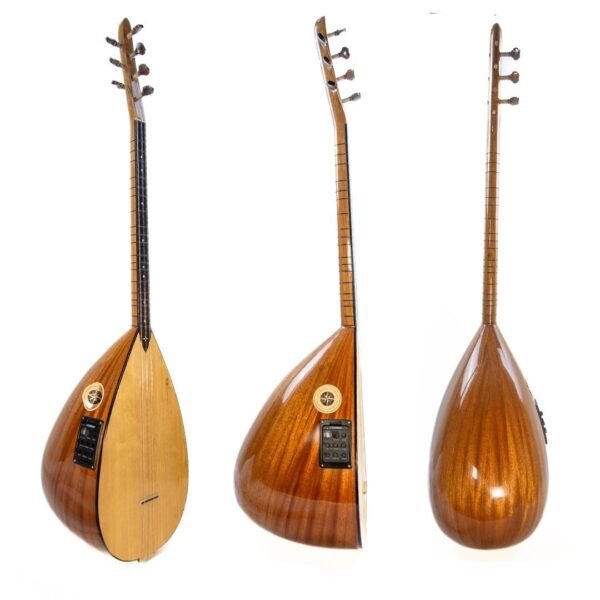


Our long-neck options are currently limited — the cümbüş-style metal-body saz is a related but distinct instrument, not a traditional wooden long-neck baglama. For most first-time buyers this isn’t a gap: short-neck is the right starting point regardless. Once you’ve settled on short-neck, our short-neck tuning guide covers getting it into playing pitch; long-neck players can reference our long-neck tuning guide.
Frequently Asked Questions
Should a beginner buy a short-neck or long-neck baglama?
Short-neck. Its 19-fret layout and shorter reach make chord shapes and fingerings easier to learn, which is why it’s the standard first-instrument recommendation — long-neck’s wider range matters more once the fundamentals are in place.
What’s the difference in fret count between short and long neck?
Short-neck baglama has 19 frets on a roughly 38–42cm body; long-neck has 23 frets on a roughly 41–45cm body, giving it a wider playing range at the cost of a bigger hand stretch.
What wood should a first baglama be made from?
Walnut or mahogany are common, stable choices for an entry-level instrument — warm-toned and durable without the price premium of aged mulberry, which is prized more on professional-tier instruments.
Do I need an electro-acoustic baglama as a beginner?
Only if you already know you’ll be playing with other amplified musicians or performing live soon. For lessons and home practice, a fully acoustic short-neck model is simpler and less expensive.
How do I check if a baglama’s neck is in good condition?
Sight down the neck from the headstock — it should be perfectly straight with no bow or twist. Also check that the string-to-fret gap is around 3mm; wider than that makes the instrument noticeably harder to play.