
The Cajon in World Percussion: Choosing Between a Classic Cajon and a Bongo Cajon
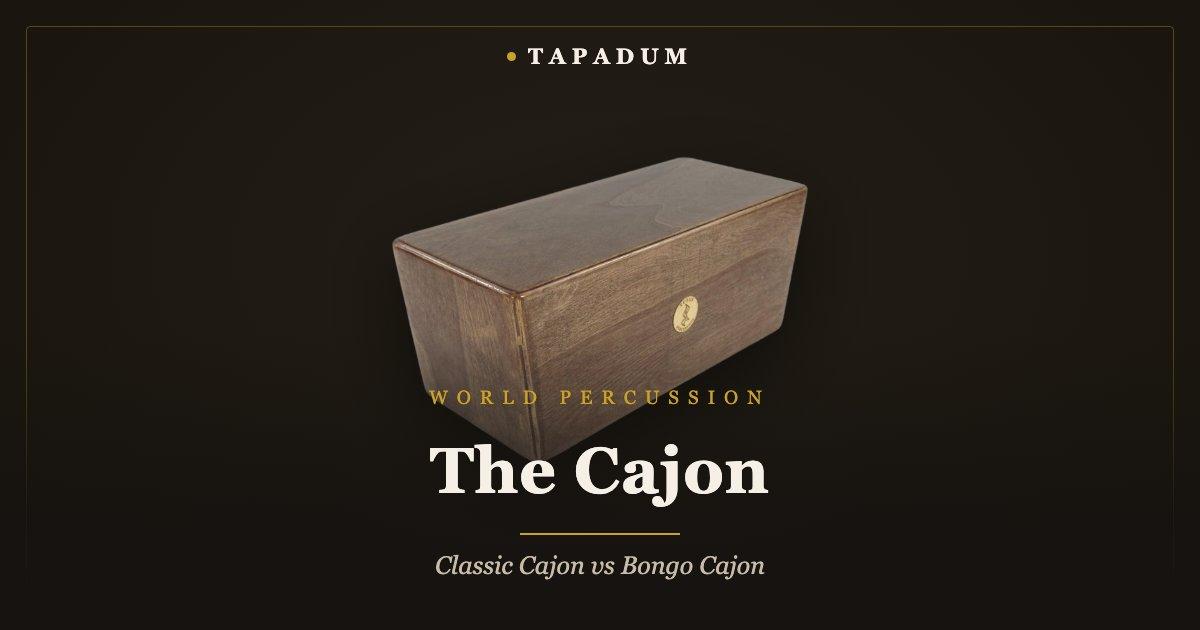
A cajon is a box-shaped drum, played seated with the player striking the front face (the tapa) between their knees — no shells, no hardware, no drum key required. It’s one of the simplest-looking instruments in percussion and one of the most versatile: a single box can produce a deep bass tone from the centre of the tapa and a bright, snappy slap tone from its edges, covering a surprising amount of a drum kit’s range with two hands and no sticks.
A bongo cajon takes that same box and adds a second voice to it — smaller drumheads built into the top or side of the case that echo the higher, tighter tones of a bongo, played alongside the cajon’s low end without the player ever standing up or switching instruments. Whether you want the plain, traditional box or the bongo hybrid depends entirely on how much tonal range you want out of a single seated instrument.
What Is a Cajon?
Structurally, a cajon is almost deceptively plain: a wooden box, usually with a thinner plywood front panel (the tapa) and a sound hole cut into the back. Struck near the top edge, the tapa gives a sharp, cutting slap; struck lower and more centrally, it produces a deep, resonant bass note that carries through the sound hole. Many cajons also have internal wires or guitar strings pressed against the inside of the tapa, buzzing on the slap strokes for a bright, snare-like edge — a detail borrowed directly from flamenco practice (more on that below).
A Short History: From Peruvian Shipping Crates to Flamenco Stages
The cajon’s origin is Afro-Peruvian: enslaved people of West and Central African descent, brought to Peru under Spanish colonial rule, adapted wooden shipping and produce crates into a drum when hand percussion was restricted or unavailable to them. The instrument grew steadily through the 19th century, and by 2001 it had been formally declared part of Peru’s national cultural heritage; in 2014, the Organization of American States went further, declaring the cajon an instrument of Peru for the Americas.
Its move into flamenco came much later and through a specific encounter: guitarist Paco de Lucía toured Peru in 1977, heard the cajon there, and brought it back to Spain on the advice of percussionists Rubem Dantas and Manuel Soler. De Lucía’s ensemble added internal strings to sharpen the slap tone, and within a few years the cajon had become a core instrument of flamenco percussion — a genre with no prior tradition of frame or box drums at all until that specific cross-cultural moment.
What Makes a “Bongo Cajon” Different
A standard cajon gives you two tones from one surface: bass and slap. A bongo cajon adds a third and fourth by mounting smaller drumheads — tuned closer to the higher, tighter voice of a bongo — into the same case, playable without moving your seat or reaching for a second instrument. For a solo percussionist, a busker, or anyone accompanying a small acoustic group, that means one seated box can cover a bass-and-slap cajon part and a bongo-style upper voice in the same piece, something that would otherwise require two separate drums and a lot more floor space.
Our Bongo Cajon n.1 and Bongo Cajon n.2 both combine that dual-voice design in a compact seated box; for a purely classic cajon voice without the bongo layer, our Cajon by Cuba Percs models focus on the traditional bass-and-slap tone alone.
Choosing Between Models
- Want maximum tonal variety from a single seated instrument? Choose a bongo cajon — useful for solo acoustic accompaniment, buskers, or small ensembles without room for a separate bongo set.
- Want the traditional, purely percussive cajon voice? A classic cajon (like our Cuba Percs models) keeps the focus on bass and slap tone without the added upper voices.
- Playing seated for long sessions? Check seat height and edge comfort in the specs — this matters more over an hour-long set than it seems in a quick test strike.
What to Look For When Buying
Tapa thickness and material. A thinner plywood front panel flexes more and gives a sharper slap; too thin, and it can sound thin or brittle. This is the single biggest factor in a cajon’s character.
Adjustable snare tension. If the model has internal wires or strings against the tapa, being able to tighten or loosen that contact changes how much buzz you get on the slap tone — useful for matching the instrument to different playing styles.
Sound hole placement and box volume. The internal air volume and hole size shape how deep and resonant the bass tone is. A larger box generally gives a deeper voice, at the cost of portability.
Seat comfort for real playing time. A cajon isn’t a drum you strike for thirty seconds and put down — test how it feels to actually sit on for a full practice session, not just a quick strike.
Frequently Asked Questions
Where does the cajon come from?
The cajon originated in Peru, developed by enslaved people of West and Central African descent under Spanish colonial rule, who adapted wooden shipping crates into a drum. It was declared part of Peru’s national cultural heritage in 2001 and recognised by the Organization of American States as an instrument of Peru for the Americas in 2014.
How did the cajon become part of flamenco music?
Guitarist Paco de Lucía encountered the cajon during a 1977 tour of Peru and brought it back to Spain on the advice of percussionists Rubem Dantas and Manuel Soler. His ensemble added internal strings to sharpen its slap tone, and it quickly became a core instrument in flamenco percussion, despite having no prior connection to that tradition.
What is the difference between a cajon and a bongo cajon?
A standard cajon produces two tones — bass and slap — from a single front panel. A bongo cajon adds smaller drumheads built into the case that echo the higher, tighter tones of a bongo, giving a seated player two extra voices without switching instruments.
Do I need internal strings or wires in a cajon?
Not strictly, but they add a bright, snare-like buzz to the slap tone that many players associate with the flamenco cajon sound specifically. A cajon without them has a cleaner, purely percussive tone — it’s a style choice, not a quality difference.
Is a bongo cajon harder to play than a classic cajon?
No more difficult technically — the additional drumheads are simply extra surfaces to strike, not a new technique. It does take some practice to move fluidly between all the available tones in one part, but the basic seated playing position and striking technique are the same as a classic cajon.