
Handpan vs Hang vs Tongue Drum: Key Differences Explained (2026)
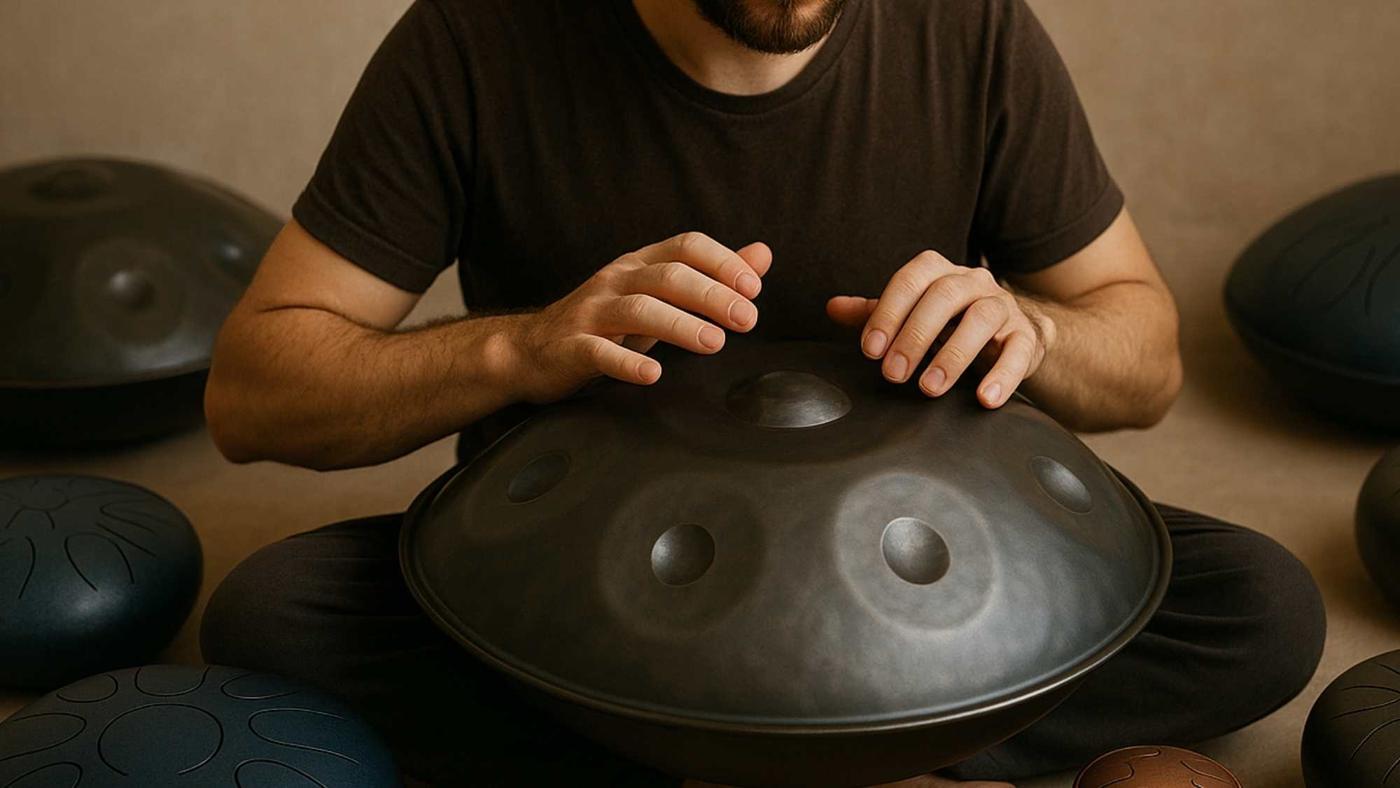
Choosing between a handpan, a hang, and a tongue drum comes down to three things: your budget, how quickly you want to make music, and the sound you are chasing. All three are melodic percussion instruments you play with your hands, and their soft, resonant tones have made them favourites for meditation, sound healing and modern acoustic music. But they are not interchangeable — they differ in how they are built, what they cost, and how hard they are to learn. This guide compares them clearly so you can pick the one that fits you.
Quick Answer
The hang is the original, now-rare Swiss instrument that started the whole category; the handpan is its modern, widely available successor; and the tongue drum is the most affordable and beginner-friendly of the three. If you want the richest, most expressive sound and are ready to invest, choose a handpan. If you want to start playing beautiful melodies today on a small budget, choose a tongue drum. A genuine hang is a collector’s item and not something most players will buy new.
Quick Comparison Table
| Feature | Handpan | Hang | Tongue Drum |
|---|---|---|---|
| What it is | Two glued steel hemispheres, hand-tuned notes | The original handpan, made by PANArt | Steel (or wood) shell with cut tongues |
| Origin | Worldwide, 2000s onward | Bern, Switzerland, 2000 | Modern evolution of the slit/tank drum |
| Typical price | Mid to high (hundreds to thousands €) | Rare / collector (very high) | Low to mid (budget-friendly) |
| Sound | Rich, complex, long sustain and overtones | Warm, refined, similar to handpan | Clear, pure, shorter sustain |
| Learning curve | Approachable melody, deep technique | As with handpan | Easiest — play a tune in minutes |
| Best for | Performance, studio, serious practice | Collectors and specialists | Beginners, travel, meditation, kids |
The Handpan: A Modern Classic
Origin and tradition
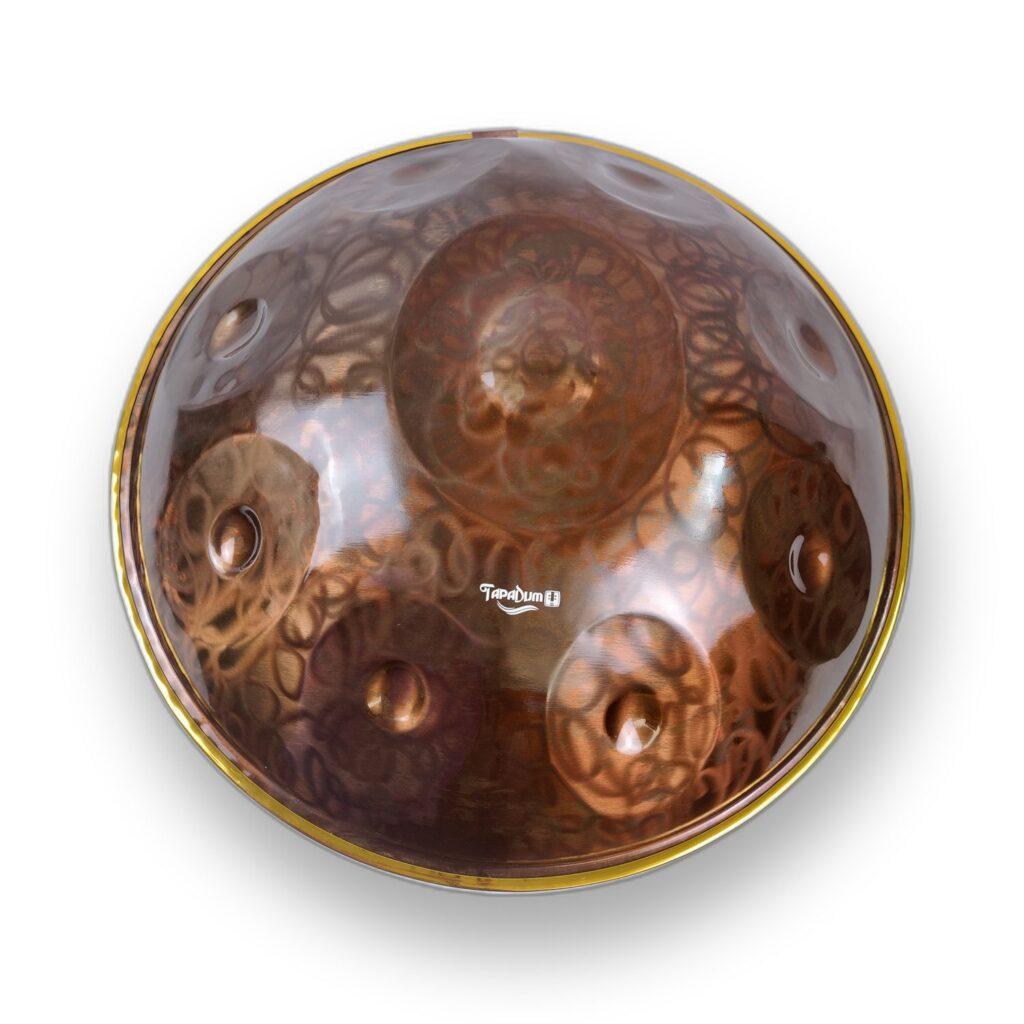
A handpan is made from two hammered steel hemispheres glued together to form a hollow, UFO-shaped instrument. The top shell carries a central note — the “ding” — surrounded by a ring of tuned tone fields. Each field is hand-hammered and tuned to produce a fundamental plus reinforcing overtones, which is why a good handpan sounds so rich from a single strike. The instrument grew out of the original hang (below) in the 2000s, and today many independent makers around the world build handpans in a wide range of scales.
Sound character
The handpan’s defining quality is its long, blooming sustain and layered overtones. A single note rings and shimmers, and skilled players build hypnotic, overlapping textures. Steel type matters: nitrided steel gives a warmer, quicker-responding voice, while stainless steel offers longer sustain and a brighter top end.
Best for
The handpan suits players who want an expressive concert-grade instrument for performance, recording and dedicated practice. It is also widely used in sound healing for its enveloping resonance. Beginners often start on the popular D Kurd scale, which is minor, meditative and forgiving.
The Hang: The Original Instrument
Origin and tradition
The hang was created in 2000 by Felix Rohner and Sabina Schärer of PANArt in Bern, Switzerland, drawing on the Trinidadian steelpan and other resonant instruments. “Hang” (from a Bernese German word for hand) is PANArt’s trademark — which is precisely why every similar instrument made by anyone else is called a handpan, not a hang. PANArt eventually stopped producing the Hang to focus on other instruments, so new hangs are effectively unavailable.
Sound character
Tonally, the hang is very close to the handpans it inspired: warm, refined, with a singing sustain. To most listeners a hang and a high-quality handpan sound like members of the same family, because they are.
Best for
Because genuine hangs are scarce and command collector prices, they are of interest mainly to specialists and collectors. For everyone who simply wants to play, a modern handpan delivers the same musical experience without the rarity premium.
The Tongue Drum: Accessible and Portable
Origin and tradition
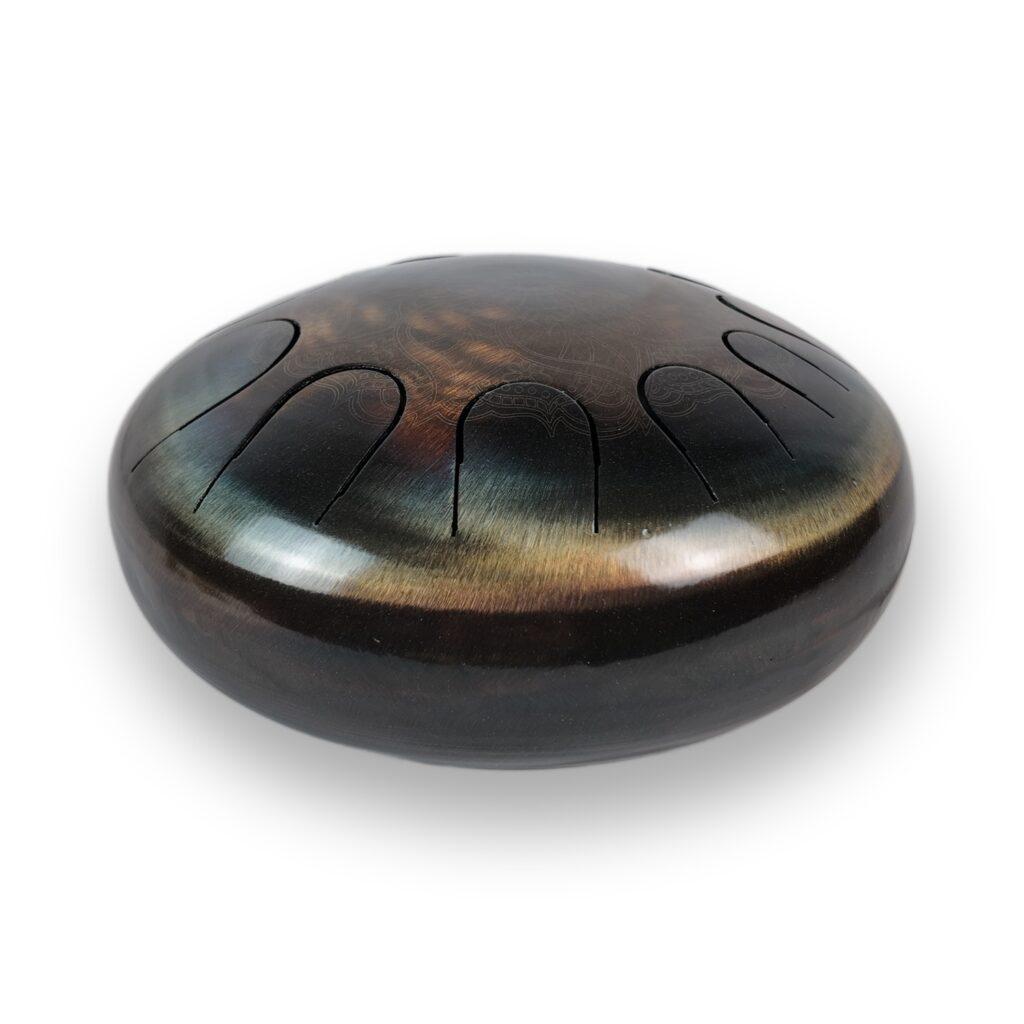
A tongue drum — also called a steel tongue drum or tank drum — is made from a hollow shell with tongue-shaped slots cut into the surface. Each tongue is tuned to a note, and you play it with fingers or small mallets. It is a modern, simplified descendant of the slit drum, and there are also wooden tongue drums with a mellower, more muted tone. Because the notes are laid out in clear, separate tongues, the layout is easy to read and hard to play “wrong.”
Sound character
Tongue drums produce clean, pure, bell-like notes with a shorter sustain than a handpan. There is less overtone complexity, which many beginners and meditators actually prefer — the sound is calm, tidy and immediately pleasant.
Best for
The tongue drum is the ideal entry point: affordable, compact, nearly indestructible, and playable within minutes. It travels well, suits children and complete beginners, and is a staple of budget-friendly meditation and sound-bath practice.
Head-to-Head: The Key Differences
Price: tongue drums are the most affordable; handpans are a significant investment; genuine hangs are rare and expensive. Sound: handpans and hangs share a rich, complex, long-sustaining voice, while tongue drums are cleaner and simpler. Learning curve: all three are welcoming, but the tongue drum is the fastest to sound good on, whereas the handpan rewards deeper technique. Availability: handpans and tongue drums are readily available in many scales; the hang is essentially out of production.
From our workshop: the question we hear most is “handpan or tongue drum?” Our honest answer: if music is becoming a serious part of your life and the budget allows, a handpan will grow with you for years. If you are curious, travelling, buying for a child, or want a calm meditation tool without a big outlay, a tongue drum is the smarter first purchase — and many players own both.
Which Should You Choose?
- Choose a handpan if you want the fullest, most expressive sound, plan to perform or record, and are ready to invest in a concert-grade instrument.
- Choose a tongue drum if you are on a budget, want to start playing immediately, need something portable and robust, or are buying for a beginner or child.
- Look for a hang only if you are a collector specifically seeking the original PANArt instrument — otherwise a modern handpan is the practical equivalent.
- For meditation and sound healing, either a handpan (deeper resonance) or a tongue drum (simpler, calmer tone) works beautifully; the choice is budget and sound preference.
Can You Use One for the Other?
Yes, up to a point. All three play melodies by hand and share the same relaxing, meditative purpose, so a tongue drum can absolutely stand in while you decide whether to invest in a handpan. What you cannot fully replicate on a tongue drum is the handpan’s blooming overtone wash and long sustain — that layered, orchestral quality is unique to the handpan and hang. Conversely, the tongue drum’s clarity and simplicity is its own strength, not a limitation, for many styles of playing.
Real Prices: Tapadum’s Handpan and Tongue Drum Lineup
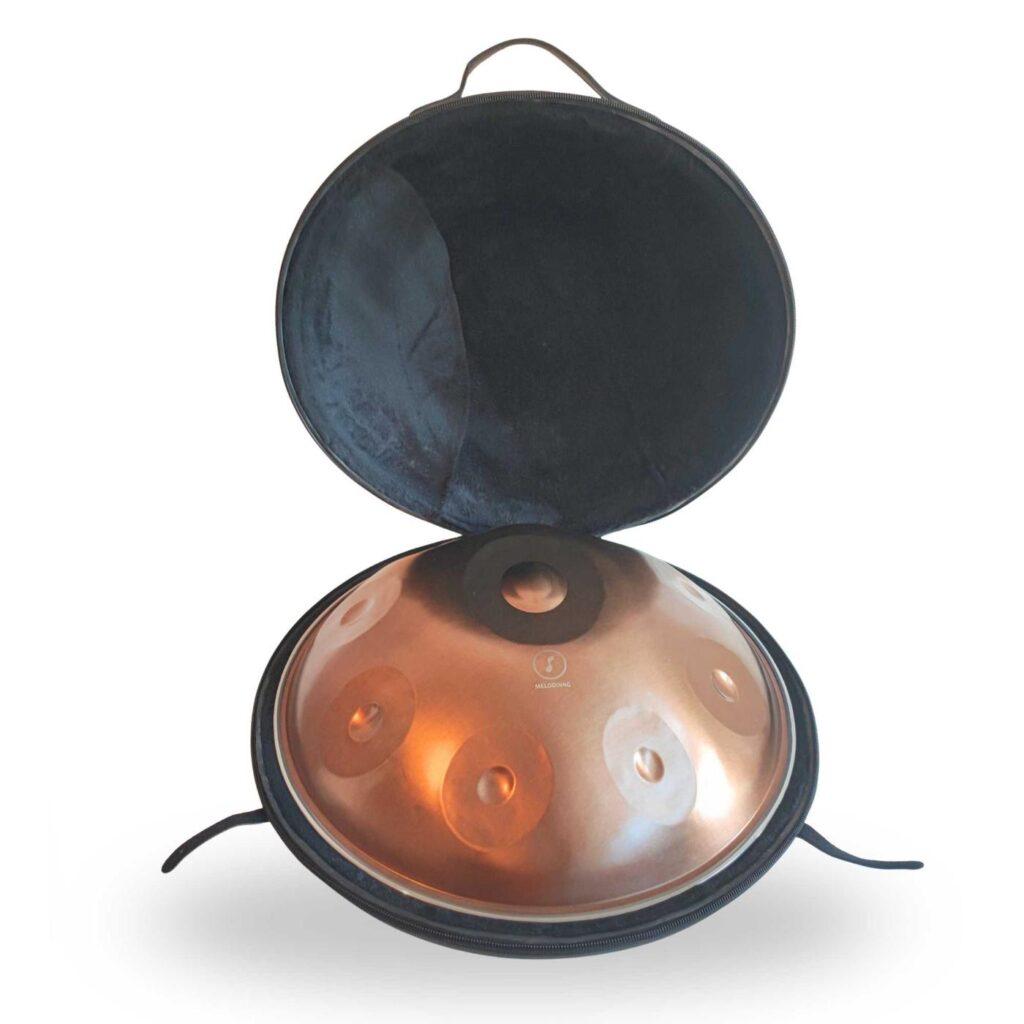
Numbers make the choice concrete. Every handpan below is a 9-note D Kurd — the same forgiving, minor scale recommended for beginners — finished in a different steel, and every tongue drum below is tuned to that same D Kurd scale in 8 or 10 notes.
| Model | Type | Notes / Scale | Price |
|---|---|---|---|
| Steel Tongue Drum, 8 Notes (Yin Yang, Purple Galaxy, Lotus, Bronze, Antique Bronze, Sacred Geometry, Blue-Grey Mandala) | Tongue drum | 8 notes, D Kurd | €140 |
| Steel Tongue Drum, 10 Notes (Om, Black Mandala, Floral, Bronze, Botanical, Geometric, Lotus Mandala) | Tongue drum | 10 notes, D Kurd | €150 |
| Handpan Arsha Nitrided – Gloss Black | Handpan | 9 notes, D Kurd | €399 |
| Handpan Arsha Nitrided – Matte Black | Handpan | 9 notes, D Kurd | €459 |
| Handpan Arsha Titanium – Green | Handpan | 9 notes, D Kurd | €469 |
| Handpan Arsha Stainless Steel | Handpan | 9 notes, D Kurd | €499 |
| Handpan Tapadum Signature | Handpan | 9 notes, D Kurd | €589 |
The price gap is the real story: a tongue drum costs roughly a quarter of an entry-level handpan. That is exactly why our workshop advice above holds — if you are not yet sure the instrument will stick, a €140–€150 tongue drum is the lower-risk way to find out, and every one of these models ships tuned to the same beginner-friendly D Kurd scale you would start on with a handpan anyway.
Looking After Whichever You Choose
Both instruments are steel, and steel rusts. The single biggest factor is moisture, not age: hands leave salt and oil on the playing surface, and a drum stored in a closed bag after a humid session is where corrosion starts. Wipe the surface after every session and let the instrument breathe before it goes back in its case. Nitrided, stainless and coated steel each need slightly different treatment — our handpan and tongue drum care guide sets out which surface you have and what it needs.
Frequently Asked Questions
Is a handpan the same as a hang?
They are the same type of instrument but not the same brand. “Hang” is PANArt’s trademarked original from Switzerland; every similar instrument made by other builders is called a handpan. A modern handpan gives you the same playing experience as a hang.
Handpan or tongue drum — which is better for beginners?
The tongue drum is easier and cheaper to start on, and you can play a simple melody within minutes. The handpan is more expressive and rewarding long-term but costs more and takes longer to master. Many beginners start with a tongue drum and move up to a handpan later.
Why are hang drums so rare and expensive?
PANArt, the original Swiss maker, stopped producing the Hang to focus on other instruments, so no new ones are being made. Existing hangs are collector items, which pushes prices very high. Modern handpans offer the same sound and are widely available.
Which is best for meditation and sound healing?
Both work well. A handpan offers deeper, longer-sustaining resonance for immersive sound baths, while a tongue drum gives a cleaner, calmer tone at a lower price. The best choice depends on your budget and the sound you find most soothing.
Do I need mallets to play these?
Handpans and hangs are played with the hands and fingers. Tongue drums can be played with either fingers or small mallets — mallets give a brighter, more defined note, while fingers give a warmer, softer sound.
Whichever direction you lean, we build and curate both ends of the range. Explore our hand-tuned handpans for sale and our steel tongue drums, browse the wider family of sound healing instruments, or read our guide to choosing your first handpan. For more on the meditative side, see sound therapy and the handpan. Background reading: the handpan and hang entries on Wikipedia.
Gurkan Ozkan leads Tapadum’s percussion collection and has spent years evaluating hand percussion and melodic steel instruments across Persian, Arab and Anatolian traditions. Every handpan and tongue drum listed above passes through his hands before it ships. Read more from Gurkan on the Tapadum team page.
Worldwide shipping & 15-day return apply to every instrument. Published by Tapadum Ethnic Music Store — reviewed by our sound-healing instrument specialists.