
Handpan and Steel Tongue Drum Care: Rust Prevention, Cleaning and Storage
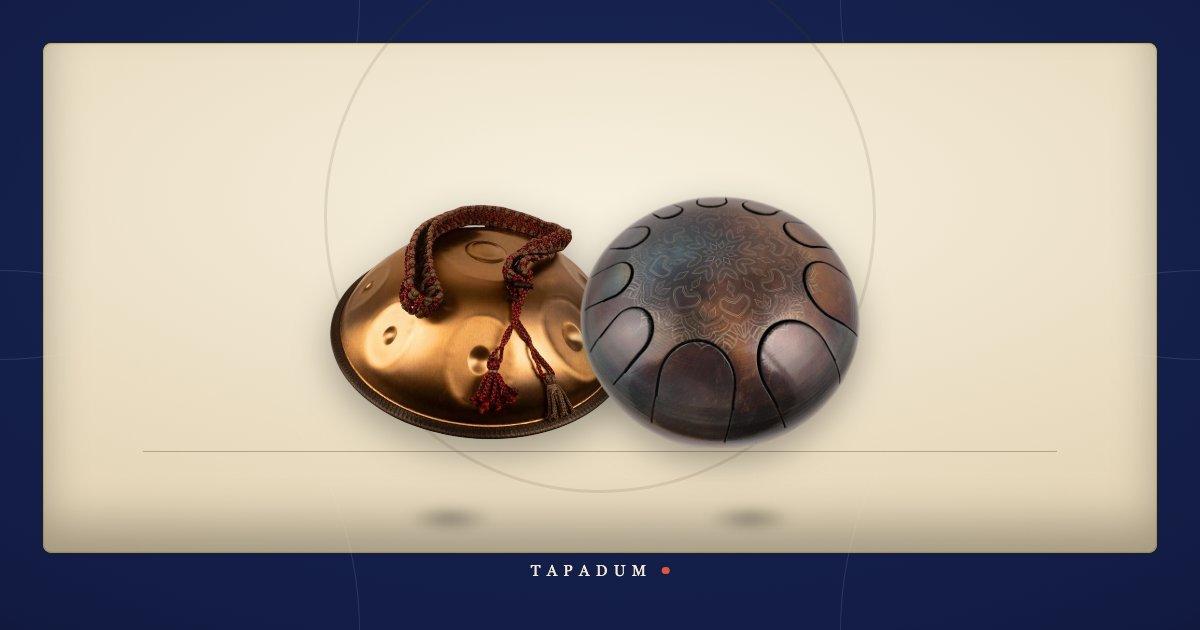
What you’ll learn: how to tell which surface your instrument has (stainless, nitrided, or coated steel) because each needs different care, why moisture — not time — is what actually causes rust, why every handpan benefits from oil and how often to apply it (every 10 days for the Arsha range and the Tapadum 9 Notes, every 15 to 20 days for premium stainless models), which oils are genuinely safe on steel you hold against your body, why a coated tongue drum should not be treated the same way, how to store and travel safely, and what to do if you find rust.
Almost everything that goes wrong with a handpan or a steel tongue drum comes down to one thing: moisture left sitting on steel. Not age, not playing, not even hard playing. A drop of sweat wiped off after a session is nothing; the same drop left overnight is where rust starts.
The complication is that these instruments do not all have the same surface, and the right routine depends on which one you own. This guide covers the three surfaces we sell, what each actually needs, and the mistakes that do real damage.
First, Identify Your Surface
Before any care routine, know what you are holding. The difference is not cosmetic — it changes what your instrument needs, and how often.
| Surface | Rust behaviour | What it needs | Example |
|---|---|---|---|
| Stainless steel (bare or titanium-finished) | Highly rust-resistant — but not immune | Wiping + light oil: every 10 days for Arsha, every 15 to 20 days for Tapadum Pro, Melodinng and Harmony | Arsha Stainless 9 Notes, Arsha Titanium, Melodinng 15 Notes |
| Nitrided steel | Resists rust well, but is not stainless | Wiping + light oil every 10 days | Arsha Nitrided Matte, Gloss |
| Coated / painted steel | The coating is the protection — the steel underneath is not stainless | Handpan: wiping + light oil every 10 days. Tongue drum: wiping + protecting the coating from scratches | Tapadum 9 Notes handpan, steel tongue drums |
Nitriding is a surface-hardening process that makes steel considerably more rust-resistant — but it is a treatment, not a change of material. That distinction is the single most useful thing to understand here: a nitrided handpan is far more forgiving than raw steel, and still not indifferent to a wet towel left on top of it. If you are choosing between the two before buying, our handpan buying guide compares how they sound as well as how they behave.
The Real Enemy Is Moisture, Not Time
Rust needs three things: iron, oxygen, and water. You cannot remove the first two, so all practical care is about the third.
The moisture sources that actually matter, roughly in order of how much damage they do:
- Your hands. Sweat is salty and slightly acidic — the worst of the three. This is why wiping after playing matters more than any product you can buy.
- Condensation. Bringing a cold instrument into a warm room makes water form on the steel, exactly as it does on a cold glass. This is the one most people never think about, and it is why you let a case come to room temperature before opening it.
- Ambient humidity. Coastal and tropical climates, damp basements, bathrooms. Nothing dramatic happens in a day; the damage is cumulative.
- Spills and damp cloths. Obvious, but worth saying: never leave a wet cloth on the instrument, and never put it away damp.
Routine Care: After Every Session
This part is the same for all three surfaces and takes about twenty seconds.
Wipe the whole playing surface with a soft, dry microfibre cloth — top, rim, and the underside where your knees and forearms rest. That is it. You are removing sweat and skin oils before they have time to sit. Doing this consistently matters far more than any deep-cleaning routine done occasionally.
What to avoid, on every surface: steel wool, scouring pads, abrasive powders, and harsh solvents. These leave shiny patches on an even finish, strip coatings, and on a tuned instrument can do worse than cosmetic harm.
Oiling Your Handpan
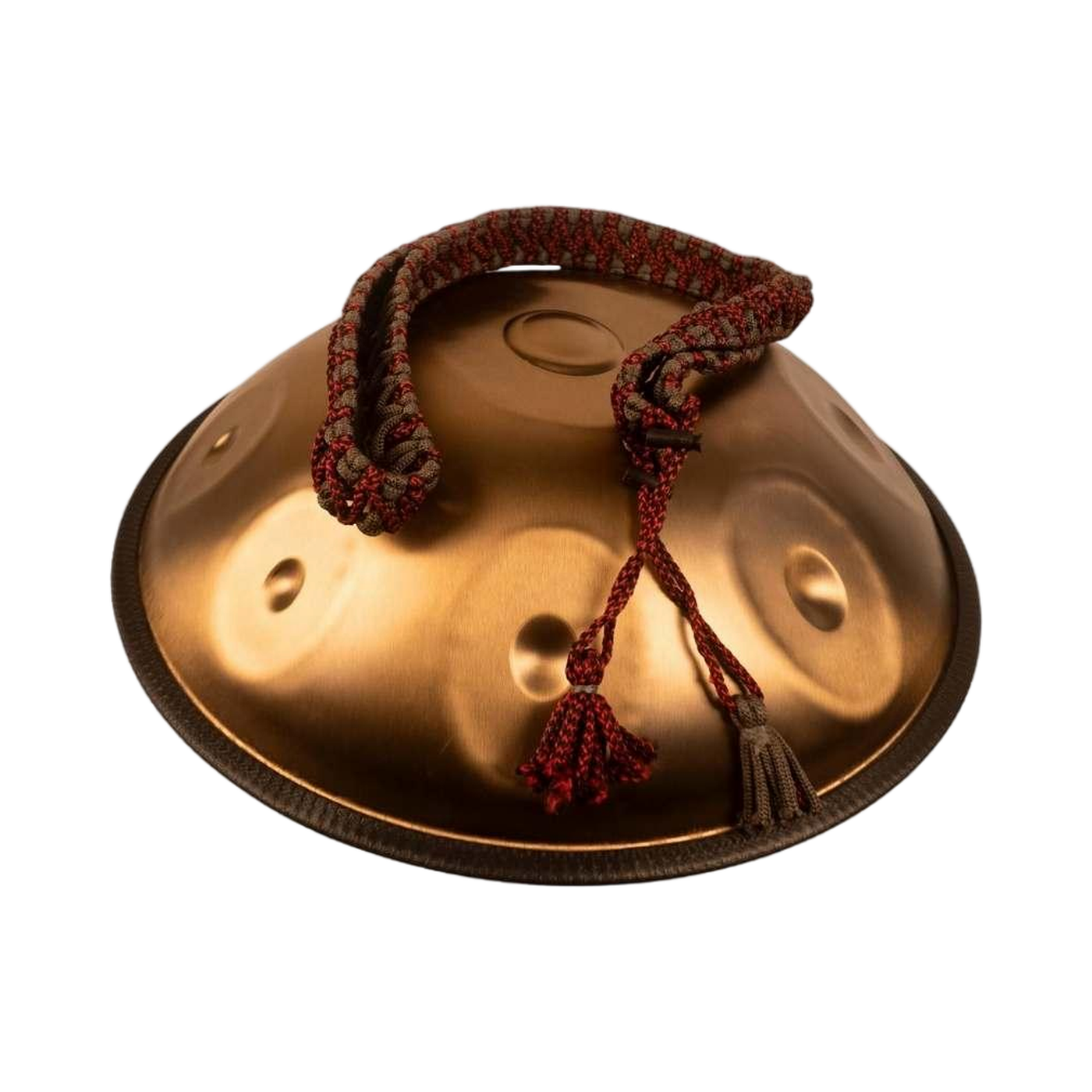
Oil works by putting a very thin barrier between the steel and the air, so airborne moisture cannot settle directly on the metal.
How often: every handpan benefits from a light oil film, not only nitrided ones. Stainless and titanium-finished steel resist rust far better than raw steel, but resistant is not immune — in practice, light rust marks can appear even on entry-level handpans with a titanium finish. So we recommend a regular routine for every model, with a soft cloth, at an interval set by the instrument — frequent enough that the film never wears through completely, spaced enough that nothing builds up:
- Arsha — Stainless, Nitrided (Black Gloss, Black Matte) and Titanium (Blue, Green, Rainbow): every 10 days.
- Tapadum 9 Notes D Kurd: every 10 days. It is coated steel, not stainless: the coating helps, but on an instrument played with bare hands across the whole shell it should not be the only protection.
- Tapadum Pro (9, 12 and 15 notes), Melodinng and Harmony: every 15 to 20 days. Premium stainless steel needs it least often — but it still needs it.
Take these as the working default and adjust them to your own conditions:
- Regular playing, ordinary indoor climate: the interval for your model, with a dry wipe after each session in between.
- Humid or coastal climate, daily playing, or heavy sweating: shorten the interval — weekly is not excessive near the sea.
- Dry climate, occasional playing: keep to the interval rather than stretching it — a dry climate lowers the risk but does not remove it. Let the surface tell you too: a pan that begins to look dry or dull is asking for oil, even before the interval is up.
- After playing outdoors or anywhere damp: wipe immediately, and re-oil sooner than usual.
Which oil: three qualities matter, and only three. The oil should be thin-bodied, skin-safe, and chemically stable. Thin matters more than most people expect: a light oil spreads into an almost invisible film, while a heavy or semi-solid one sits on top of the surface, collects dust, and on a gas-nitrided pan can sink into the slightly porous finish and damp the response. Two ordinary, easily found oils meet all three conditions, and these are the two we point our own customers to:
- Coconut oil — the fractionated kind. Food-grade fractionated coconut oil stays liquid at room temperature: light, close to odourless, and widely available. It is not the same thing as the solid coconut oil sold for cooking, which is heavier and can turn rancid on metal.
- Baby oil — that is, light mineral oil. Plain, unperfumed baby oil is refined white mineral oil, and its real advantage is that it cannot go rancid: mineral oil does not oxidise the way plant oils do, so a film left on the steel for a fortnight stays a film instead of turning into a sticky residue. This is not an improvised substitute, either — Ballistol, an oil several handpan builders point their own owners to, is built on the same medicinal-grade white mineral oil.
Two label checks before you buy baby oil. Choose a fragrance-free one: added perfume has no business on an instrument you hold against your chest for an hour. And read the ingredients, because a number of products now sold as “baby oil” are plant-oil blends rather than mineral oil, and those behave like kitchen oils.
Dedicated handpan oils sold by instrument makers do the same job, and are the safest choice of all if your own maker names one — follow their sheet before ours. What to keep away from the instrument: olive, sunflower and other kitchen oils, which go rancid and turn tacky; solid cooking coconut oil, for the same reason; anything perfumed; and WD-40, motor oil, silicone sprays and general-purpose lubricants, which have no business on a musical instrument you hold against your body.
How to apply: a soft cloth is the entire tool kit — microfibre or plain cotton, clean and lint-free, never paper towel. Put a few drops on the cloth, never directly on the instrument, and spread a thin, even film across the top, the rim and the underside. Then buff with a second dry cloth until nothing feels greasy. A handpan should never leave oil on your hands when you pick it up. A barely-there film is the goal: too much oil attracts dust, damps the note fields, and on nitrided steel is actively counterproductive rather than merely wasteful.
Every few months, clean before you oil. Fresh oil laid over old oil eventually builds into a tacky layer that dulls the sound as surely as rust would. Isopropyl alcohol on a cloth lifts the old film — then re-oil straight away, because the alcohol strips the protection along with the residue.
Do not forget the inside. The shell interior is steel as well, and moisture that finds its way in stays there far longer than a drop on the top surface. Wipe it out when you clean, and give it a light oil pass two or three times a year.
Start with your hands. Hand cream, sunscreen and insect repellent leave residues considerably more aggressive than plain sweat, and no oil film protects against something applied on top of it. Washing and drying your hands before you play removes more corrosion risk than any care routine adds.
Oiling does not affect tuning. If you want to understand what does, see how a handpan is tuned.
Caring for a Coated Steel Tongue Drum
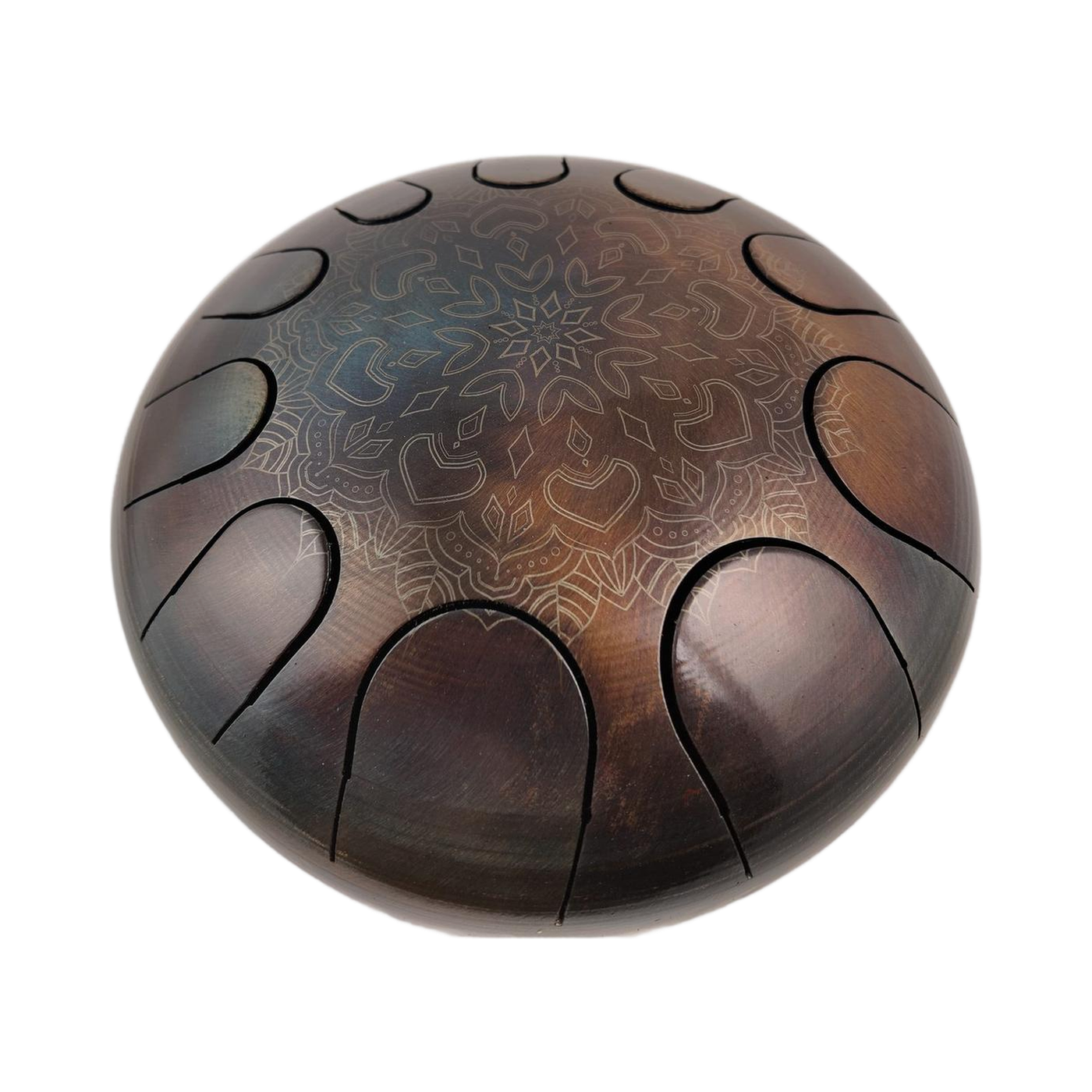
Here the routine genuinely differs, and this is where advice written for handpans gets misapplied.
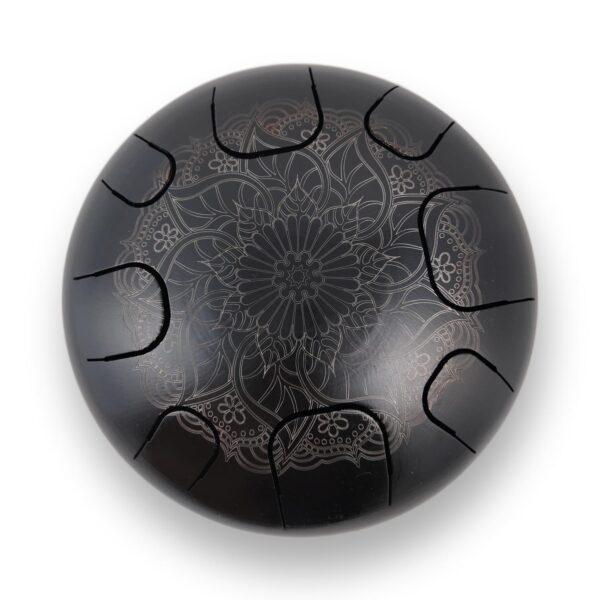
Our steel tongue drums have a finish and a protective coating over the steel shell, with the pattern etched into the metal rather than printed on top. That coating is the rust protection. So the priority is not building an oil film — it is not damaging the coating:
- Wipe with a soft, dry cloth after playing, as with any steel instrument.
- If something needs more than a dry wipe, use a barely damp cloth and dry it immediately afterwards.
- Keep it in the supplied soft bag when it is not being played, away from damp and direct heat.
- Be careful with the mallets and with rings, watches, and belt buckles — a scratch through the coating exposes the steel underneath, and that is where corrosion would begin.
- Do not scrub the etched pattern with anything abrasive.
If your tongue drum has bare or nitrided steel rather than a coating, treat it like a nitrided handpan instead — light oil, same method as above. New to the instrument? Our steel tongue drum buyer’s guide covers scales and sizes, and our complete handpan guide explains how the families differ.
Storage and Travel
- Store it in its case or bag, not on a stand in the open, and not on the floor of a damp room.
- Away from direct sun and heat sources. Sun on a dark instrument can heat it considerably; radiators and car boots swing between extremes.
- Let it acclimatise before opening. After transport in the cold, leave the closed case in the room for twenty to thirty minutes. Opening it immediately invites condensation onto cold steel — the single most avoidable cause of rust.
- Never store it damp. If you played outdoors or in a humid room, wipe it dry before it goes back in the bag; a closed case traps moisture against the surface.
- Travel with a padded case. Beyond rust, these are tuned instruments — a hard knock on the rim or a note field can affect the tuning itself.
If You Find Rust
Small orange or brown specks, usually where hands rest most. Caught early this is a nuisance, not a disaster.
For light surface spotting: put a little oil on a microfibre cloth and rub the spot gently, then wipe clean and re-oil the area. Patience works better than pressure — several light passes beat one hard scrub.
What not to do: do not reach for steel wool, wire brushes, sandpaper, or rust-removing chemicals. On a tuned instrument these can remove material unevenly, leave permanent shiny marks, and in the worst case affect how a note field responds. The cure becomes worse than the problem.
If rust is widespread, pitted, or keeps returning in the same place, stop and contact us or the maker. Deeper corrosion needs assessment, not an experiment — and if it has reached the point of affecting the sound, that is a job for a tuner, not a cloth.
Frequently Asked Questions
How often should I oil my handpan?
Every handpan benefits from regular oiling, stainless and titanium-finished models included. Our recommendation is every 10 days for the Arsha range (stainless, nitrided and titanium) and the Tapadum 9 Notes, and every 15 to 20 days for premium stainless models — Tapadum Pro, Melodinng and Harmony. Use a few drops on a soft cloth, and wipe the instrument dry after every session in between. Oil more often if you live somewhere humid or coastal, play daily, or sweat heavily.
What oil should I use on a handpan?
A thin-bodied, skin-safe, chemically stable one. The two we recommend are food-grade fractionated coconut oil (the liquid kind, not the solid cooking one) and plain, fragrance-free baby oil, which is light mineral oil. Dedicated handpan oils do the same job and are the safest choice if your maker names one. Avoid solid cooking coconut oil and kitchen oils such as olive or sunflower, which go rancid; anything perfumed; and WD-40, motor oil, silicone sprays or general-purpose lubricants on an instrument you hold against your body.
Can I use baby oil on a handpan?
Yes, provided it is plain and fragrance-free. Baby oil is refined light mineral oil: thin, skin-safe, and — unlike plant oils — unable to go rancid, so the film stays a film instead of turning sticky. Ballistol, an oil several handpan builders recommend, uses the same medicinal-grade white mineral oil base. Two cautions: skip perfumed or “scented” versions, and check the ingredients, because some products sold as baby oil today are plant-oil blends rather than mineral oil.
How do I know if I have used too much oil?
The instrument feels slightly greasy, leaves a trace on your hands when you lift it, or shows sheen pooling around the note fields — and it picks up dust quickly. On a nitrided pan the excess can also sink into the porous surface and damp the response. Buff it back with a dry cloth; if a tacky layer has built up over time, clean it off with isopropyl alcohol on a cloth and re-oil thinly straight afterwards.
Do stainless steel handpans rust?
They are highly rust-resistant, but not immune — light rust marks can appear even on entry-level handpans with a titanium finish. So the basics always apply: wipe it dry after playing, never store it damp, and do not leave sweat sitting on it. A light oil film adds a further layer of protection: every 15 to 20 days for premium stainless models (Tapadum Pro, Melodinng, Harmony), every 10 days for the Arsha range.
Does a steel tongue drum need oiling?
Not if it has a protective coating, as ours do — there the coating is the protection, and the priority is keeping it unscratched. Wipe dry after playing and store it in its bag. A bare or nitrided steel tongue drum should be lightly oiled, like a nitrided handpan.
How do I remove rust from a handpan?
For light surface spots, rub gently with a little oil on a microfibre cloth, then wipe and re-oil. Never use steel wool, sandpaper, wire brushes, or rust-removing chemicals — on a tuned instrument they can leave permanent marks and affect how a note responds. Widespread or pitted rust should be assessed by us or the maker.
Why does my handpan get wet when I bring it inside?
That is condensation. Cold steel meeting warm, humid air forms water on the surface, exactly as on a cold glass. Leave the closed case in the room for twenty to thirty minutes before opening it, so the instrument warms up first.
Can I use alcohol or soap to clean my handpan?
A dry microfibre cloth handles almost everything. If a deeper clean is genuinely needed on a nitrided instrument, isopropyl alcohol on a cloth removes old oil residue — but it strips the protective film, so always re-oil afterwards. Avoid harsh solvents and abrasive cleaners entirely, and be more conservative with coated tongue drums.
Does oiling or cleaning affect the tuning?
No. Oiling and wiping are surface treatments and do not change tuning. What does affect tuning is physical shock — dropping the instrument, knocking the rim, or pressing hard on a note field — which is why a padded case matters more than any cleaning routine.
The Instruments in This Guide
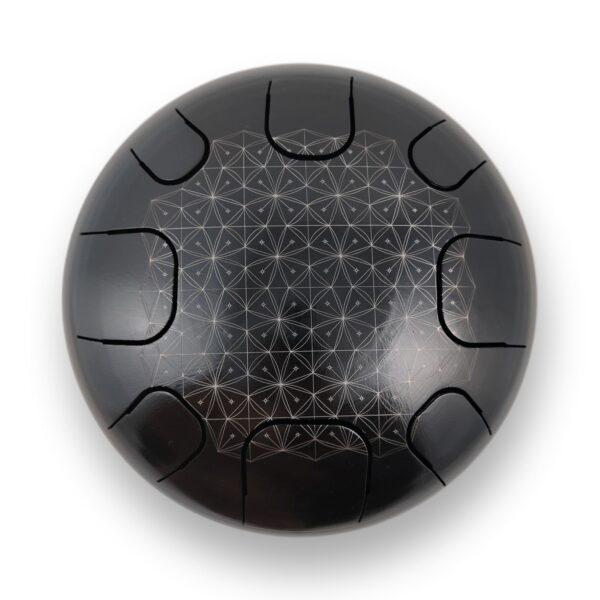
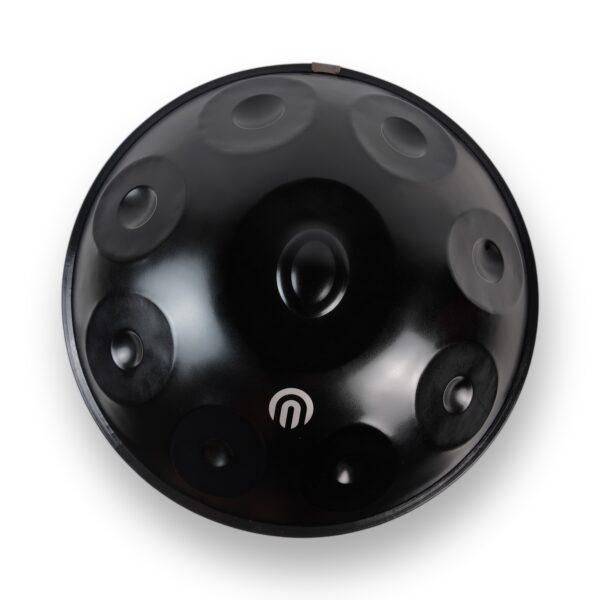
One example of each surface discussed above — two handpans and two coated tongue drums:

Related reading: Steel tongue drum for meditation, the meditative power of the handpan, and building a sound bath set. Browse our handpans and steel tongue drums.